Bali River Scenic Area in Fuyang City
1. Introduction
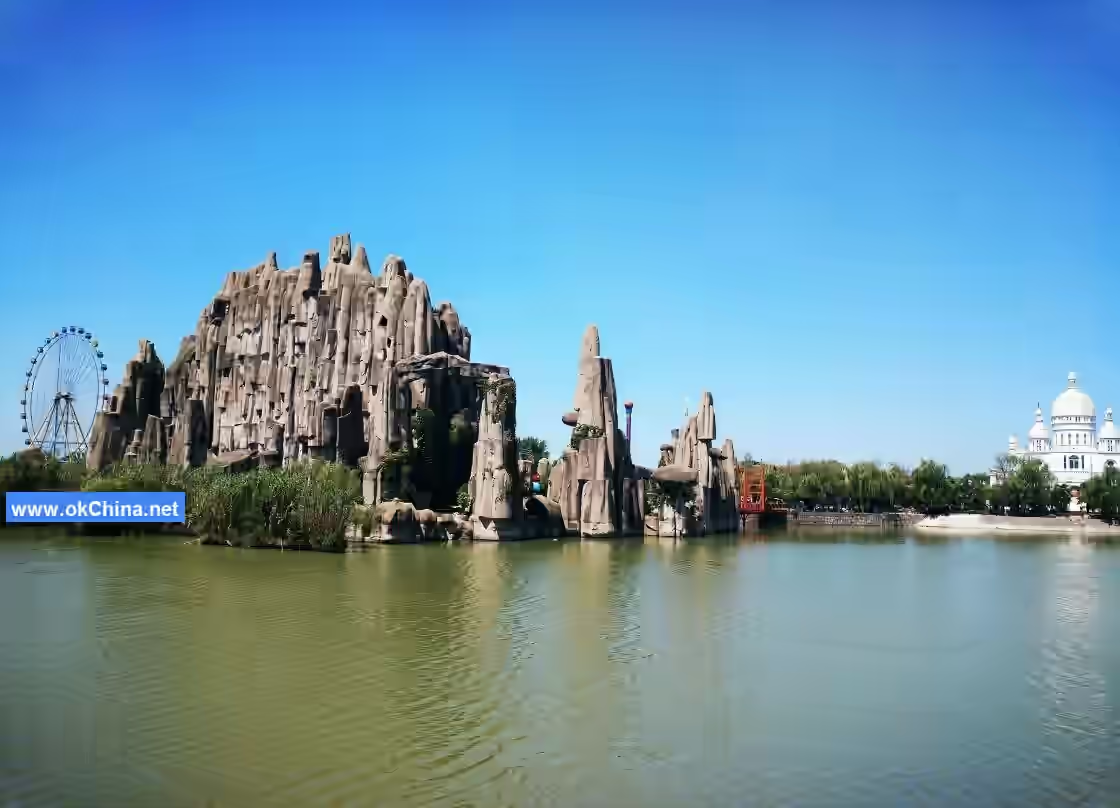
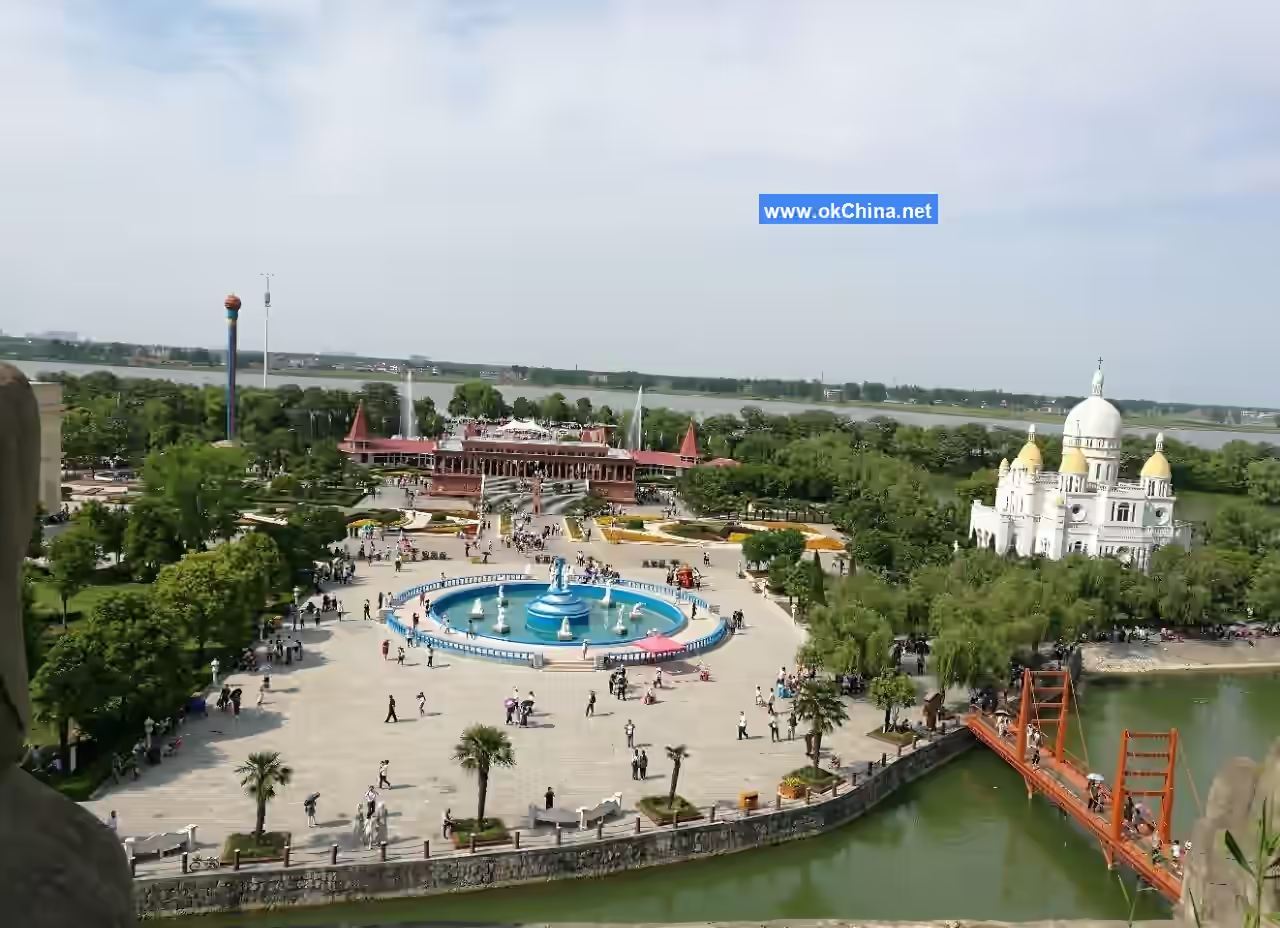
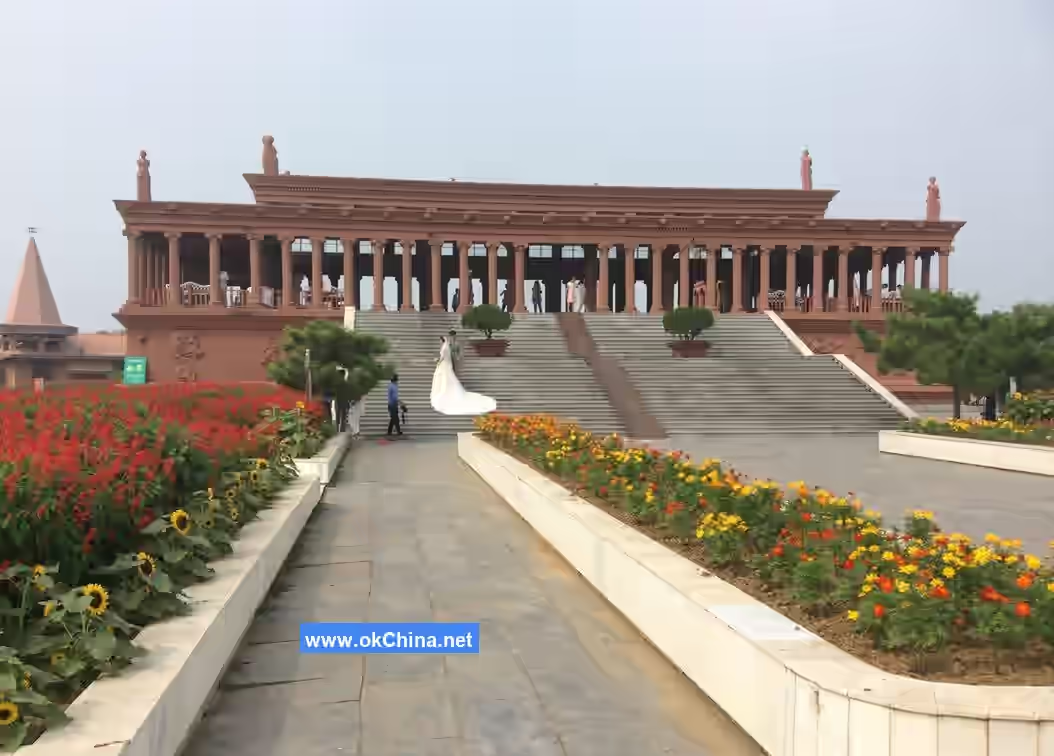
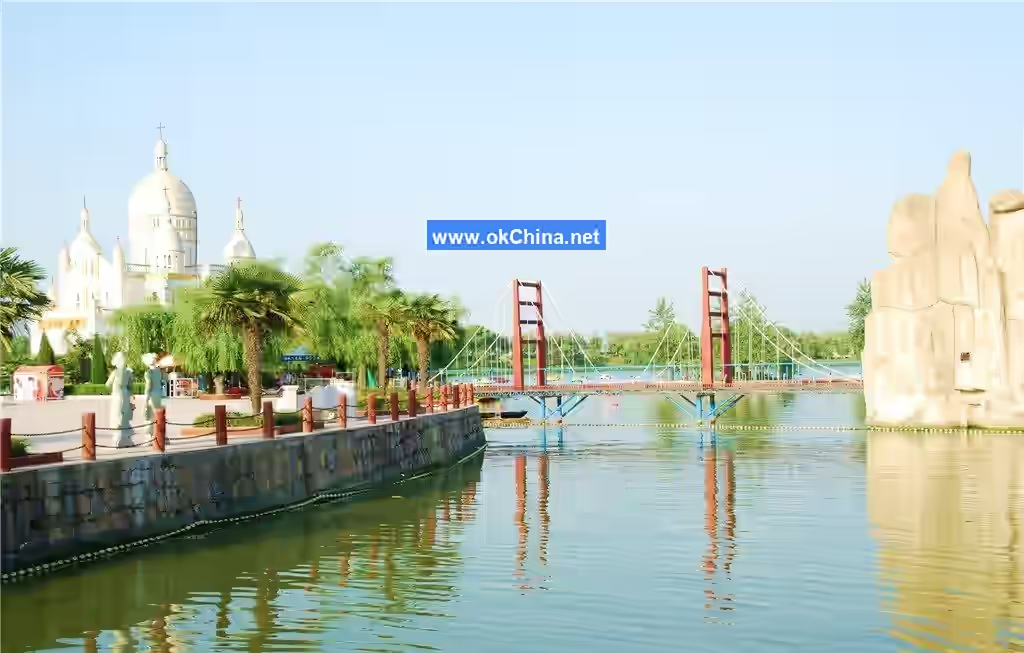
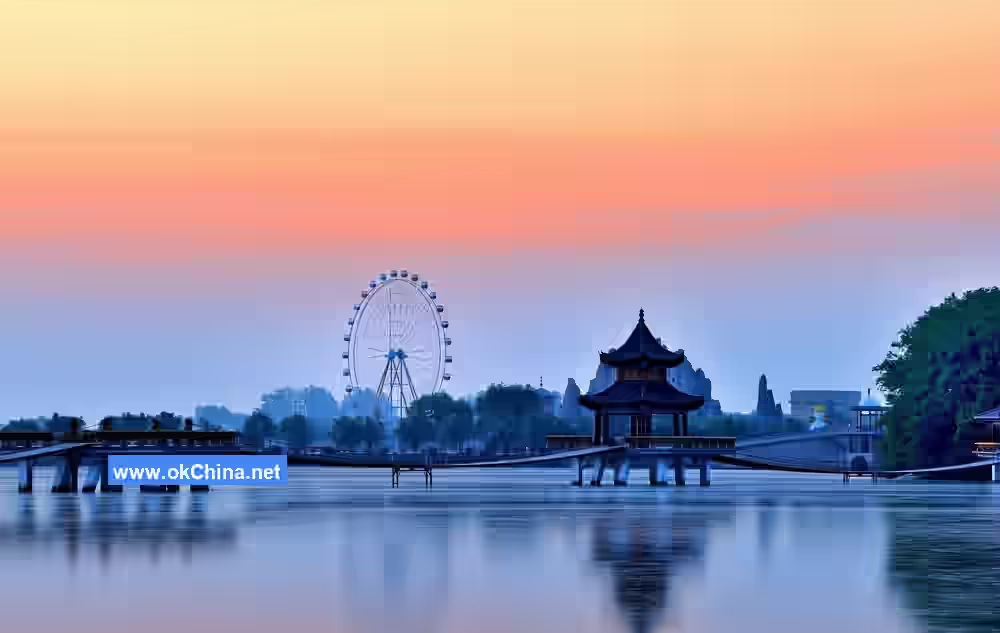
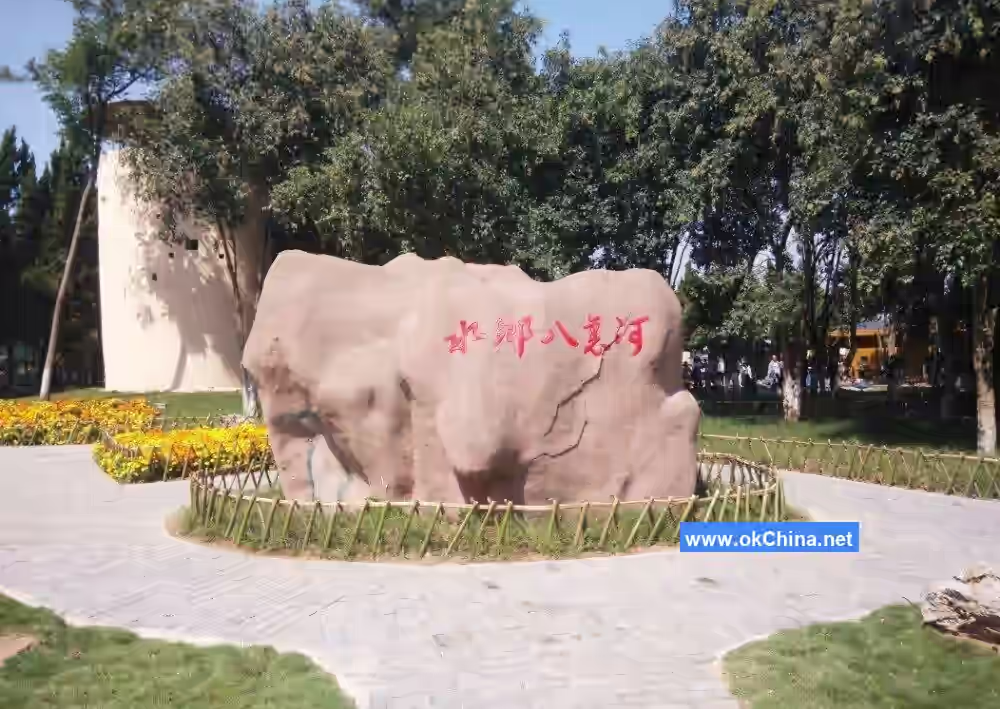
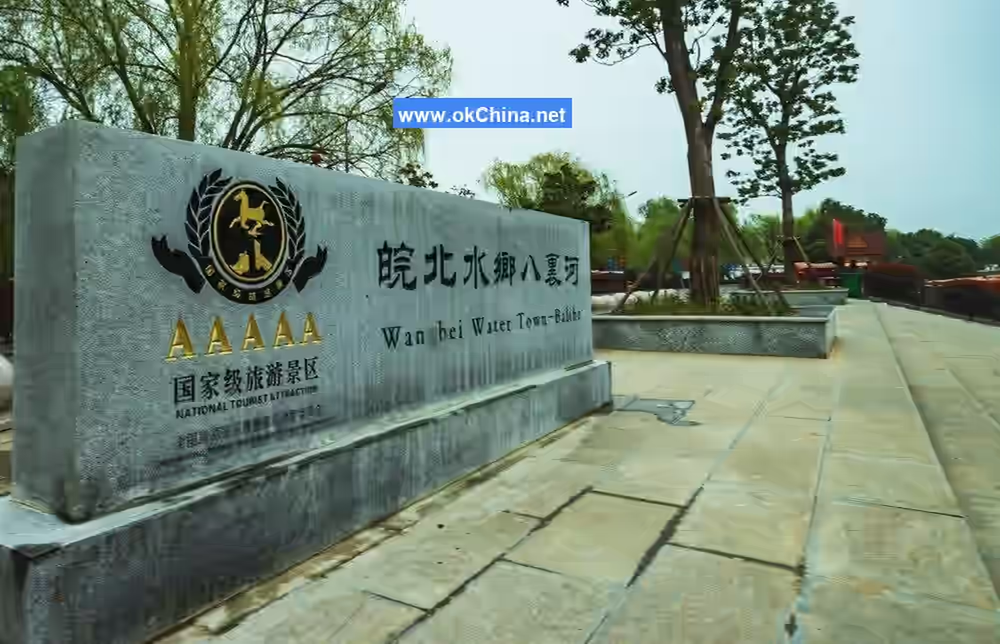
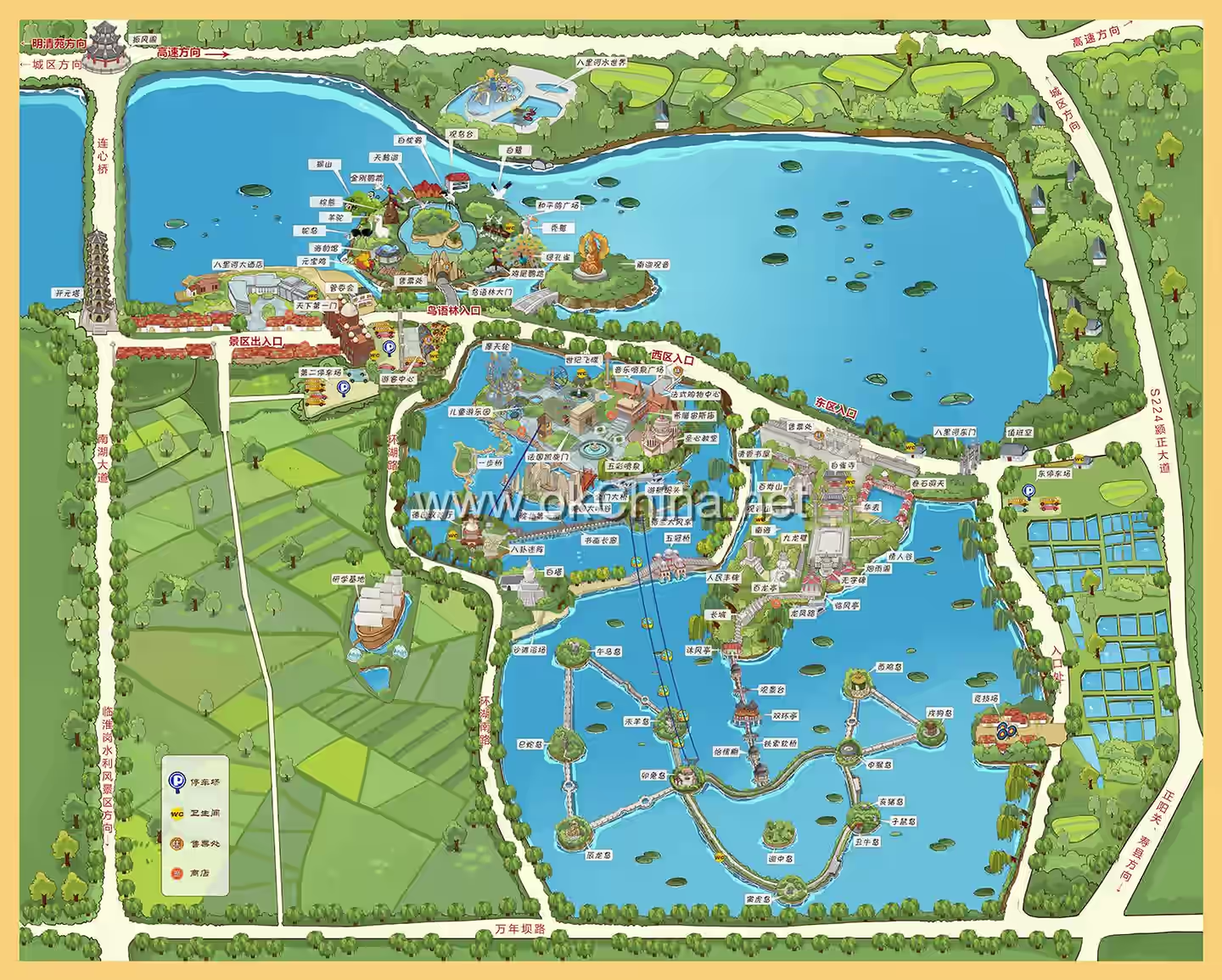
The Bali River Scenic Area in Fuyang City, abbreviated as Bali River Scenic Area, is a tourist attraction located in Yingshang County, Fuyang City, Anhui Province, covering an area of 3,600 acres. Bali River is actually a lake in the southern part of Yingshang County, connecting the Ying River to the east along the Huai River and the Third Lake to the west, stretching 15 kilometers from east to west and over 1 kilometer from north to south. The Bali River Scenic Area, formerly known as South Lake Park, consists of four major attractions: the Bird Forest, West Zone, East Zone, and Twelve Flower Islands. The area is home to nearly a hundred species of birds, including first-class protected birds such as peacocks, white storks, red-crowned cranes, and Steller's sea eagles, as well as second-class protected birds like swans, mandarin ducks, white-naped cranes, swan geese, and vultures. The scenic area also features architectural structures such as the Greek Temple of Zeus, the Sacré-Cœur Basilica in Paris, the French Lion Triumphal Arch, the German Country Church, the American Grand Canyon, Dutch windmills, colorful fountains, and a calligraphy and painting corridor. The Bali River Scenic Area uniquely blends natural scenery with cultural landscapes, making it a tourist destination that combines sightseeing, blessings, and wellness. On October 11, 2013, the Bali River Scenic Area in Fuyang City was awarded the title of "National AAAAA Tourist Attraction" by the National Tourism Administration of the People's Republic of China, becoming the first such attraction in Fuyang City and the seventh in Anhui Province.
2. Geographical Environment
2.1 Location and Territory
The Bali River Scenic Area is located in Bali River Town, Yingshang County, Fuyang City, Anhui Province, covering an area of 3,600 acres.
2.2 Topography and Landforms
Bali River is actually an inland lake situated at the confluence of the Huai River and the Ying River. It was formed due to historical flooding of the Yellow River and Huai River, with sediment deposits covering, accumulating, and retaining water. The soil around the Bali River area is mostly brown, derived from loess-like ancient river sediments. The lakebed is flat, with a substrate of old silt and deep mud.
2.3 Hydrological Characteristics
The water of Bali River connects with the Ying River through the Three-Chong Cutoff Gate of the Ying River. The surrounding area is built with embankments, and the water source mainly relies on natural precipitation. The Bali River area receives abundant rainfall with low evaporation, maintaining a water level of 19.5 meters year-round. The water level in the protected area follows the same annual trend as that of Bali River, with the highest monthly average in July, followed by August, and the lowest in January, followed by December.
2.4 Climate Features
The Bali River Scenic Area lies in the transitional zone from the warm temperate to the subtropical zone, with four distinct seasons. The average annual precipitation is 923.8 mm, influenced by the monsoon climate, with significant seasonal and interannual variations—more in summer and less in autumn, and more in spring than in autumn. The annual sunshine duration is 2,213.3 hours, with a total annual solar radiation of 5.02×10^9 joules per square centimeter. The water of Bali River connects with the Ying River through the Three-Chong Cutoff Gate of the Ying River. The surrounding area is built with embankments, and the water source mainly relies on natural precipitation. The Bali River area receives abundant rainfall with low evaporation, maintaining a water level of 19.5 meters year-round. The area is characterized by abundant heat, ample rainfall, a long frost-free period, and four distinct seasons.
3. Main Attractions
3.1 Overview
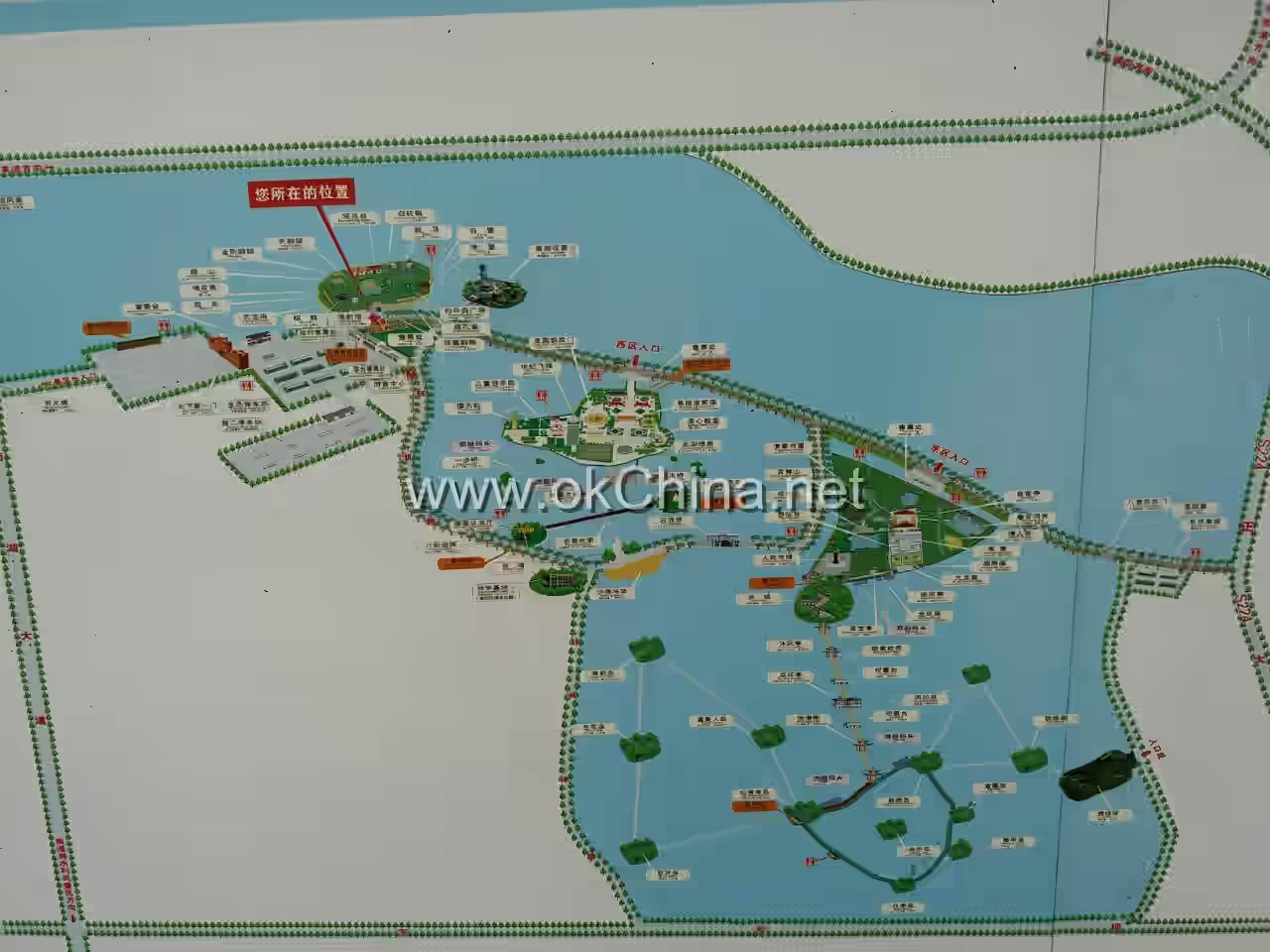
The Bali River Scenic Area is mainly divided into four major attractions: the Bird Forest, West Zone, East Zone, and Twelve Flower Islands. It also includes attractions such as the Bali River Glass Skywalk, the "World's First Gate," the Five-Crown Bridge, the Iron Chain Suspension Bridge, the Greek Temple of Zeus, the French Lion Triumphal Arch, the Sacré-Cœur Basilica, the American Grand Canyon, the Calligraphy and Painting Corridor, the Qingxiang Study, the White Sparrow Temple, Guanyin Mountain, and the Nine-Dragon Wall.
3.2 Five-Crown Bridge
The Five-Crown Bridge is located on the ring road landscape belt of the main scenic area. It was built based on the Five-Pavilion Bridge of Yangzhou's Slender West Lake. Because it has five pavilions, it is called the "Five-Pavilion Bridge." In the scenic area, the Five-Pavilion Bridge was modified to have pavilions shaped like crowns, while the rest remains the same as the original bridge, hence it is also known as the "Five-Crown Bridge."
3.3 Bird Forest
The Bird Forest features tall trees, artificial mountains, ponds, and winding paths, making it a natural place for people and birds to enjoy together. It covers an area of 3 hectares with 66 birdhouses, housing nearly a hundred species of birds, including first-class protected birds such as green peacocks, white storks, red-crowned cranes, and Steller's sea eagles, as well as second-class protected birds like swans, mandarin ducks, white-naped cranes, gray cranes, swan geese, and vultures.
3.4 White Sparrow Temple
The White Sparrow Temple was completed and opened to the public in May 1996. It is divided into four main halls: the Mahavira Hall, the Heavenly King Hall, the Ksitigarbha Hall, and the Guanyin Hall. The original temple was built during the Eastern Han Dynasty but was destroyed by war. The temple in the scenic area was rebuilt during the construction of the attraction.
3.5 Guanyin Mountain
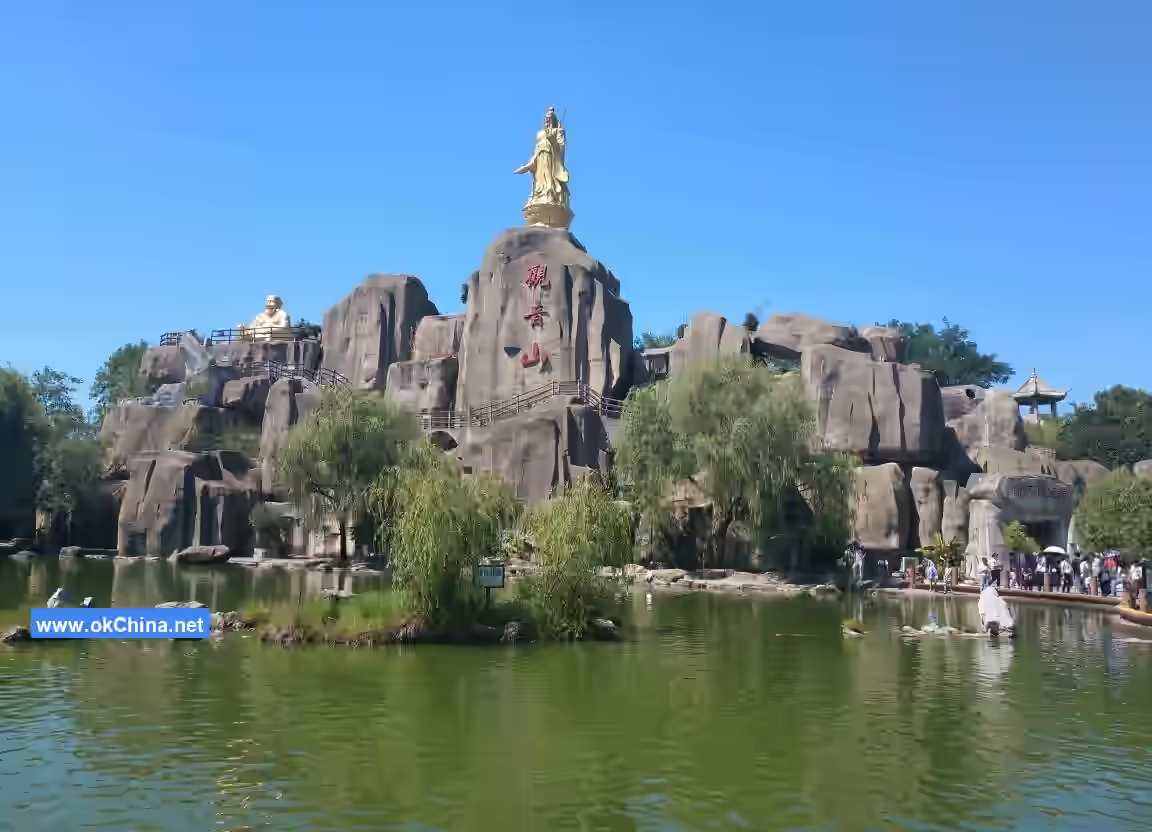
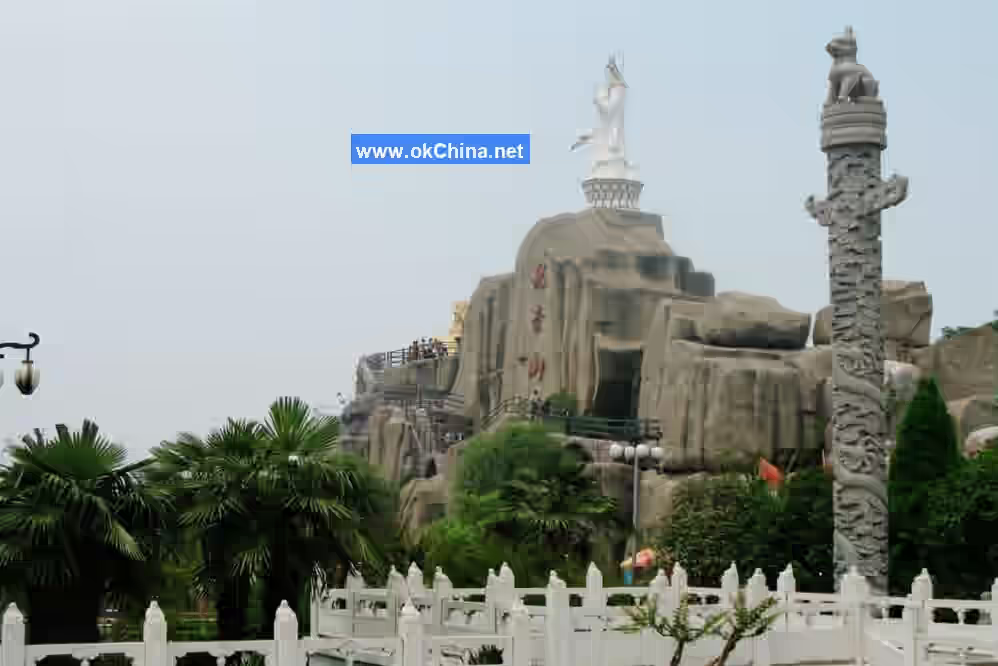
"Guanyin Mountain" is located in the center of the East Zone. This artificial mountain is 20 meters long, and with the 9.9-meter-tall statue of Guanyin and its base, it reaches a height of about 32.9 meters, with a three-dimensional framework of 1,750 square meters. The 9.9-meter-tall statue of Guanyin stands atop the artificial mountain.
3.6 Calligraphy and Painting Corridor
The Lakeside Calligraphy and Painting Corridor is one of the main attractions in the "West Zone" corridor bridge area. It connects two national islands, Germany Island and the Netherlands Island, at its eastern and western ends. Together with the One-Step Bridge, it integrates the corridor bridge area with the land island area. The Lakeside Calligraphy and Painting Corridor is 241.55 meters long and 2.9 meters wide, with a base of a 25-arch bridge. It is adorned with 178 ancient corridor pillars, 93 crossbeams, and 176 side purlins, covered by a long-ridge roof. The pillars, beams, and purlins are all decorated with colorful paintings, including the complete story of "Dream of the Red Chamber," birds, fish, flowers, grass, mountains, water, trees, and rocks, totaling 353 paintings.
3.7 Qingxiang Study
The Qingxiang Study in Bali River was built in imitation of Suzhou's largest private garden, the Humble Administrator's Garden. To the west is the Xiaoyao Lake, and it is symmetrically aligned with the Juanshi Cave Heaven to the east. To the north lies the Hundred Herb Garden.
3.8 Twelve Flower Islands
The Twelve Flower Islands are adorned with lucky flowers corresponding to the twelve zodiac animals. They are cultivated using modern technology, ensuring flowers bloom in all seasons, with each island offering a unique experience.
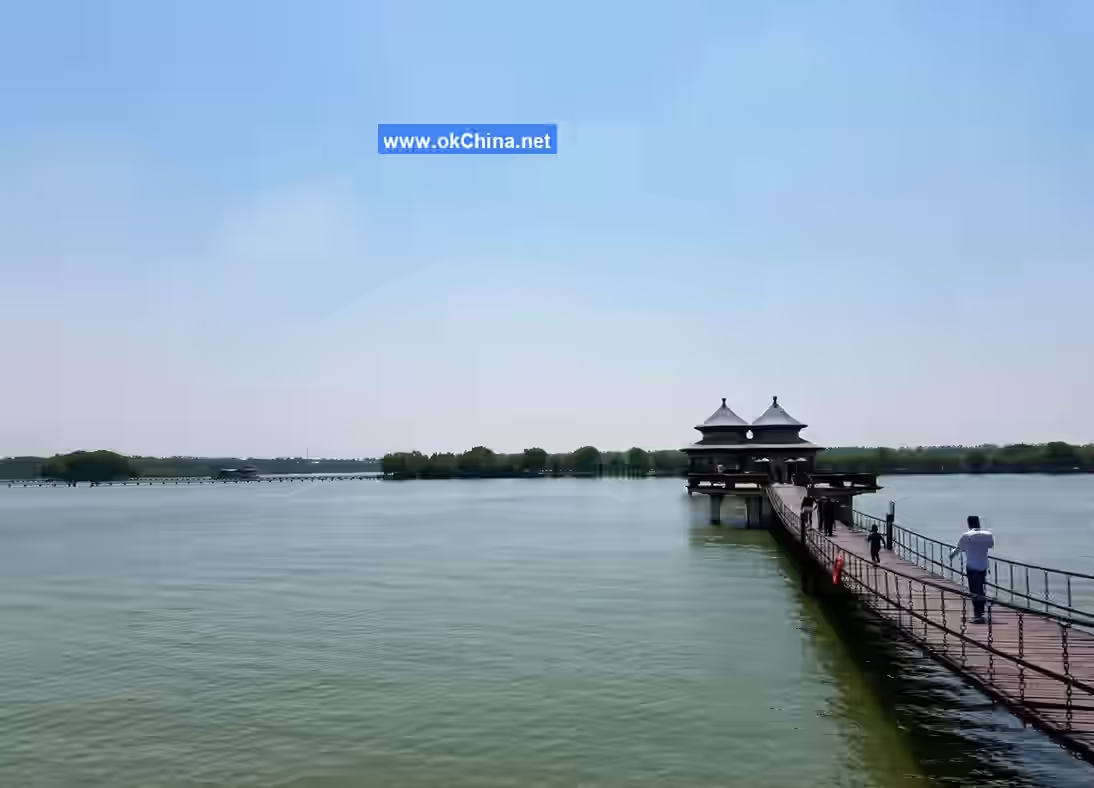
3.9 Iron Chain Suspension Bridge
The Step Cloud Bridge, also known as the Iron Chain Suspension Bridge, was built in imitation of the iron chain bridge crossed by the Red Army during the crossing of the Dadu River. It is 582 meters long and paved with 2,634 pine planks. The suspension bridge is divided into six sections, connected by seven pavilions.
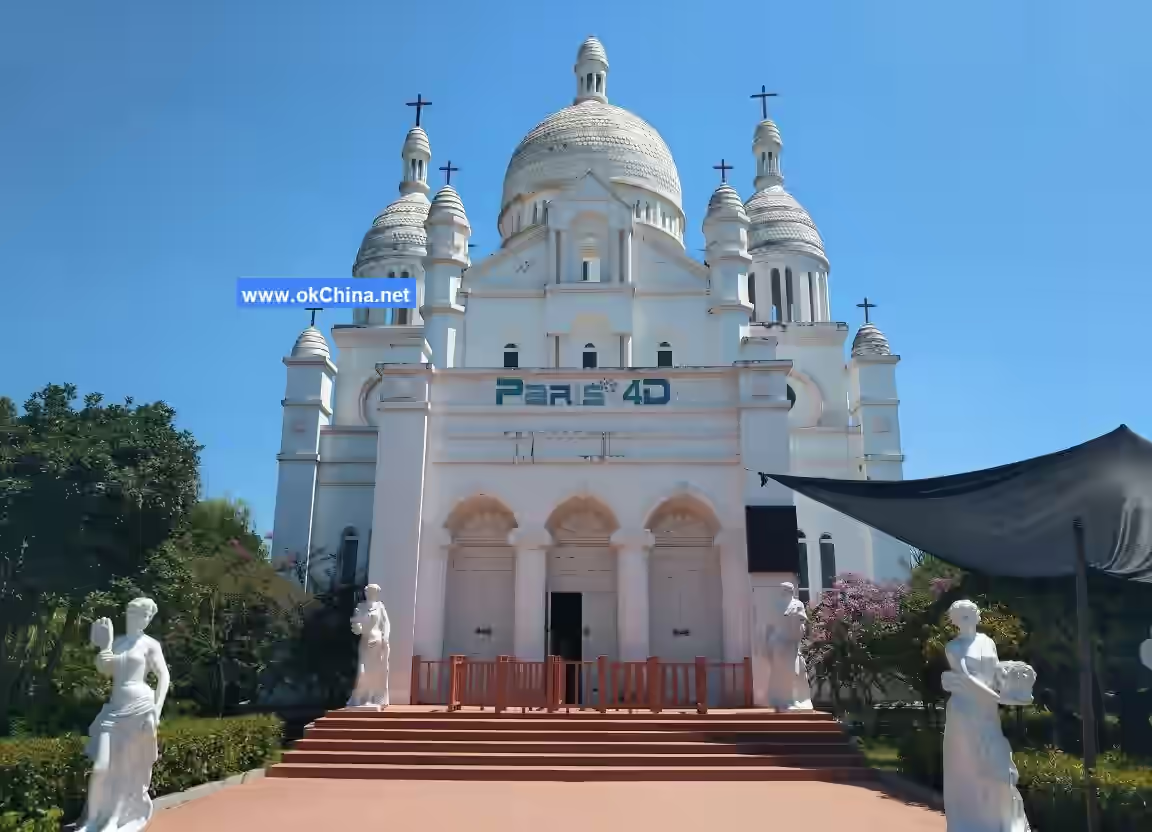
3.10 Sacré-Cœur Basilica
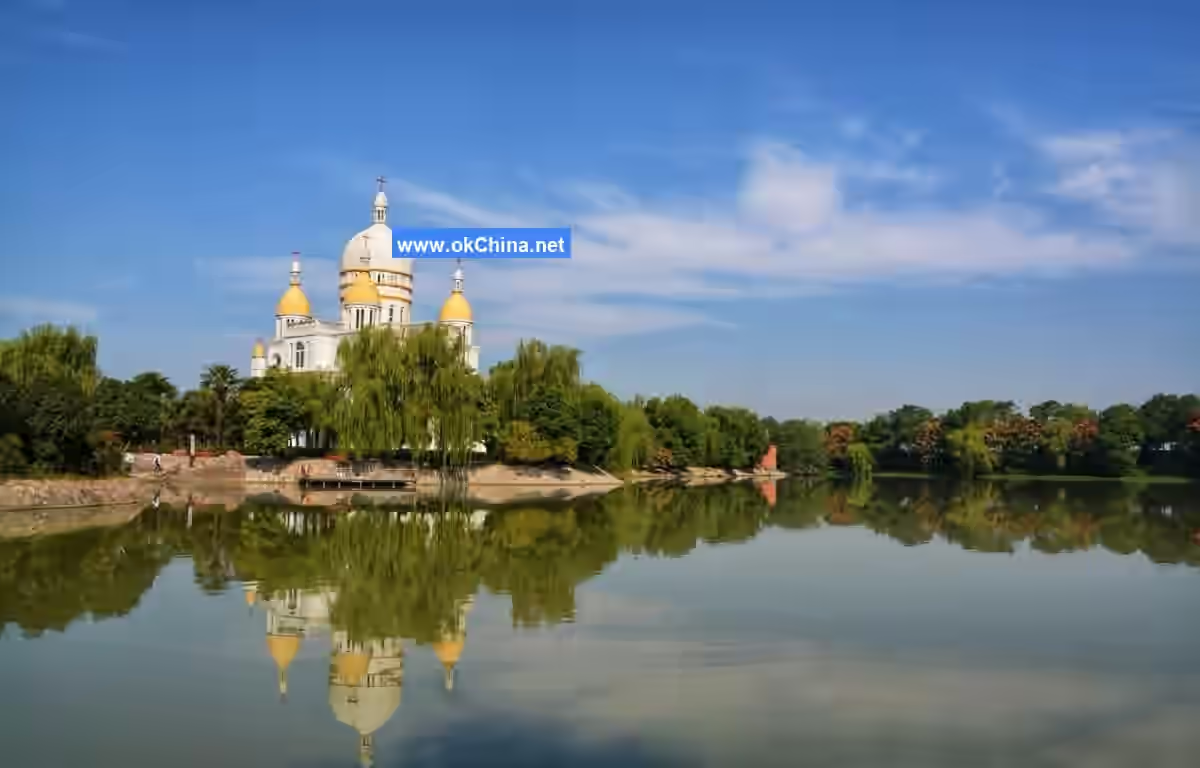
The Sacré-Cœur Basilica in Paris is a typical eclectic-style building. The Sacré-Cœur Basilica in the Bali River Scenic Area was built by the Fuyang Architectural Design Institute based on pictures and scaled proportionally.
3.11 World's First Gate
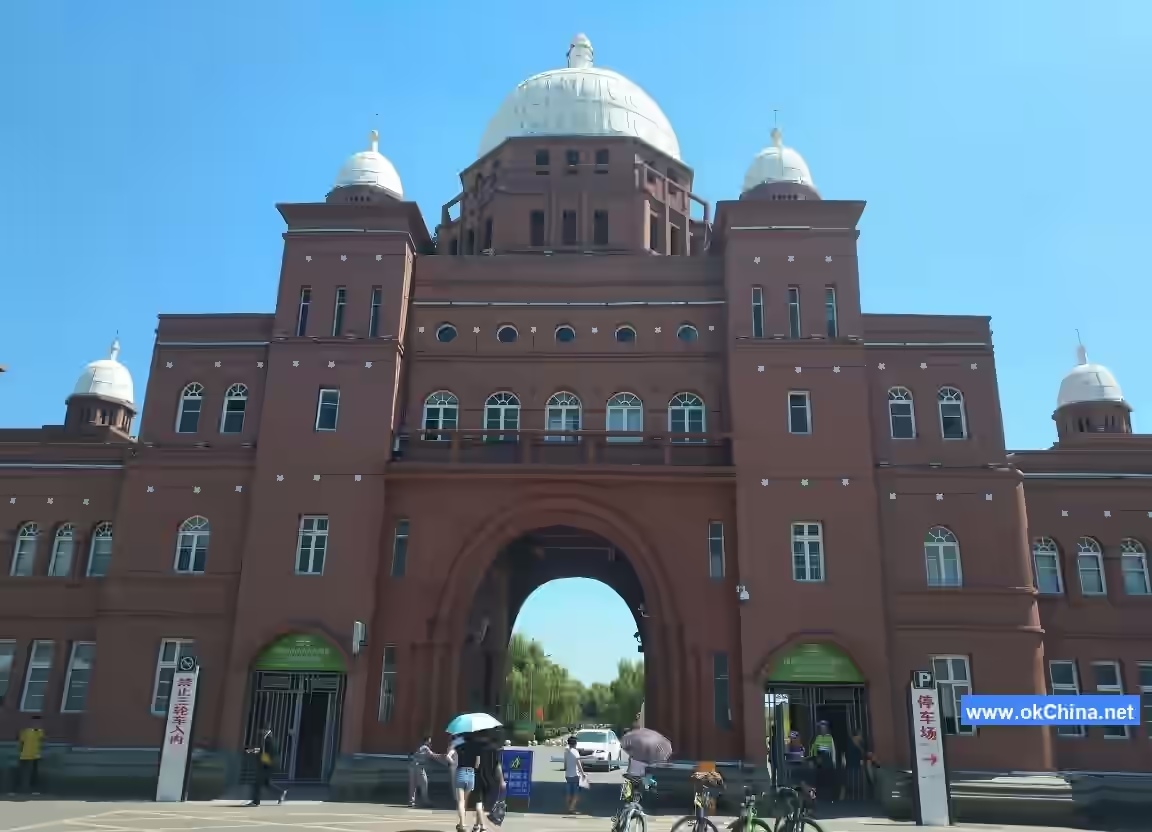
The World's First Gate is the main entrance to the Bali River Scenic Area. It combines architectural features from Russia, England, and the United States, creating a building with the artistic style of Bali River, and it is also the iconic structure of the scenic area. This fortress-style gate has 13 white domes, with the central one being more prominent. The exterior walls are decorated with scarlet sandblasting.
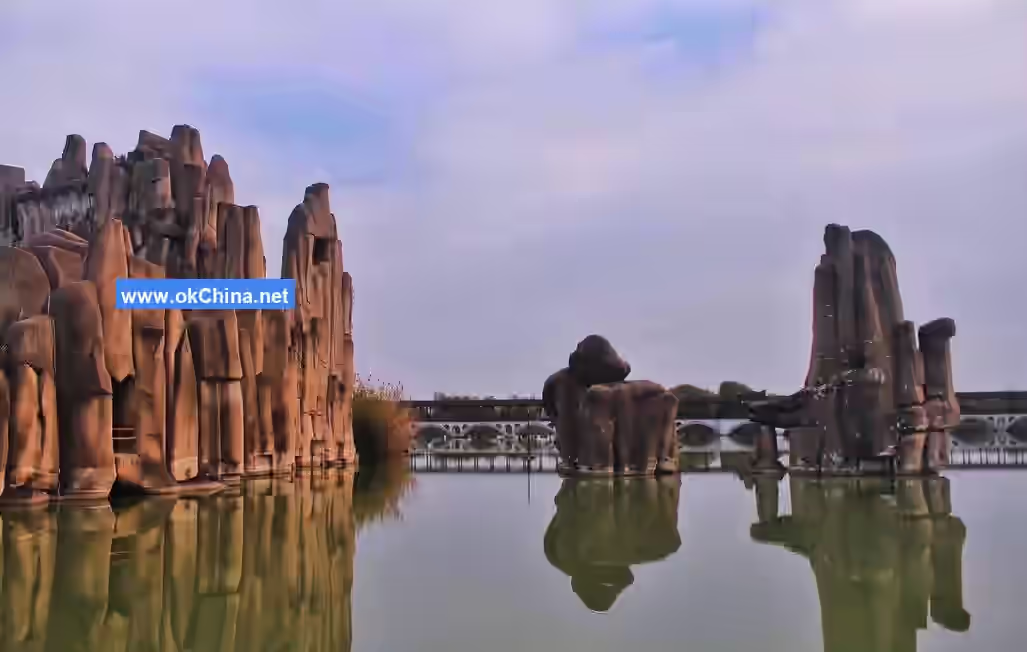
3.12 American Grand Canyon
The American Grand Canyon is located in the southwestern United States, at the triangular area of the Kaibab Plateau where northwestern Arizona borders Utah and Nevada. The American Grand Canyon in the Bali River Scenic Area is a hollow steel-framed mineral structure.
3.13 Greek Temple of Zeus
The prototype of the Temple of Zeus is located on Mount Olympus in Olympia, Greece, built to worship Zeus. It is one of the largest temples in ancient Greece. The Temple of Zeus in the Bali River Scenic Area was built based on a restored model. The entire structure, when viewed from above, is U-shaped and covered with a split-level framed roof.
3.14 French Triumphal Arch
The Triumphal Arch was built to commemorate Napoleon I's victory over the Austro-Russian alliance. The Lion Triumphal Arch in the Bali River Scenic Area is one-third the size of the original building.
3.15 Glass Skywalk
The Bali River Suspended Water Sightseeing Glass Skywalk is 425 meters long, 3 meters wide, and 55 meters high. It is built with fully transparent special glass, resembling a winding dragon hovering over the Bali River water surface. It combines popular technological elements such as 9D sound, light, and electric shattered color screens, and three-dimensional effects of flowers, birds, and swimming fish with the vibrating bridge surface, along with sound effects.
4. Historical Figures
4.1 Guan Zhong
Guan Zhong (c. 723–645 BCE), also known as Yiwu, styled Zhong, with the surname Ji, was a native of Yingshang (present-day Yingshang County, Anhui Province). He was a famous politician, military strategist, economist, and reformer in Chinese history and a representative figure of the Legalist school during the Spring and Autumn period. He was an important advisor to Duke Huan of Qi (Prince Xiaobai) and is known as the "First Minister of the Spring and Autumn Period." Guan Zhong's governance philosophy and reform measures had a profound impact on later generations. His political wisdom and military talent enabled Qi to become a hegemon during the Spring and Autumn period, creating the glorious era of the "Five Hegemons of the Spring and Autumn Period."
4.1.1 Early Life and Assisting Duke Huan of Qi
Guan Zhong came from a humble background and faced many hardships in his early life. In his youth, he engaged in business with his close friend Bao Shuya. However, due to his unrestrained and unconventional personality, he often clashed with Bao Shuya. Despite this, Bao Shuya always held Guan Zhong in high regard, believing he was exceptionally talented and destined for greatness. Later, due to his impoverished family, Guan Zhong sought official positions multiple times without success and even became a prisoner at one point.
In 685 BCE, internal strife broke out in Qi. Duke Huan of Qi (then Prince Xiaobai) successfully seized the throne with Bao Shuya's assistance. After ascending the throne, Bao Shuya recommended Guan Zhong to Duke Huan, calling him a "rare talent under heaven." Duke Huan heeded Bao Shuya's advice, set aside past grievances, appointed Guan Zhong as the prime minister of Qi, and entrusted him with significant responsibilities. From then on, Guan Zhong began his political career, assisting Duke Huan in governing Qi and achieving its hegemony.
4.1.2 Guan Zhong's Governance Philosophy and Reform MeasuresAfter becoming prime minister, Guan Zhong proposed the political concept of "Revering the King and Repelling the Barbarians," advocating that the State of Qi should respect the authority of the Zhou royal court while uniting with other feudal states to jointly resist foreign invasions. This concept not only won the support of other feudal states for Qi but also laid the foundation for Duke Huan of Qi's hegemony.
In terms of governance, Guan Zhong implemented a series of reform measures covering political, economic, military, and other fields. His reforms mainly included the following aspects:
-
Political Reforms: Guan Zhong advocated "governing the country by law," emphasizing the authority and fairness of the law. He implemented a series of legal systems, rectified official governance, cracked down on corruption, and improved the administrative efficiency of the government. At the same time, he focused on selecting talents, advocating "appointing people based on merit," which broke the monopoly of power by hereditary nobles and selected a group of capable officials for Qi.
-
Economic Reforms: Guan Zhong's reforms in the economic field were particularly outstanding. He proposed the policy of "taxation based on land fertility," which levied different taxes according to the fertility of the land, ensuring the state's fiscal revenue while reducing the burden on farmers. He also implemented the "state monopoly over mountains and seas" policy, where the state monopolized the production and sale of important resources such as salt and iron, increasing the state's fiscal revenue. Additionally, Guan Zhong encouraged commercial development, established markets, and promoted the prosperity of Qi's economy.
-
Military Reforms: Guan Zhong also carried out bold reforms in the military. He proposed the idea of "integrating soldiers into farmers," combining military training with agricultural production. Farmers engaged in agricultural production during peacetime and transformed into soldiers during wartime. This policy not only strengthened Qi's military power but also reduced the state's financial burden. Furthermore, Guan Zhong emphasized military discipline and training, improving the combat effectiveness of Qi's army.
-
Foreign Policy: Guan Zhong also demonstrated exceptional talent in diplomacy. He advocated "Revering the King and Repelling the Barbarians," uniting with other feudal states to jointly resist foreign invasions and maintain the authority of the Zhou royal court. Through his efforts, Qi successfully united feudal states such as Lu, Song, Chen, and Wei, forming a powerful alliance. As a result, Duke Huan of Qi became the hegemon during the Spring and Autumn Period.
4.1.3 Guan Zhong's Military Talent and Qi's Hegemony
Guan Zhong was not only an outstanding statesman but also an exceptional military strategist. With his assistance, Qi achieved multiple military victories, establishing Duke Huan of Qi's hegemony.
In 681 BCE, on Guan Zhong's advice, Duke Huan of Qi convened a meeting of feudal states at Kuiqiu (present-day Lankao, Henan), formally establishing Qi's hegemonic status. Subsequently, Qi dispatched troops multiple times to help other feudal states resist foreign invasions, maintaining stability in the Central Plains region. Duke Huan of Qi's hegemony not only made Qi a powerful state during the Spring and Autumn Period but also set an example of "Revering the King and Repelling the Barbarians" for later generations.
4.1.4 Guan Zhong's Thoughts and Influence
Guan Zhong's thoughts were reflected not only in his governance practices but also in his writings. According to Records of the Grand Historian, Guan Zhong authored the book Guanzi, which covers politics, economics, military affairs, philosophy, and other fields. Guanzi is one of the important ancient Chinese classics and has had a profound influence on later generations.
The core of Guan Zhong's thoughts is "governing the country by law" and "putting the people first." He advocated the authority and fairness of the law, emphasizing that the government should prioritize the people and care about their hardships. His economic thoughts were particularly outstanding, proposing many forward-looking ideas such as "taxation based on land fertility" and "state monopoly over mountains and seas," which had a significant impact on later economic policies.
4.1.5 Historical Evaluation and Influence
Guan Zhong was one of the most outstanding statesmen of the Spring and Autumn Period. His governance philosophy and reform measures had a profound influence on later generations. He not only assisted Duke Huan of Qi in achieving hegemony but also provided valuable governance experience for later generations. His ideas of "Revering the King and Repelling the Barbarians," "governing the country by law," and economic reform measures are still studied and referenced today.
Guan Zhong's achievements have not only been widely recognized by later generations but also praised by various schools of thought. Confucius once praised Guan Zhong as a "benevolent person," believing his achievements were sufficient to "unify the world." Sima Qian also gave high praise to Guan Zhong in Records of the Grand Historian, calling him the "first prime minister of the Spring and Autumn Period."
Comments
Post a Comment