Baiyun Mountain Scenic Area in Guangzhou
1. Introduction
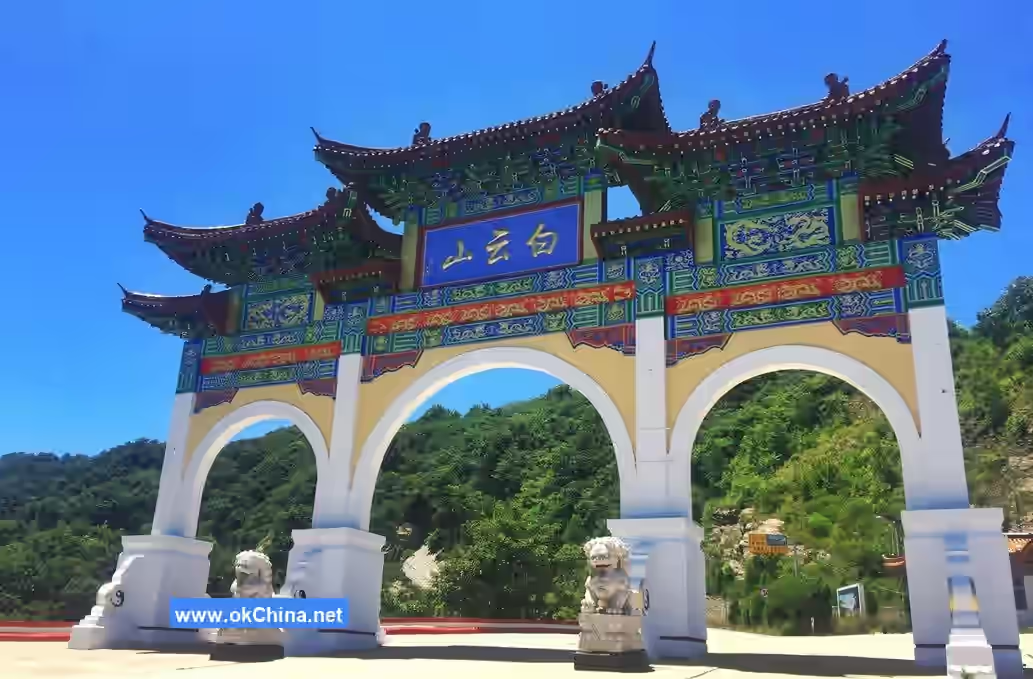
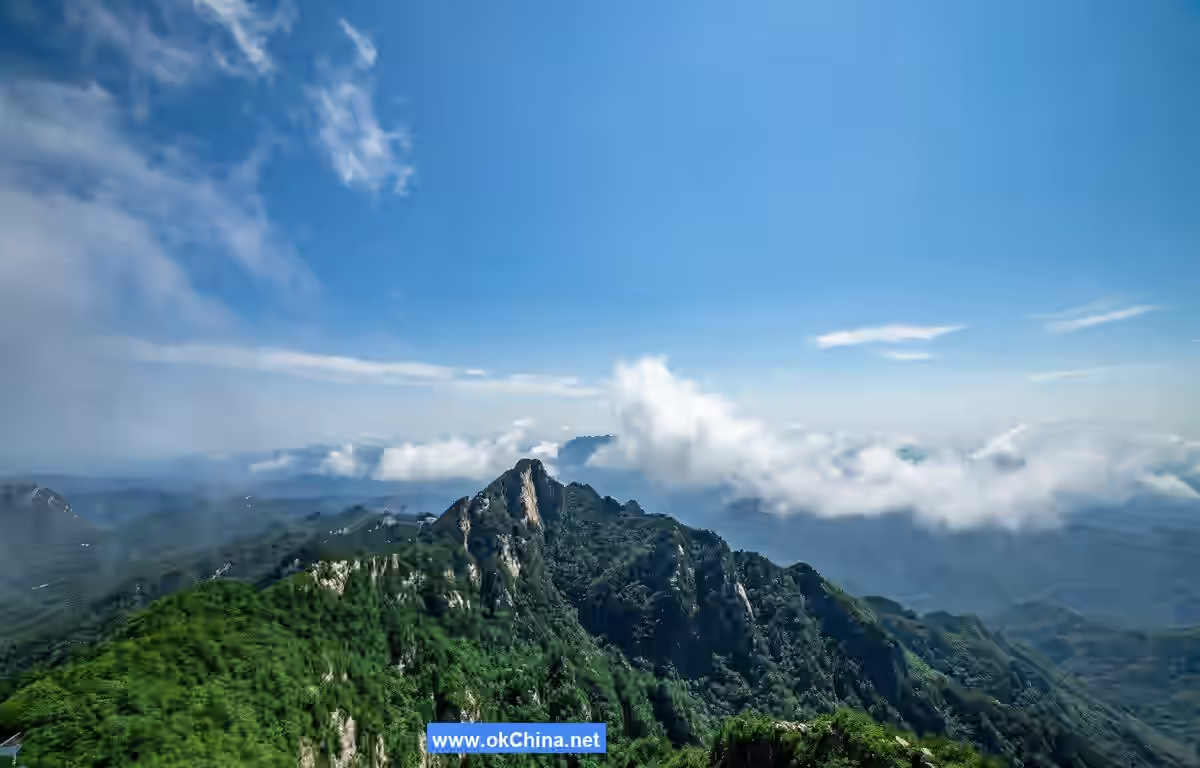
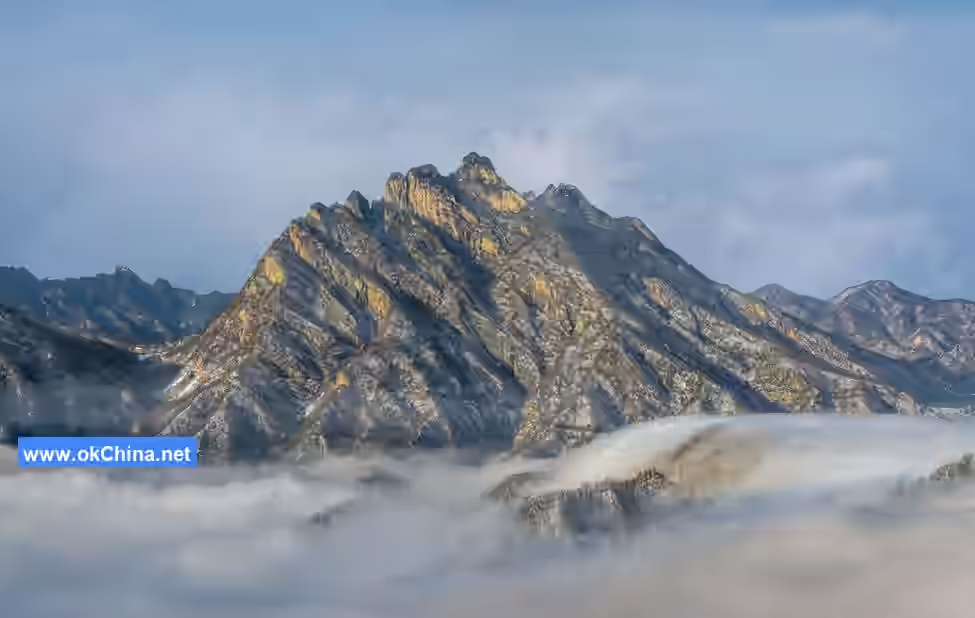
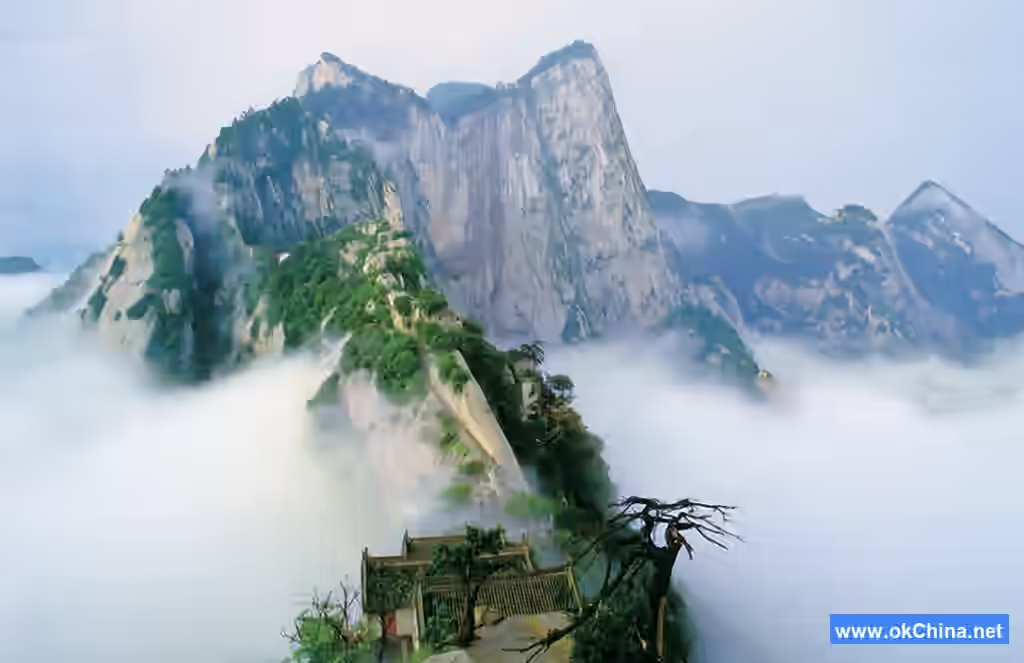
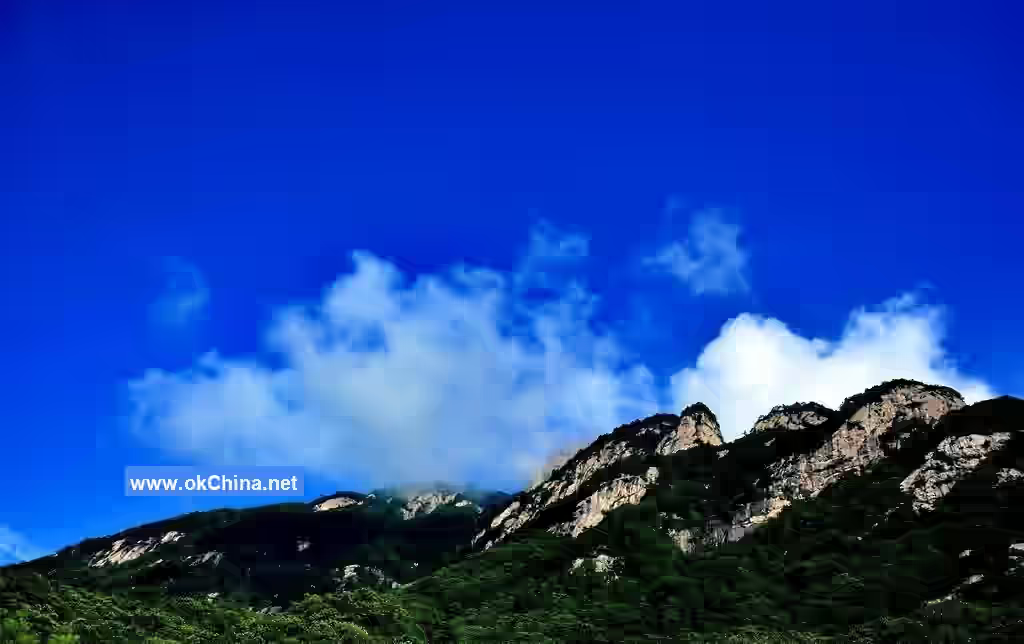
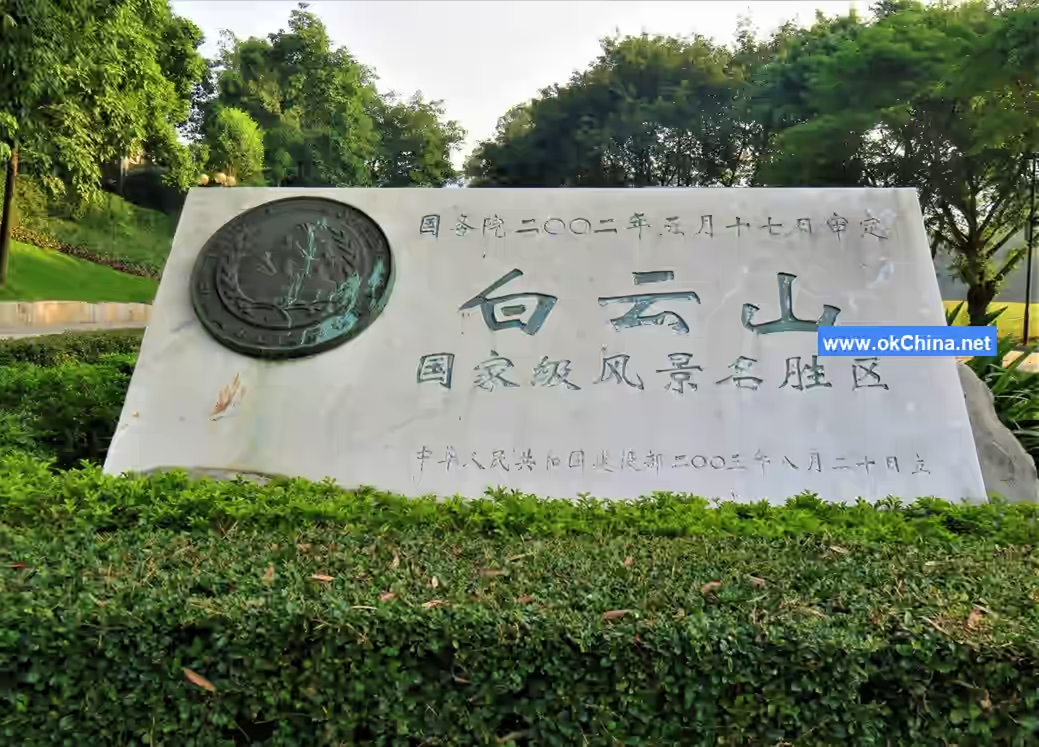
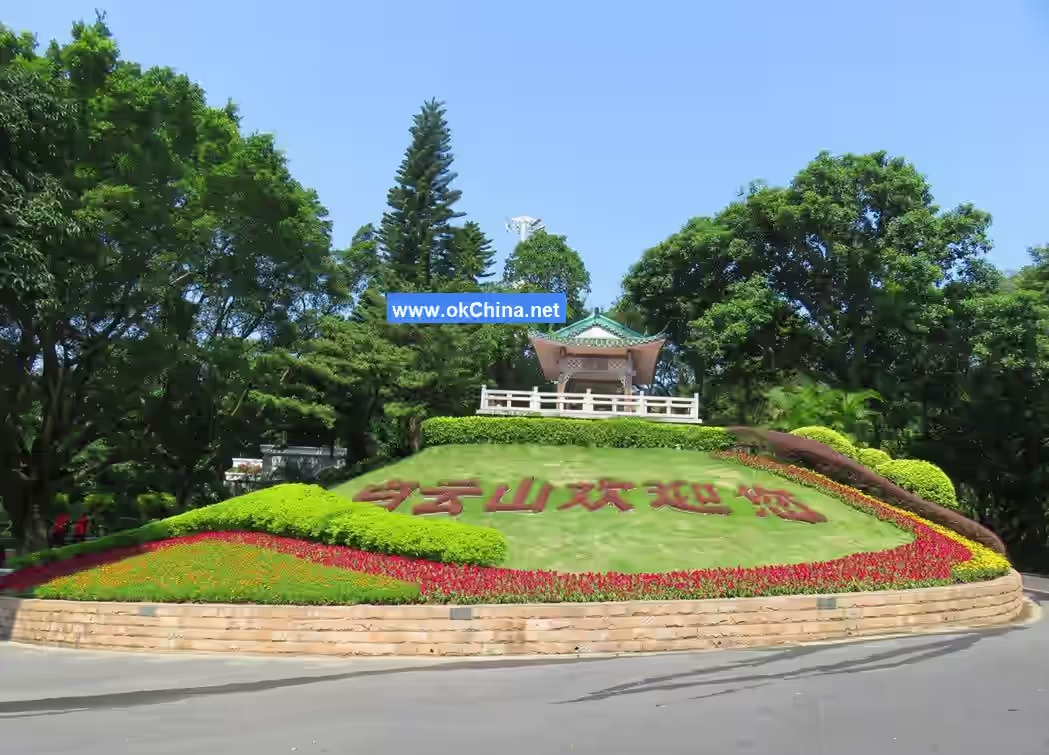
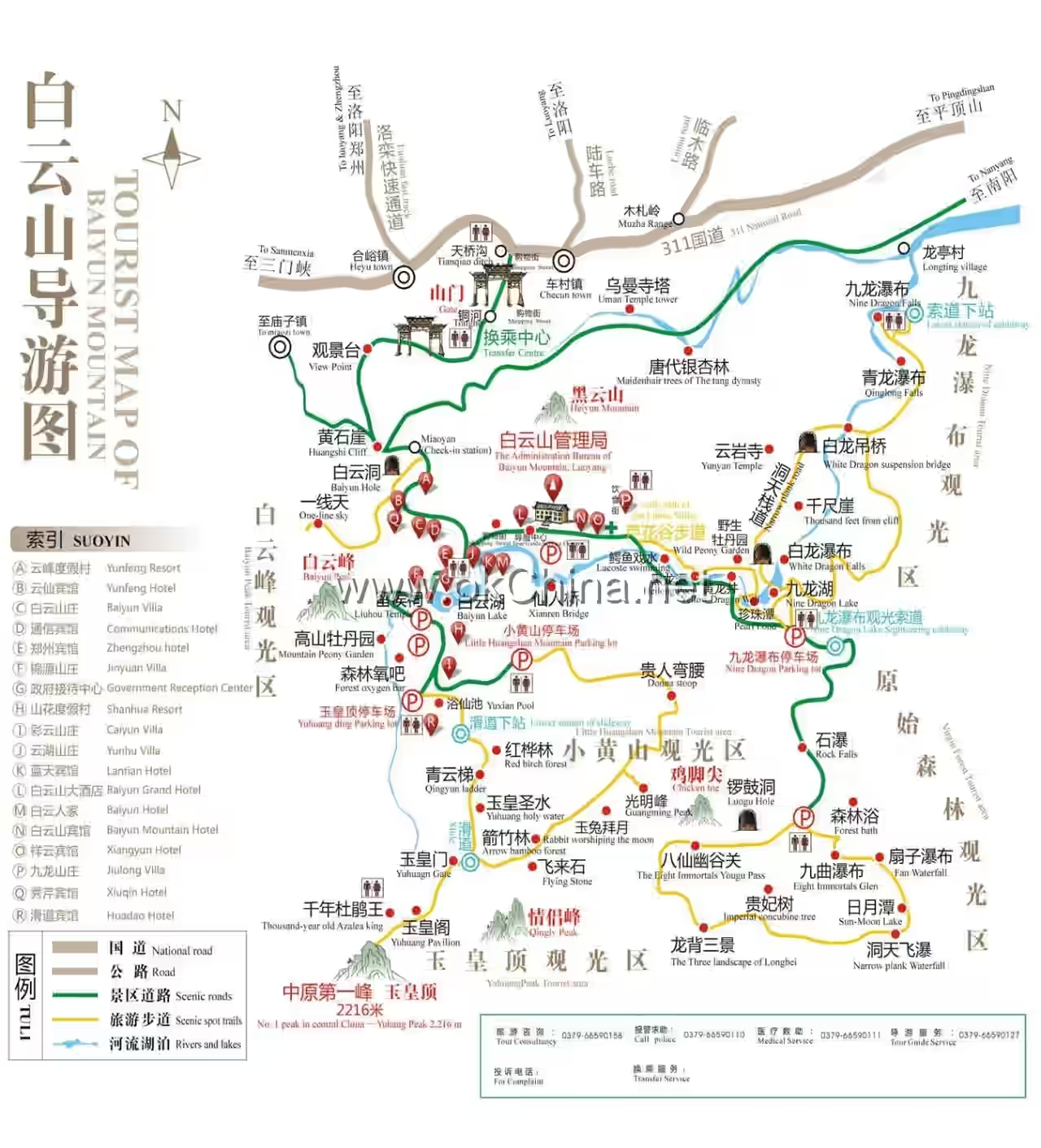
Baiyun Mountain Scenic Area is located at No. 801 Guangyuan Middle Road, Baiyun District, Guangzhou City, Guangdong Province. Situated in the northeastern part of Guangzhou, it covers a total area of 21.8 square kilometers and is classified as an urban mountainous forest ecological scenic area.
Baiyun Mountain features a South Asian tropical monsoon maritime climate characterized by long summers, warm winters, ample sunshine, and abundant rainfall. The mountain has ancient geology and varied topography, with higher elevations in the center and lower elevations to the north and south, sloping from northeast to southwest. Although Baiyun Mountain has a large catchment area, there are no rivers within the scenic area. Surface water is only found in the forms of streams, mountain springs, and reservoirs, while groundwater is relatively abundant, primarily consisting of mountain spring water. Baiyun Mountain boasts rich natural resources, including 1,054 plant species, 23 of which are nationally or provincially protected rare and endangered plants such as Alsophila spinulosa, camphor trees, and Tsoongiodendron odorum. Additionally, 185 insect species, 43 amphibian species, and 16 mammal species have been observed. The historical and cultural heritage of Baiyun Mountain dates back to the Neolithic Age. During the Southern Liang Dynasty, the Jingtai Zen Master built the Jingtai Temple on Baiyun Mountain, leaving behind the scenic spot "Jingtai Monk's Return." During the Ming and Qing dynasties, three of the "Eight Scenic Spots of Yangcheng" were located on Baiyun Mountain. After the founding of the People's Republic of China, successive Guangzhou municipal governments developed the area, leading to the establishment of the Guangzhou Baiyun Mountain Scenic Area Administration. The scenic area is divided from south to north into seven sections: Luhu Lake Tourist Area, Santailing Tourist Area, Mingchungu Tourist Area, and others. Among its attractions, Yuntai Garden, Mingchungu, and Sculpture Park are nationally renowned, while scenic spots such as "Baiyun Pine Waves," "Cloud Mountain Splendor," and "Layered Verdure of Cloud Mountain" have been successively selected as part of the "New Eight Scenic Spots of Yangcheng."
2. Natural Environment
2.1 Location and Territory
Baiyun Mountain Scenic Area is located at No. 801 Guangyuan Middle Road, Baiyun District, Guangzhou City, Guangdong Province. Situated in the northeastern part of Guangzhou, it is approximately 7.5 kilometers from the city center, lying between 23°09′–23°11′ north latitude and 113°16′–113°19′ east longitude. The scenic area covers a total area of 21.8 square kilometers.
2.2 Geology
2.2.1 Formation and Evolution
Scientific measurements indicate that the strata in the Baiyun Mountain area formed during the "Middle Devonian Guitou Group" period, approximately 400 million years ago. During that time, the strata of Baiyun Mountain experienced irregular, banded uplift due to the collision and compression of drifting continental plates, originating from the Conghua direction.
However, the formation of Baiyun Mountain in its true sense occurred about 60 million years ago. At that time, the topography of Guangzhou featured Baiyun Mountain rising as a mountain, with Jurassic shallow-sea sediments intruded by granite. Some sandstone metamorphosed into hard, impermeable quartzite layers, becoming "captive bodies" within the granite mass, which formed the foundation of Baiyun Mountain's cliffs. Simultaneously, the areas on both sides of Baiyun Mountain were lowlands formed by fault subsidence. From present-day Sanyuanli to the old city area, and from the old city area to present-day Shahe, shallow lake basins or large river valleys surrounded Baiyun Mountain, accumulating extensive red rock series. Subsequently, ancient Baiyun Mountain underwent approximately 60 million years of erosion during the Tertiary period, during which the overlying Paleozoic sandstone and shale were eroded away, exposing the solidified granite deep underground.
During the middle of the Tertiary period (approximately 65 million to 2.5 million years ago), the uplift of the Himalayas caused the region where present-day Guangzhou is located to rise and experience faulting. This orogenic movement led to the uplift of parts of Baiyun Mountain and the subsidence of its sides. By the end of the Tertiary period, the crust continued to rise, and the subsided lowlands on both sides of Baiyun Mountain emerged as land. The granite mass of Baiyun Mountain formed the mountainous area, while the sandstone and shale regions preserved in the faulted zones on both sides also formed high hills such as Guanyin Mountain (Yuexiu Mountain), Xianggang, and Shougouling.
Since the Quaternary period (approximately 2.5 million years ago), Baiyun Mountain has experienced three uplifts. The flat summit of the mountain was originally a plain, which later rose along with the crust to become a flat mountaintop. Erosion lowered the higher areas while deposition raised the lower areas, forming another plain, which resulted in the gentle summit of Baiyun Mountain. Due to the presence of hard quartzite forming its peak, Moxing Ridge features several large boulders at the top of its ridge, making it the highest point of Baiyun Mountain.
2.2.2 Geological Structure
Baiyun Mountain belongs to the terminal section of the Jiulian Mountain range, a branch of the Dayu Ridge, one of the Five Ridges. Its geological structure includes folds, faults, and uplift-subsidence movements of the strata, accompanied by magmatic intrusion and metamorphism. Neotectonic movements also caused fractures in the hard rock layers of Baiyun Mountain, with the most notable being the north-south trending Guangzhou-Conghua fault and the Guangzhou-Luofushan fault. The former is visible on the cliff of the eastern slope along the line from Moxing Ridge (the "First Peak of Southern Heaven") to Niuguilan, while the latter is manifested in the metamorphic belt from Xiayushu to Shougouling to Jilonggang.
The exposed strata in Baiyun Mountain mainly include banded migmatite, gneiss, quartzite, and small amounts of sandstone, shale, and granite. The widely exposed strata are primarily metamorphic rocks that have undergone metamorphism and migmatization. Due to the upper sandy rock layers and the underlying magmatic rock support, infiltrating water easily emerges at the junctions of faulted rock layers, forming mountain springs.
2.3 Topography and Landforms
Baiyun Mountain features higher elevations in the center and lower elevations to the north and south, sloping from northeast to southwest. Its landforms are varied, including steep cliffs and deep valleys distributed on the eastern and western slopes. From the viewing points on the summit of Baiyun Mountain, two fault lines are visible when looking north and east, while multiple deep gullies with steep slopes and relative depths of about 100 meters can be seen when looking west.
Baiyun Mountain is a branch of the Jiulian Mountain range extending southwestward, consisting of over 30 peaks, with the main peak, Moxing Ridge, reaching an elevation of 382 meters. It is a mountain block formed by fault uplift, belonging to the hilly terrain of southern China. The topography is slightly rectangular, trending northeast-southwest, with a width of about 4 kilometers from east to west and a length of about 7 kilometers from north to south. From an aerial view, Baiyun Mountain resembles a "flat bean pod." As the slopes formed along the fault lines in the angular zone between the Guangcong fault and the Guangzhou-Luofushan fault, the southeastern and northwestern slopes of Baiyun Mountain are long, straight, and steep.
2.4 Climate
Baiyun Mountain Scenic Area is located south of the Tropic of Cancer and features a South Asian tropical monsoon maritime climate. The climate is mild, with long summers, warm winters, abundant rainfall, and ample sunshine. The average annual temperature in the mountainous area is 21.8°C, with an average July temperature of 28.4°C and an extreme maximum temperature of 38.1°C. The average January temperature is 13.3°C, with an extreme minimum of 0°C. The frost-free period lasts 345 days, and the annual rainfall is 1,694 millimeters, with rainfall from April to September accounting for 82.1% of the annual total.
2.5 Hydrology
Baiyun Mountain Scenic Area has a large catchment area but no rivers within its boundaries. Surface water is only found in the forms of streams, mountain springs, and reservoirs. Mountain streams flow in all directions according to the terrain, forming a feather-like distribution. The source streams are short, with clear water, typically only 2 to 3 kilometers long and with low flow rates. However, flash floods may occur after heavy rainstorms. Groundwater in Baiyun Mountain is relatively abundant, primarily consisting of mountain spring water.
2.6 Biodiversity
Baiyun Mountain Scenic Area serves as a gene pool for Guangzhou's urban ecological resources, flora, and fauna. Its green coverage exceeds 95%, with a total of 1,054 plant species and 23 forest vegetation communities. Among them, 23 species are nationally or provincially protected rare and endangered plants, such as Alsophila spinulosa, camphor trees, Tsoongiodendron odorum, and Cibotium barometz. Additionally, 185 insect species, 43 amphibian species, and 16 mammal species have been observed. There are 228 species of wild birds and artificially bred rare birds, including nationally and provincially protected wildlife such as peacocks, red-crowned cranes, tiger-striped frogs, and marsh frogs.
3. Key Attractions
3.1 Luhu Lake Scenic Area
3.1.1 Luhu Lake Park
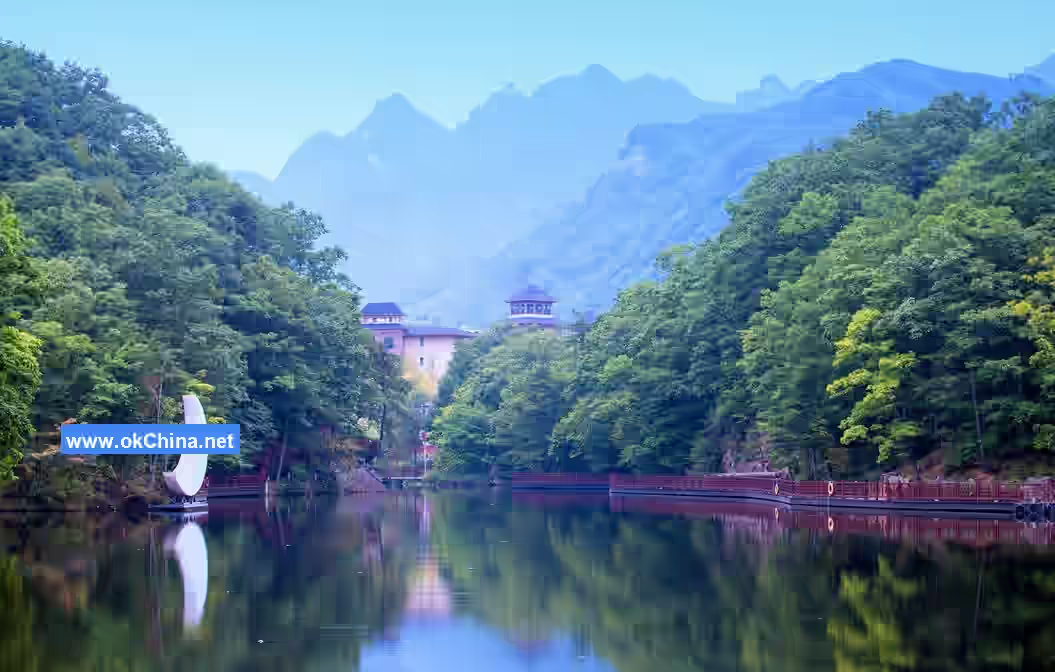
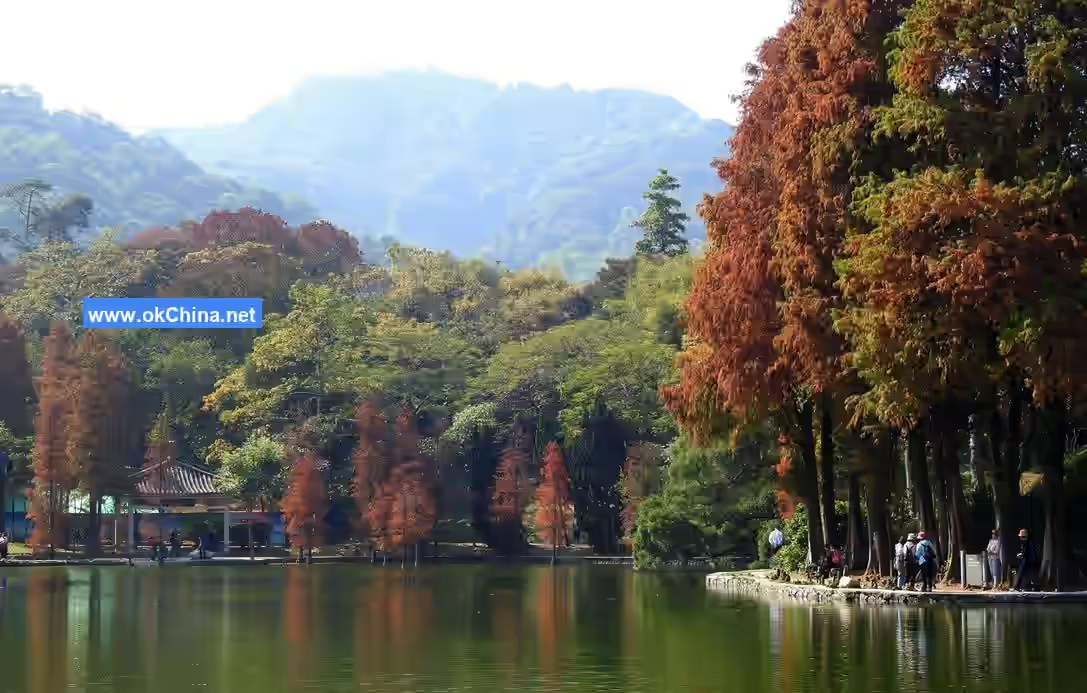
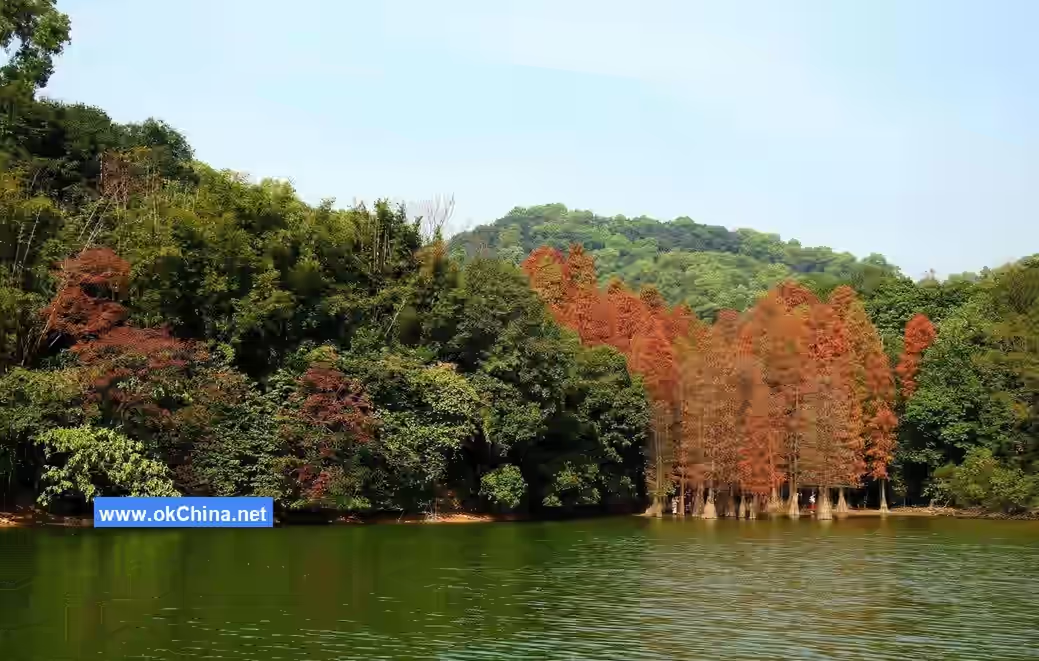
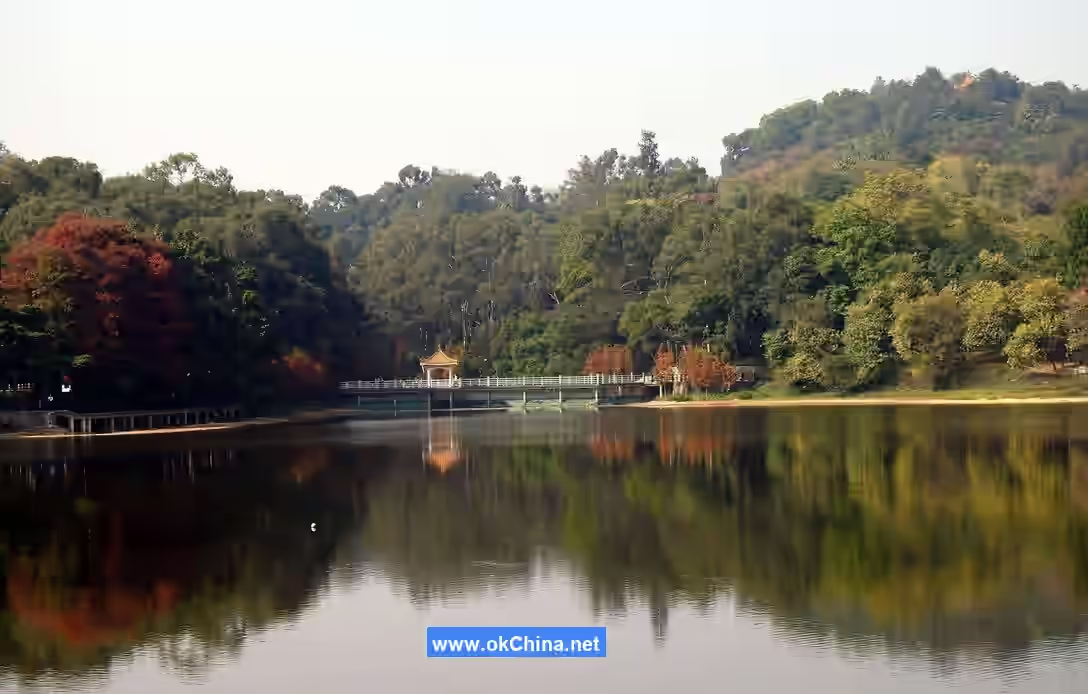
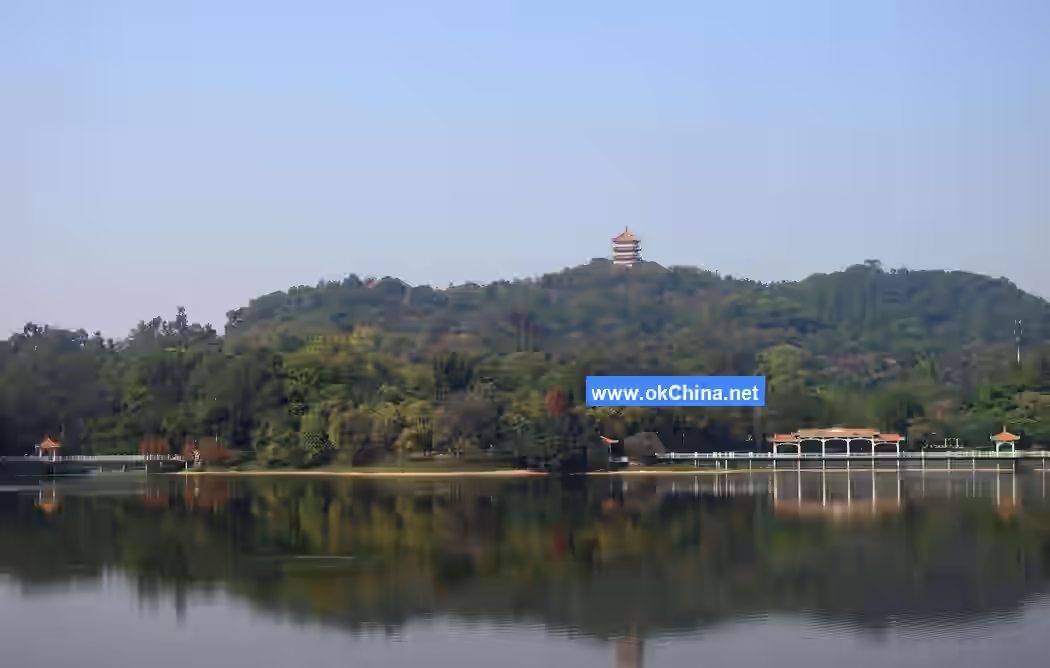
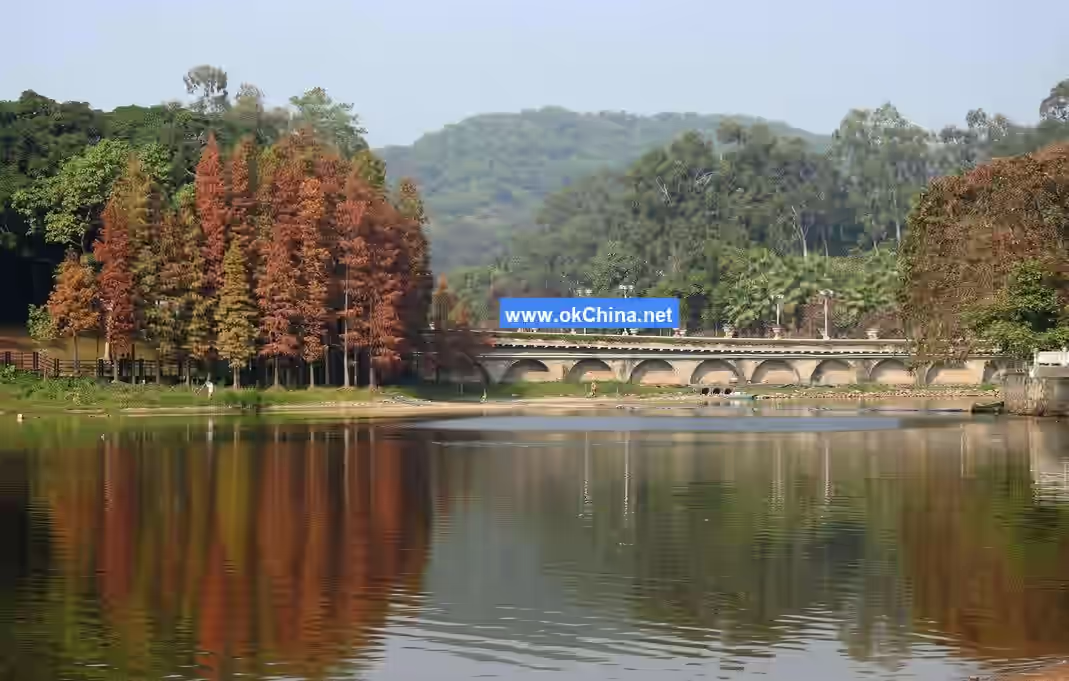
Luhu Lake Park is located in the northern part of Guangzhou and at the southern end of Baiyun Mountain Scenic Area. It covers an area of 2.05 million square meters, with the water body of Luhu Lake occupying 210,000 square meters. After years of development, the park has gradually become a large urban landscape garden renowned for its lake and mountain scenery. Attractions within the park include Jufang Garden, Children's Playground, Xinghai Garden, and Baiyun Xianguan.
3.1.2 Honghu Tower
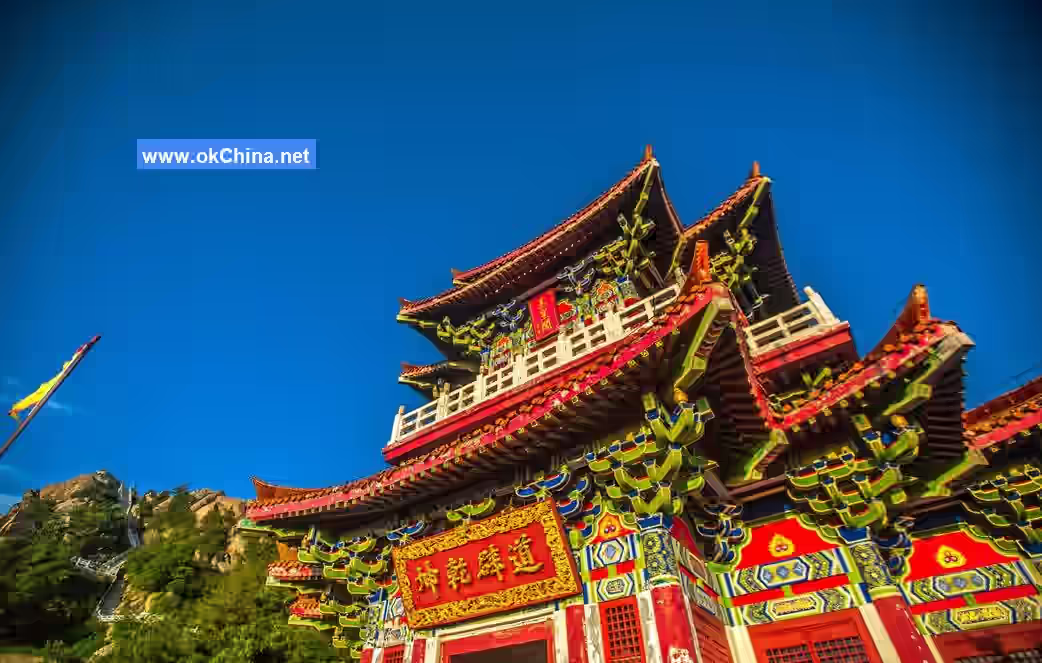
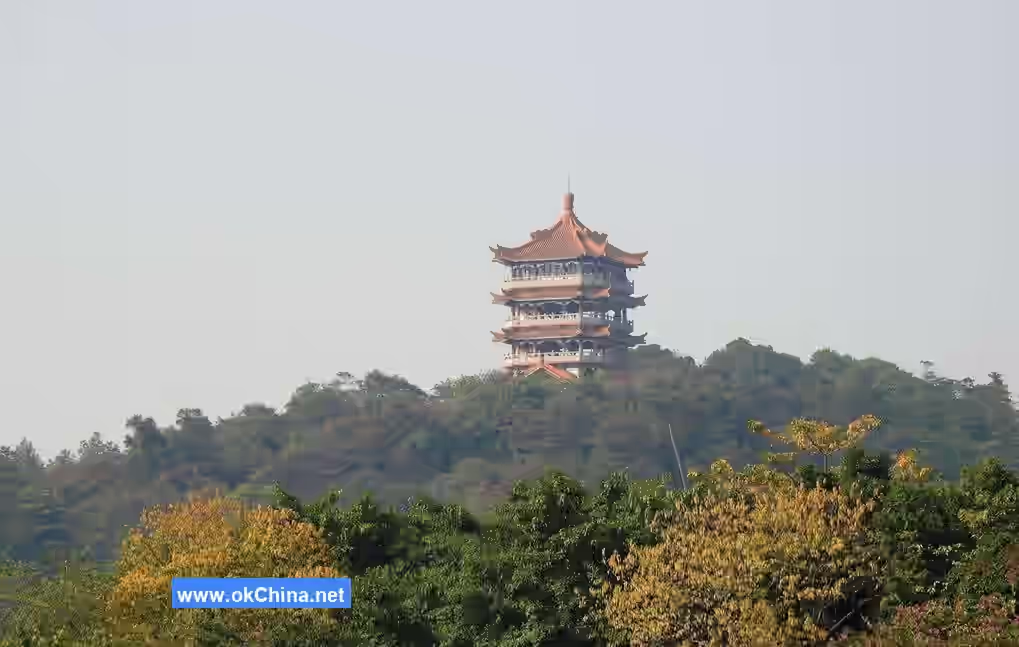
Honghu Tower is a five-story Chinese-style pavilion with a frame structure. It covers a construction area of 158 square meters, with a total building area of 548 square meters and a height of 24.5 meters. It is one of the larger classical-style buildings in Guangdong Province. Built in 1987, Honghu Tower is the tallest garden structure in Guangzhou, earning it the title "First Tower of the Pearl River and Cloud Mountain." An inscription on the tower reads, "Standing in rain and shine, Luhu Lake and Honghu Tower form a pair of masterpieces; swaying in wind and moon, the Pearl River and Cloud Mountain boast the first tower." This is inspired by the saying, "In the north, there is the Yellow Crane Tower; in the south, there is Honghu Tower."
3.1.3 Xinghai Garden
Xinghai Garden is located on the western shore of Luhu Lake, covering an area of approximately 15,000 square meters. It was built to commemorate the people's musician Xian Xinghai and was inaugurated on December 1, 1985, along with a ceremony for the relocation of Xian Xinghai's ashes. The garden is surrounded by lush green hedges and features monuments, tomb pathways, statues, memorial halls, commemorative corridors, a 70-meter-long tomb pathway, and a spacious platform. A bust of Xian Xinghai rests on a reddish-brown marble base, with part of his ashes placed beneath it. A 300-square-meter exhibition room displays Xian Xinghai's life achievements. To accommodate youth activities, a 1,000-square-meter outdoor activity area outside the garden includes facilities such as badminton courts, bocce courts, and outdoor fitness equipment.
3.2 Santailing Scenic Area#### 3.2.1 Yuntai Garden
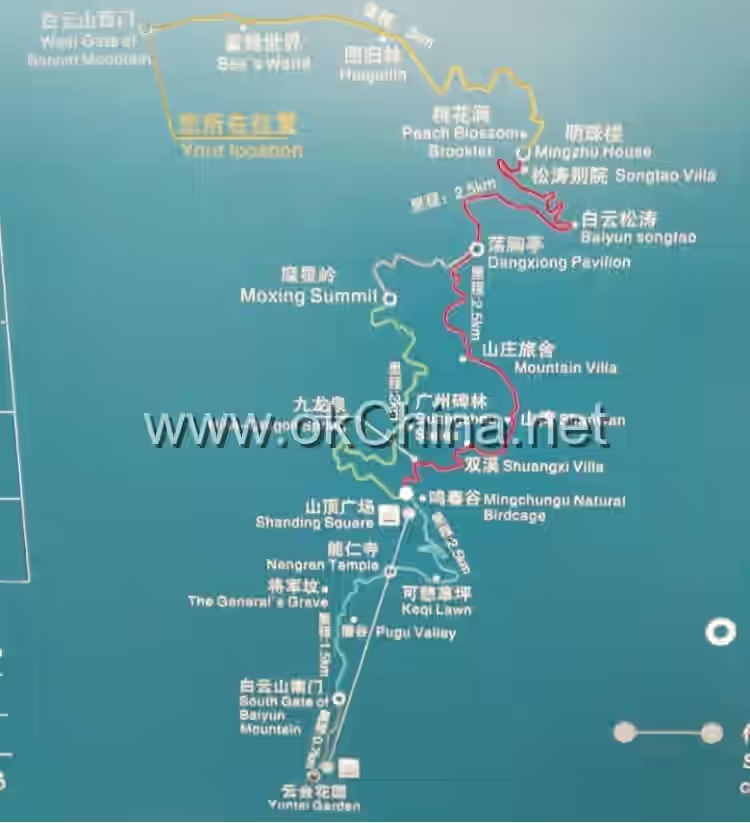
Yuntai Garden is situated at the southern foot of Baiyun Mountain, covering an area of 250,000 square meters. It derives its name from the Yuntai Ridge of Baiyun Mountain behind it and the collection of precious Chinese and foreign flowers that bloom in all seasons within the garden. It is the largest Western-style garden in China. Modeled after the world-renowned Butchart Gardens in Canada, Yuntai Garden was opened to the public on September 28, 1995. Its completion ended the history of the "City of Flowers" having no major garden, earning it the reputation as the "Pearl of the Flower City." The overall layout of Yuntai Garden is centered on a grand staircase and a terraced light fountain that greet visitors upon entry, forming the central axis. The garden features uniquely shaped famous trees and flowers that bloom throughout the year, hosting over 20 scenic spots including "Cascading Rainbow Falls," the Ground Fountain Square, and Yan Lake.
3.2.2 Cascading Rainbow Falls
"Cascading Rainbow Falls" is a set of terraced light fountains and serves as the main axial attraction of Yuntai Garden. Water flows gently down 101 glass steps between two staircases, resembling a distant waterfall. Under the illumination of night lights, the flowing water shimmers with golden and colorful hues, like a rainbow river, hence the name "Cascading Rainbow Falls."
3.2.3 Rose Garden
The Rose Garden is the largest rose viewing garden in the Guangdong region. It cultivates nearly ten thousand roses of over a hundred varieties, including Black Rose, Double Delight, Just Joey, and Princesse de Monaco, ensuring blooms throughout the four seasons. Visitors can find diamond roses as small as a finger, champion red roses with diameters up to 20 centimeters, and rare century-old tree stump roses within the Rose Garden.
3.2.4 Friendship Garden
The Friendship Garden is an important window showcasing Guangzhou's achievements in city diplomacy. The garden displays gifts presented to the Guangzhou Municipal Government by its international sister cities, including a small wooden cabin from Linköping, Sweden; the "Eternal Power" stone sculpture from Auckland, New Zealand; and the "Large Wine Pot" from Frankfurt, Germany.
3.3 Mingchun Valley Scenic Area
3.3.1 Nengren Temple
Nengren Temple is located on the left side of the mountain road at the southern foot of Baiyun Mountain, nestled within Yuhong Cave. Surrounded by mountains on three sides, it covers an area of 10,000 square meters. Built during the Xianfeng and Tongzhi reigns of the Qing Dynasty, the temple was restored with investment from the Guangzhou Municipal Government in 1993 and opened to the public in May 1995. The temple complex includes the Mahavira Hall and Ciyun Hall, housing 34 Buddha statues and 11 couplets. Key historical sites include Hupao Spring, Ganlu Spring, Yuhong Pond, Liuyun Piaoyue, and an ancient bridge. There is also a 2-meter high, 1-meter wide red character for "tiger" (虎) written in a single stroke by Liu Yongfu, the Black Flag General and hero of the resistance against the French.
3.3.2 First Peak of the Southern Sky
The First Peak of the Southern Sky is located on the eastern side of the central part of the Mountain Top Park and is one of the most famous scenic spots on Baiyun Mountain. Developed early, a renowned Buddhist temple was established here as early as the Tianjian era (502–509 AD) of Emperor Wu of the Liang Dynasty during the Southern Dynasties. The site features a granite memorial archway, the only well-preserved ancient archway among Baiyun Mountain's historic structures. Its plaque is inscribed with "First Peak of the Southern Sky." Originally built by Tao Ding, a Transport Commissioner of the Song Dynasty, as a signpost for ascending Moxing Ridge, it was once the essential route to the peak. With the development of Baiyun Mountain, its function as a guide has long faded. The archway has been renovated twice by later generations and now stands as an independent attraction. The mountain where the archway sits has an elevation of about 200 meters and is not the highest peak of Baiyun Mountain. A couplet on the archway's pillars reads: "Clouds part to reveal three thousand realms beyond the world; The cliff leans against the First Peak of the Southern Sky," which is a couplet inspired by the "Cloudy Cliff" scenic spot.
3.3.3 Cloudy Cliff
Cloudy Cliff, also known as Zhengxian Cliff, is located on the eastern cliffside of Baiyun Mountain's summit, below the First Peak of the Southern Sky. With steep cliffs above and precipices below, it is said to be the place where Zheng Anqi ascended to heaven on a crane. To the right of its entrance are the four characters "Hong Chen Bu Dao" (Beyond the Mundane World), written by Deng Wanlin of Changsha in the 22nd year of the Guangxu reign of the Qing Dynasty (1896).
3.3.4 Mingchun Valley
Mingchun Valley is situated in the Dishuiyan Valley between the "First Peak of the Southern Sky" and "Nine Dragon Spring" on Baiyun Mountain. Covering an area of 56,000 square meters, it is the largest natural birdcage in China and the second largest in Asia. Its name is derived from the meaning "thus birds herald the spring" from the Tang Dynasty poet Han Yu's "Preface to Seeing Off Meng Jiaoye." Mingchun Valley is divided into six sections: the Bird Specimen Exhibition Room, the Large Aviary Scenic Area, the Rare Bird Exhibition Area, the Songbird Perch Corridor, the Bird Training Performance Area, and the Dishuiyan Natural Scenic Area. It houses over 5,000 birds of more than 150 species, including Red-crowned Cranes, Swans, Peacocks, Yellow-bellied Tragopans, and Blue Eared Pheasants. Consequently, it has earned the nickname "Little Birds' Paradise." In 1995, Mingchun Valley was recognized as a "China's Best" by the Development Research Center of the State Council, hence its title as "China's Largest Natural Birdcage."
3.4 Moxing Ridge Scenic Area
3.4.1 Nine Dragon Spring
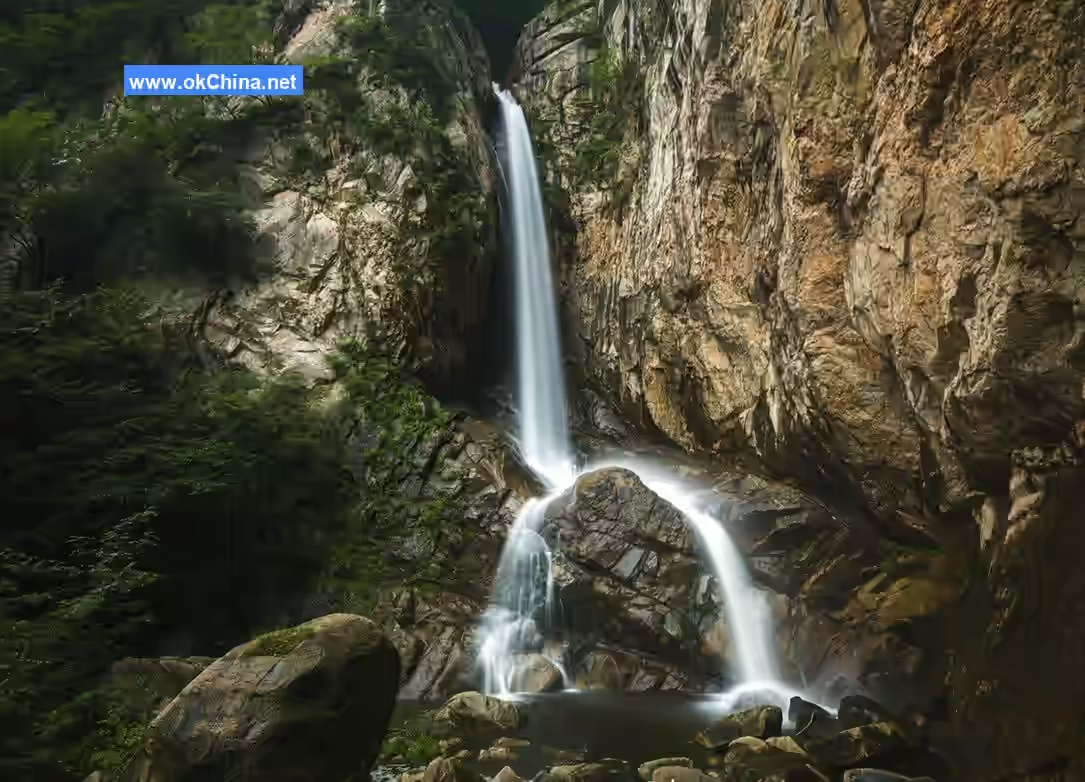
"Nine Dragon Spring," also called "Anqi Well," is located within the Forest of Steles on Moxing Ridge of Baiyun Mountain and is the most famous spring on the mountain. Legend has it that during the Qin Dynasty, Zheng Anqi came to Baiyun Mountain to gather herbs but found no spring. One day, nine plump, fair-skinned children suddenly appeared playing on the mountain. Shortly after, the nine children transformed into nine colorful dragons and soared into the sky. At the spot where the children had appeared, a spring welled up, gushing with water. Zheng Anqi then dug it into a well for public use, and thus it was named Nine Dragon Spring. The spring has a large flow of clear, sweet water, and the waterfall below resembles curtains of large and small pearls, making it a famous scenic spot. Since the Tang Dynasty, it has been a place for Guangzhou residents to pray for rain. Nearby structures like the Nine Dragon Nunnery and the Dragon King Shrine once existed but are no longer present.
The well mouth has a diameter of about 1.1 meters, rimmed with a hexagonal granite railing. The spring is surrounded by dragon-pillar railings and features a granite stele inscribed in running script with "Nine Dragon Spring," approximately 2.3 meters high. Both the stele and railings were constructed during the Qing Dynasty. Additionally, a "Nine Dragon Circulating Fountain" is installed beside the well, and a 14-meter long, 4-meter high "Nine Dragon Wall" is installed at the entrance archway. This wall is carved from 32 pieces of Fujian bluestone, with a total weight exceeding 30 tons.
3.4.2 Guangzhou Forest of Steles
The Guangzhou Forest of Steles is located on the slope above the Nine Dragon Spring well to the foot of Moxing Ridge. Its predecessor was Baiyun Temple, built during the Song Dynasty. Baiyun Temple was one of Guangzhou's ancient temples with a long history, destroyed during the War of Resistance against Japan. The Guangzhou Forest of Steles was newly constructed on the site of Baiyun Temple, breaking ground in April 1992 and opening in October 1994, with a total area of 16,000 square meters. The Forest of Steles is laid out using an artistic form that combines indoor tablet placement, outdoor stele erection, and cliff-face inscriptions, integrated with garden landscaping. It is divided into three areas: the Cliff Carving Area, Nanya Hall, and Xianheixuan Pavilion, displaying nearly 300 stone tablets. These include excellent poems and calligraphy works by historical scholars, modern poets, and calligraphers praising the scenery of Lingnan, the City of Rams (Guangzhou), and Baiyun Mountain.
3.4.3 Moxing Ridge
Moxing Ridge was originally named "Biyun Peak." Located between Sujia Ancestral Hall and Longhu Gang on Baiyun Mountain, with an elevation of 382 meters, it is the highest peak of Baiyun Mountain and the foremost among its over 30 peaks. It can be accessed from Qixia Ridge to the Moxing Ridge gate tower. Before the Song and Ming dynasties, it was not called "Moxing Ridge" but was known as the "First Mountain." The Kangxi-era "Guangdong Gazetteer" depicted a map of Baiyun Mountain labeling this peak as "Moxing Ridge," and the name has been used since.
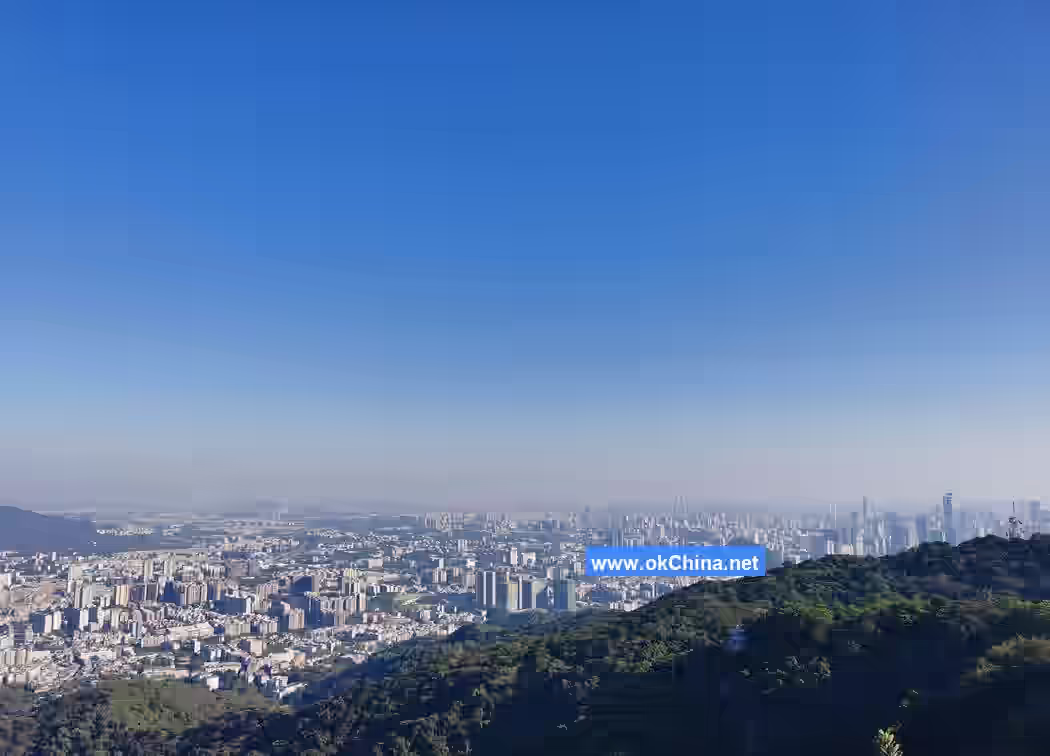
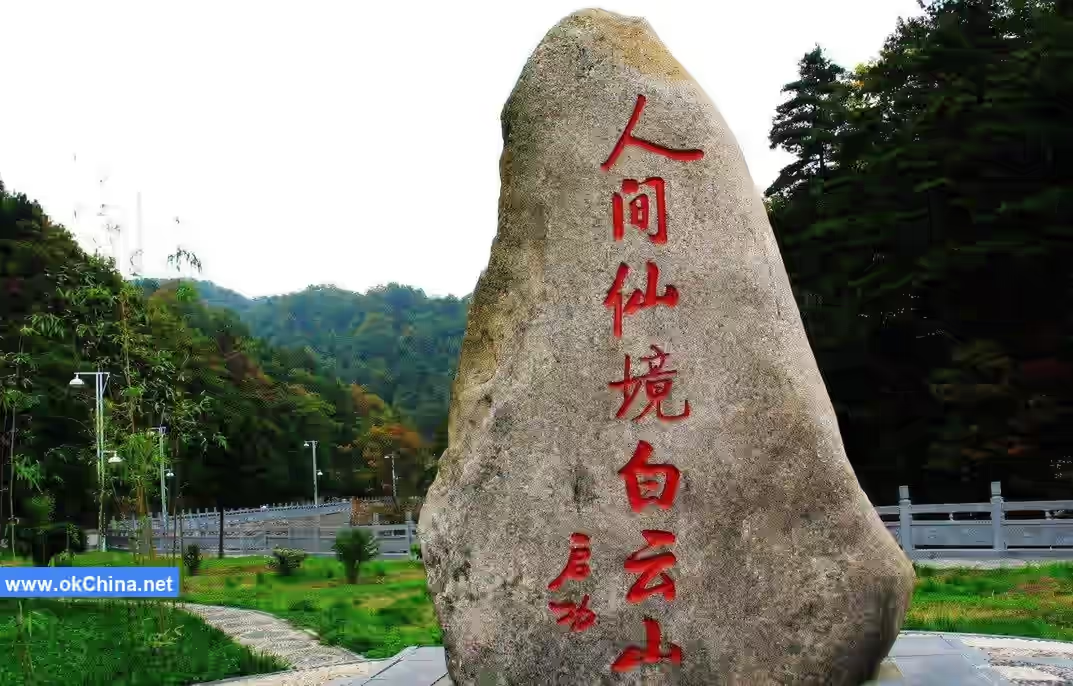
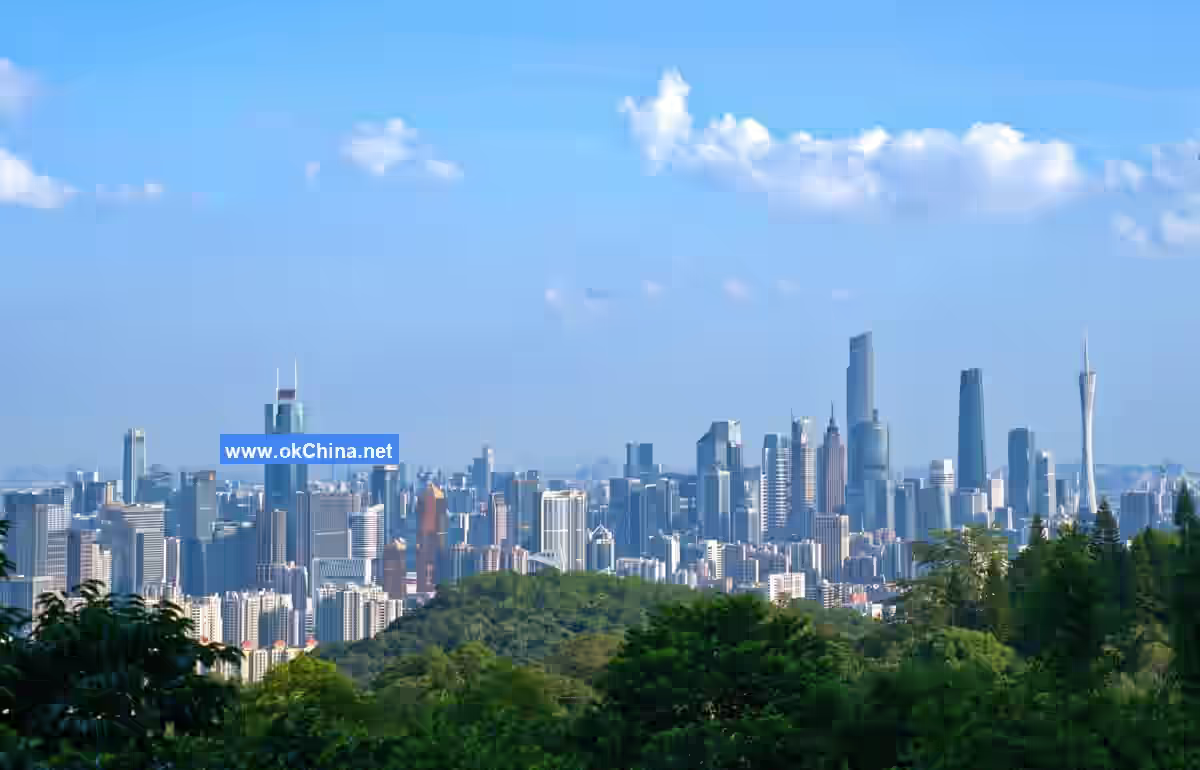
Ascending Moxing Ridge offers different views depending on the weather. On clear days, one can overlook Guangzhou city and the Pearl River Delta plain. About 100 meters from the Moxing Ridge entrance gate, there is a large sculpted stone inscribed with the three characters "Mo Xing Ling" (Moxing Ridge). It is 6 meters high and 4 meters wide, totaling 10 meters, symbolizing perfection and auspicious fortune, hence called the "Auspicious Star Stone." The four characters "Jin Xiu Nan Tian" (Splendid Southern Sky) on the Moxing Ridge archway were inscribed by Chairman Zhu De when he visited Baiyun Mountain in 1965.
3.5 Mingzhu Tower Scenic Area
3.5.1 Baiyun Pines and Surging Waves
Baiyun Pines and Surging Waves is located along the North Baiyun Mountain Road and was selected as one of the "Eight Scenic Spots of Yangcheng" in the 1960s and 1970s. The four characters "Bai Yun Song Tao" (Baiyun Pines and Surging Waves) carved on yellowish-white quartzite are the personal inscription of Dong Biwu, a veteran proletarian revolutionary, from his visit in January 1965. It is said that Comrade Tao Zhu particularly enjoyed listening to the sound of the wind in the pines here during his lifetime and left behind the famous prose piece "The Character of the Pine Tree." This spot originally featured extensive forests of Masson pines. However, due to the aging of the Masson pine species and susceptibility to pests and diseases, which reduced their ornamental value, they were replaced with a superior species—the Caribbean pine. This pine forest covers approximately 330,000 square meters and, after over a decade of robust growth, has restored the magnificent spectacle of a vast sea of trees.
3.5.2 Peach Blossom Stream
Peach Blossom Stream is located in the central scenic area of Mingzhu Tower and is primarily an attraction for viewing peach blossoms. It underwent two major expansions and renovations of its terrain in 1999 and 2011, now covering about 50,000 square meters. Legend has it that in ancient times, a wise man, disillusioned with the mundane world, came to Baiyun Mountain. He happened upon this beautiful landscape with clear waters and verdant hills, was captivated, and decided to live in seclusion there. He took pleasure in planting peach trees, and over time, peach blossoms spread all over the mountains and fields, hence the name "Peach Blossom Stream." The garden is designed as a Chinese-style freehand landscape garden, drawing its conceptual主线 from the Eastern Jin Dynasty poet Tao Yuanming's "Peach Blossom Spring." It cultivates various peach blossom varieties such as White Peach, Shoudai Peach, Crimson Peach, and Flat Peach. Scenic spots within include the Pebble Beach, Lianli Pavilion, Peach Blossom Islet, and a stele inscribed with "The Peach Blossom Spring." Equipped with pavilions, corridors, sculpted stones, and flowing streams, it has become a place for enjoying scenery and leisurely recreation.#### 3.5.3 Plum Blossom Valley Located north of Huangpodong Reservoir and covering an area of 50,000 square meters, Plum Blossom Valley is a scenic spot integrating mountain forest ecology, tourism landscapes, and cultural leisure. It was opened to the public in January 2004. Among the nearly one thousand plum trees in the valley, there are over 460 fruit plum trees, over 120 beauty plum trees, 34 heralding spring plum trees, over 30 apricot trees, and over 150 plum blossom trees. The weeping plum, with branches drooping like willow twigs contrary to typical plum trees, is particularly ornamental. The large-fruit plum, featuring a two-layer canopy and a breast-height diameter of 30 cm, is one of the main attractions in the valley. At the entrance, four artistically shaped plum trees are uniquely beautiful, each valued at several thousand yuan.
3.6 Heyi Ridge Scenic Area
3.6.1 Overview
The Heyi Ridge Tourist Area, also known as Yunxi Ecological Park, is the largest free open park in Guangzhou. The park was completed in September 2001 and officially opened to the public on October 1st, National Day, of the same year. Yunxi Ecological Park consists of three main parts: the Fruit Fragrance Garden, the Cascading Water Garden, and the Lotus Viewing Garden, covering a total area of 280,000 square meters, with green spaces accounting for 258,000 square meters.
3.6.2 Fruit Fragrance Garden
Developed from the former Fruit Tree Science Research Institute with adjustments and additional plantings, the Fruit Fragrance Garden primarily cultivates Lingnan fruits such as lychee, longan, mango, and carambola.
3.6.3 Cascading Water Garden
The Cascading Water Garden is the park's main attraction. It was designed and built based on the original three ponds and the valley terrain, forming a cascading water stream with natural water bodies. The murmuring stream flows down like a cloud-wrapped brook, giving the park its name "Yunxi" (Cloud Stream). Both sides of the stream are planted with numerous flowering shrubs and waterside plants, which, together with water onions, water lilies, and bald cypress in the water, create a rich, multi-layered, and colorful tropical wetland landscape.
3.6.4 Lotus Viewing Garden
The Lotus Viewing Garden features a Large Hibiscus Garden and a Lotus Viewing Pond. The Large Hibiscus Garden cultivates 32 varieties of hibiscus, each growing differently due to their distinct species. The Lotus Viewing Pond is primarily for admiring lotuses, with various colored lotuses and water lilies planted within.
3.7 Fei'e Ridge Scenic Area
3.7.1 Guangzhou Sculpture Park
Located west of Fei'e Ridge in Baiyun Mountain, Guangzhou Sculpture Park covers an area of 460,000 square meters. Construction began in 1996 to grandly celebrate Guangzhou's 2210th anniversary. This park is one of Guangzhou's civilized parks, the city's only sculpture-themed park, and the largest thematic sculpture park in China, hailed as Guangzhou's "green history book." It combines sculpture with gardens, viewing with education, and art with history, using sculptural art to document over 2000 years of Guangzhou's history and culture. Major sculpture works include "Pillars of China," "Grand Sculpture Plaza," and "Glory of the Ancient City."
3.7.2 Xihua Well
Xihua Well, also known as "Jipa Well," is located west of the sculpture piece "Guangzhou Customs Street." Spring water flows from rock crevices in the well, renowned for its excellent quality and dubbed the "Number One Spring in Lingnan." Legend has it that in ancient times, when the city lacked fresh water, people from Liwan and farmers from Sanyuanli area carried water from Xihua Well for drinking. Huang Jianyan, author of the Ming Dynasty's "Guangzhou Water Records," stated after tasting famous wells in Guangzhou that this well ranked as the number one spring. The characters "西华井" (Xihua Well) are carved on the rock above the spring. Today, the well is enclosed with stones for protection.
3.7.3 Shuangxi Villa
Shuangxi Villa is located within the North Mountain Scenic Area of Baiyun Mountain Scenic Area, situated at the foot of Biyun Peak. It was built in 1963 on the site of Shuangxi Temple, one of the ten major temples of Baiyun Mountain. Shuangxi Temple was a famous ancient temple on Baiyun Mountain, destroyed during the War of Resistance against Japan. "Shuangxi" (Two Streams) refers to the two small streams that once flowed around the original temple, named Ri Stream and Yue Stream. Historically, "two waters flowed around and cascaded down from the temple, with waterfalls intermingling over the streams," but they have long since dried up. Shuangxi Villa is a single-story brick-and-wood structure divided into Block A and Block B, intended as a detached courtyard of the Baiyun Mountain Villa Lodge for receiving distinguished guests.
The two villas are built on steep slopes. The entrance gatehouse bears the inscription "双溪" (Shuangxi) handwritten by Marshal Zhang Yunyi. The inner courtyard has a height difference of 15 meters, with houses arranged in a picturesque disorder. The combination of flat roofs and gently sloping roofs, along with white walls, ice-crack patterned stone masonry, and lattice windows, embodies the characteristics of modern Lingnan architecture. In 1965, Premier Zhou Enlai and Vice Premier Chen Yi stayed at Shuangxi Villa while meeting with Indonesian First Vice Prime Minister Subandrio at the Villa Lodge. In 1993, the villa won the Excellent Architectural Creation Award from the Architectural Society of China. In January 2014, it was included in Guangzhou's first batch of historical building lists. In 2019, it was selected for the "Fourth Batch of Chinese 20th-Century Architectural Heritage List." As one of the historical building protection and utilization pilot projects organized by the Guangzhou Municipal Planning and Natural Resources Bureau, the Shuangxi Villa protection and restoration project also won the 2019-2020 Architectural Design Award from the Architectural Society of China.
3.7.4 Maori Sports and Culture Village
The Maori Sports and Culture Village is a folk village integrating leisure, sports, entertainment, tourism, and shopping. It organically combines New Zealand Maori culture and its regional customs with Maori sports. Ancient Maori houses are scattered picturesquely within the village. Visitors can experience New Zealand Maori customs and cultural atmosphere, watch Maori song and dance performances, and participate in various Maori leisure and fitness sports, such as Maori bungee jumping, alpine slide (also known as dry land sledding), and alpine grass skiing.
3.7.5 Baiyun Dawn Viewing Pavilion
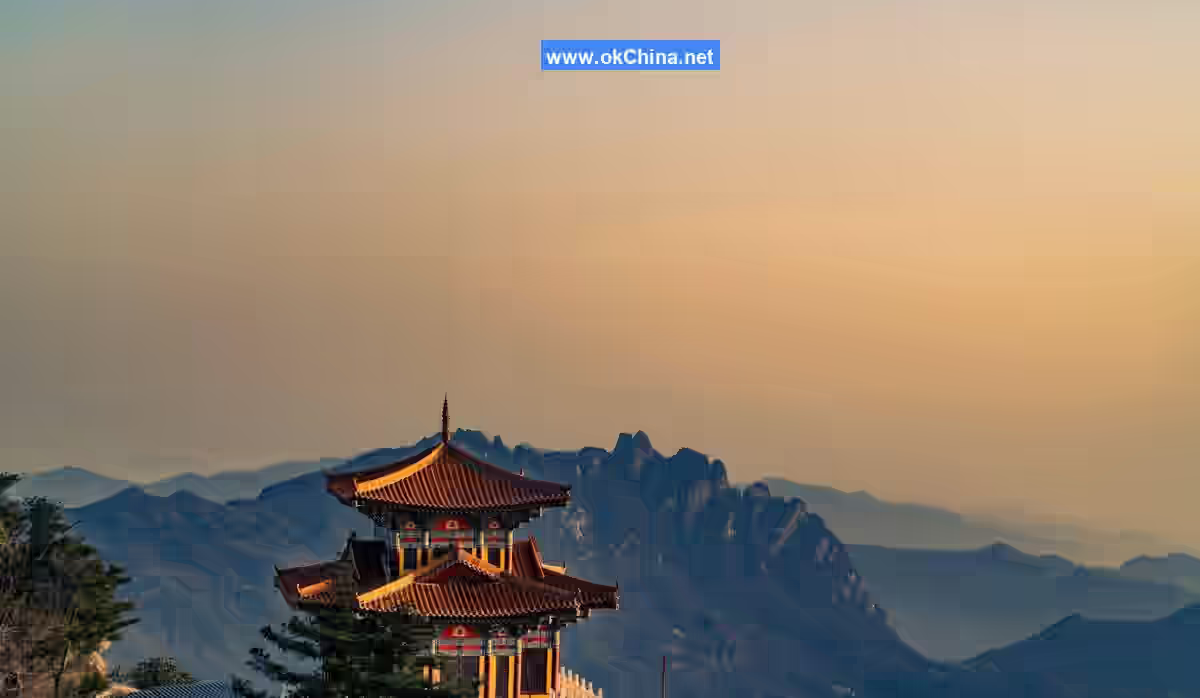
Built in 1965, the Baiyun Dawn Viewing Pavilion is the best spot for overlooking the scenery of the Mingchun Valley Scenic Area and also the prime location for watching the sunrise. The horizontal plaque on the pavilion reads "Baiyun Mountain Dawn Viewing" in the handwriting of General Zhang Yunyi. The couplet on the viewing pavilion reads: "A thousand mountains give rise to white clouds, ten thousand plums vie in the dusk." "Ten thousand plums" refers to the plum forest that originally stood in front of the pavilion, hence "ten thousand plums vie in the dusk."
4. Seasonal Landscapes
4.1 Baiyun Evening View
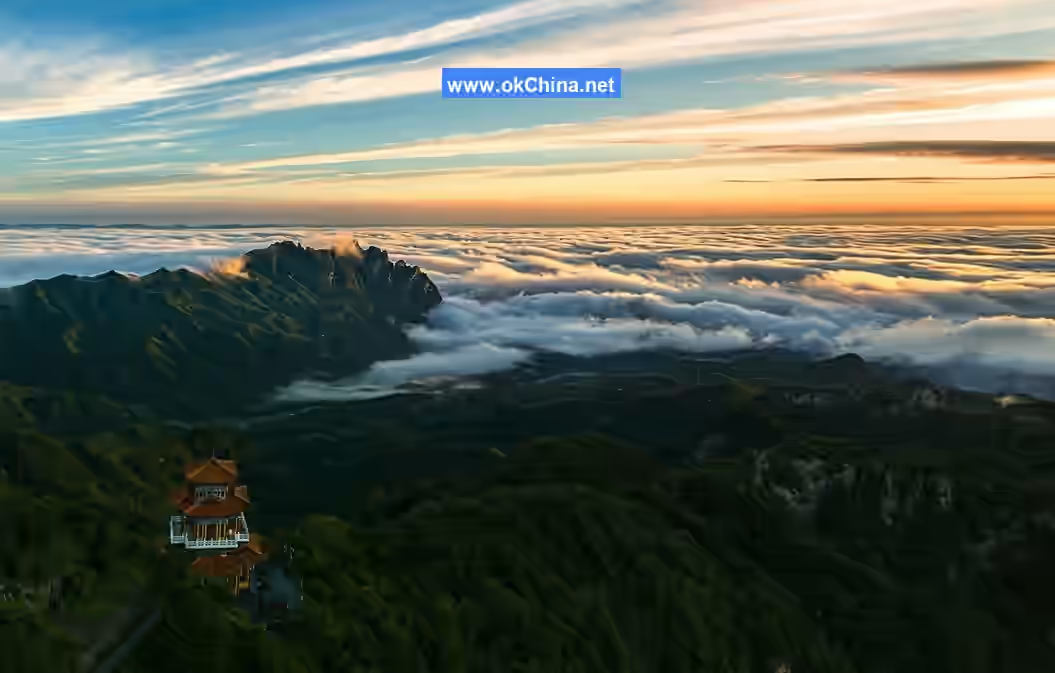
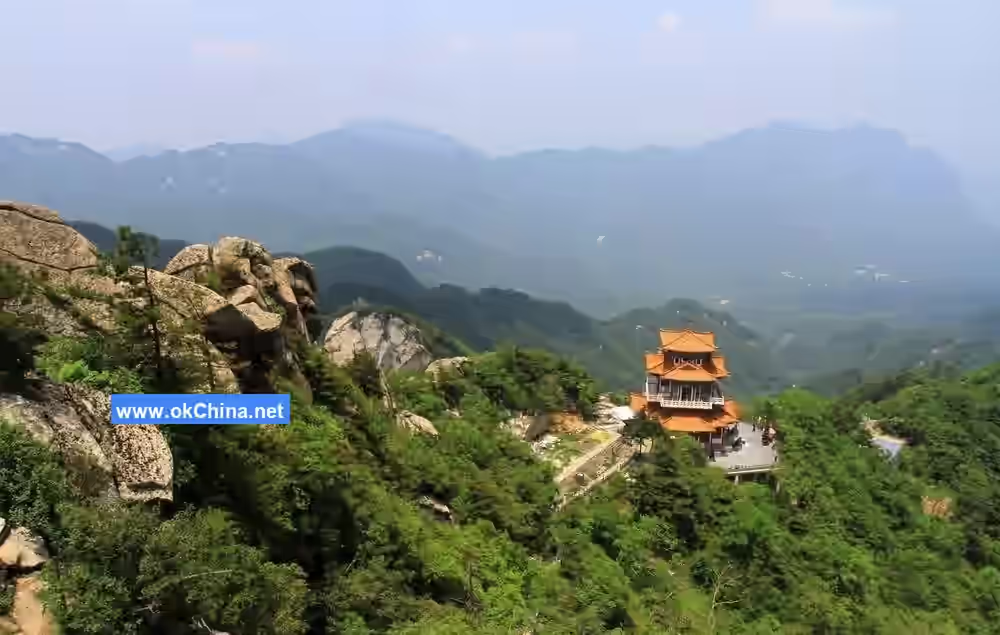
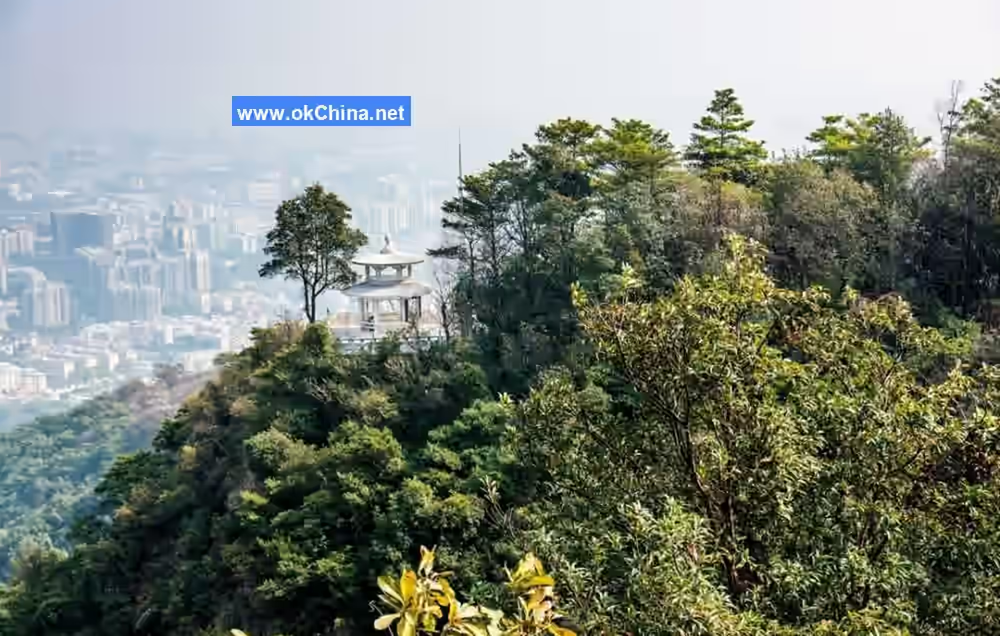
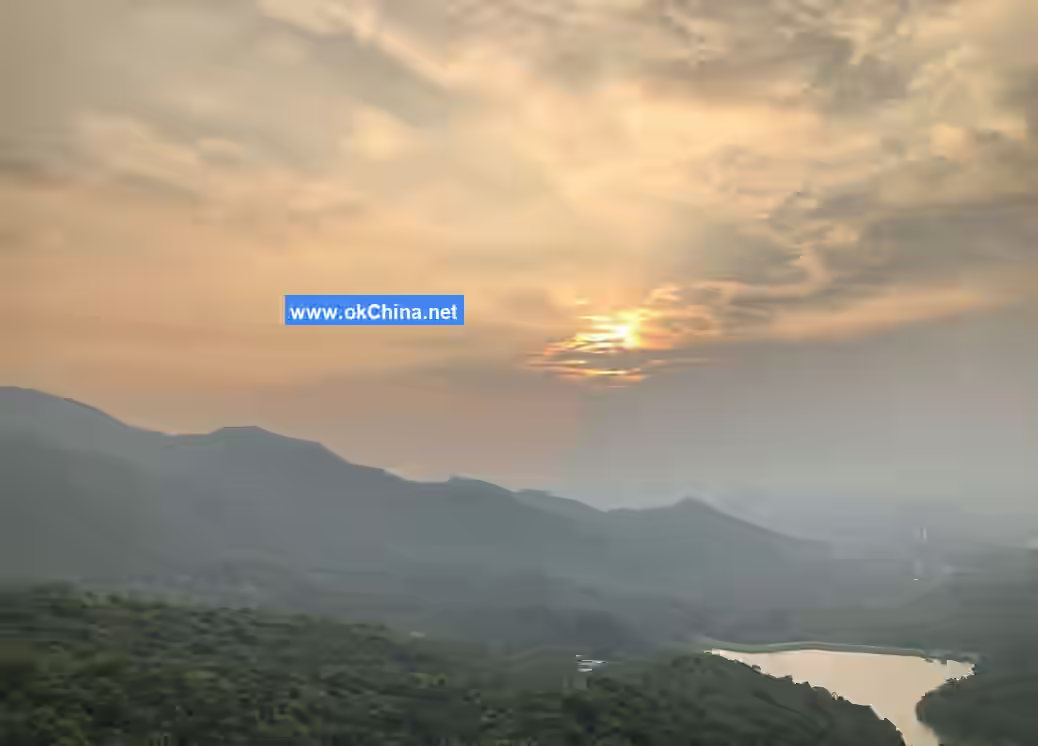
"Baiyun Evening View" is located atop "Luosanding" in the Mountain Top Park, built against the mountain and overlooking the cliff in 1964. It consists of two parts: the "Viewing Platform" and the "Evening Viewing Pavilion," renowned primarily for watching the sunset and night views. As early as the Yuan Dynasty, "Baiyun Evening View" was one of the Eight Scenes of Yangcheng (Guangzhou) for viewing myriad city lights and fishing fires on the Pearl River. Both the old and new Eight Scenes of Yangcheng from the Song, Ming, and Qing dynasties invariably included "Baiyun Evening View." At dusk, standing in the Evening Viewing Pavilion, one can see the setting sun and colorful evening glow in the sky, gazing into the distance where clouds and mist stretch boundlessly. As night deepens and the moon rises, the lights of the Flower City (Guangzhou) become increasingly numerous and bright, resembling a sea of stars, splendid and brilliant. Additionally, climbing to "Baiyun Evening View" during the day offers a clear view of Guangzhou's cityscape, which is also a sight to behold.
4.2 Dripping Rock
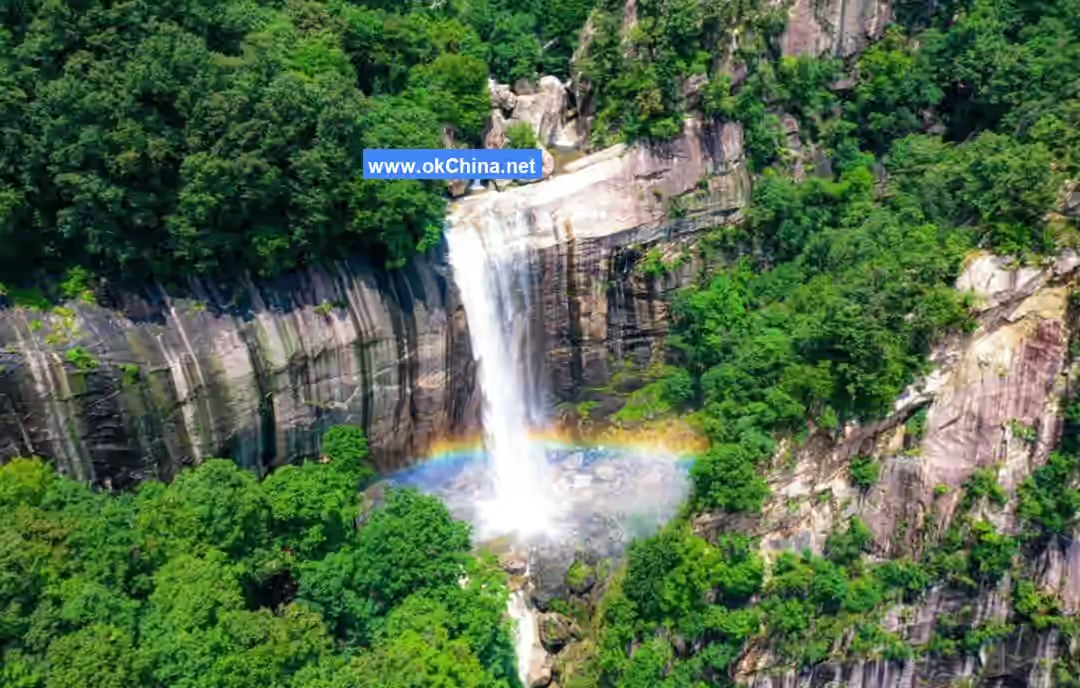
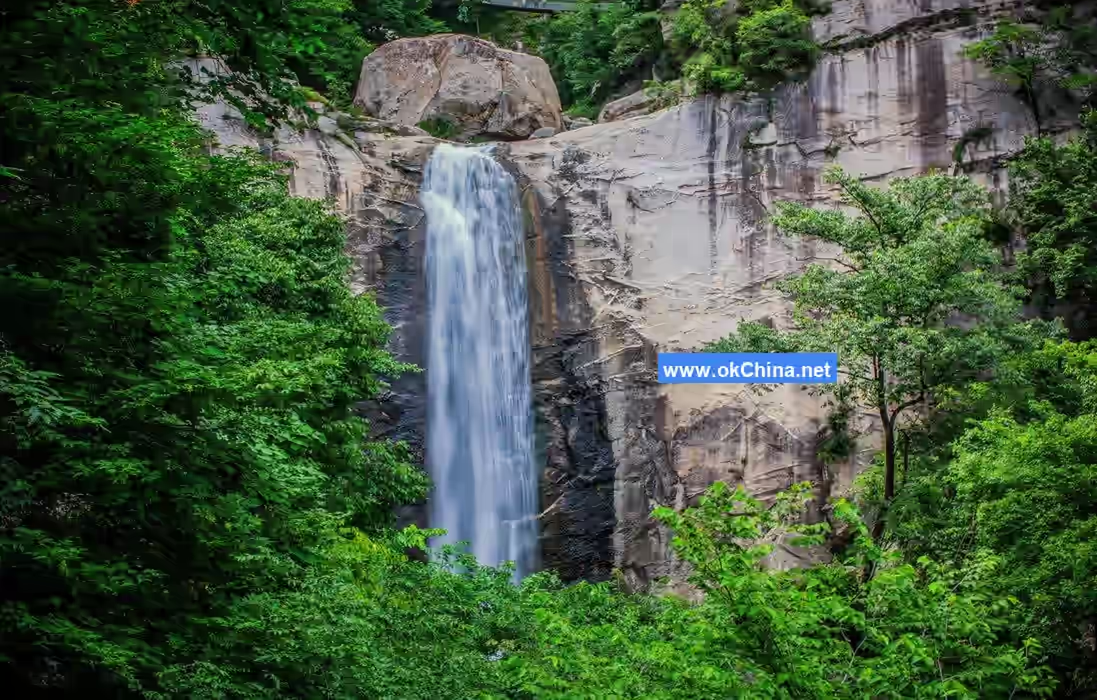
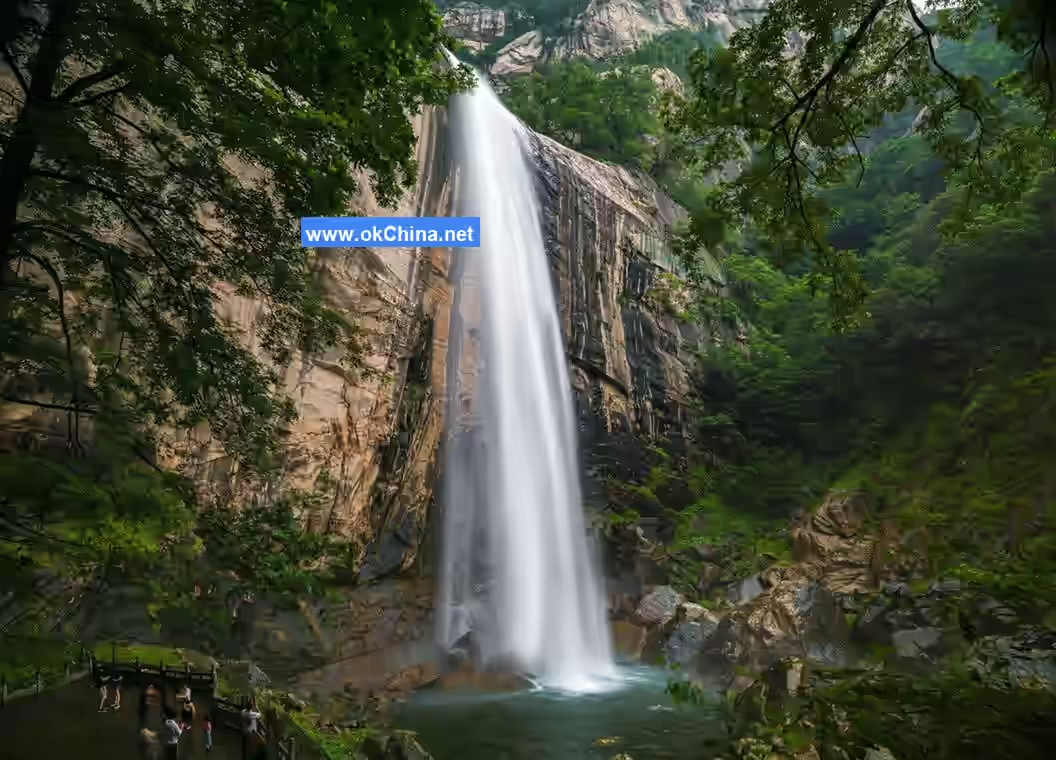
The Dripping Rock Natural Scenic Area is located at the upper source of Pujian in Baiyun Mountain. It is the site of the "Pujian Lianquan" scene, one of the Eight Scenes of Yangcheng during the Song and Yuan dynasties. It officially reopened on May 1, 2005. The Dripping Rock Scenic Area is divided into the Dripping Rock Zone, Cuwei Ancient Path, Lianquan Waterfall Zone, and Listening to Waves and Watching Fish Zone. As Dripping Rock is an area where spring water seeping along mountain rock joints converges, the springs emerge from steep cliffs with a drop of about 30-40 meters. On sunny days, the spring water hangs like a bead curtain, sprinkling like rain; during the rainy season when water volume increases, it forms a small waterfall. The water gathers into Pujian stream behind Dripping Rock. The winding Cuwei Ancient Path connected to Dripping Rock, with varying terrain along the way, forms natural landscape features such as shallow streams, deep pools, and narrow gorges.
4.3 Flowers and Trees of the Four Seasons
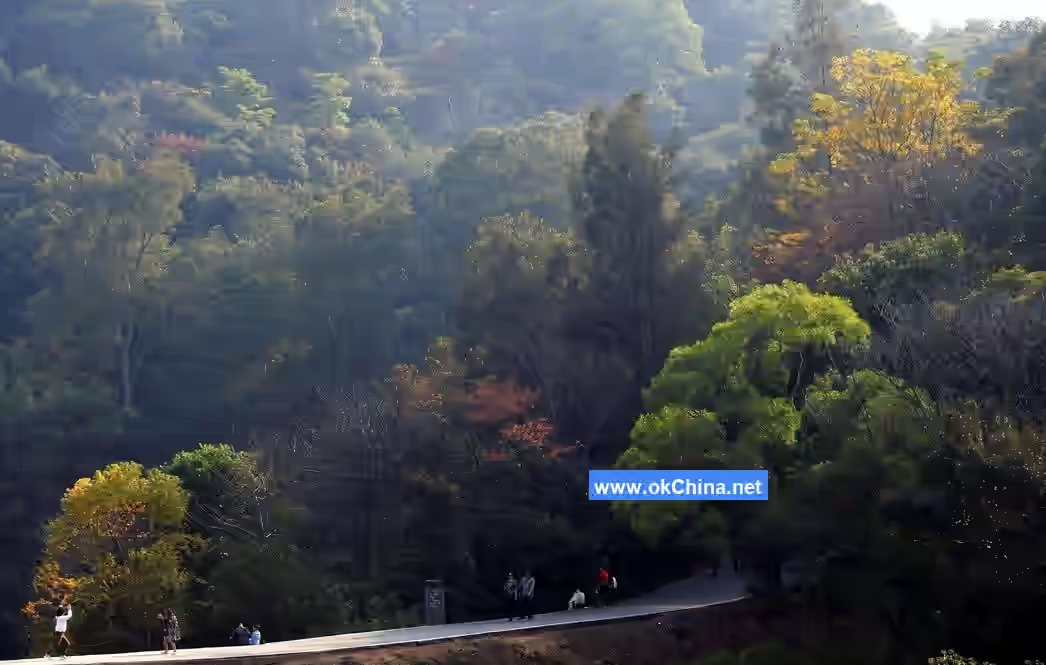
Baiyun Mountain offers opportunities to appreciate flowers and trees throughout the four seasons, with a rich variety of ornamental plants. Summer, from June to August, is the peak flowering period on Baiyun Mountain, while December has the fewest flowering plant species. The most common flowering plants on Baiyun Mountain include Queen's Crape Myrtle, Kapok, Beautiful Chorisia, Hong Kong Orchid Tree, Red Flower Hong Kong Orchid Tree, and Flame Tree. More distinctive flowering and foliage plant landscapes include the Hong Kong Orchid Trees along Luhu Road, the Red Flower Hong Kong Orchid Trees and Schima trees along the main road of the Mingzhu Tower Tourist Area, the Queen's Crape Myrtles along the main road of the Mingchun Valley Tourist Area, the Red Maple Forest on Moxing Ridge, and the Thousand-year-old Tung Trees at Heyi Ridge.
5. Cultural Resources
5.1 Historical Evolution
During the Neolithic Age, human activities were already present on Baiyun Mountain, with prehistoric cultural sites from this period remaining at Huangpodong in the northern part of the mountain.
In the late Qin Dynasty, the noble scholar Zheng Anqi lived in seclusion on Baiyun Mountain, gathering herbs to aid the world, and was said to have "ascended to immortality" from the mountain.
During the Jin Dynasty, Ge Hong from Jiangsu once practiced alchemy on Baiyun Mountain and authored the famous Taoist work "Baopuzi."
In the Southern Liang Dynasty, Monk Jingtai established the first temple on Baiyun Mountain, "Jingtai Temple," also leaving behind the scene "Jingtai Monk's Return."
After the Tang and Song dynasties, famous literati such as Du Shenyan, Li Qunyu, Su Shi, and Han Yu successively climbed the mountain to compose poetry. Their literary works, expressing emotions through objects, became precious historical and spiritual treasures of Lingnan.
In the Yuan Dynasty, "Jingtai Monk's Return" became one of the Eight Scenes of Yangcheng.
During the Ming and Qing dynasties, Baiyun Mountain accounted for three of the Eight Scenes of Yangcheng: "Pujian Lianquan," "Jingtai Monk's Return," and "Baiyun Evening View." By the late Qing Dynasty, ancient temples such as Baiyun Temple, Shuangxi Temple, Nengren Temple, and Maitreya Temple, as well as scenic spots and historical sites like Baishan Xianguan, Mingzhu, and Baihua Zhong, had been built on Baiyun Mountain.
At the time of China's Liberation, only the memorial archway "First Peak South of Heaven" and the ruins of some temples remained in the Guangzhou Baiyun Mountain Scenic Area.
After the founding of the People's Republic of China, the scenery and environment of the Guangzhou Baiyun Mountain Scenic Area were gradually restored.1956
To address the difficulties in production and daily water supply for farmers at the foot of Baiyun Mountain, the Huangpodong Reservoir was constructed.
1958
Guangzhou residents volunteered to excavate Luhu Lake, which is one of the three major reservoirs in the Baiyun Mountain Scenic Area.
1965
The Baiyun Xiaowang Pavilion on Baiyun Mountain was completed.
April 16, 1984
Construction began on the Baiyun Cableway in the Baiyun Mountain Scenic Area. This was China’s first self-designed and self-built sightseeing cableway featuring a single-loop, double-jaw opening and closing grip system.
December 1, 1985
Xinghai Garden, jointly funded by the Guangdong Provincial Musicians Association and the Guangzhou Municipal People's Government, was completed within the scenic area.
1987
The Honghu Tower in the Baiyun Mountain Scenic Area of Guangzhou was completed.
1992
Funded by the Guangzhou Municipal Committee, Municipal Government, and Municipal People's Congress, the Guangzhou Forest of Steles was newly constructed on the site of the former Baiyun Temple. The Forest of Steles has been open to the public since 1994.
1995
The Baiyun Mountain Luhu Golf Course, a cooperative project between Luhu Park and Hong Kong Hongyu Company, was completed and opened. On September 28 of the same year, the Baiyun Mountain Yuntai Garden, designed by the Guangzhou Garden Architecture Design Institute and funded by the Guangzhou Municipal Government with over 50 million yuan, was also completed and opened.
1996
Construction of the Guangzhou Sculpture Park began on Baiyun Mountain.
September 2001
The Heyi Ling Tourist Area within the Baiyun Mountain Scenic Area of Guangzhou was completed and officially opened to the public on October 1, National Day of the same year.
5.2 Cultural Activities
5.2.1 Zhengxian Festival
The Zhengxian Festival, also known as the "Aotou Festival," "Baiyun Festival," and "Guangzhou's First Festival," was originally the most important folk festival on Baiyun Mountain. During the Eastern Jin Dynasty, to commemorate the great compassion of Zheng Anqi (Zhengxian) in practicing medicine and aiding the people of Guangzhou, Luo You, the then Governor of Guangzhou, advocated designating the 25th day of the seventh lunar month as the "Zhengxian Festival." The festival remained highly popular until the late Qing Dynasty, after which it gradually declined due to wars and historical reasons.
To revive the folk activities of the Zhengxian Festival, since 2012, with the strong support and guidance of the Baiyun Mountain Administration, the Mingchungu Management Office has organized several editions of the Zhengxian Festival Tourism and Cultural Festival. Held annually, the festival builds upon traditional customs such as climbing the mountain for "earth energy," picking calamus, and bathing in spiritual springs, while adding new activities like Zhengxian parades, puppet shows, Zhengxian gatherings, and cultural forums. In 2015, the Baiyun Mountain Zhengxian Festival was included in the fourth batch of district-level intangible cultural heritage list of Baiyun District.
5.2.2 Baiyun Mountain Trendy Market
During the New Year's Day period in 2021, Baiyun Mountain hosted the "Baiyun Mountain Trendy Market" event. The event aimed to promote traditional intangible cultural heritage and Lingnan art, featuring areas such as a non-heritage trendy play zone, a car trunk market, an agricultural support green zone, a Lingnan specialty zone, a market specialty zone, a street art zone, a recreational interaction zone, a trendy e-sports zone, and a main stage performance and interaction zone. The non-heritage trendy play zone showcased traditional intangible heritage skills like Xiguan copperwork, Guangzhou olive carving, Chakeng stone carving, and Cantonese-style mooncake mold carving. The car trunk market sold various handmade crafts, figurines, models, and other trendy items. The street art zone featured artists creating live portrait sketches and impromptu DIY artworks, while the trendy e-sports zone provided a platform for gamers and trendsetters to interact and compete.
5.2.3 Other Activities
The Baiyun Mountain Scenic Area hosts over 50 flower exhibitions, lantern shows, and other events annually, such as "Hearing the Bloom: Orchid Melodies on the Mountain" and tulip exhibitions. It also opens five lawns for visitors to pitch tents and lay mats. Each year, more than 20 sports activities are organized, including the Double Ninth Festival mountain climbing, New Year's running events, the "Guangzhou 100"越野赛 (cross-country race), "Ancient Post Road" hikes, and water sports like "Paddling on Luhu Lake." Additionally, free-to-use table tennis facilities are provided at locations like the Mingzhu Tower in the northern part of the mountain and the Zhiqing Pavilion in the southern part. Over 40 science popularization and promotional events are held annually, such as the "Exploring the Beauty of Baiyun Mountain, Caring for Nature Around Us"科技 (technology) innovation carnival and "The 'Top Hat' in the Manor," which promote ecological civilization awareness.
Comments
Post a Comment