Baishuiyang · Yuanyangxi Scenic Area
1. Introduction
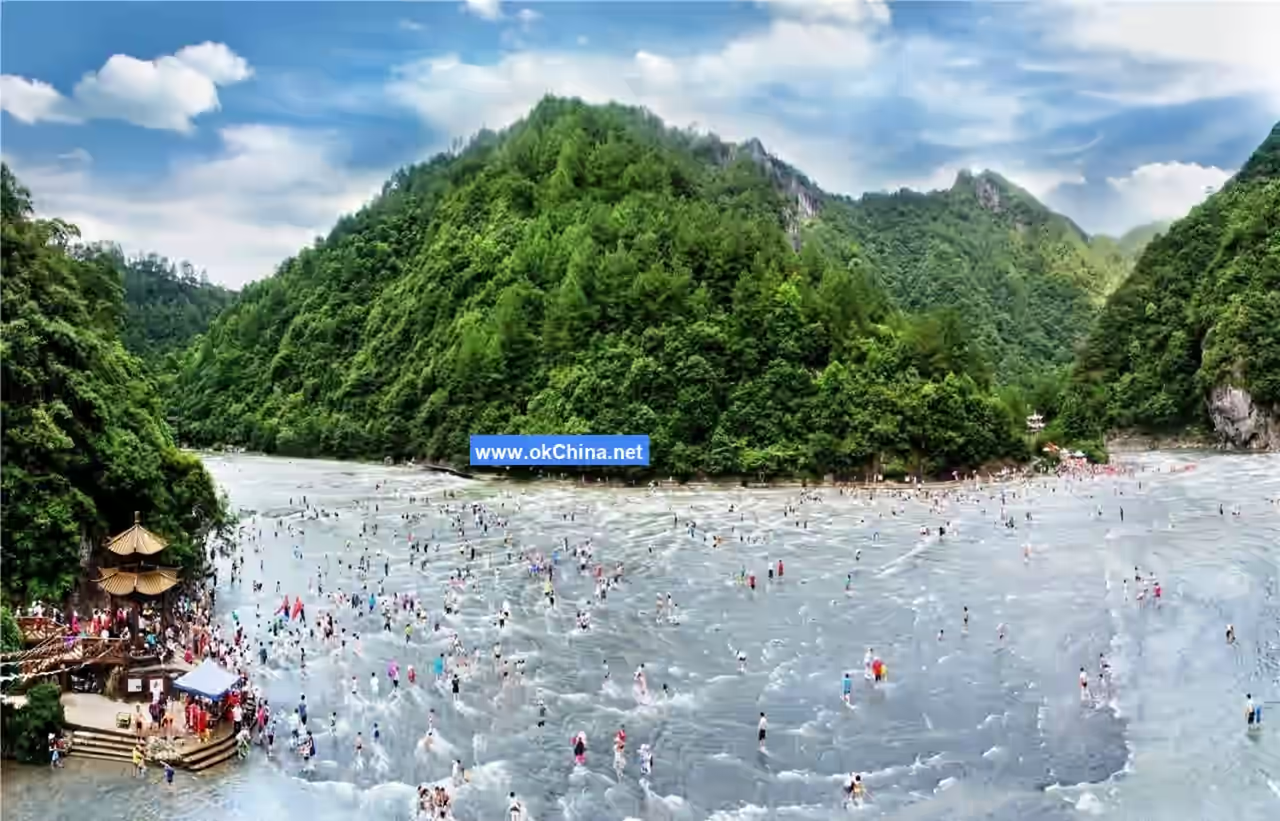
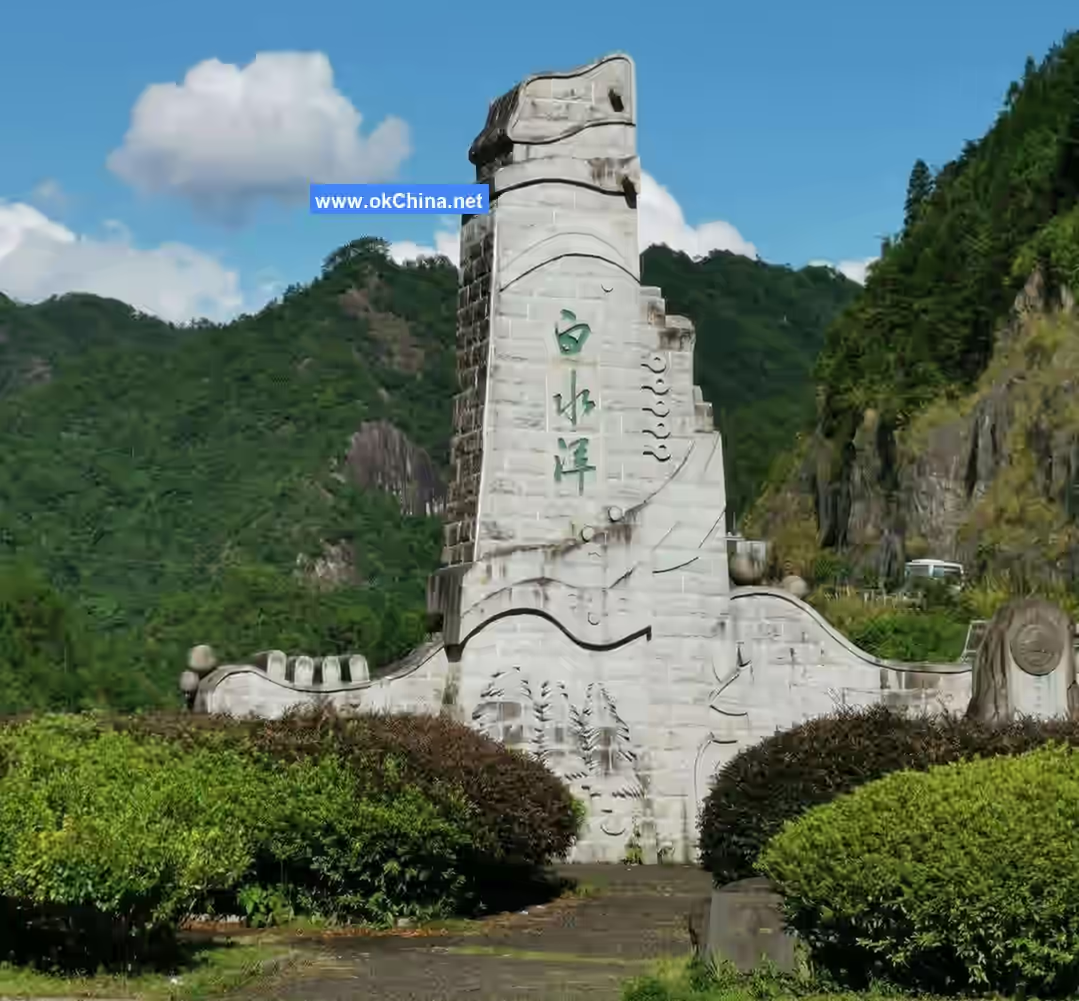
Baishuiyang, located in Pingnan County, Ningde City, Fujian Province, is a national AAAAA-level tourist attraction. The Baishuiyang Geological Park covers a total area of 77.34 square kilometers and hosts the world's only Yuanyang (Mandarin Duck) and Macaque Nature Reserve. The Baishuiyang Scenic Area is one of Fujian Province's eight major tourism brands. In November 2003, during an inspection tour, Lu Zhangong, then Secretary of the Fujian Provincial Party Committee, praised Baishuiyang as a "peerless wonder under heaven, a mystery of the universe." After visiting, Vice Premier Wu Yi inscribed the words "Unique Landscape."
2. Geographical Environment
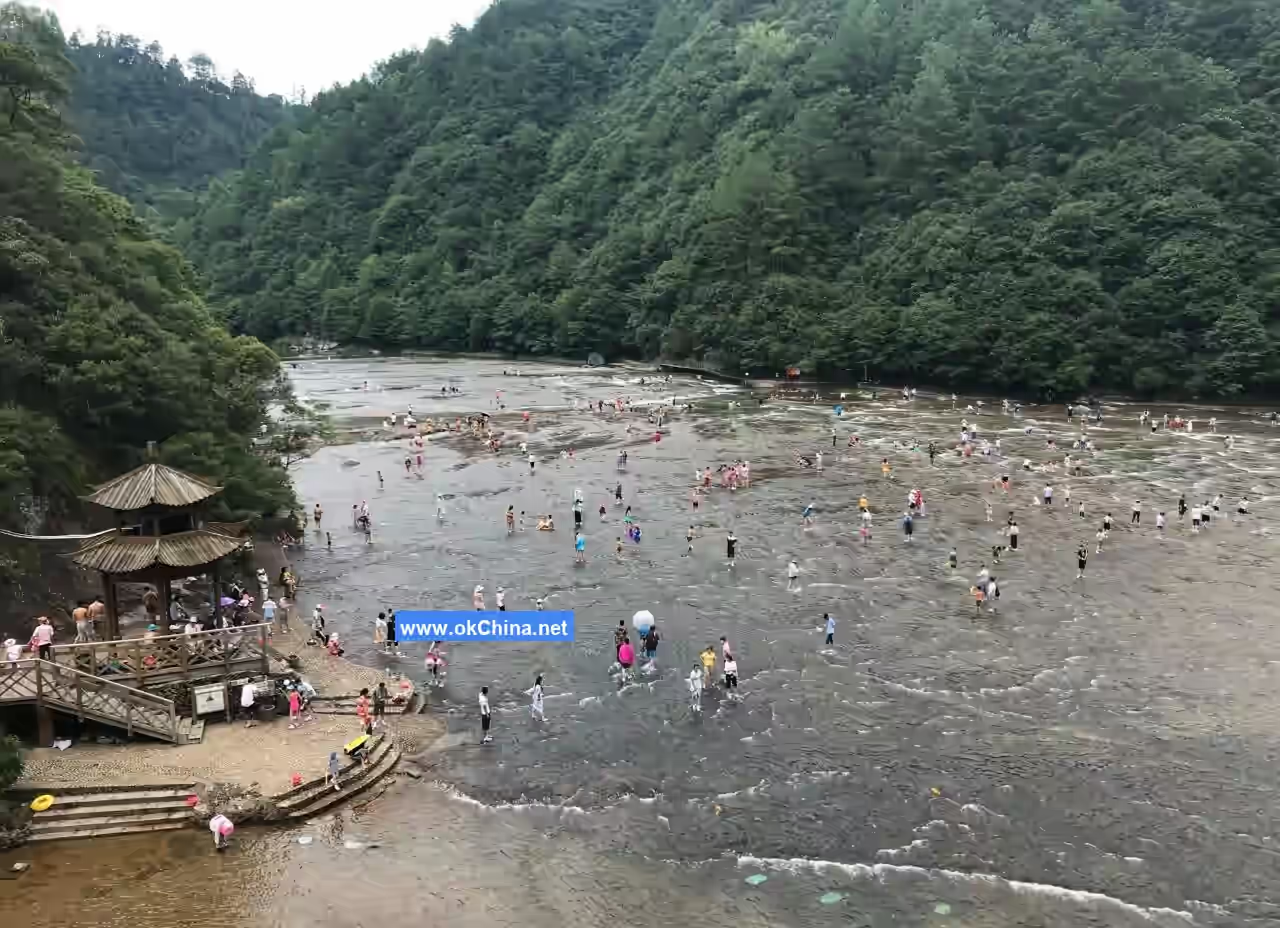
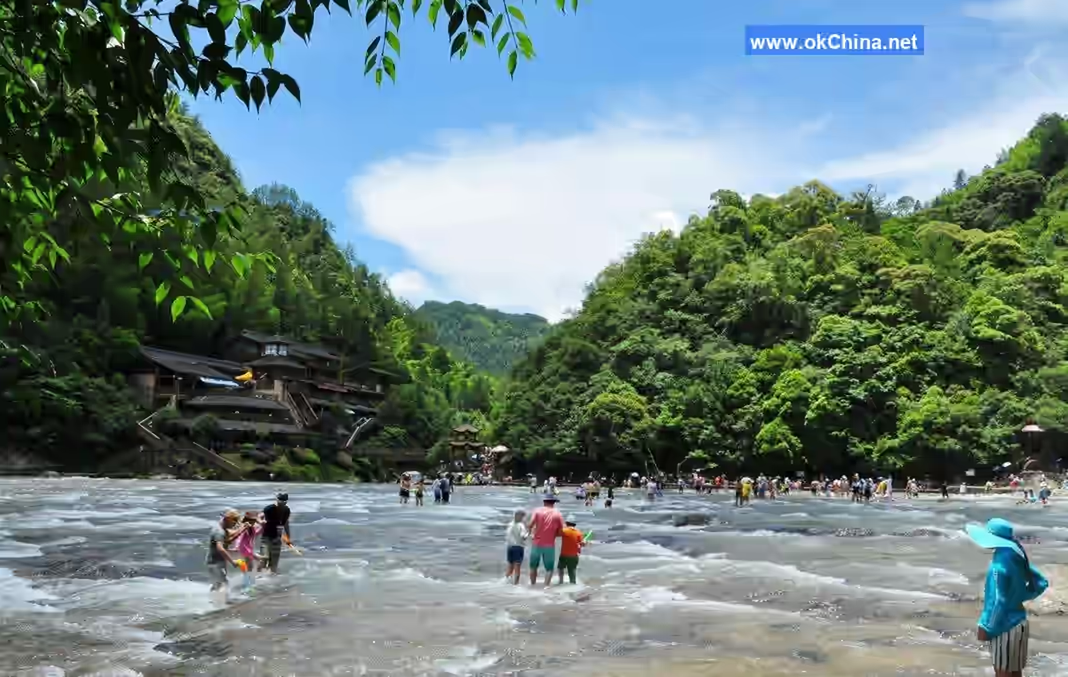
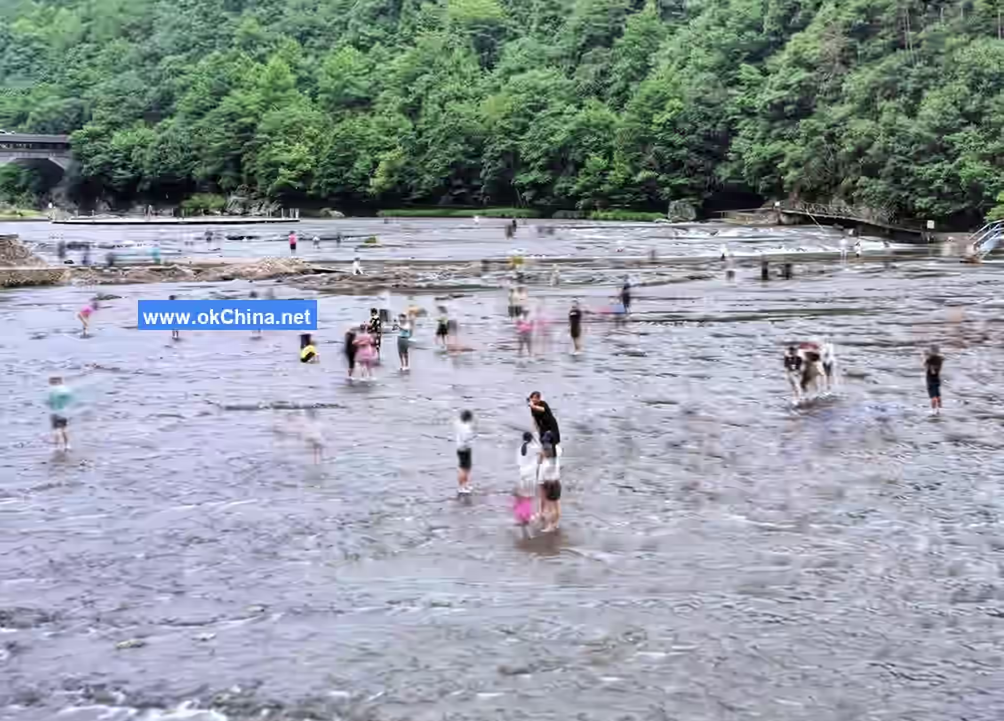
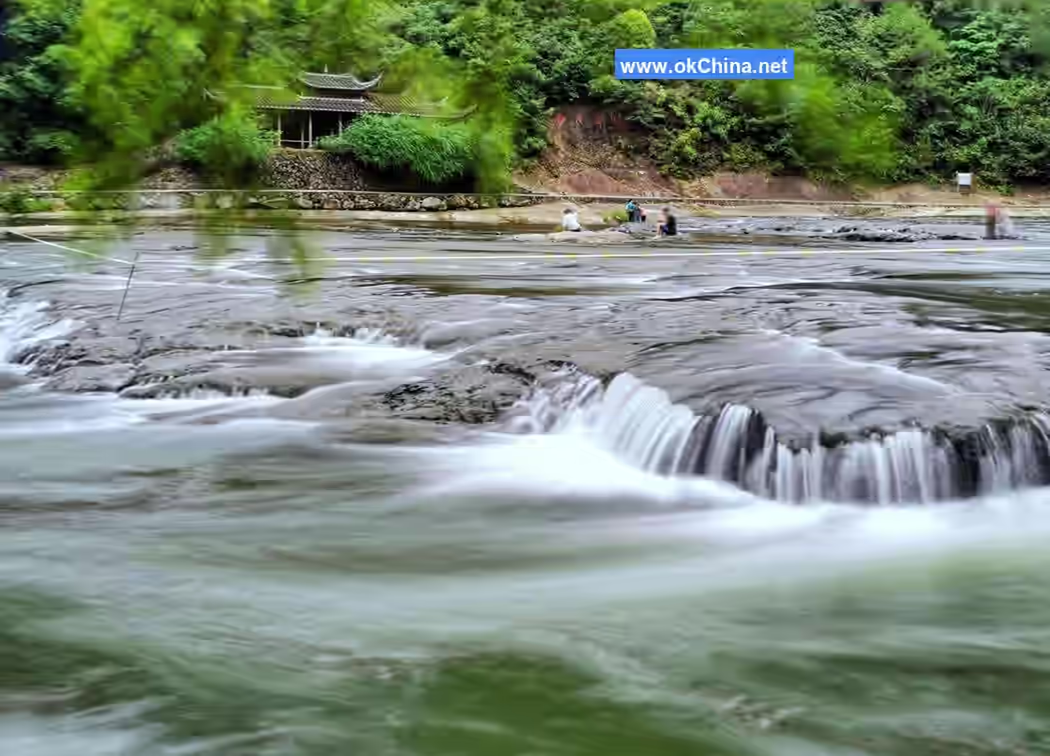
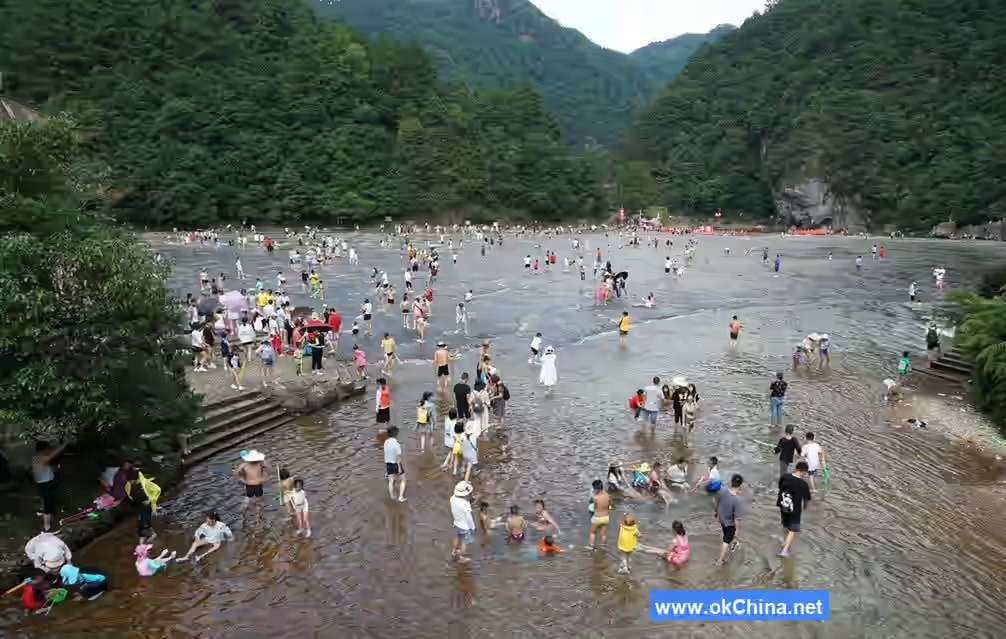
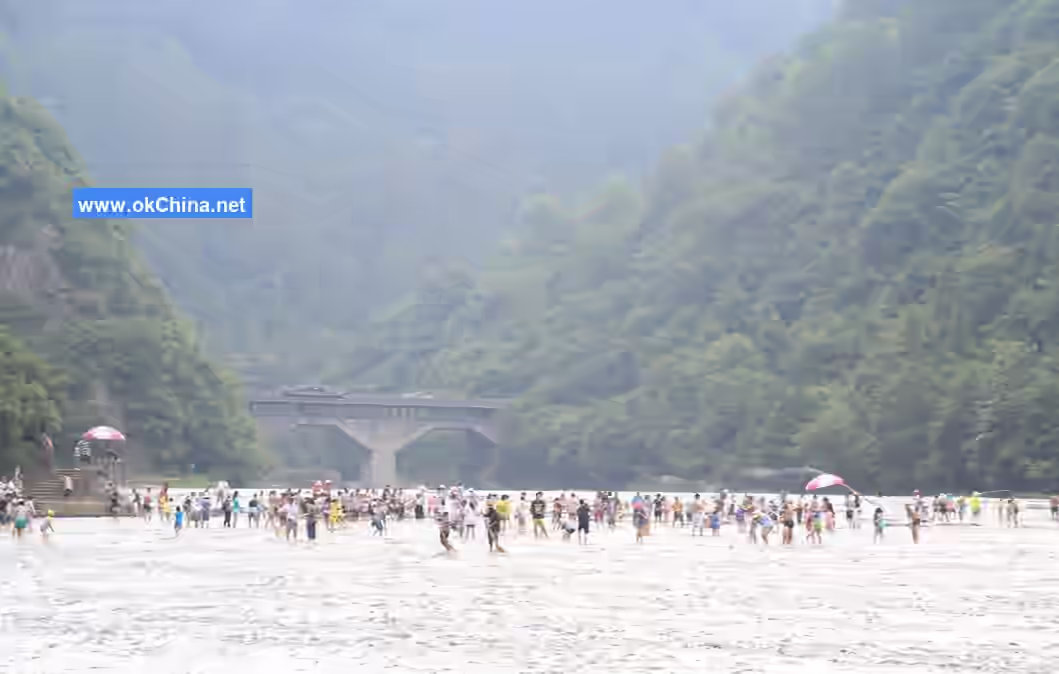
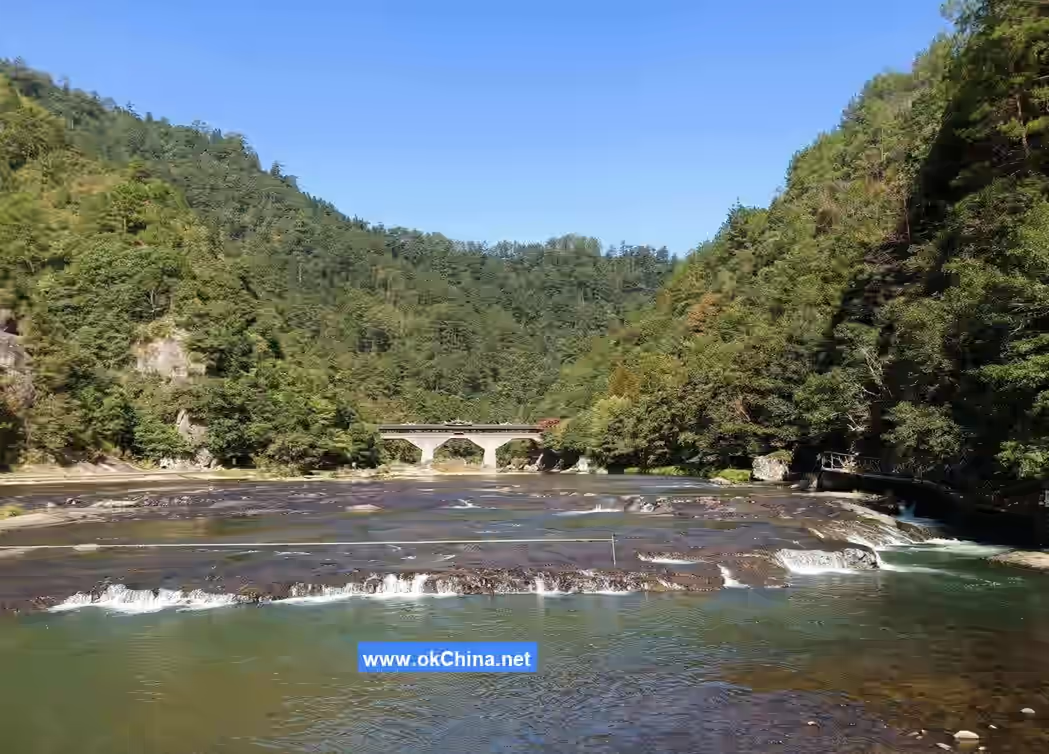
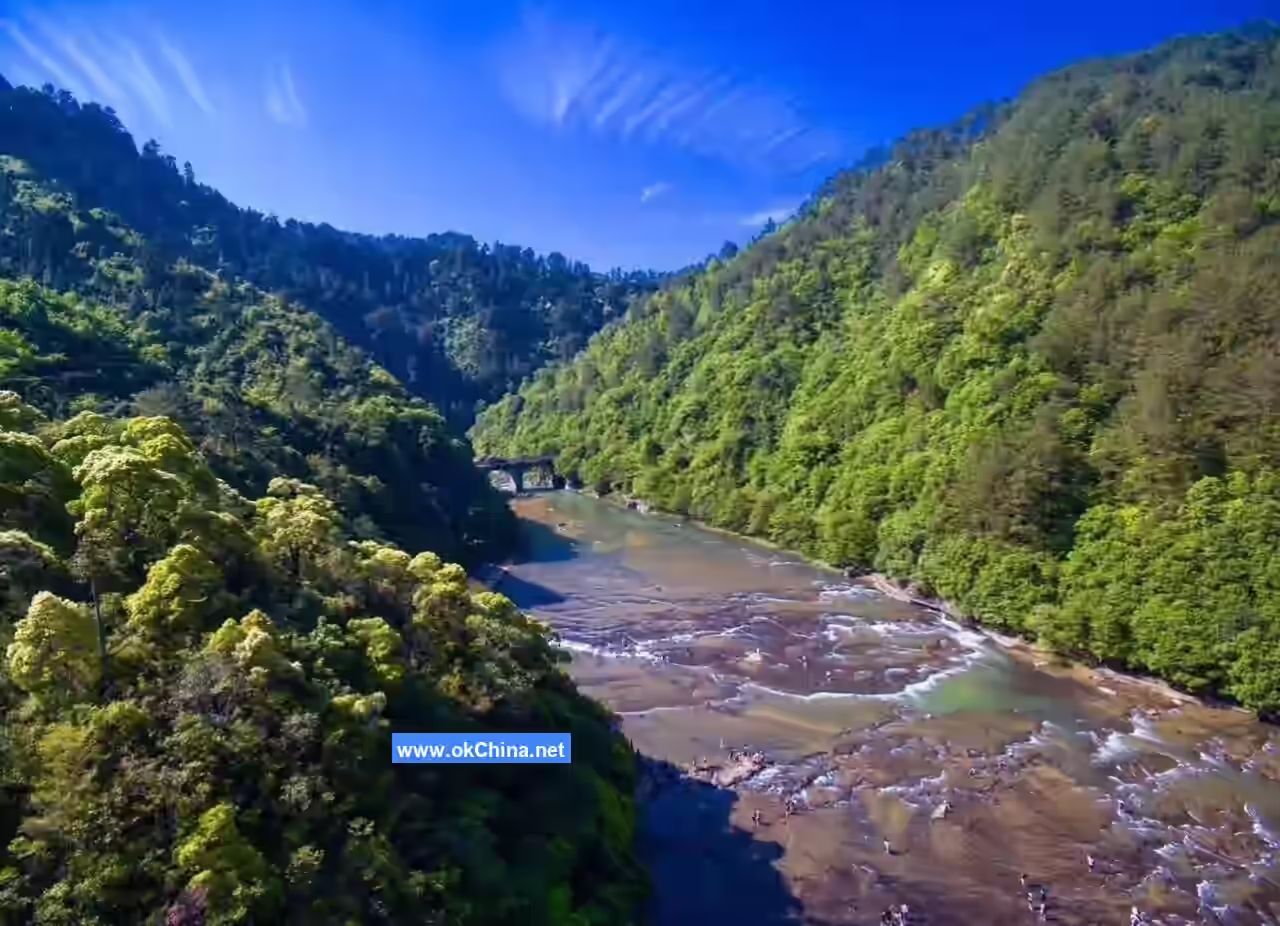
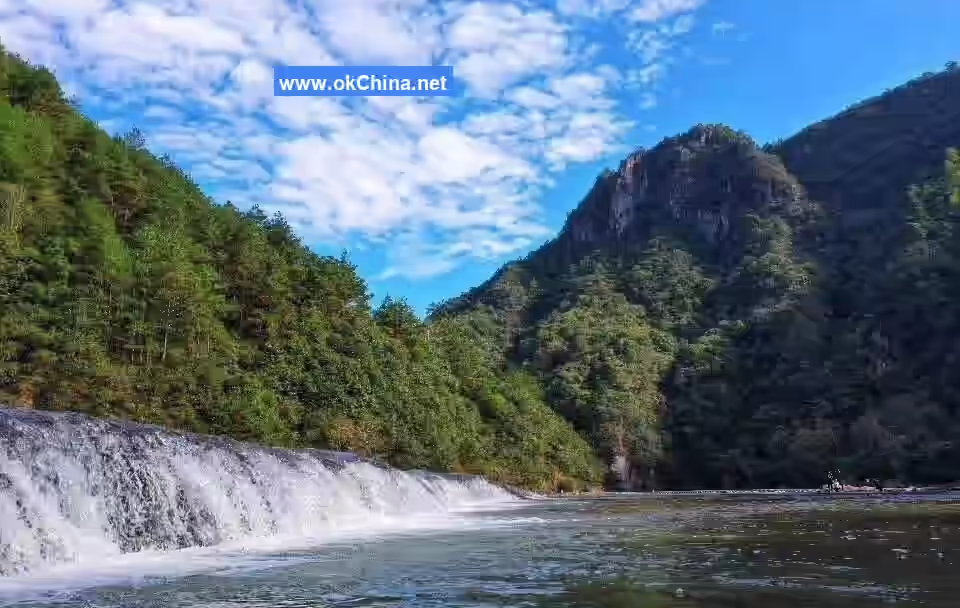
Baishuiyang is a distinctive natural landscape among the five major scenic areas of Yuanyangxi (Mandarin Duck Stream). Its flat rocky riverbed is formed from a single massive stone. Under sunlight, the water surface shimmers, appearing brilliantly white, hence the name Baishuiyang (White Water Ocean). Among its three shallow-water plazas, the largest, Zhongyang, covers 40,000 square meters with a maximum width of 182 meters. The riverbed distributes water evenly, with ankle-deep water. Experts organized by the former Ministry of Construction confirmed that Baishuiyang is a rare shallow-water plaza in the world.
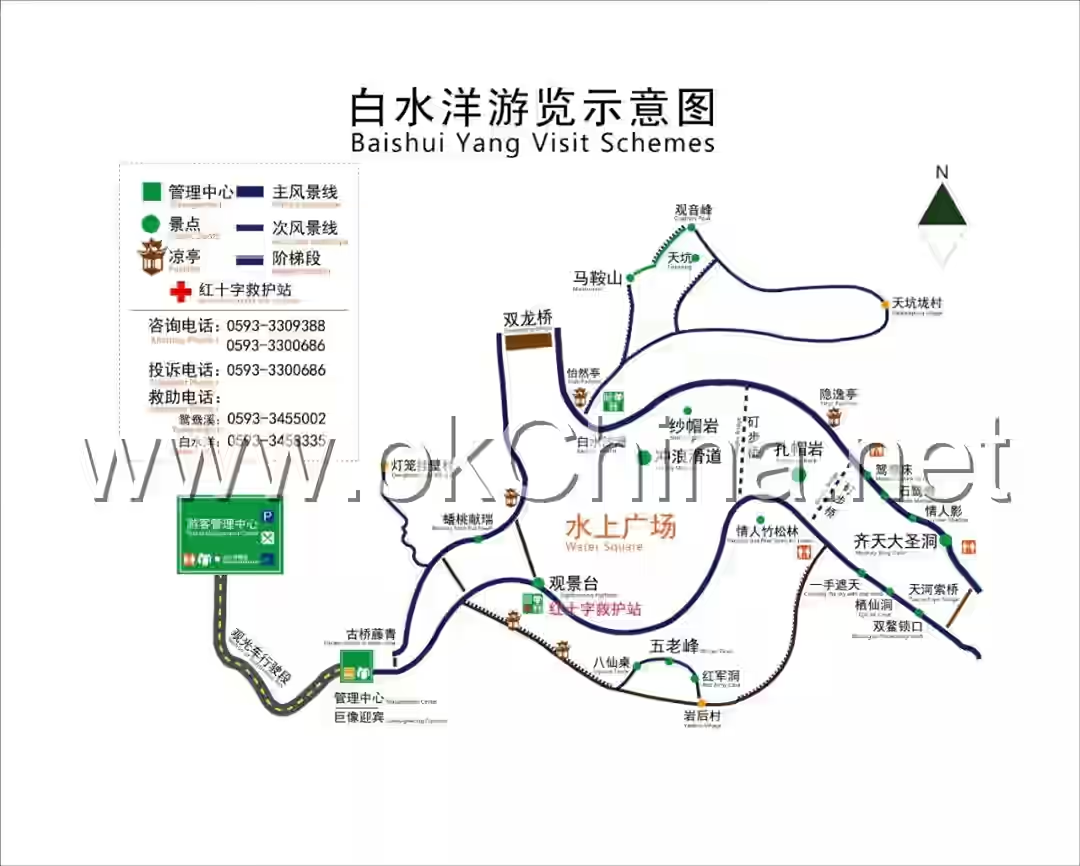
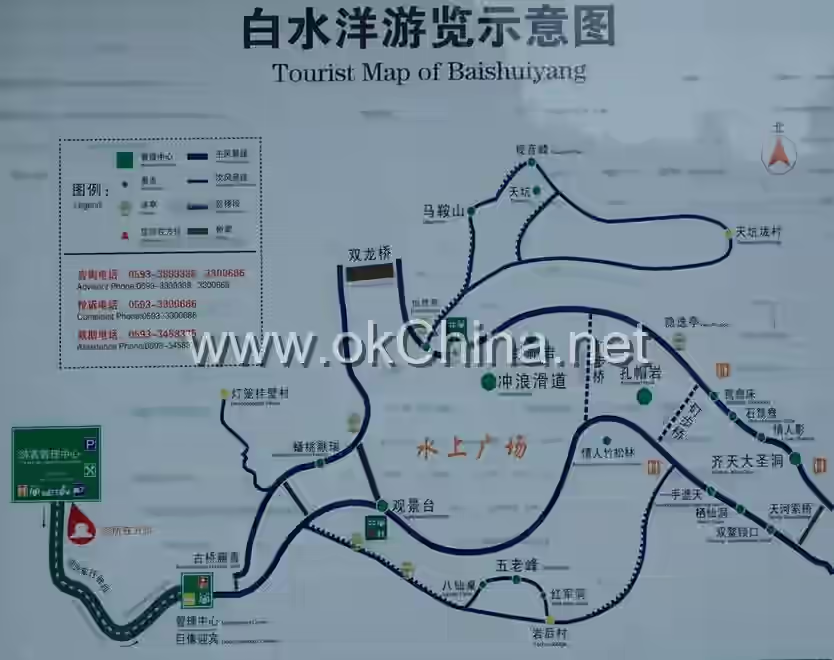
Facing each other across Baishuiyang are the Wulao Peak and Guanyin Rock. Other scenic spots within the area include Shisun Rock (also known as Shamao Rock), Dongtanxia Waterfall, Monkey King Gazing Afar, Two Immortals Descending, Caotan Xiongtan, Shuangrutang, Fairy Carp Facing Heaven (Sentry Platform), Giant Elephant Welcoming Guests, and more.
3. Main Attractions
3.1 Wulao Peak
From the heights of Wulao Peak, one can enjoy a panoramic view of the Baishuiyang scenic area. The peak boasts an elegant shape and sits beside Baishuiyang. The small platform in front is called Chessboard Summit. Legend has it that five immortals once pondered over a chess game here for generations, eventually forgetting themselves and transforming into the five peaks due to their intense concentration.
3.2 Yanhou Village
Yanhou Village is a revolutionary base village known for its unwavering red flag. Veteran proletarian revolutionary Ye Fei once conducted guerrilla warfare in this area. The village was burned down three times by Kuomintang forces and was rebuilt with the help of the People's Government after liberation. Several houses, referred to by locals as "Western-style buildings" from that era, are still preserved in the village.
3.3 Zhongyang
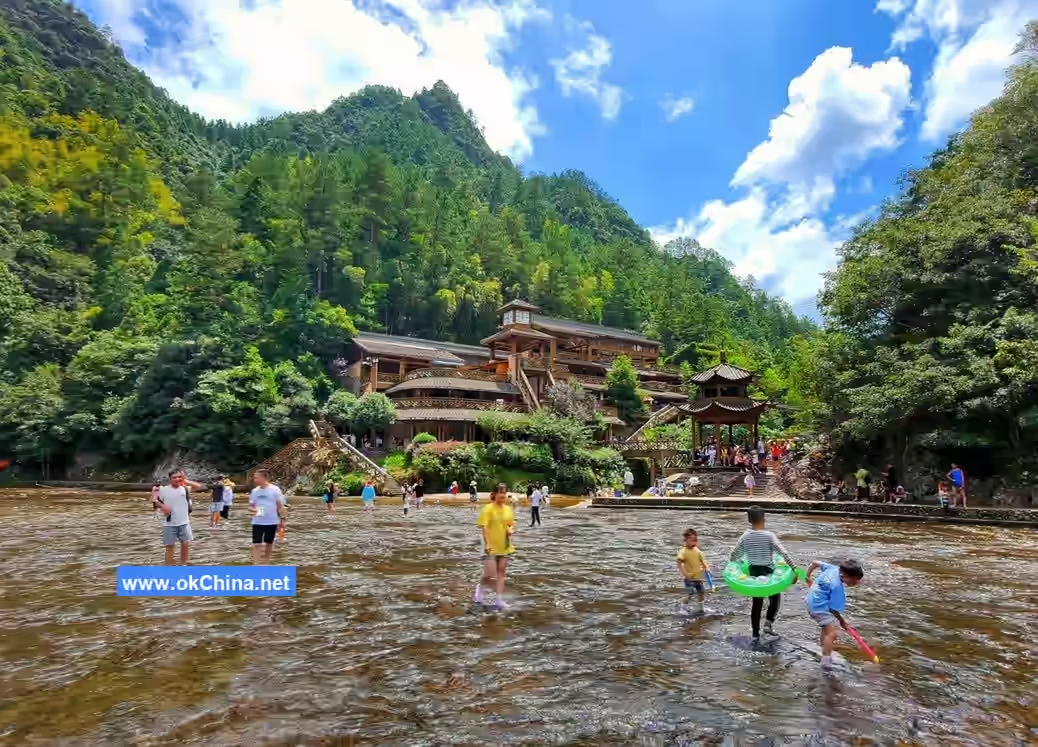
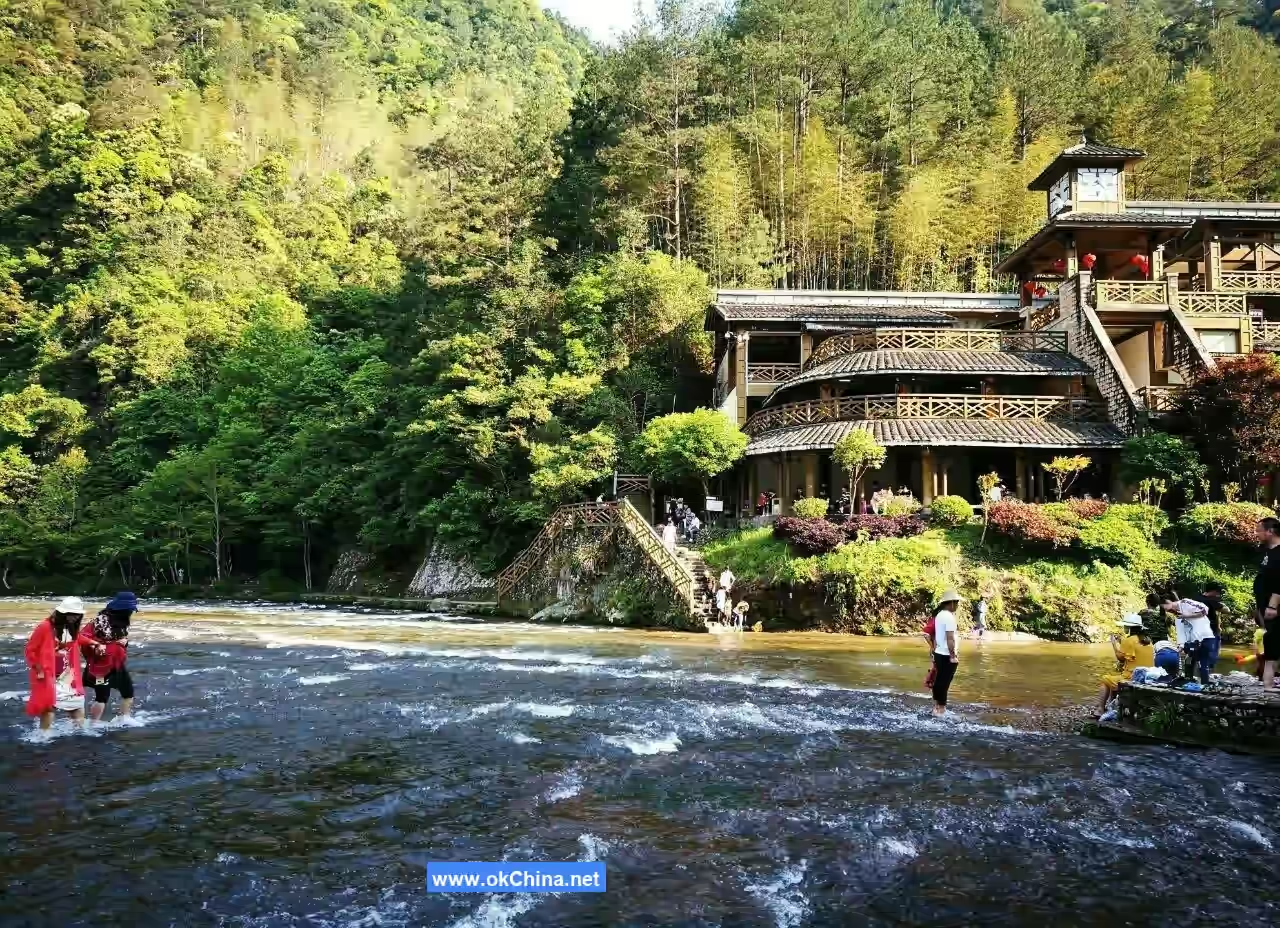
In the Zhongyang area of Baishuiyang, some softer rocks have been eroded by water flow, forming bathtub-like depressions. Here, visitors can walk barefoot in the water, getting close to nature.
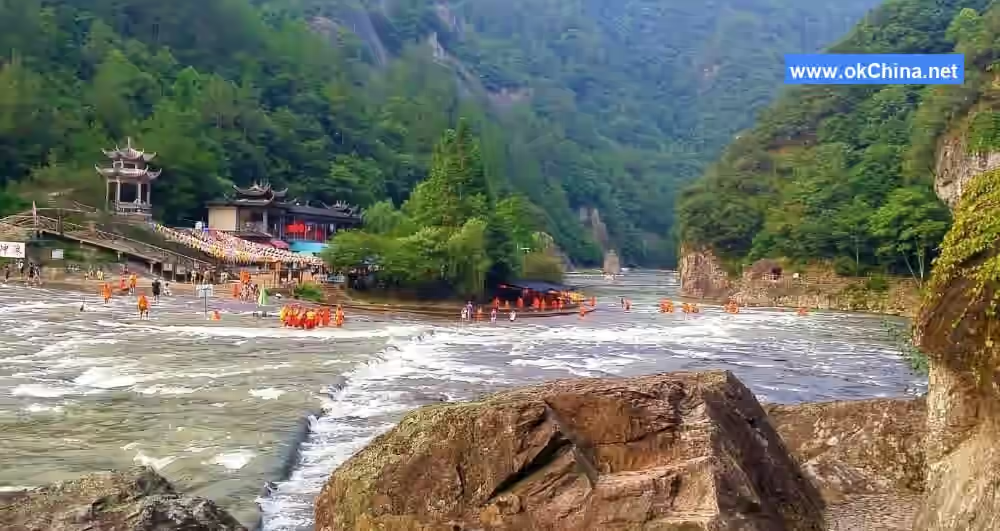
Zhongyang features a vast water plaza and a "Ten-li Water Street." Every midsummer, water sports competitions are held here, including water dragon dance, mandarin duck board race, water tug-of-war, taekwondo performances, and 100-meter dash.
3.4 Yantan
The water plaza in Zhongyang connects downstream to Yantan (Swallow Pool). Yantan features clear, rippling, and serene waters. Water erosion has formed a natural "swimming pool" here for visitors to enjoy. Jiao Xun wrote in his "Song of Autumn River": "At dawn, I watch mandarin ducks fly; at dusk, I watch mandarin ducks rest. Sometimes the mandarin ducks fly, sometimes they rest." Later, Du Mu added: "All day, no one watches the fine rain; mandarin ducks bathe opposite each other in red robes."
3.5 Xiayang
The Xiayang (Lower Ocean) area of Baishuiyang is as calm as a mirror. Due to varying depths of the riverbed and sunlight refraction, it resembles multifaceted crystal. Combined with the greenery on both banks, the entire Xiayang shimmers with colors and brilliant white light, earning it the name "Colorful Ocean."
3.6 Shamao Rock
In the center of the Colorful Ocean, a prominent stone stalagmite resembles a black gauze cap from the Ming Dynasty when viewed from above, hence the name "Shamao Rock" (Gauze Cap Rock). It is said that a county magistrate once passed by and threw his official cap into the water, where it transformed into this rock. The rock's appearance changes with the viewing angle. From the left side looking up, it resembles a giant turtle carrying a pile of treasures, called "Golden Turtle Carrying Treasure." Overall, it also looks like a fully billowed sail, symbolizing "Smooth Sailing." Therefore, this spot also has the name "Golden Turtle Carries Treasure, Smooth Sailing."
3.7 Baishuiyang
Baishuiyang, also known as Xianpa Creek, is one of the four wonders of Yuanyangxi and is part of the upper reaches of Yuanyangxi. Its three large water plazas, each over ten thousand square meters, were confirmed by experts organized by the former Ministry of Construction to be rare shallow-water plazas in the world, earning it the title "Peerless Wonder Under Heaven." The flat rocky riverbed of Baishuiyang is formed from a single stone, free of sand and gravel. The largest of the three plazas covers nearly 40,000 square meters, with the widest point reaching 150 meters. The riverbed distributes water evenly with ankle-deep water. Under sunlight, it shimmers brilliantly white, hence the name Baishuiyang. One can ride bicycles or even drive cars on it. It features a nearly 100-meter-wide curved waterfall, a nearly 100-meter-long water slide where one can surf without skin injury, and connects to the Yantan beach. It serves as both a natural surfing spot and a natural water park. The county holds a mass water sports festival here every August, involving 20,000 participants, creating an incredibly lively scene. Facing each other across Baishuiyang are the steep Wulao Peak and Guanyin Rock, creating a striking contrast with the flat water expanse. The scenic area is exceptionally beautiful and also includes Shisun Rock (Shamao Rock), Dongtanxia Waterfall, Monkey King Gazing Afar, Two Immortals Descending, Caotan Xiongtan, Shuangrutang, Fairy Carp Facing Heaven (Sentry Platform), Giant Elephant Welcoming Guests, and more.
3.8 Qitian Dasheng Cave (Great Sage Equal to Heaven Cave)
Located downstream of Baishuiyang, Qitian Dasheng Cave is tall and spacious with jagged rock formations inside. A vast sandy beach lies in front, and the stream area is dotted with rocks. In December of the 10th year of the Tongzhi reign (1872), villagers built a shrine inscribed with "Jade-Sealed Upper Cave Great Sage Equal to Heaven King Combined Hall." The temple was later destroyed, leaving only stone pillars and a stone flagpole. Among the river stones beside the cave, there are stone steps resembling a mother's heart and a lover's shadow.
3.9 Baizhangji Water Curtain Cave
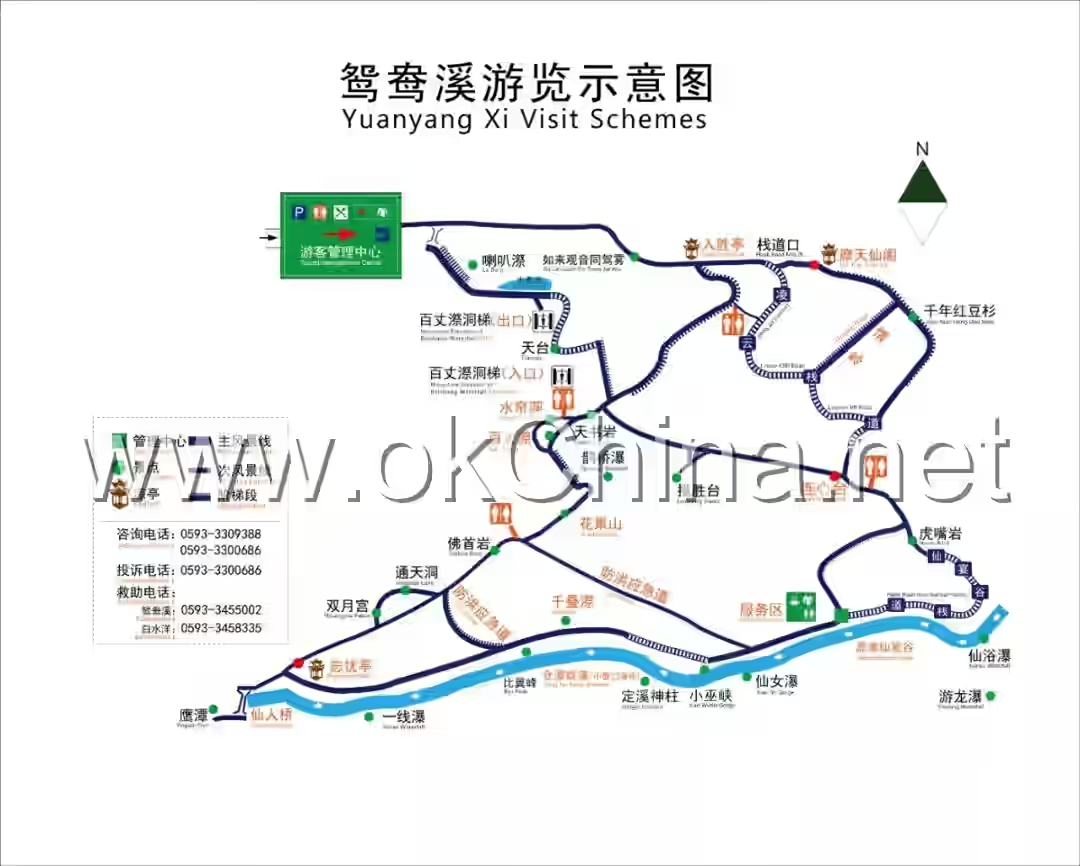
Located in the Yiyang scenic area of the middle section of Yuanyangxi, Baizhangji Water Curtain Cave is one of the four wonders of Yuanyangxi. Zhang Chaosheng, a military graduate from Yiyang during the Qing Dynasty, inscribed it as "Mist Forming at the Water's Edge." The waterfall in front of the cave is over 150 meters high and more than 20 meters wide, with a majestic momentum, ranking it as the "Foremost of China's Five Great Water Curtain Caves." During high water, it appears as a single waterfall; in low water, it separates into three distinct cascades with graceful curves. Its characteristics are a wide curtain, great height difference, long flow path, ample discharge, and a location not on the mountainside, allowing it to accommodate over a hundred people. Visitors can enter from the side without getting wet, feeling like they are touring a dragon palace. The waterfall is complemented by scenic rocks like the Divine Turtle and Divine Snake, and Black Ape Intercepting the Waterfall. A stone inscription appears like the character "Ah" but not quite; it can be read as ten characters meaning "Ah, the Baizhangji river and mountains are extraordinarily magnificent," showcasing ingenious conception.
3.10 Tathagata and Guanyin Riding the Mist
Looking downstream from the entrance of the conservation area atop Dayan (Great Rock), one can see a peak resembling the reclining giant figure of Tathagata (Buddha), with palms together touching the face, seemingly locking the valley. To its side, a smaller rock looks exactly like Guanyin (Goddess of Mercy) sitting cross-legged on a lotus throne. Individually, these are called "Tathagata Reclining" and "Guanyin Moving the Lotus." Early in the morning, one can witness "Tathagata and Guanyin Riding the Mist." At that time, a sea of clouds spreads below the mountain waist, softly churning, as if Tathagata and Guanyin are gently driving the clouds and mist forward. Two century-old pine trees by the roadside pierce through the misty sea, adding a unique charm. A Fujian Provincial CPPCC calligraphers and painters inspection team considered it comparable to the Huangshan Sea of Clouds, ranking it as one of the four wonders of Yuanyangxi.
3.11 Dingtan Xianyan Valley (Immortal Feast Valley of Tripod Pools)
Located beneath Dayan in the middle section of Yuanyangxi, Dingtan Xianyan Valley is one of the four wonders of Yuanyangxi, hailed as a "fully three-dimensional landscape," a "large panoramic scenic film," and "rare in China, unique in the world." In the valley, four deep pools are connected like giant tripods, with "smoke channels" between them, commonly called "Tripod Pools Stringing Pearls." The emerald water in the pools seems to boil, churning like jade liquid in a boiling pot, with mist spreading and a pattering sound. The valley features smooth rock beds, towering boulders, steep cliffs, moon-gate openings, high flying waterfalls, perilously hanging caves, refreshing breezes, and a grand atmosphere. It is a favorite spot for mandarin ducks. Other attractions in the valley include Buddha's Hand Rock, Profile Guanyin, Old Urchin, Maitreya Rock, Monkey King's Reflection, Empress's Throne, Empress's Bathing Trace, Camel Rock, Mandarin Duck Rock, Snake Colony Rock, Relief Sculpture Group, Happy Nest, Fairy Maiden Waterfall, Midstream Frog Rock, Turtle Pressing Snake Rock, Dolphin Balancing Ball, Fairy Whale Carrying Passengers (Fairy Stage), and Panda with Painted Face.
3.12 Qingling (Love Ridge)
Qingling is a long ridge connecting Dingtan Xianyan Valley to the top of Dazhe Rock. It has over 1,200 stone steps. From the crevice between Dazhe Rock and Jimu Rock, one ascends via vertical railings and two steel ladders.
3.13 Huzui Rock (Tiger Mouth Rock)
Also known as Horse Thief Stronghold, Huzui Rock is located in the middle-lower section of Qingling. Macaques often spend the night in the cave, which can accommodate about a hundred people seeking shade. Inside are Monkey King Stone and Monkey Climbing Cave. Opposite the cave are Maitreya Peak, Buddha Subduing the Bull Demon, Buddha Subduing Bajie (Pigsy), Buddha Taming the Monkey King, Youlong Waterfall (also called Piaohong Waterfall), and other sights. It offers a panoramic view of Yuanyang Pool and is an excellent spot to watch mandarin ducks playing in the water.
3.14 Dayan (Great White Rock)
Located in the middle section of Yuanyangxi, Baiyanxi (White Rock Stream) derives its name from this rock. The giant rock rises abruptly from the riverside with a relative height difference of over 600 meters. Several rocks stand together, presenting a majestic sight. Spring flowers and autumn maples grow among the rock crevices, creating an impressionistic Chinese painting-like scene. Among the rocks are Monkey King's Head, Mountain Pressing Monkey King, Rock Clamping Bajie, Spiny-breasted Frog Cave, and other attractions. Atop the rock stands a three-story glazed tile pavilion named "Skyscraping Immortal Pavilion," the first scenic pavilion in Yuanyangxi.
3.15 Liujiao Rock (Hexagonal Rock)
Located upstream of the Jiuchongji Power Station in the middle section of the stream, Liujiao Rock stands hundreds of feet high. The rock body consists of alternating black and folded layers, primarily folded, forming regularly weathered striped rocks. The weathering pattern is整齐, with concave lower parts and convex upper parts, layered like hanging icicles. Under sunlight, it dazzles the eyes. Upstream is Changtan (Long Pool), and downstream is Jiuqutan (Nine-bend Pool).
3.16 Yuanyang Waterfall (Mandarin Duck Waterfall)
Also known as Dawang Waterfall (Great King Waterfall), it is located below the Dawang Temple at the water tail of Yiyang Village. Beside the waterfall, century-old Chinese fir and paper mulberry trees have intertwined branches, known as the "Mandarin Duck Trees."
3.17 Laba Waterfall (Trumpet Waterfall)
Located at the entrance of the Yuanyangxi Conservation Area, the rock pillar below the waterfall strongly resembles a large trumpet. The rock surface at the trumpet's mouth is smooth and gracefully curved.
3.18 Daoqiao Tan (Scabbard Pool)
Located under the Ancient Pine Ridge in the middle reaches of Yuanyangxi, Daoqiao Tan is the return point for the one-day tour of the Shiping (Lion Flat) scenic area. Giant rocks on both sides of the pool look as if cut by a knife or axe. A long pool runs through it, shaped like a scabbard. It is a deep pool where mandarin ducks often play. At the head of the pool, there is a flat rock and wide beach that can accommodate hundreds of people for recreation.
3.19 Shiping (Lion Flat)Located upstream of the Dingtan Xianyan Valley, this is a massive valley of sandy beaches and giant boulders. Within the valley are scenic spots such as the Immortal Bathing Pool, Seal Pool, Seven Fairy Maidens Rock, Two Lions Snuggling, Two Dragons Fighting for a Pearl, and Buddha Holding a Monkey. It is one of the areas with the highest concentration of mandarin ducks and the most frequent activities of macaques.
3.20 Wengtan (Urn Pool)
Located downstream of the Dingtan Xianyan Valley, this pool is wide and deep, featuring alternating sandy beaches and pebble banks. On the shore are attractions like the Mandarin Duck Viewing Platform, Monkey Play Beach, and Divine Lizard. At the head of the pool are the Little Wuxia Gorge and the Watery Thread of Sky. Within the pool lies the small, exquisite Jade Rabbit Buddha Head Stone. Wengtan is one of the earliest developed scenic spots in the Mandarin Duck Stream area and a prime location for viewing mandarin ducks.
3.21 Cangtan Xiongpu (Cangtan Mighty Waterfall)
Located at the junction downstream of Wengtan and Cangtan, the waters of Mandarin Duck Stream are forced by the Twin Turtle Rocks behind Wengtan into a narrow stream mouth only about ten meters wide, where they cascade down with immense force and sound. The rocky beach beside the pool is flat and broad, featuring sights like the Stone Tent and the Toad Glancing Askance at Mandarin Ducks. This valley is also hailed as a fully three-dimensional landscape and is the most photographed spot along Mandarin Duck Stream.
3.22 Qingdiepu (Green Butterfly Waterfall)
Located at the tail end of Cangtan, this waterfall is about a hundred meters high and is a plunging type waterfall. Within the waterfall is the scene "Monkey King Bathing," also known as the Hidden Buddha. Opposite the waterfall is the Giant Elephant Rock. Below the waterfall, large rocks stand in great numbers, and a small concrete bridge has been built. Small rainbows are often seen here.
3.23 Xianrenqiao (Immortal Bridge)
Located downstream of Cangtan, it was originally a single-plank bridge. A stone arch bridge was built in 1986. Both banks of the bridge are sheer cliffs, over 30 meters above the water surface. Below the bridge lies the deep and unfathomable Yingtan (Eagle Pool), with scenic spots such as the Immortal Stone Belt, Jieshi Stone (Tongue-Restraining Stone), Immortal Folded Quilt, and Crocodile's Lament.
3.24 Shuangyuegong (Twin Moon Palaces)
Located along the small path leading to the Immortal Bridge, these are two shallow, moon-shaped caves. The upper cave has a Tongtiandong (Sky-Reaching Cave) that leads to the mountain ridge and is carved with the shrine of the Mandarin Duck Goddess. Across from the caves are sights like the Thread Waterfall and Elephant Rock.
3.25 Jiuzhalongdong (Nine-Zha Dragon Cave)
Located downstream of the Immortal Bridge, this cave is narrow and deep. The riverbed in front of the cave is broad, the pool is deep, the rocks are slippery, and giant stones stand like a forest. Both banks feature towering cliffs and stone pillars reaching for the sky.
3.26 Youyiqiao (Friendship Bridge)
Located at Chaxi (Fork Stream), also known as Chaxi Bridge, it was jointly built by Pingnan County and Zhouning County in September 1969, hence its name. It serves as the boundary bridge for the downstream area of the Mandarin Duck and Macaque Nature Reserve.
3.27 Taibaolou (Taibao Tower)
Located downstream of the Friendship Bridge, this is part of the downstream scenic area of Mandarin Duck Stream. Its main attractions include thousands of acres of primitive secondary forest and the river valley landscape.
3.28 Xianfengding (Immortal Peak Summit)
Located behind Shuizhuyang Village, it is the second highest peak in the Mandarin Duck Stream Scenic Area. The Xianfengding scenic area is one of the five major scenic areas of Mandarin Duck Stream.
3.29 Liugongyan (Duke Liu's Rock)
Located below Xianfengding, it is known as the "Little Taimu." The entire rock mass is bare and devoid of vegetation, appearing as if painted with black ink. It is often shrouded in clouds and mist throughout the year. Among the rocks, the interconnected four chambers of Duke Liu's Cave are steep and difficult to climb.
3.30 Baxian Tianshan Wang (Eight Immortals Heavenly Fir King)
Located near Kaoxi Village in Shuangxi Town, there are eight large Chinese cedars (Cryptomeria fortunei). The largest one has a girth of 8.5 meters, a height of 46 meters, and a timber volume of 61 cubic meters.
3.31 Beiyan Mudan (North Rock Peonies)
The peonies at Beiyan Temple in Shuangxi were brought back from Luoyang and planted by Xue Wenchao, a military juren (provincial graduate) of the Qing Dynasty who served as a garrison commander in Taiwan. The flowers are as large as plates and come in deep red and light red colors. It is said that if watered with wine on New Year's Eve, the flowers bloom even redder the following year, with an exceptionally strong fragrance, making them famous within and outside the county. In the preface to Wanqingtang Wenji (Wanqing Hall Collection) by Chen Gongfu of Fuzhou, it is stated: "Peonies from Luoyang and Caozhou are considered the best, with those from Pingnan being the finest among them." County Magistrate Fu Zhaolun wrote a poem: "One flower, one world; one flower, one tower." Zhang Kaixi of Tongcheng inscribed verses about the Beiyan Temple peonies: "From here, going to see the flowers should be by appointment; coming again to fetch water, I wish to share the tally." Because these peonies rarely survive transplantation, only those at the Song residence in the East Gate and the Zhou family in the North Gate have survived to this day.
3.32 Kaoxi Pubuqun (Kaoxi Waterfall Group)
Located around Kaoxi Village, when heavy rain occurs, the group of waterfalls roars and flies, presenting a spectacular sight. The pool below the Baizhangji Waterfall is home to the rare giant salamander.
3.33 Shilaocuo (Stone Old House)
Located on Longbi Ridge, a protruding rock forms a semi-cave stone house that can accommodate hundreds of people. Below the cave is a temple. Old records mention many karst caves within, but they have not been found for a long time.
3.34 Qingtianzhu (Sky-Supporting Pillar)
Located in the valley opposite Shilaocuo on Longbi Ridge, a stone pillar stands alone in the valley, about a hundred meters high. Nearby are two other pillars, pointed and slightly shorter. The three pillars stand like a tripod, forming a scenic sight.
3.35 Yuanyanghu (Mandarin Duck Lake)
Also known as Tianquan Reservoir, it is located on the outskirts of Shuangxi Town and is one of the five major scenic areas of Mandarin Duck Stream. The lake covers an area of over 5,000 mu. The backdrop is the Beauty Peak, which resembles a reclining beauty bathing in the lake. It is characterized by its lake scenery, small islands, mandarin ducks, flocks of wild ducks, and nearby cultural landscapes such as four-season azaleas and ancient temples and pagodas.
3.36 Wenbifeng (Writing Brush Peak)
Also known as Xianglufeng (Incense Burner Peak), it is the highest peak by Mandarin Duck Lake. From its summit, one can enjoy a panoramic view of the Ruiguang Pagoda, ancient trenches, ancient fortresses, and the scenery of the lake and mountains below.
3.37 Woniudao (Reclining Ox Island)
Located within Mandarin Duck Lake, it divides the lake into two parts. The island covers an area of over 300 mu, with a winding and interesting shape, and also features cliffs on its top.
3.38 Huxindao (Lake Center Island)
Located at the center of Mandarin Duck Lake, facing Woniudao. The island is low, small, and nearly circular.
3.39 Tianquan (Sweet Spring)
Also known as Huiminquan (Benefiting the People Spring), it is said to have been dug by County Magistrate Shen Zhong. The spring water is exceptionally clear and sweet, never drying up even during severe droughts. The Tianquan Reservoir is named after this spring.
3.40 Manli Pubu (Manli Waterfall)
Located north of Shuangxi Town, the mountain shape remarkably resembles a brush holder, being tall and perilous.
3.41 Cuipingfeng (Jade Screen Peak)
Located north of Shuangxi Town, the peak and rocks resemble a horizontal screen. Old records state that the county seat was established at the confluence of the two streams, south of the screen-like mountain, hence the name Pingnan (South of the Screen).
3.42 Bijia Shan (Brush Holder Mountain)
Located north of Shuangxi Town, the mountain shape remarkably resembles a brush holder, being tall and perilous.
3.43 Pijia Zhanglao, Luohan Shi (Monk in Kasaya, Arhat Stone)
Located by the Provincial Ansong Highway in Getou Village, it resembles a stone figure. From different angles, one can see two postures: sitting in meditation with hands on knees, and facing the wind with kasaya draped. In reality, there are two peach-shaped stones on its head.
3.44 Beiyansi (North Rock Temple)
Also called Xiayuan (Lower Monastery), it is located about 1 kilometer east of Shuangxi Town. It was first built by Monk Juehai in the first year of the Song Yongxi era (984 AD), but was later destroyed. It was rebuilt in the 25th year of the Qing Kangxi era (1686 AD). In the 30th year of the Guangxu era (1904 AD), Monk Dihui continued its renovation,重塑金身 (re-gilded the statues), giving it initial scale and fame in neighboring counties. In October 1982, Zhao Puchu, Vice Chairman of the National Committee of the Chinese People's Political Consultative Conference and President of the Chinese Buddhist Association, inscribed a plaque for it. The temple is famous within and outside the county for its砂清天花板举 (this phrase seems incomplete/possibly a transcription error; likely refers to architectural features or the peonies) and the Luoyang peonies brought back by Taiwan garrison commander Xue Wenchao. Surrounding the temple are scenic spots like Lion Peak, Tiger Cave, Pine Bridge and Bamboo Pavilion, Vine Rock, Lotus Pond, Whale Mountain, and Dragon Stream. During the Republic of China period, County Magistrate Fang Rizhong was particularly fond of the scenery and water at Beiyan. He built the "Qiyan Pavilion" (Perching on Rock Pavilion) on the rocks by the small stream to the right of the temple, and also carved the words "Xixin Yan" (Heart-Cleansing Rock) on a large stone in the stream. He renovated the small stream for tourists to swim and bathe, making it extremely popular for a time. Many poems praising Beiyan have been written throughout the ages.
3.45 Lingyansi (Spirit Rock Temple)
Lingyansi, also called Shangyuan (Upper Monastery), is located above Beiyan Temple. It was built by Monk Guyue in the first year of the Song Taiping Xingguo era (976 AD) and experienced several periods of prosperity and ruin over time. During the "Cultural Revolution," the Buddha statues were destroyed and the temple was severely damaged. In 1989, funds were raised from the public to rebuild the temple,重塑金身 (re-gild the statues), and a consecration ceremony was held.
3.46 Siji Dujuanhua (Four-Season Azalea)
Located at the entrance of Longyuan Village in Tangkou Township, the tree is over 3 meters tall with a crown diameter of over 5 meters. It has seven branches growing in a cluster, its trunk covered with moss, and is over 400 years old. According to observations, it does not bloom in July each year. Experts believe it is a precious variant of Rhododendron × pulchrum. It was featured in many newspapers and television programs in the mid-1980s.
4. Local Delicacies
4.1 Qiu Se Guobian (Autumn Flavor Rice Noodle Soup)
To make Autumn Flavor Guobian, first, wild field loaches are kept in clean water for three to four days, then cleaned and boiled in water until half-cooked. Their heads, tails, and internal organs are removed, and they are placed into the Pingnan County Autumn Flavor Guobian pot. Seasonings like oil, salt, shredded ginger, and fermented rice are added to the pot to make a broth, which is set aside. Guobian糊 (rice noodle strips) are stir-fried slowly over low heat with cooked oil, then the broth is gradually added. An appropriate amount of field snail cilantro,朝天椒 (facing heaven chili peppers),味精 (monosodium glutamate), aged rice wine, and chopped green onions are added, and it is boiled for three to four minutes. It is both thirst-quenching and filling. Autumn Flavor Guobian is most famous in Shuangxi Town.
4.2 Mi Shao Tu (Rice-Roasted Rabbit)
Mi Shao Tu is a specialty dish of Pingnan County, excellent in both appearance and flavor. The glossy rabbit skin is beige, and the rabbit meat exudes a阵阵米香 (wave after wave of rice fragrance), making one's mouth water even before eating. The preparation process is unique. First, rice is placed in an iron wok, then a bamboo rack holds the slaughtered rabbit. A low fire is lit to slowly dry most of the moisture from the rabbit meat while allowing the rice fragrance to gradually penetrate the meat. When serving, the rice-roasted rabbit is cut into small pieces and stir-fried or stewed with pickled ginger, scallions, garlic, and konjac threads.
4.3 Yuanyang Mian (Mandarin Duck Noodles)
"Yuanyang Mian," commonly known as "Kuzhui Mian" (Bitter Chinquapin Noodles), has an amber color, a smooth, greasy, and elastic texture, and a清滑鲜嫩 (clear, smooth, fresh, and tender) flavor that doesn't become mushy or break apart. Legend has it that during the late Tang Dynasty, people in Pingnan gathered wild chinquapin (Castanopsis spp.) nuts, removed their shells, soaked them, rinsed away the bitterness, ground them into a paste, dried it into powder, cooked it, and cut it into thin strips, thus creating "Kuzhui Mian." From the late Tang Dynasty until before the 1980s, people in Pingnan used it to stave off hunger and alleviate food shortages. According to relevant expert evaluations: "Kuzhui Mian" has cooling and detoxifying properties and is rich in amino acids, iron, copper, and other trace elements. Moreover, practice has proven that stewing "Kuzhui Mian" with fish腥草 (Houttuynia cordata) and pork ribs is not only鲜嫩可口 (fresh, tender, and delicious) but also an excellent medicinal diet for treating hemorrhoids, tooth decay, and hypertension. Later, a provincial senior leader came to Pingnan, tasted it, and greatly praised it. Because it is a specialty of the land of mandarin ducks, and it is also said that "Kuzhui Guo" (chinquapin nuts) are a favorite food of mandarin ducks, it was renamed "Yuanyang Mian." "Yuanyang Mian" once won the "Special Award" at the "Eastern Fujian Flavor Snacks Exhibition."
4.4 Jitou Bianrou (Jitou Wontons)
The wontons made by villagers in Jitou Village using traditional cooking techniques result in a filling that is鲜脆、香甜 (fresh, crispy, and sweet), with thin,柔韧滑润 (soft, resilient, and smooth) wrappers and a clear, pure color. Mixed with various condiments, they offer a unique flavor that fills the mouth with fragrance upon biting.
4.5 Daixi Yutou Mian (Daixi Taro Noodles)Daixi Taro Noodles are a relatively common snack in Pingnan County. The locals use duck broth as the base for the noodles, with ingredients such as pork belly, dried squid, scallions, cilantro, and red yeast rice. The dough is made by mixing taro and starch in a 1:1.2 ratio. After bringing the broth to a boil, reduce the heat to low. Place a tool for extruding the taro noodles over the pot, push the kneaded dough into thin strips into the broth, and stir well. Once done, turn the heat to high, and after a brief boil, the dish is ready to serve.
5. Significance and Value
Baishuiyang is a broad, flat bedrock riverbed, whose formation is influenced by rock characteristics, geological structures, and hydrodynamic forces. Due to its unique origin and distinctive geological and geomorphological features, Baishuiyang has become an ideal site for studying endogenic and exogenic geological processes within the Mesozoic volcanic rock region, as well as the development of volcanic landforms. It also provides favorable conditions for research in Mesozoic volcanic petrology, structural geology, hydrogeology, and hydrodynamics.
Comments
Post a Comment