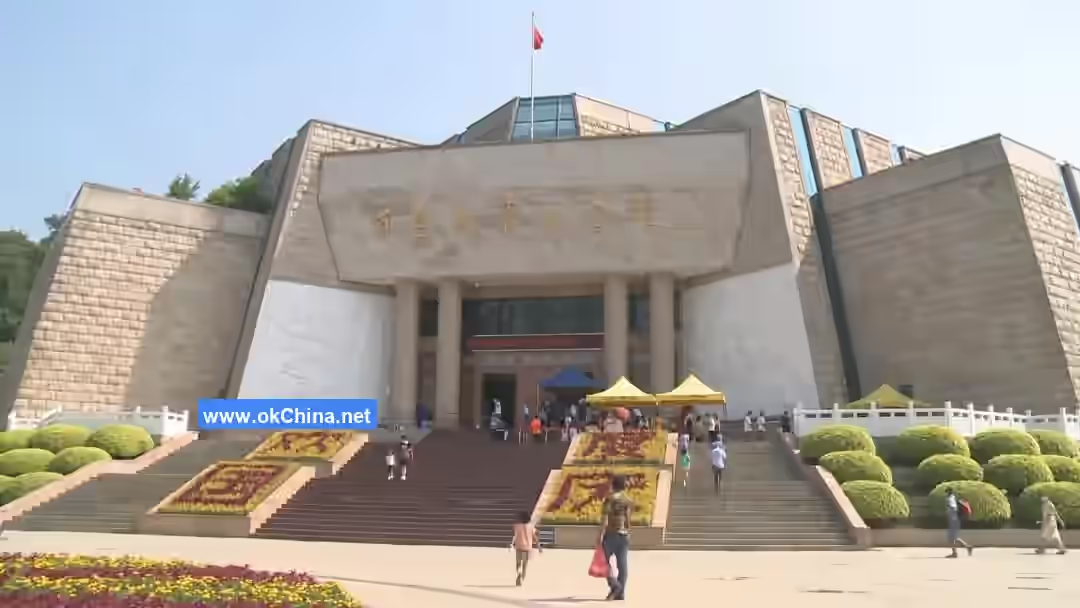
Baise Uprising Memorial Park
1. Introduction
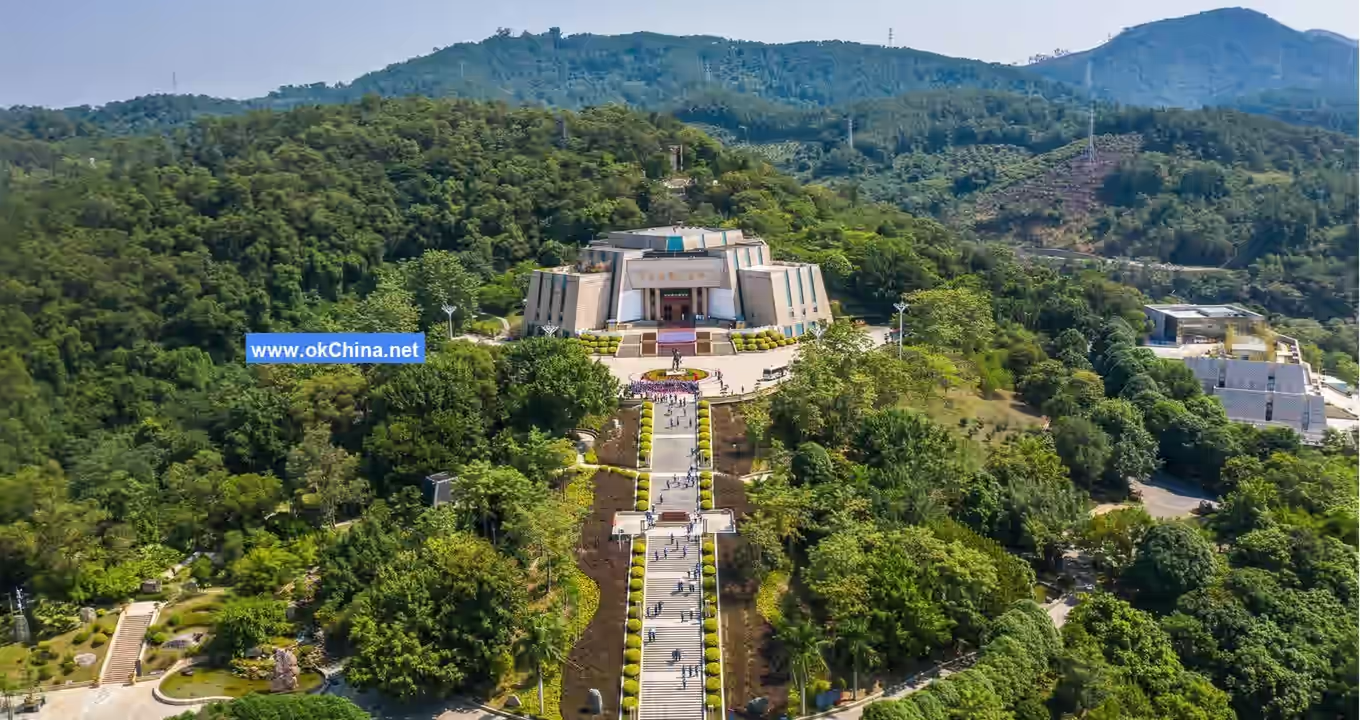
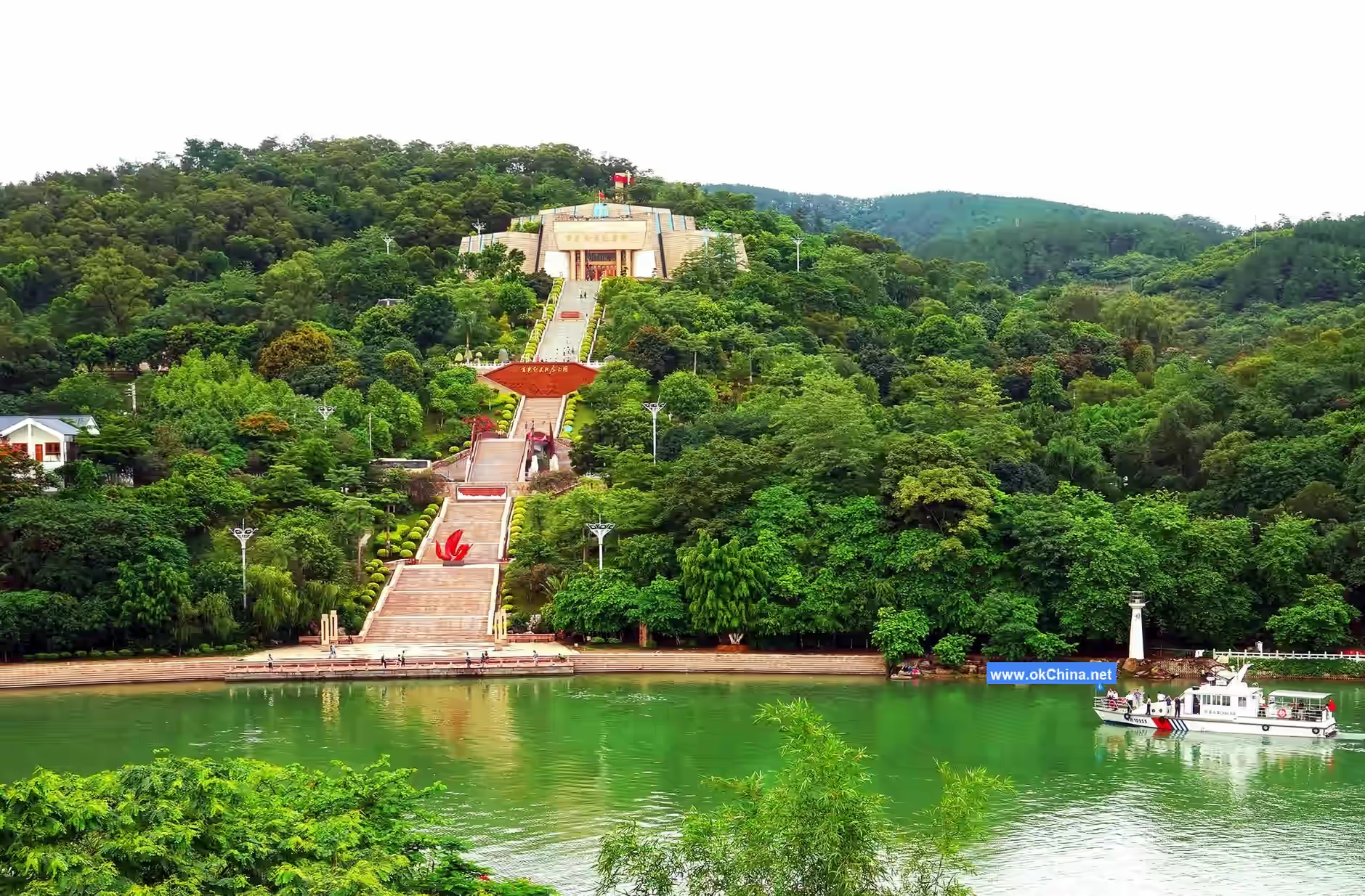
Baise Uprising Memorial Park is located on the Houlong Mountain, Panlong Mountain, and Yinglong Mountain east of Baise City. It is a thematic memorial park formed by integrating revolutionary historical and cultural resources such as the Baise Uprising Memorial Hall, the Youjiang Ethnic Museum, the Baise Uprising Monument, the Red Army Bridge, the Bronze Drum Tower, the Nange Pavilion, and the Liangguang Youth Friendship Garden. Established in July 2008, it is the core area of the "Two Rivers Red Flag, Baise Thunder" scenic area, which is one of the 12 key national red tourism scenic spots designated by the central government. The total planned area within the red line is 1,004 acres, with a current actual area of 600 acres. In 2009, the first phase of the expansion and renovation project of Baise Uprising Memorial Park was implemented. The construction included the renovation of the central axis of the memorial hall and surrounding facilities, the construction of the Baise Uprising Heroes Sculpture Garden, the creation of the Deng Xiaoping Handwriting Stele Forest, the renovation of the Bronze Drum Tower Square, and the greening transformation of the scenic area. Through the expansion and renovation, Baise Uprising Memorial Park has become a high-quality thematic memorial park that integrates a long history and culture, beautiful natural landscapes, and excellent revolutionary traditions, combining ideological education with tourism aesthetics. It has become a spiritual high ground of Baise City and an important calling card for promoting Baise.
2. Geographical Location
No. 112, Chengdong Road, Youjiang District, Baise City
3. Main Attractions
3.1 Baise Uprising Monument
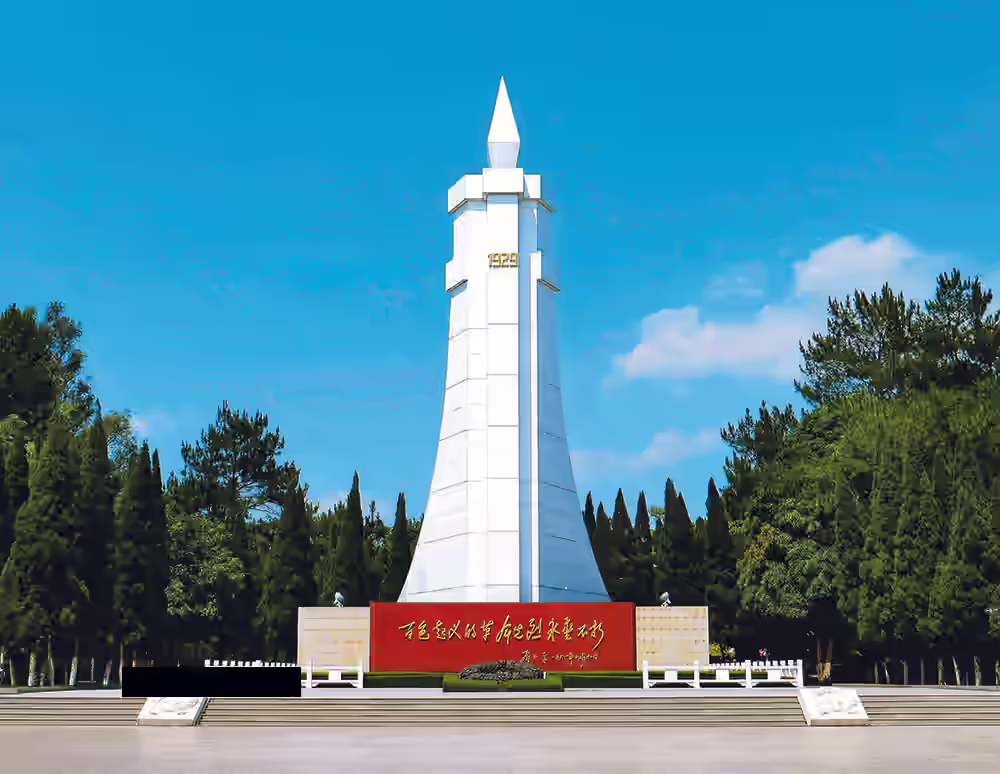
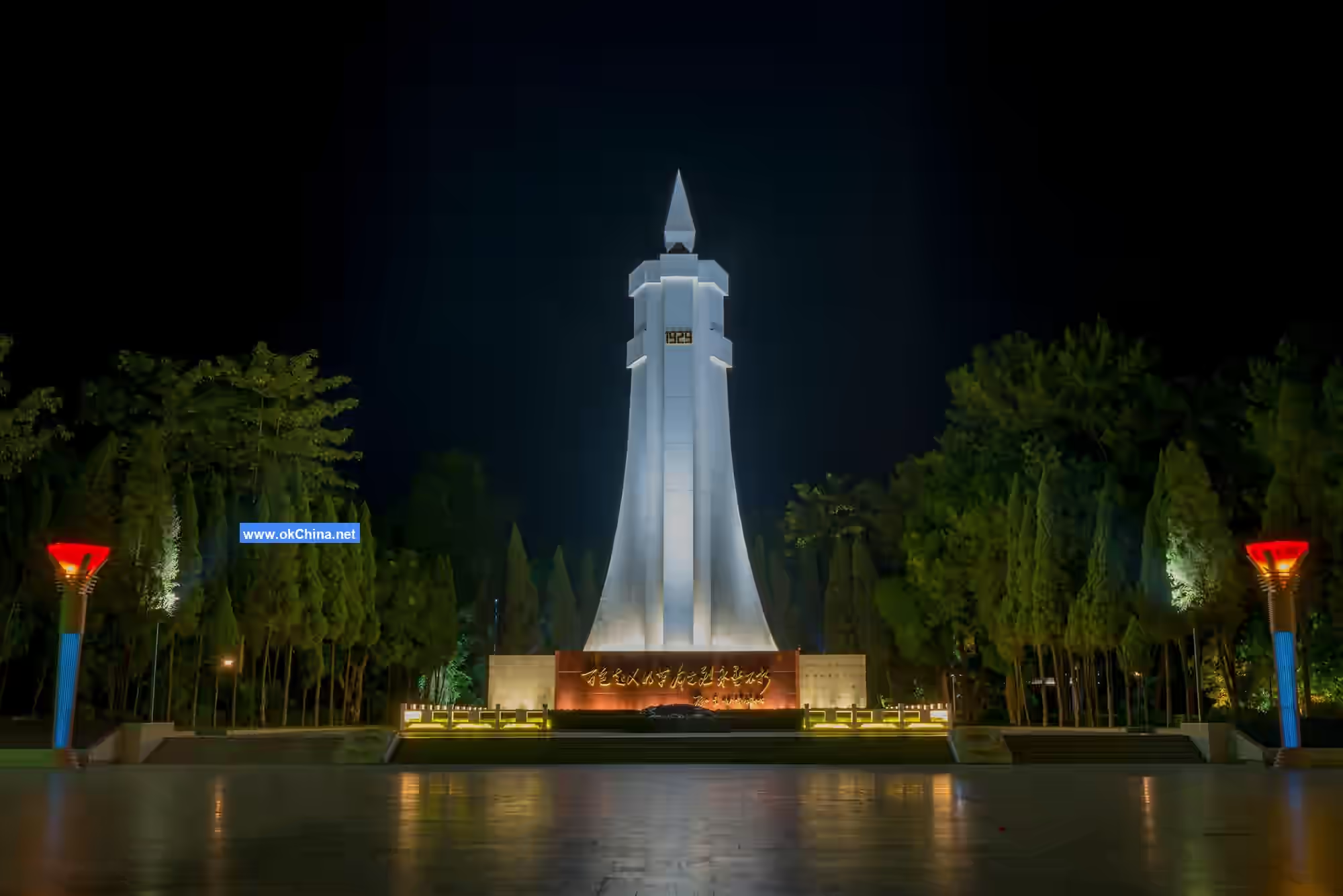
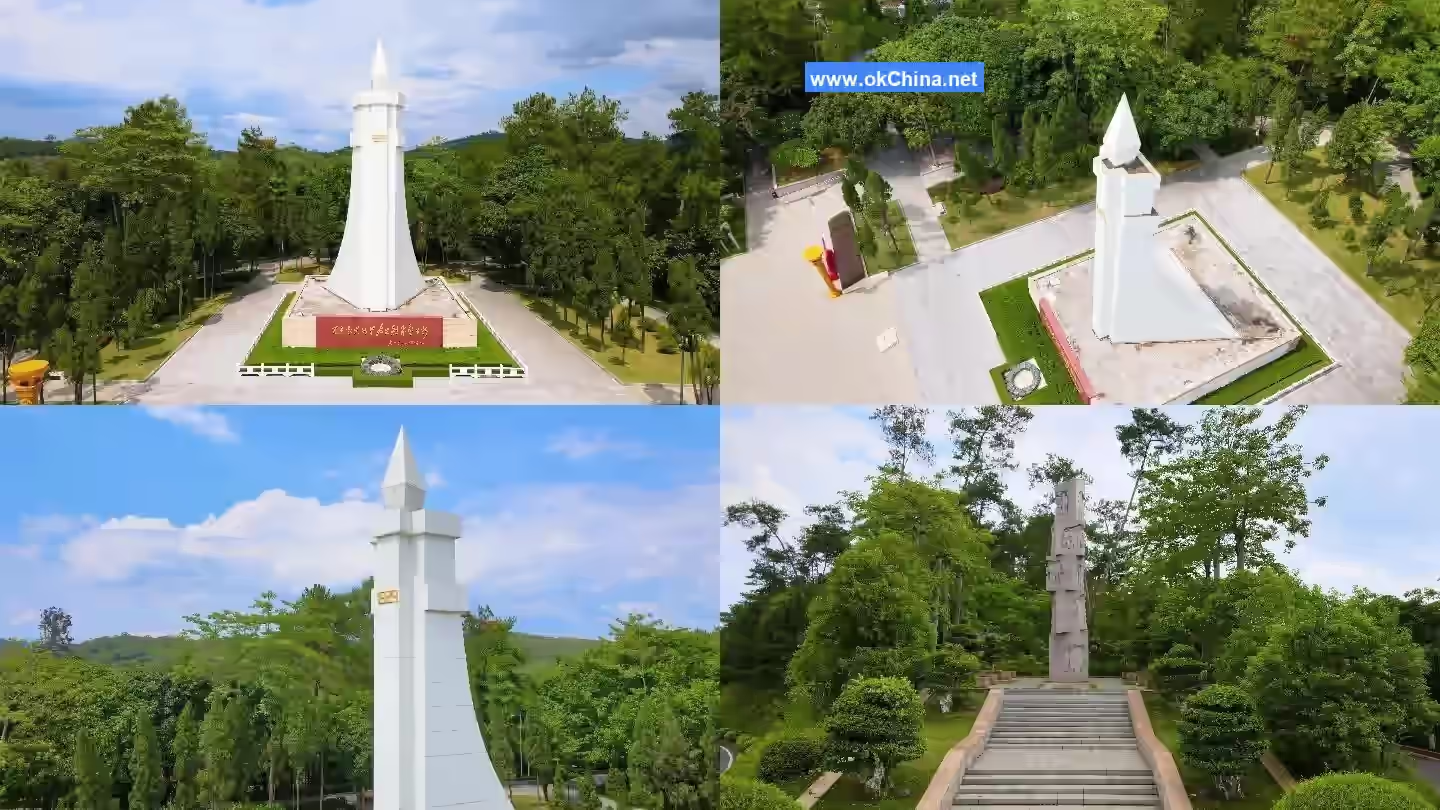
The Baise Uprising Monument, standing on Houlong Mountain, was built in 1984. The monument is 23.9 meters high, and its shape resembles a red spear and a broadsword piercing the sky, symbolizing the indomitable spirit and strength of the revolutionaries. The front of the monument base is inscribed with thirteen gilded characters written by Comrade Deng Xiaoping: "The revolutionary martyrs of the Baise Uprising are immortal." The back bears the chronicle of the Baise Uprising, and the sides feature white marble reliefs depicting the uprising and the victory of the revolution. The raised characters "1929" on the top of the monument indicate the year of the Baise Uprising. The base is surrounded by evergreen pines and cypresses, and there is a square in front of the monument for holding various commemorative activities. The steps leading to the monument square number 314, with "314" taken from the mathematical constant "π," symbolizing that the revolutionary spirit of the Baise Uprising will be passed down through generations. The width of the steps is 11 meters, representing the date of the Baise Uprising: December 11, 1929.
Since its completion, thousands of people from all walks of life have come to pay their respects. More than 60 current and former party and state leaders, including Hu Jintao, Jiang Zemin, and Wen Jiabao, have visited here to lay wreaths in honor of the revolutionary martyrs of the Baise Uprising.
3.2 Baise Uprising Memorial Hall
3.2.1 Permanent Exhibition
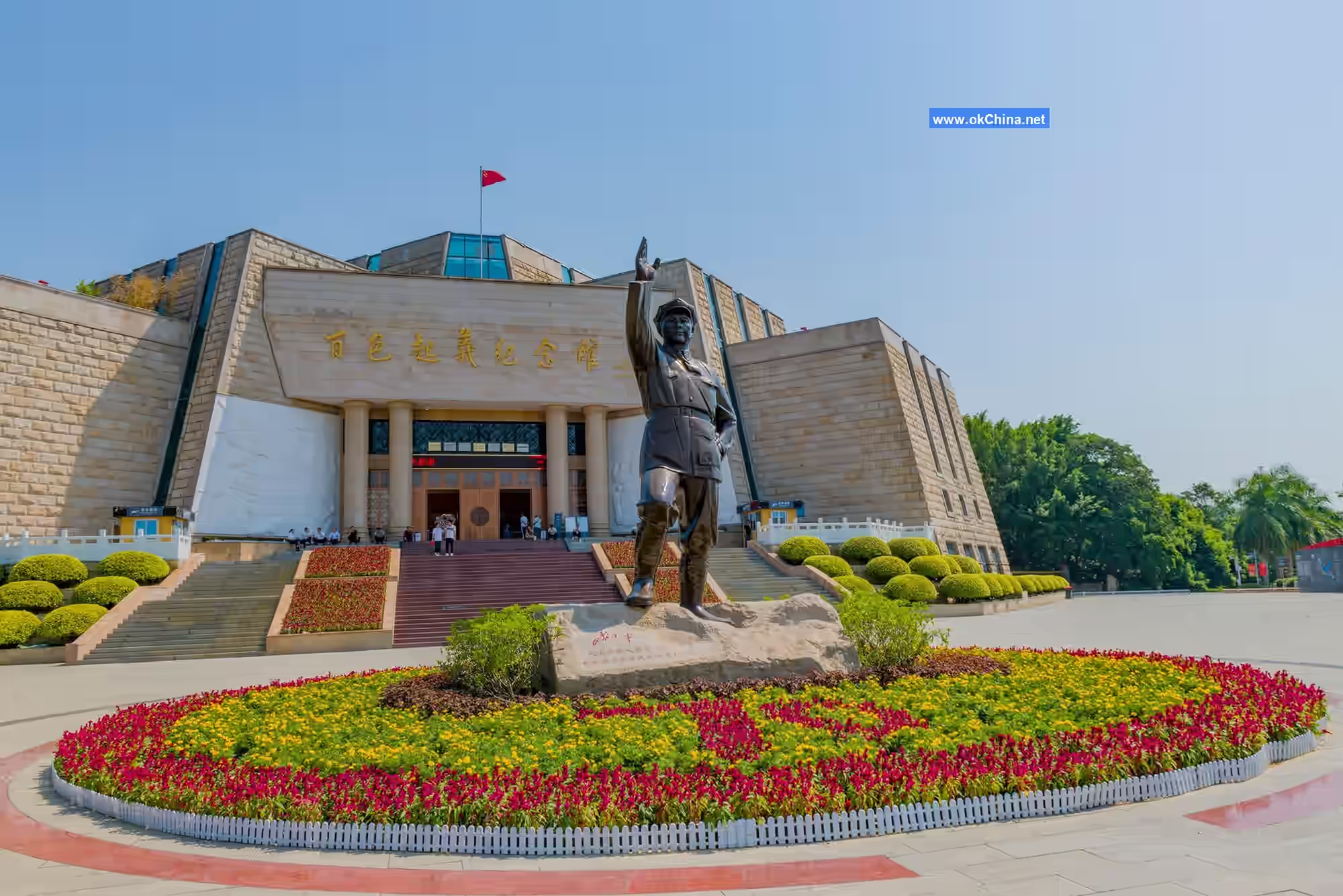
The Baise Uprising Memorial Hall has a building area of 6,000 square meters and an exhibition area of 3,500 square meters. The exhibition focuses on the Baise Uprising, with Comrade Deng Xiaoping's revolutionary activities in Baise and the combat history of the Red Seventh Army as the main themes. Using cultural relics as the primary exhibition language, it is divided into six parts: "Uprising Beacon," "Soviet Area Construction," "Eternal Radiance," "Noble Spirit Endures," "Shining Stars," and "Footprints of the Great Man." In terms of exhibition techniques, modern display technologies such as sound, light, electricity, multimedia, murals, sculptures, oil paintings, scene restoration, phantom imaging, and virtual reality are fully utilized to recreate history, highlight key points and highlights, and enhance artistic appeal and emotional impact. At the same time, by integrating ethnic culture and ethnic symbols into public spaces and exhibition details, it reflects a strong regional character and distinct artistic features.
3.2.2 Important Collections
The important collections of the Baise Uprising Memorial Hall mainly consist of modern and contemporary cultural relics. Examples include the whip used by Deng Xiaoping during his inspection work in Linfeng District, Enlong County, in the autumn of 1930; the general's uniform and inkstone of General Zhang Yunyi; the "Letter to Compatriots" printed by Wei Baqun and others in 1926; the flag of the Soviet government in Bazhe Township, Donglan County; the clock and handbell used by Wei Baqun; the "Youjiang Daily" founded by the Red Seventh Army and the printing press used at the time. These provide important reference value for people to commemorate the achievements of Deng Xiaoping and other proletarian revolutionaries of the older generation and to receive patriotic education and revolutionary tradition education.
"Letter to Compatriots": In 1925, Wei Baqun, in the name of the Special Party Department of the Kuomintang in Guangxi Province, issued the "Letter to Compatriots," calling on compatriots to unite and "carry out the National Revolution."
"Provisional Regulations on Land Law": Promulgated on May 1, 1930. The main contents of the regulations: first, the scope of land confiscation was the land of landlords and counter-revolutionaries; second, land distribution was based on the amount of output, i.e., calculating land area by yield; third, distribution was based on the average population; fourth, the method of taking from the rich to supplement the poor was implemented.
3.3 Baise National Integrity Education Base
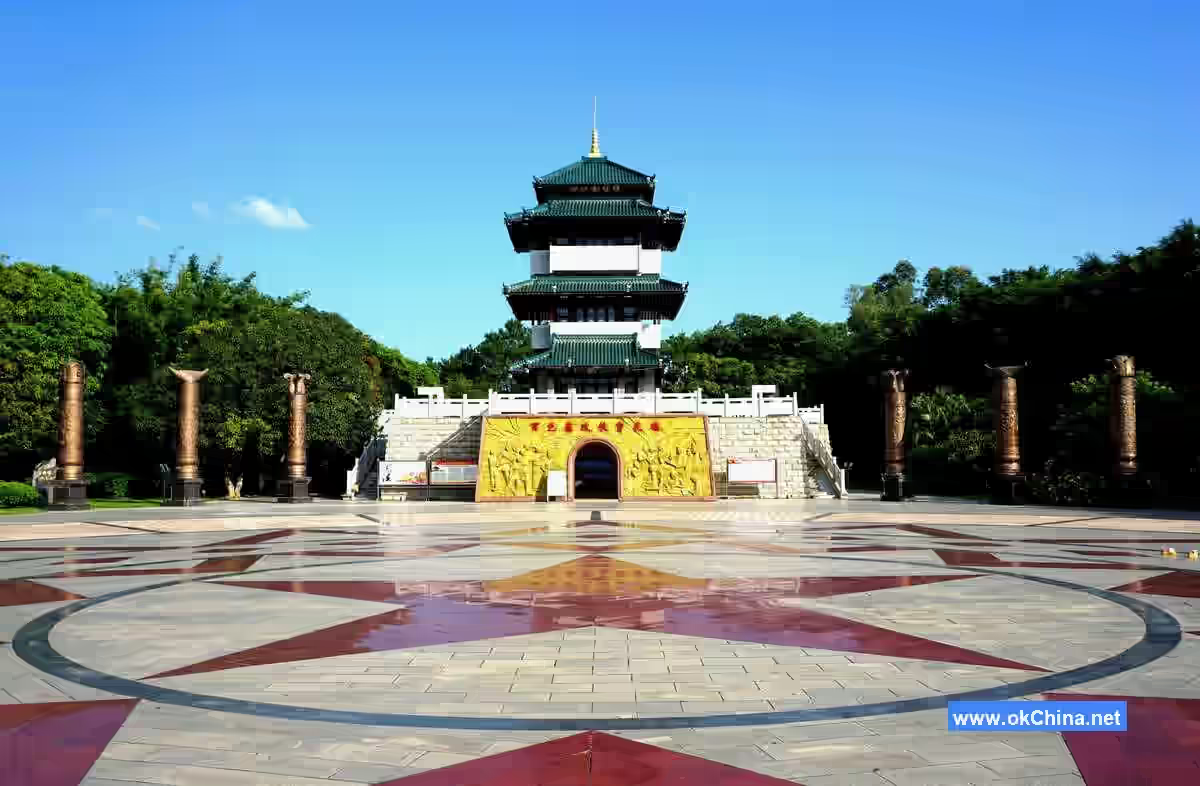
The Baise National Integrity Education Base officially opened to the public on December 11, 2012. The integrity exhibition covers an area of 18,000 square meters and is divided into indoor and outdoor sections. The indoor section is a thematic exhibition hall for integrity education; the outdoor section displays integrity culture education themes through landscape art forms such as scenic walls, memorial archways, stone carvings, couplets, and integrity corridors, serving as an extension and continuation of the indoor exhibition. The Integrity Education Base uses history to inform governance, warns the present, and provides the general audience with unique and profound lessons.
3.4 Baise Poverty Alleviation Exhibition Hall
The Baise Poverty Alleviation Exhibition Hall officially opened to the public on December 10, 2019. The exhibition hall has a building area of 3,500 square meters and an exhibition area of 2,200 square meters. The exhibition content follows a chronological sequence and is divided into four parts: the Preface Hall, the Journey Chapter, the Assistance Chapter, and the Honors Chapter. It showcases to the whole society the arduous journey and glorious achievements of Baise City in poverty alleviation, highlighting the indomitable and striving spirit of the people of all ethnic groups in Baise in the decisive battle against poverty and for a moderately prosperous society.
3.5 Huang Wenxiu Advanced Deeds Exhibition
The Huang Wenxiu Advanced Deeds Exhibition officially opened to the public on February 8, 2021. The exhibition is located within the Baise Poverty Alleviation Exhibition Hall in the Baise Uprising Memorial Park, covering an exhibition area of 380 square meters. The Huang Wenxiu Advanced Deeds Exhibition, themed "Beautiful Youth, Model of the Times," consists of four units: "Born in Baise," "Returning Home," "Residing in Baini Village," and "Youth Album," as well as two special exhibition areas: Huang Wenxiu at Beijing Normal University and Huang Wenxiu at Changzhi University. It fully showcases Huang Wenxiu's hardworking and striving spirit during her youth, presents her short but brilliant life, and reflects her excellent qualities of staying true to her original aspirations, loyalty to the Party, caring for the masses, practical responsibility, optimism, and perseverance.
3.6 Deng Xiaoping Handwriting Stele Forest
The Deng Xiaoping Handwriting Stele Forest is located at the half-mountain square of Yinglong Mountain in the Baise Uprising Memorial Park. It is a red tourism attraction newly built in 2009 to commemorate the 80th anniversary of the Baise Uprising. The stele forest covers a total area of 30,000 square meters and consists of 100 natural wonder stones and 120 pieces of handwriting. It is currently the largest, most comprehensive, and most diverse Deng Xiaoping handwriting stele forest in China.
The Deng Xiaoping handwriting in the stele forest is divided into three sections, featuring inscriptions related to "The Essence of Deng Xiaoping's Thought and Theory," "Leading the Baise Uprising and Founding the Red Seventh and Eighth Armies," and "Work Methods, Approaches, and Life Interests," which are widely loved by tourists.
The Deng Xiaoping Handwriting Stele Forest integrates the essence of Deng Xiaoping Theory, the calligraphy art of the great man, stone art, and environmental art, possessing high ideological, artistic, and documentary value. It is hailed as an "open-air treasure trove of Deng Xiaoping's theoretical thought."
3.7 Baise Uprising Heroes Sculpture Garden
The Baise Uprising Heroes Sculpture Garden is located on Yinglong Mountain in the Baise Uprising Memorial Park, covering an area of 108 acres. It is a red tourism attraction newly built in 2009 to commemorate the 80th anniversary of the Baise Uprising. The entire garden uses sculpture art to vividly depict the spirit of the revolutionary predecessors of the Baise Uprising, who feared no sacrifice and marched forward courageously, and to recreate the touching scenes of the close unity and joint struggle between the military and civilians in the Youjiang Revolutionary Base Area. The sculpture garden is divided from south to north into sections such as "Gate of Remembrance," "Uprising Leaders," "Baise Thunder," "Military-Civilian Fish-Water Relationship," and "Famous Heroes," including a total of 43 groups (pieces) of main sculptures and group sculptures. Among them, the "Uprising Leaders" group sculpture was awarded the "Annual Grand Prize" for outstanding urban sculpture projects in China in 2009 by the National Urban Sculpture Construction Guidance Committee. The completion of the sculpture garden has added a rich, innovative, and beautifully environment-friendly patriotic education base to Baise, making it one of the "New Three Chapters" of Baise's red tourism.
3.8 Central Axis Landscape
The central axis landscape of the Baise Uprising Memorial Hall has a total length of 350 meters, extending from the square in front of the Baise Uprising Memorial Hall to the Youjiang River. The middle section features a pedestrian overpass across the road to separate pedestrians and vehicles, organically connecting Yinglong Mountain Park and the Liangguang Youth Friendship Garden into a whole. From top to bottom along the central axis, there are attractions such as the inscription stele with Comrade Jiang Zemin's inscription "The heroic achievements of the Baise Uprising shine through the ages," the quotation wall from Comrade Hu Jintao's inspection of Baise, the majestic thematic relief wall of the Baise Uprising Memorial Park, the Liangguang Friendship Bridge—Guangzhou Bridge, the unique Zhuang ethnic-style sculpture "Flames of the Zhuang Homeland," and the riverside dock, making it a veritable red corridor. Visitors can walk along the central axis to the bank of the Youjiang River and then take a red boat to tour the river. Looking at the central axis of the memorial hall, it is grand and magnificent, symbolizing the heroic spirit of the revolutionary predecessors of the Baise Uprising who sacrificed their lives and shed their blood, bravely advancing for the cause of people's liberation. It inspires the cadres and masses of the Baise revolutionary old area to inherit and carry forward the glorious revolutionary tradition and devote themselves with full confidence and high morale to the great cause of building a harmonious society in all respects.### 3.9 Nange Pavilion Nange Pavilion, located on Longyan Mountain opposite Yinglong Mountain Park in the Baise Uprising Memorial Park, was first built in 1871 and is one of the eight scenic spots of Baise in the late Qing Dynasty. The pavilion stands over six zhang (approximately 20 meters) high, featuring a magnificent and uniquely structured three-story hexagonal design with three arched doorways. Its upturned eaves are adorned with six bronze gourds, and the surrounding beams and columns are exquisitely carved and painted. After restoration, Nange Pavilion remains majestic and resplendent. The folk custom of burning incense and making wishes at the pavilion continues to this day, forming a unique culture of prayer.
4. Historical Background: The Baise Uprising
4.1 Background
In the 1920s, social conflicts in China intensified, and the rule of the new Kuomintang warlords plunged people's lives into extreme hardship. Guangxi, a remote region with a backward economy and a concentration of ethnic minorities, faced particularly acute social contradictions. To resist the reactionary rule of the Kuomintang and advance the agrarian revolution, the Communist Party of China decided to launch an armed uprising in the Baise area of Guangxi. Baise, situated at the junction of Yunnan, Guangxi, and Guizhou provinces, held strategic geographical importance and had a solid mass base, especially among ethnic minorities like the Zhuang and Yao, who strongly supported the revolution. Additionally, Communist Party members such as Deng Xiaoping and Zhang Yunyi had previously carried out active work in Guangxi, laying the organizational and mass foundation for the uprising.
4.2 Course
On December 11, 1929, under the leadership of Communist Party members including Deng Xiaoping, Zhang Yunyi, and Wei Baqun, the Baise Uprising officially erupted. The insurgent forces, primarily composed of the Guangxi Garrison Fourth Brigade and peasant militias, quickly occupied Baise County. Following the success of the uprising, the Chinese Workers' and Peasants' Red Army Seventh Army and the Right River Soviet Government were established, with Zhang Yunyi appointed as commander of the Red Seventh Army, Deng Xiaoping as political commissar, and Wei Baqun as commander of the Third Column. After its formation, the Red Seventh Army actively promoted the agrarian revolution, fighting local tyrants and distributing land, which won widespread support among peasants. The insurgent forces also established the Right River Revolutionary Base Area, forming a red region centered on Baise. However, facing encirclement and suppression by Kuomintang forces, the Red Seventh Army was forced to leave the Right River Base Area in the autumn of 1930, marching north to the Central Soviet Area in Jiangxi to join forces with the Central Red Army.
4.3 Significance
4.3.1 Military Significance
The Baise Uprising created the Chinese Workers' and Peasants' Red Army Seventh Army, strengthening the armed forces led by the Communist Party of China and accumulating valuable experience for subsequent revolutionary struggles. The establishment of the Red Seventh Army and the Right River Revolutionary Base Area provided crucial strategic support for the victory of the Chinese revolution.
4.3.2 Political Significance
The successful conduct of the uprising in an ethnic minority area promoted unity among the various ethnic groups in Guangxi and served as a model for the Communist Party of China's revolutionary work in ethnic regions. The establishment of the Right River Soviet Government marked a successful attempt by the Communist Party of China to establish political power in ethnic minority areas.
4.3.3 Historical Impact
The Baise Uprising was one of the significant events in the early armed struggles of the Communist Party of China, laying a solid foundation for the victory of the Chinese revolution. The unwavering faith, hard work, and spirit of ethnic unity demonstrated during the uprising have become precious spiritual assets for the Communist Party of China and the Chinese people.
4.3.4 Commemoration and Legacy
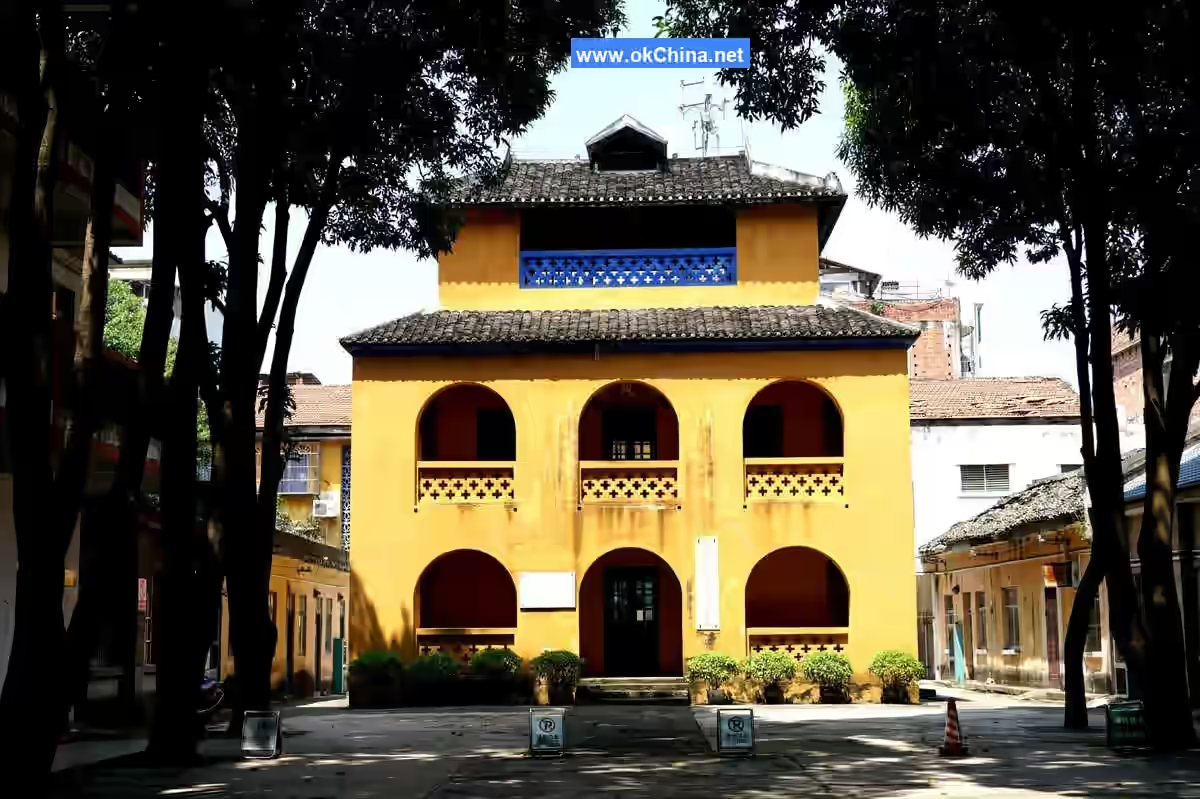
Today, sites such as the Baise Uprising Memorial Hall and the former headquarters of the Red Seventh Army have become important patriotic education bases, allowing future generations to commemorate and learn from this glorious history. The spirit of the Baise Uprising continues to inspire generations of Chinese people to strive for national rejuvenation.
Comments
Post a Comment