


Baidicheng · Qutang Gorge Scenic Area
1. Introduction
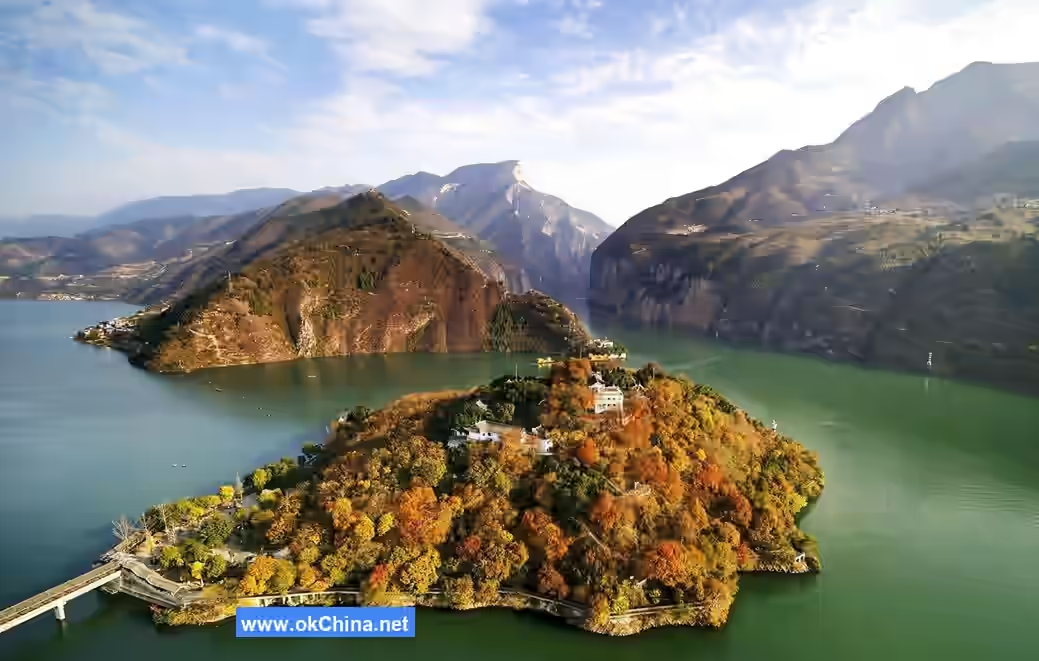
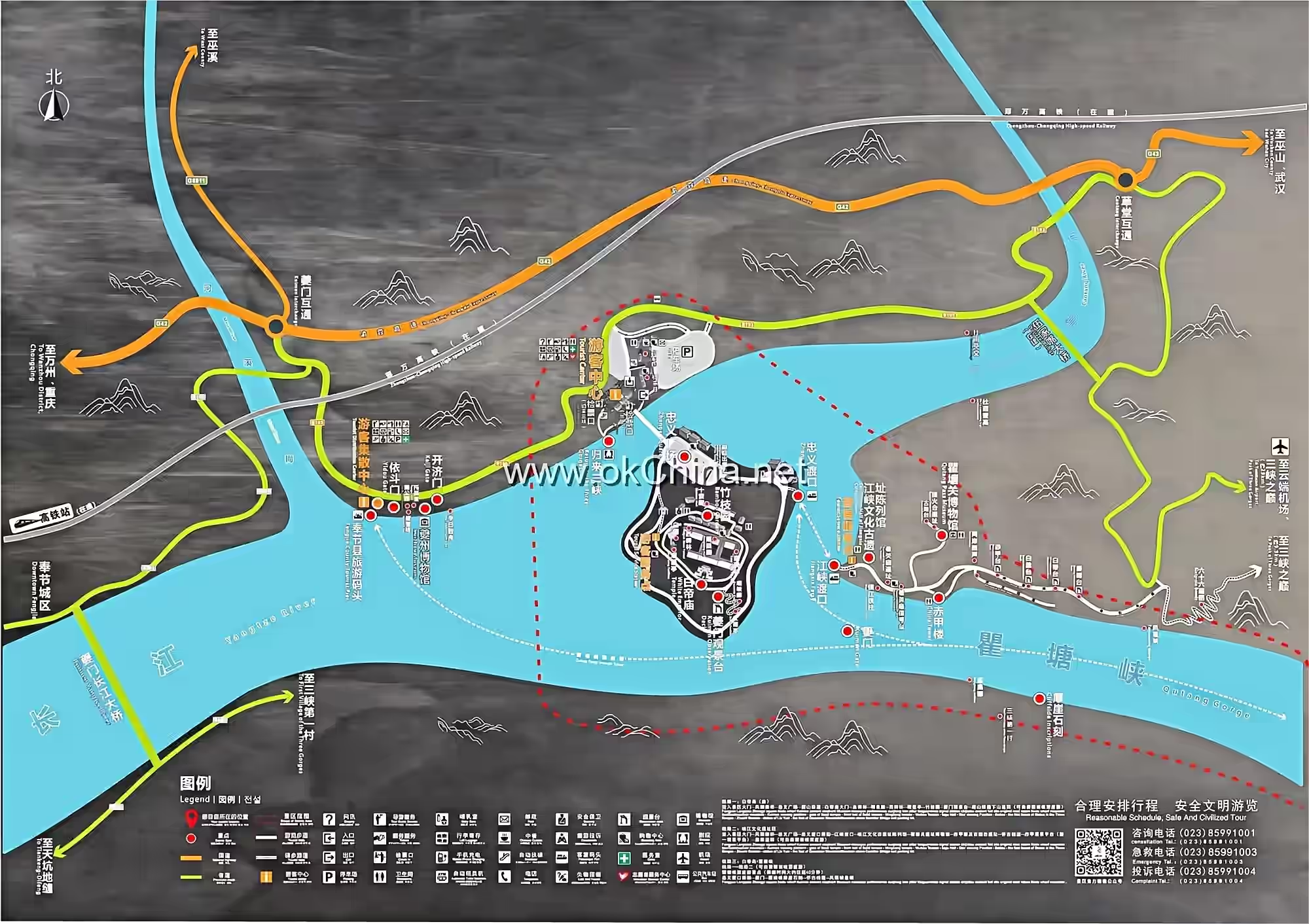
The Baidicheng · Qutang Gorge Scenic Area is located on Baidi Mountain on the north bank of the Yangtze River at the mouth of Qutang Gorge in Fengjie County, Chongqing. Situated at the western entrance of the Three Gorges of the Yangtze River, it faces Kuimen to the east, Baiyan Mountain across the river to the south, borders Fengjie County town to the west, and leans against Jigong Mountain to the north. It is approximately 10 kilometers east of Fengjie County town. The scenic area covers a total area of 4.7 square kilometers and primarily consists of two major scenic zones: Baidicheng (White Emperor City) and Qutang Gorge. It boasts numerous historical sites and monuments, blending natural and cultural elements, poetic charm and wartime history into one. It serves as the starting point to appreciate the magnificent beauty of the Three Gorges of the Yangtze River. The back of the 10-yuan note in both the 1999 and 2019 editions of the fifth series of Renminbi issued by the People's Bank of China features the image of Kuimen.
2. Geographical Environment
2.1 Location and Territory
The Baidicheng · Qutang Gorge Scenic Area is situated on Baidi Mountain on the north bank of the Yangtze River at the mouth of Qutang Gorge in Fengjie County, Chongqing. Located at the western entrance of the Three Gorges of the Yangtze River, its elevation ranges from 188 to 1388 meters. It spans approximately 109°1′ east longitude and 30°29′ north latitude, extending east to Baidi Village and Qutang Village, west to Guanmiaotuo, south to the boundary of Fengjie and Wushan counties (Huoyan Mountain, Huayanzi), and north to Ziyangcheng.
2.2 Geology and Geomorphology
The scenic area lies at the convergence of three major tectonic belts: the Sichuan-Hubei-Hunan-Guizhou Uplift Fold Belt, the Southern Dabashan Downwarp Fold Belt, and the Eastern Sichuan Fold Belt. The geological structure is dominated by folds, with rock strata generally trending northeast-southwest. Anticlines formed by folding often constitute mountain ranges. All streams and rivers within the area belong to the Yangtze River system. The geomorphology is complex and diverse due to the control of geological structure, stratigraphic distribution, lithology, and the influence of hydrological processes. It features undulating mountains, numerous streams and rivers, crisscrossing gullies, and characteristics such as deep river cutting and steep mountain slopes.
2.3 Climatic Features
The scenic area has a mid-subtropical humid monsoon climate, characterized by early springs, hot summers, cool autumns, and warm winters, with distinct seasons, a long frost-free period, suitable sunlight, and abundant rainfall. Influenced by topography, the climate exhibits significant vertical variation, forming a typical three-dimensional climate pattern. The average annual temperature is 16.4°C in areas below 600 meters, 13.7–10.8°C in areas between 1000–1400 meters, and below 10.8°C in areas above 1400 meters. The average annual sunshine duration is 1639 hours, and the average annual precipitation is 1132 mm.
3. Main Attractions
Overview The Baidicheng · Qutang Gorge Scenic Area covers a total area of 4.7 square kilometers and mainly consists of two scenic zones: Baidicheng and Qutang Gorge. Baidicheng has multiple city gates, including the discovered East Gate, Small North Gate, Great North Gate, Huangdiantai Wengcheng Gate (Sange Gate), Small West Gate, and West Gate. Within the Baidi Temple complex are Ming and Qing dynasty structures such as the Mingliang Hall, Wuhou Shrine, and Guanxing Pavilion. Qutang Gorge, adjacent to Baidicheng, stretches for 8 kilometers and integrates majesty, wonder, peril, and steepness, making it the shortest, narrowest, and most perilous section of the Three Gorges. On the northern bank's Chijia Mountain within Qutang Gorge are three major archaeological sites—Laoguanmiao Culture Site, Daxi Culture Site, and Wushan Ape-man Site—as well as attractions like the Laoguanmiao Signal Tower, Chijia Tower, Ancient Fort, Ancient Plank Road, and Hanging Coffins in Fengxiang Gorge. On the southern bank's Baiyan Mountain are landscapes such as the Mengliangti Ancient Plank Road remains, Cliff Carvings, Rhinoceros Gazing at the Moon Peak, and Ape-man Peak, condensing two million years of Chinese human history.
3.1 Natural Landscapes
3.1.1 Qutang Gorge
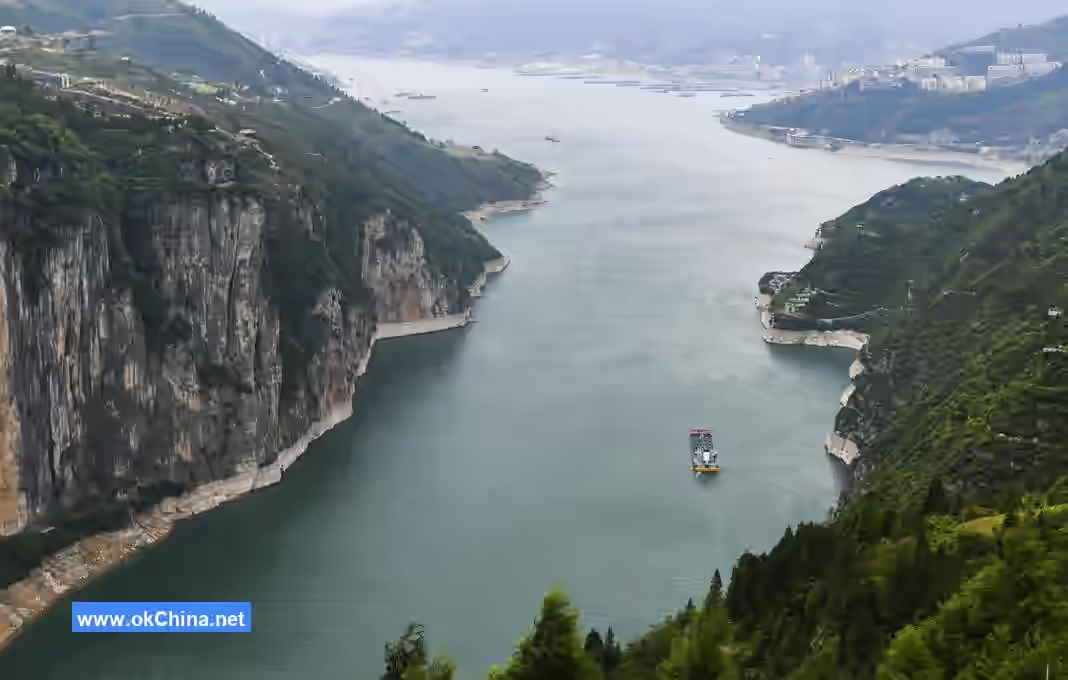
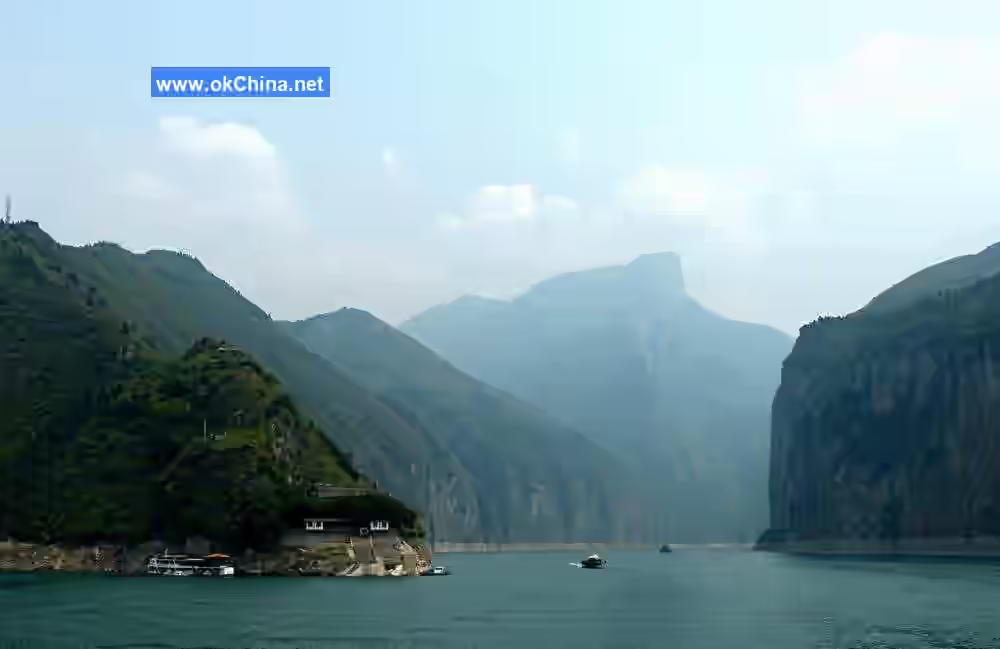
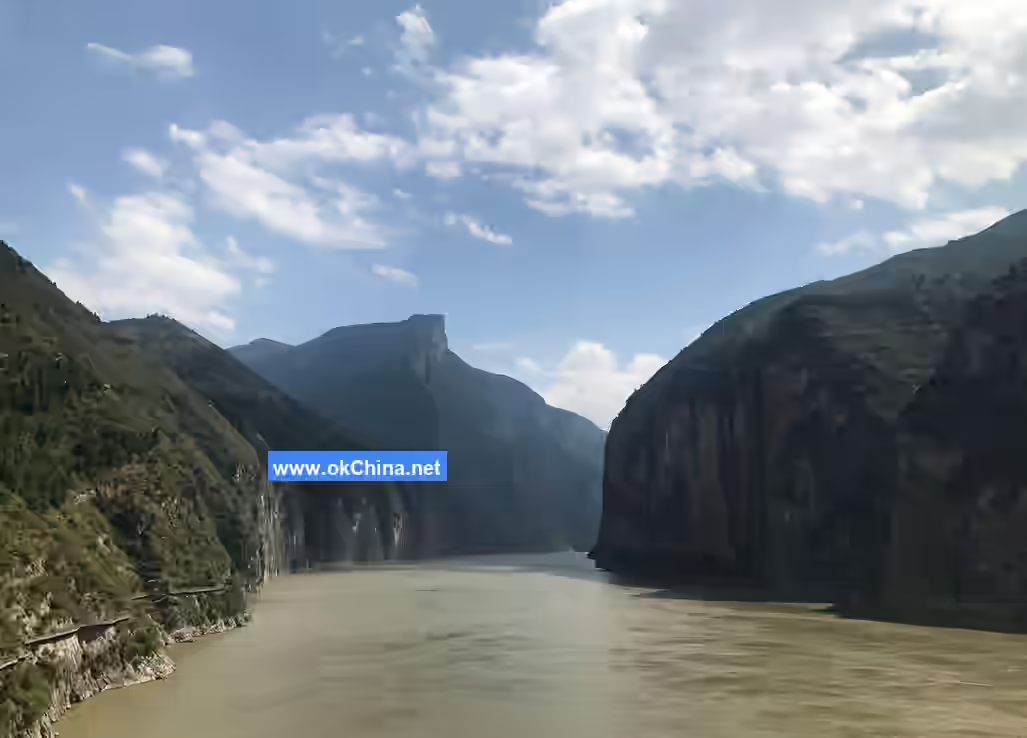
Qutang Gorge, also known as Kui Gorge, was historically called Guangxi Gorge, Ba Gorge, Xiling Gorge, etc. It is the first gorge of the Three Gorges of the Yangtze River. Stretching from Baidicheng in Fengjie in the west to Daxi Town in Wushan in the east, it is the richest in scenic spots and historical sites. The gorge is steep, with peaks on both banks seemingly about to meet, thousand-foot sheer cliffs, ancient trees and vines resembling a high-hanging embroidered curtain; the river water within the gorge surges with overwhelming force, sounding like a mountain collapse heard for miles. After the Three Gorges Dam reservoir level rose to 175 meters in 2008, Qutang Gorge became a placid lake amidst high gorges, with the perilous peaks and rugged rocks on both banks remaining. It presents both the绚丽多彩 beauty of red leaves covering the mountains like rosy clouds and the serene, vast grandeur of shimmering blue waters and misty waves.
3.1.2 Kuimen (Kui Gate)
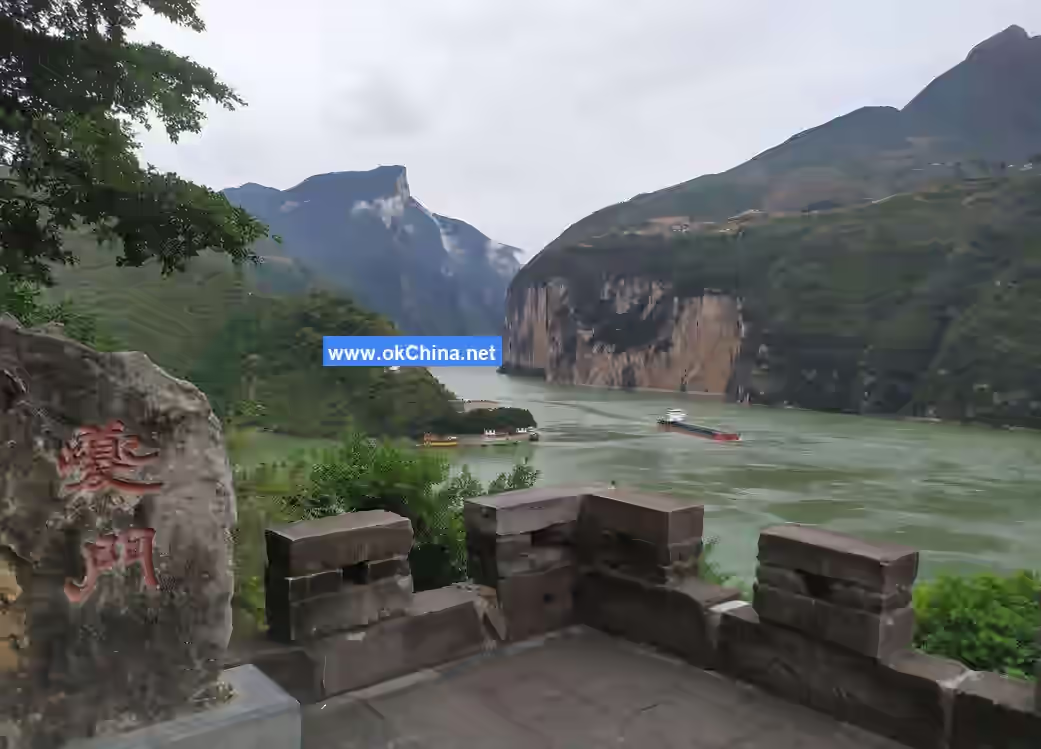
Kuimen is located at the western mouth of Qutang Gorge. Chijia Mountain stands majestically on the north bank, while Baiyan Mountain towers on the south bank, facing each other across the river. The sheer cliffs are like cut walls, with a slit of sky and the gorge opening like a gate. The riverbanks stand as steep as if carved, resembling a naturally formed gate. The river here is only about a hundred meters wide. The poet Du Fu praised it: "All waters converge at Fu and Wan, Qutang contends for this single gate." The approximately thousand-meter-high Chijia and Baiyan mountains face each other, as the rolling torrents and churning waves clamorously squeeze through this gate. Due to the large water volume and narrow channel, the water level can rise sharply by 20 meters within a day during flood season, and the annual water level variation can even reach 50 meters.
3.1.3 Chijia Mountain
Ancient Fengjie County Annals record: "Chijia Mountain grows no grass or trees; its soil and rocks are all red, like a person's bare back, hence the name Chijia (Red Armor)." When the setting sun shines upon it, the red rocks resemble a blazing fire, creating the scenic view "Chijia in Clear Sunshine." Chijia Mountain, with an elevation of 1388 meters, is the main peak of the Three Gorges. It greets the morning sun in the east and bids farewell to the evening glow in the west, exhibiting magnificent grandeur. Based on the lines by the great Tang dynasty poet Du Fu—"Both Chijia and Baiyan pierce the sky, / Dwellings wind and climb to the mountaintop. / Maple woods and orange trees, a painting combined, / Layered paths and towers, brocade suspended"—this landscape is called the "Pinnacle of the Three Gorges."
3.1.4 Rhinoceros Gazing at the Moon
Located on the waist of Baiyan Mountain on the southern bank of Qutang Gorge, a solitary巨石 stands like a rhinoceros lying on its side, its head turned eastward as if gazing at the moon above Kuimen, hence the name "Rhinoceros Gazing at the Moon."
3.1.5 Golden Cave
On the cliff of Baiyan Mountain at Kuimen, there is a cave, with a 70-meter悬崖 above and a 200-meter深谷 below. Legend has it that before his defeat, Gongsun Shu of the Western Han dynasty secretly hid years of accumulated gold, silver, and jewels in this cave for a future comeback, hence the name "Golden Cave." Two thousand years ago, the ancient Ba people collectively disappeared in this cave, becoming an enduring mystery in Chinese historiography. On August 25, 1998, a joint expedition team from China, the United Kingdom, and Ireland scaled the sheer cliff of Kuimen and entered the Golden Cave, discovering remains,岩画涂鸦, ancient weapons, household utensils, etc., inside.
3.1.6 Yanyu Rock (Yanyu Dui)
Yanyu Rock was originally a huge reef横亘 at the mouth of Qutang Gorge, below Baidi Mountain. It was 30 meters long, 20 meters wide, and 40 meters high, standing against the current like a fierce拦路虎, blocking half the航道 and having撞沉无数船只 since ancient times. "Whirlpools at Yanyu" was renowned for its狂澜万卷 and泡漩千重. The Guangxu edition of Fengjie County Annals · Mountains and Rivers records: "Yanyu Rock,屹立 at the mouth of Qutang Gorge, is a巨石 in the midstream. Local people have passed down since ancient times: beneath Yanyu Rock lies a Kui dragon. In summer when the water rises, the dragon潜入 the Longtan Pool from the West Rang River (today's Meixi River) and lurks below the Dragon King Temple; in autumn when the water recedes, it returns to Yanyu." During prolonged droughts and low water, most of Yanyu Rock could be exposed, revealing three foot-like supports resembling a tripod鼎. Although Yanyu Rock posed a danger of capsizing boats, it also served as a navigational aid. In the winter of 1959, during the regulation of the Sichuan river航道, Yanyu Rock was blasted away. Since then, the mouth of Qutang Gorge transformed from the "world's most perilous place" into a "placid lake amidst high gorges." Many Tang and Song dynasty poets composed poems titled or themed on "Yanyu Rock."
3.1.7 Phoenix Spring
Phoenix Spring is a spacious偏岩洞 located at the lower section of the sheer cliff of Baiyan Mountain. In front of the cave stands a large stalagmite, 8 meters high with a base diameter of 6 meters, from which clear spring water emerges. Its shape remarkably resembles a phoenix stretching its neck into a rock crevice to drink the clear spring. The "phoenix body" is covered with water willow trees,恰如满身凤羽. A天生 small shrub on its head resembles the phoenix's crest冠. When the breeze blows, the green "feathers" flutter, making it栩栩如生, hence the name Phoenix Spring. In 2003, after the Three Gorges Dam impoundment, Phoenix Spring was submerged.
3.2 Cultural Landscapes#### 3.2.1 Baidi City
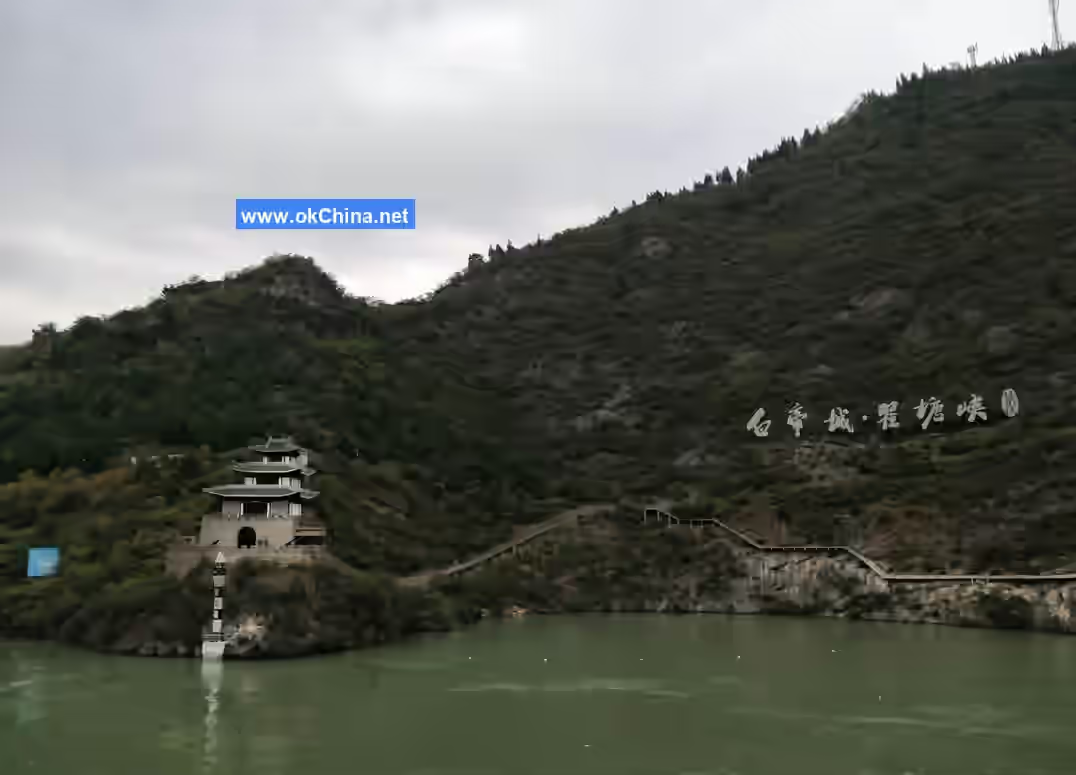
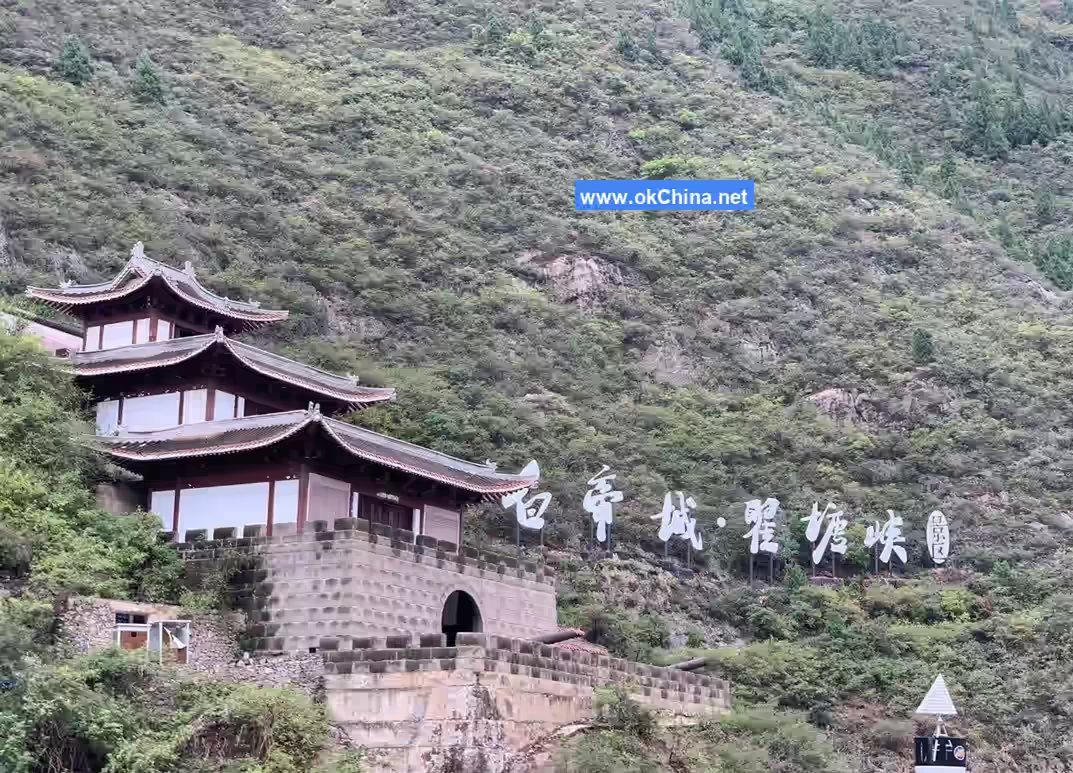
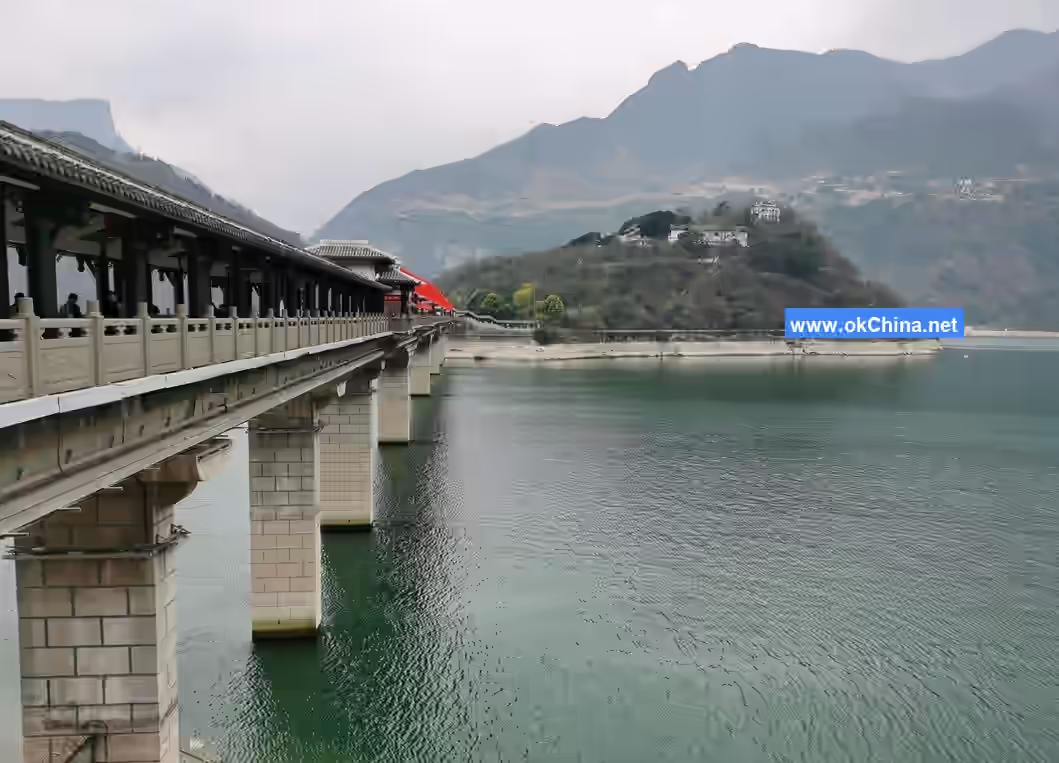
Baidi City is located at the mouth of the Qutang Gorge, 10 kilometers east of Fengjie County. Surrounded by water on all sides, it occupies a crucial land and water transportation hub. In the late Western Han Dynasty, Gongsun Shu, who had established a separatist regime in Sichuan, recognized the strategic importance of this easily defensible location and built a city wall approximately five li in circumference, stationing troops there for defense. At that time, there was an ancient well within the city from which white mist often rose. Rumors spread that this was an auspicious sign of a "white dragon offering blessings," foretelling the emergence of a new emperor. Consequently, Gongsun Shu "leaped onto his horse and proclaimed himself emperor," adopting the title "White Emperor," and the city he built was named Baidi City. In the 12th year of the Jianwu era of the Eastern Han Dynasty (36 AD), Emperor Guangwu of Han, Liu Xiu, sent troops into Sichuan. Gongsun Shu died in battle in Chengdu. Gongsun Shu reigned as emperor for 12 years. During his reign, warfare was frequent in various regions, but the area around Baidi City remained relatively peaceful. After his death, the local people, grateful for his benevolence, built a temple on Baidi Mountain to enshrine a statue of Gongsun Shu for worship, known as the Baidi Temple. In the second year of the Qianyuan era (759 AD) of the Tang Dynasty, the great poet Li Bai's poem "Departing from Baidi City at Dawn" brought fame to Baidi City both domestically and internationally. The incense offerings at Baidi Temple have always been prosperous. From the early Eastern Han Dynasty until the seventh year of the Zhengde era of the Ming Dynasty (1512 AD), a span of over 1,400 years, it primarily enshrined Gongsun Shu. Even though there were changes in between, Baidi Temple remained inseparably linked to Gongsun Shu, and there was never a period when the temple lacked a "White Emperor." The Southern Song poet Lu You traveled from Shaoxing, Zhejiang, upstream along the Yangtze River, through the Three Gorges, to serve as Tongpan (Deputy Commissioner) in Kuizhou in the southwest. In his "Diary of a Journey to Shu," he recorded: "...Entering the pass, I paid respects at Baidi Temple. Its atmosphere is very ancient, with pines and cypresses that are several hundred years old. There are several steles, all erected during the Shu period. In the courtyard, there is a stone pillar with an inscription dated to the first year of the Jianzhong Jingguo era by Huang Luzhi. There is also the Yuegong Hall, originally built by Yang Su of the Sui Dynasty, for which Du Fu composed a poem. It has been destroyed. The hall built now is also very grand." The Yuegong Hall was later destroyed again during warfare. By the Song Dynasty, Kuizhou Prefect Zhang Hang praised Gongsun Shu's meritorious deeds and virtues, constructing the "Temple of Emperor Gongsun." Furthermore, he personally wrote the three characters "白帝庙" (Baidi Temple) in Han clerical script on the temple gate's couplet plaque. The three characters "白帝庙" written by Zhang Hang have been preserved to this day. After the Three Gorges Dam reservoir reached an elevation of 175 meters in 2007, Baidi City became an island surrounded by water on all sides.
3.2.2 Loyalty Square
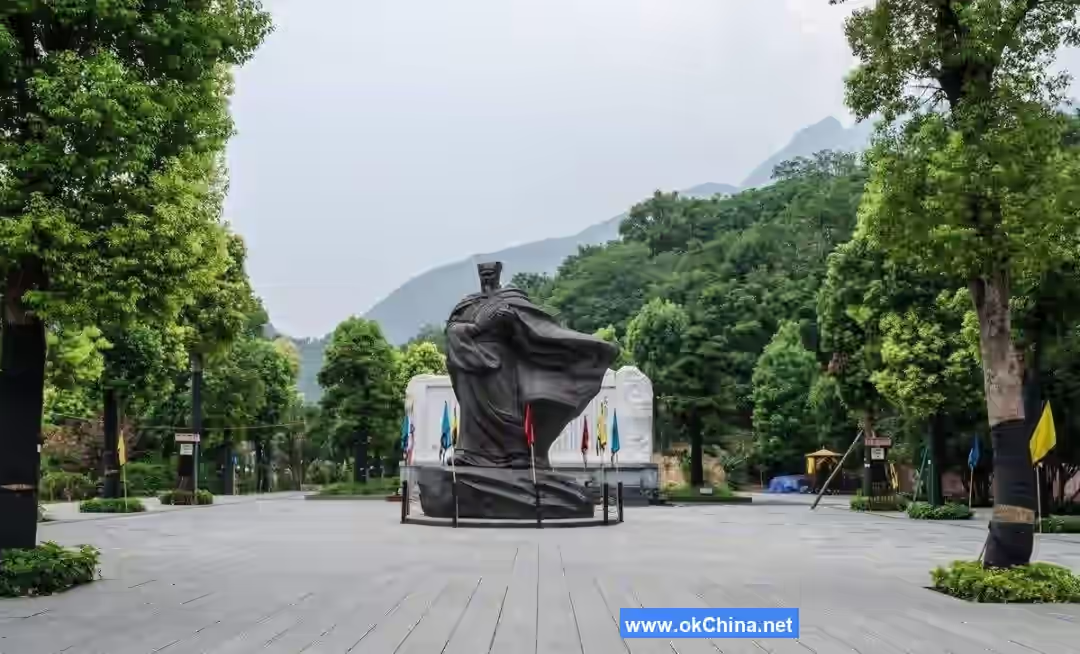
Loyalty Square is located on the north side of Baidi Mountain, covering an area of 7,000 square meters. At the center of the square stands a bronze statue of Zhuge Liang. The total height of the statue is 7.9 meters, with the figure itself being 5 meters tall. Zhuge Liang holds a feather fan, with his robes flowing. Behind the statue is a stele made of white marble carved with the "Chu Shi Biao" (Memorial on the Eve of a Campaign). The stele is 16 meters long, 4 meters high, and 2 meters thick. The front side bears the first "Chu Shi Biao," and the back side bears the later "Chu Shi Biao."
3.2.3 Baidi Temple
Baidi Temple is situated at the highest point of the peninsula, with a total area of approximately 4,000 square meters and a building area of 1,691.2 square meters. Within the temple are ancient and modern structures such as the Front Hall (Entrusting the Orphan Hall), Mingliang Hall, Wuhou Shrine, Stargazing Pavilion, and Bai Tower. Attractions include the East Stele Forest, West Stele Forest, Cultural Relics Exhibition Room, and Hanging Coffin Exhibition Room. On the north side of Baidi Temple is the "First Stele Forest of the Three Gorges—Bamboo Branch Garden." Historical records state: "After Shu's death, the people built a temple in Baidi City to worship him." In the eighth year of the Zhengde era of the Ming Dynasty (1513 AD), based on Ma Yuan's remark that "Ziyang (Gongsun Shu's courtesy name) is but a frog at the bottom of a well," Sichuan Governor Lin Jun destroyed the statue of Gongsun Shu. Instead, he enshrined statues of the River God, the Earth God, and the Han general Ma Yuan (Fubo), renaming it the Three Lords Shrine. In the 11th year of the Jiajing era of the Ming Dynasty (1532 AD), Governor Si Zhu Tingli and Vice Surveillance Commissioner Zhang Jian, taking the meaning of "the Former Lord and Wuhou sharing the same palace," changed the Three Lords Shrine to the Righteousness Shrine, enshrining Emperor Zhaolie of Shu Han and Chancellor Zhuge Liang, and erecting their statues. In the 36th year of the Jiajing era (1557 AD), Governor Duan Jin added statues of Guan Yu, Zhang Fei, and three generations of Zhuge Liang's family (himself, his son, and his grandson), changing the Righteousness Shrine to Mingliang Hall. From then on, the pattern of "no White Emperor in Baidi Temple, but long-term worship of Shu Han figures" has continued to the present day. The temple was renovated during the Qing Dynasty, forming its basic layout. Comprehensive repairs were carried out from 1974 to 1976, and it reopened during the Spring Festival of 1977. In 1992, the Baidi City Museum built the "First Stele Forest of the Three Gorges—Bamboo Branch Garden" north of Baidi Temple, forming the current layout.
3.2.4 Baidi Temple Gate
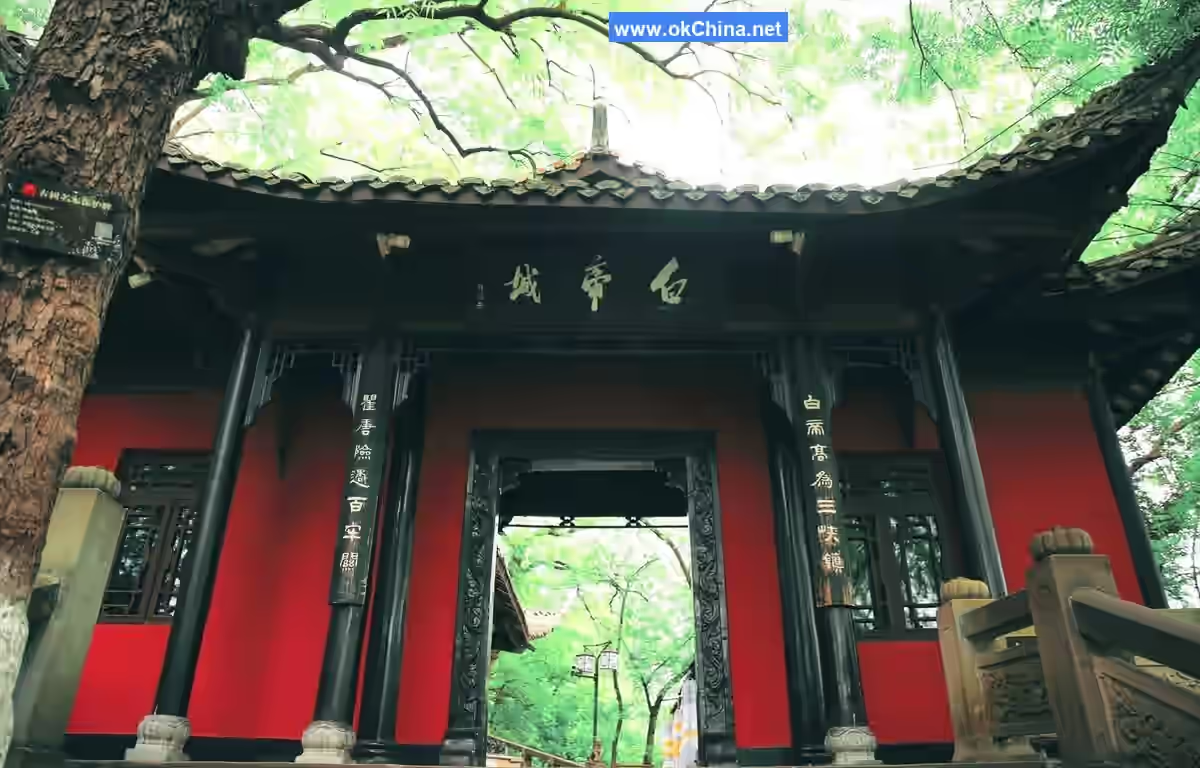
The Baidi Temple gate is the iconic structure of Baidi City, rebuilt during the Qing Dynasty, following the typical architectural style of the Ming Dynasty. The front features a brick archway-style stone arched gateway, while the rear is a wooden single-slope gate hall. On both sides of the archway are "八字" (character 'eight' shaped) screen walls, with patterns of dragons subduing clouds and treasure vases with cloud motifs painted on the east and west sides. The vertical plaque above the gateway arch is surrounded by a three-layer relief pattern of five dragons. In the center, the name "Baidi Temple" is written vertically in clerical script, inlaid with blue-dotted white porcelain. The original "Baidi Temple" inscription in clerical script by the Song dynasty's Zhang Hang had become damaged over time. In 1957, it was re-inscribed by contemporary calligrapher Liu Mengkang and has been included in the "Collection of Famous Chinese Plaques." On the walls on either side of the gate are two vases with double-happiness patterns; the right vase holds peonies, and the left holds chrysanthemums, symbolizing wealth and auspiciousness. The couplet on the gate pillars was inscribed by the notable Huang Yuanzao of the Republican era. The upper couplet reads: "Ten thousand nations' officials pay homage to the imperial crown; claiming supreme honor, how could Gongsun be allowed to leap onto his horse?" The lower couplet reads: "Strategizing for the tripartite division; entrusting the orphan and his fate, we rely on Zhuge Liang, the Sleeping Dragon."
3.2.5 Shu Han Hall
Inside Baidi Temple, the Shu Han Hall features three bronze statues at its center. Zhuge Liang is on the left, and Liu Bei is on the right. The two sit across a table, engaged in a pleasant conversation, with a young page serving tea standing beside them. The Shu Han Hall depicts the historical scene of the "Longzhong Dialogue."
3.2.6 Expedition Against Wu Hall
The Expedition Against Wu Hall within Baidi Temple displays siege weapons from the Three Kingdoms period such as "ramming carts," "wooden oxen and gliding horses," "catapults," and "siege towers." Murals on the walls outline several historical episodes including "The Deaths of Guan and Zhang," "Liu Bei's Expedition," "Lu Xun's Enfeoffment (as Grand Commander)," "Burning of the Linked Camps," and "Defeat at Yiling," summarizing the history of the "Battle of Yiling."
3.2.7 Eight Formations Hall
Located within Baidi Temple, the Eight Formations Hall uses a geographical model and a copper relief to depict the legendary story of Zhuge Liang trapping the enemy with his "Eight Formations."
3.2.8 Mingliang Hall
Mingliang Hall faces the temple gate, situated on the central axis of the entire Baidi Temple complex. It is the main hall of Baidi Temple, named with the meaning of "enlightened ruler and virtuous ministers." The hall enshrines statues of Emperor Zhaolie of Shu Han, Liu Bei; Chancellor Zhuge Liang; Guan Yu; and Zhang Fei. In the 10th year of the Kangxi era of the Qing Dynasty (1671 AD), Cai Yurong, who had served as Prefect of Kuizhou and later as Governor-General of Sichuan and Huguang, renovated Mingliang Hall. He inscribed the plaque "Han Dynasty Enlightened and Virtuous," which was hung directly above Mingliang Hall and later included in the "Collection of Famous Chinese Plaques."
3.2.9 Civil Officials Hall
To the right of Mingliang Hall is the Civil Officials Hall, which houses 10 bronze statues of the ten famous civil officials of Shu Han: Deng Zhi, Pang Tong, Zhang Song, Mi Zhu, Jiang Wan, Fei Yi, Sun Qian, Li Yan, Dong He, and Fa Zheng.
3.2.10 Military Generals Hall
To the left of Mingliang Hall is the Military Generals Hall, which houses 10 bronze statues of the ten famous military generals of Shu Han: Guan Yu, Zhang Fei, Zhao Yun, Ma Chao, Huang Zhong, Wei Yan, Yan Yan, Jiang Wei, Wang Ping, and Xiang Chong.
3.2.11 Wuhou Shrine
The Wuhou Shrine is located west of Mingliang Hall. The hall enshrines statues of Zhuge Liang, his son Zhuge Zhan, and his grandson Zhuge Shang. Inside the shrine is a couplet: "Three generations of outstanding talent, a thousand years of regret; the ministerial achievements in Shu have left fragrance for a hundred generations."
3.2.12 Entrusting the Orphan Hall
The Entrusting the Orphan Hall is located in the front hall of Baidi Temple. It features 21 life-sized colored fiberglass statues recreating the historical event of "Liu Bei Entrusting the Orphan at Baidi City."
3.2.13 Loyal and Martial Hall
The Loyal and Martial Hall uses murals and woodcuts to introduce Zhuge Liang's life and major deeds, such as "Debating the Scholars," "Borrowing Arrows with Straw Boats," "Borrowing the East Wind," "Capturing Meng Huo Seven Times," "Six Campaigns from Qishan," and "The Empty Fort Strategy."
3.2.14 Stargazing Pavilion
The Stargazing Pavilion is located west of the Entrusting the Orphan Hall. It is a hexagonal pavilion with double eaves. The lower level is supported by 12 wooden pillars, and the upper level by 6 wooden pillars. It features upturned eaves and corners, with an exquisite design. An ancient bell hangs inside the pavilion. Legend has it that when Zhuge Liang led his army into Sichuan, he observed the stars here at night, hence the name "Stargazing Pavilion."
3.2.15 Bamboo Branch Garden
The Bamboo Branch Garden is located north of Baidi Temple. It was built to commemorate the Tang Dynasty poet Liu Yuxi and opened in 1995, covering an area of over 8,000 square meters. The garden contains a stele corridor, a Bamboo Branch Tower, and exhibition halls. The stele corridor is inlaid with 108 stone tablets of calligraphy and paintings related to Bamboo Branch lyrics, including 88 calligraphy steles of Bamboo Branch lyrics and 20 steles of historical Bamboo Branch paintings and seal carvings. A stone statue of the Tang Dynasty poet Liu Yuxi stands within. Liu Yuxi served as Prefect of Kuizhou (a supervisory official) from the 2nd to the 4th year of the Changqing era (822-824 AD). During his time in Kuizhou, Liu Yuxi extensively collected folk songs from the lowest levels of society and created the folk-song-style poetry form known as Bamboo Branch lyrics, later praised as "the 'Guofeng' of poetry, the 'Nine Songs' of lyrics."#### 3.2.16 Qutang Gorge Ancient Plank Road The Qutang Gorge Ancient Plank Road is located from the mouth of Qutang Gorge to the Baiguobei area, with a total length of 12 kilometers. Its widest point is 3 meters, its narrowest is 1 meter, and its height is 2.5 meters. The section at Baiguobei was built in the third year of the Daoguang reign of the Qing Dynasty (1823). In the fifteenth year of the Guangxu reign (1889), Wang Jian, the prefect of Kuizhou, raised funds to excavate the section from Fengxiang Gorge to the western gorge mouth. Within Qutang Gorge, a 4-kilometer section was entirely carved into a trough-shaped roadbed on sheer cliffs. During construction, "the craftsmen had nothing to rely on; they drilled holes facing the cliff wall, accumulating layers upward." After completion, the plank road could accommodate the eight-bearer sedan chair of the Kuizhou prefect. Strolling along the plank road, with towering cliffs above and the surging river below, one feels as if soaring through the air. To commemorate this monumental feat, later generations carved the praises "Kai Bi Qi Gong" (Marvelous Feat of Opening the Cliff) and "Tian Ti Jin Di" (Ladder to the Heavenly Ford) on the cliff face. After the Three Gorges Dam impounded water, most of the Qutang Gorge Ancient Plank Road was submerged. A restoration project for the ancient plank road was launched in 2016.
3.2.17 Qutang Gorge Cliff Carvings
The Qutang Gorge Cliff Carvings were originally located on the cliff face along the southern bank of Qutang Gorge. There are 13 inscriptions from the Southern Song Dynasty to modern times, covering a total area of 600 square meters. The inscriptions are all intaglio, featuring scripts such as regular, clerical, cursive, and seal script. Their content involves praising virtues, chanting history, and admiring scenery. The most famous is the "Huang Song Zhong Xing Sheng De Song" (Ode to the Imperial Song's Restoration and Sacred Virtue) written by Zhao Gongshuo during the Qiandao period of the Southern Song Dynasty, comprising 980 characters. Additionally, there are inscriptions such as the Ming Dynasty poet Shen Qing's "Fu Qutang Shang Xia" (Rhapsody on Ascending Qutang Gorge), the Qing Dynasty Zhang Boxiang's "Qutang," Liu Xinyuan's "Kuimen," the modern anti-Japanese patriotic general Feng Yuxiang's "Step Out of Kuimen and Wushan, Drive Away the Japanese Invaders," and Sun Yuanliang's "Kuimen, the Most Majestic Under Heaven, Where Ships and Planes Pass Lightly."
3.2.18 Fengxiang Gorge
Fengxiang Gorge, along with the Ba People's Hanging Coffins, is located in the middle of the northern bank of Qutang Gorge. Countless brownish elongated wooden boxes are placed in caves and crevices on the steep cliffs. Ancient legend held that this was where Lu Ban, the patron saint of carpenters, stored his bellows, hence the name "Fengxiang Gorge" (Bellows Gorge). Later research confirmed that these elongated wooden boxes are actually Ba People's Hanging Coffins, a burial custom of the ancient Ba people, some of which remain well-preserved to this day.
3.2.19 Meng Liang's Ladder
Meng Liang's Ladder is located on the sheer cliffs near the Fenbi Wall on the southern bank of Qutang Gorge. Legend says it was built by Meng Liang, a general of the Yang Family in the Northern Song Dynasty, to retrieve the body of the old commander Yang Jiye, hence the name. Today, 61 stone holes remain, arranged in a zigzag pattern from top to bottom. The topmost hole is about 30 meters from the mountaintop. The square holes are 26 cm high and 34 cm deep, spaced 1 to 3 meters apart. Research suggests it was an ancient plank road leading to Yangkou City during the Southern Song Dynasty's resistance against the Yuan. After the Three Gorges Dam impounded water, the lower section of Meng Liang's Ladder sank into the riverbed, while the upper section remains.
3.2.20 Du Fu's West Pavilion
Du Fu's West Pavilion, originally named Guanyin Cave (Goddess of Mercy Cave), is located at the foot of Baidi Mountain. In the fourteenth year of the Zhengde reign of the Ming Dynasty (1519), a statue of Guanyin was enshrined inside the cave. Next to it stands the Zhenjiang Pavilion, built during the Yuan Dynasty. Banyan trees stand in clusters, with red walls and green tiles nestled among verdant pines and cypresses, vines covering the rocks. From the front of the cave, one can gaze upon the great river flowing eastward, look down at the swirling whirlpools of Yanyu, watch the sunset glow in the west, and listen to evening songs from fishing boats, making it a summer retreat. In 1984, it was renovated to commemorate the Poet Sage Du Fu and renamed the West Pavilion. The newly built West Pavilion features vermilion pillars and green tiles on its verandas, with upturned eaves and bracket sets on the pavilion. A large colored ceramic tile mural titled "Du Fu Chanting" is embedded upstairs. Later, a stone statue of Du Fu was erected at the entrance. In 2003, after the Three Gorges Dam impounded water, Du Fu's West Pavilion sank into the riverbed, and the Du Fu stone statue was relocated to the mountainside of Baidi City.
3.2.21 Chijia Tower
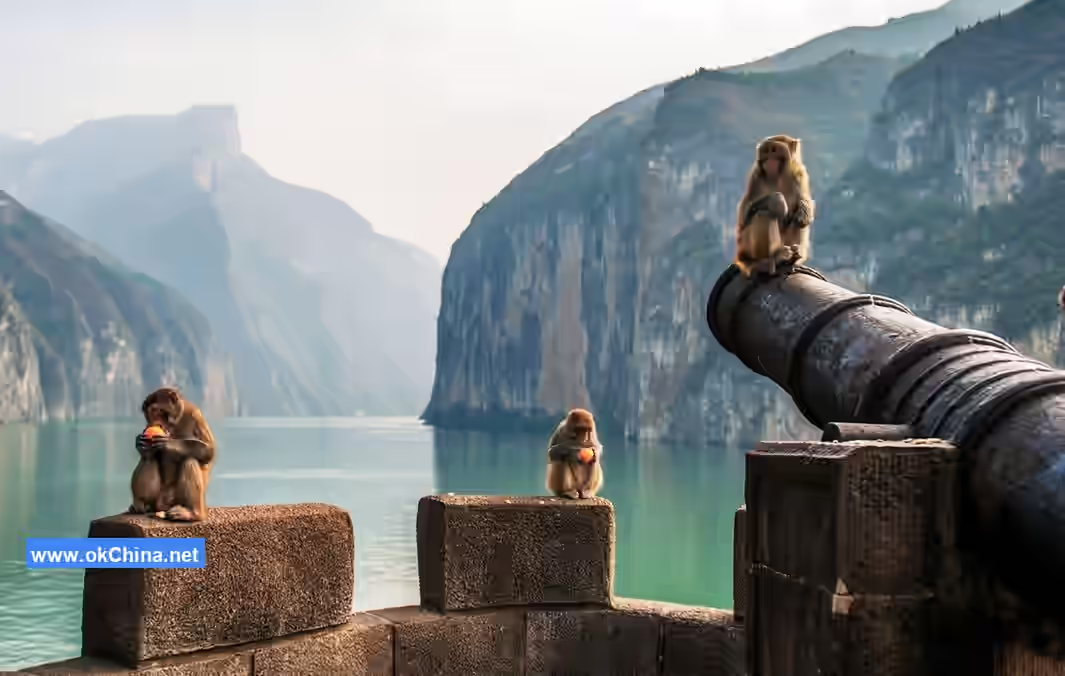
Chijia Tower is located at the mouth of Qutang Gorge on the northern bank of the Yangtze River, named for being built at the foot of Chijia Mountain. The tower's plaque was inscribed by calligrapher Shen Peng. Inside and outside the tower are embedded poems, lyrics, songs, and rhapsodies about the Three Gorges by famous figures throughout history, carved by Chinese calligrapher Chen Fucheng, hailed by CCTV as "China's First Knife," who used a knife instead of a brush. Carvings include Li Daoyuan's (Northern Wei) "Commentary on the Water Classic" and Mao Zedong's "Prelude to Water Melody · Swimming." The riverside platform at Chijia Tower is the site of an ancient battery, where two large iron cannons are placed.
3.2.22 River-Locking Iron Pillars
The River-Locking Iron Pillars, also known as Tiesuo Pass and Kuiguan, are located on the northern bank of Qutang Gorge. Two iron pillars stand at the confluence of the Yangtze River and Caotang River, remnants of the Qutang Gorge river-locking pillars. They were cast by Xu Zongwu, a Southern Song Dynasty general guarding the pass, and are relics from the Southern Song's resistance against the Yuan. The pillars are made of cast iron, standing 2.3 meters high with a diameter of 0.4 meters. The base is 0.27 meters high. The pillar body has five sections with jeweled tops, and the upper part features decorative patterns. Before 2003, they were relocated and displayed to the right of the Kuimen Ancient Elephant Museum.
3.2.23 Yugong Cave
Yugong Cave is a long, slanted rock cave located on the lower left side of the Chijia Mountain peak. The cave entrance is carved with the four characters "Yan Ju Chuan Guan" (Living Among Rocks, Viewing the Rivers). Inside, there are stone tables, stools, and a bed; outside, there is a stone mortar and a clear spring. Ming Dynasty prefect Yu Youjue once abandoned his official post to live in seclusion here, hence the name Yugong Cave.
3.2.24 Kuimen Ancient Elephant Museum
The Kuimen Ancient Elephant Museum opened on May 8, 1998. Its name was inscribed by Jia Lanpo, a Chinese Academy of Sciences academician and professor of Chinese paleoanthropology. The museum has four exhibition halls: the Kuimen Ancient Elephant Fossil Hall, the Elephant Evolution Exhibition Hall, the Underground Bionic Hall, and the Laoguanmiao Site Culture Exhibition Hall. The Kuimen ancient elephant fossil was unearthed in September 1990 in Qutang Three Village, Baidi Town, Fengjie County, accidentally discovered by villagers digging a pond. Dating indicates it is a fossil of a Stegodon-like elephant from over 2 million years ago.
3.2.25 The First Forest of Steles in the Three Gorges
The First Forest of Steles in the Three Gorges is located outside the red wall of Baidi Temple. The stele forest contains over a hundred stone steles inscribed with Bamboo Branch Lyrics, calligraphy, and paintings. The calligraphy and painting works come from 17 provinces and cities across China, encompassing various schools and script styles, earning it the title "The First Forest of Steles in the Three Gorges." Famous steles originally displayed in the East and West Stele Forests of Baidi Temple, such as the "Phoenix Stele," "Bamboo Leaf Stele," and "Kangxi's Six-Character Poem Stele," are also exhibited here.
4. History and Culture
4.1 Historical Development
In the late Western Han Dynasty, Gongsun Shu occupied Shu and built a city here. Because a well in the city often emitted white vapor resembling a white dragon, he named himself Baidi (White Emperor) and called the city Baidi City. After Gongsun Shu's death, locals built a temple on the mountain with his statue, called Baidi Temple. Before the Tang Dynasty, the Baidi Temple complex expanded to include the Xianzhu Temple for worshipping Liu Bei and the Wuhou Shrine for worshipping Zhuge Liang. In the eighth year of the Zhengde reign of the Ming Dynasty (1513), Lin Jun, the Governor of Sichuan, destroyed Gongsun Shu's statue. Instead, he enshrined statues of the River God, the Earth God, and Ma Yuan, renaming it the "Three Merits Shrine." In the twelfth year of the Jiajing reign of the Ming Dynasty (1533), Zhang Jian, the Vice Commissioner of the Sichuan Pacification Commission, destroyed the "Three Merits Shrine," replaced the statues with those of Liu Bei and Zhuge Liang, and renamed it the "Righteousness Shrine." In the thirty-sixth year of the Jiajing reign of the Ming Dynasty (1557), Governor Duan Jin added statues of Guan Yu and Zhang Fei inside the temple. Taking the meaning of "enlightened ruler and worthy ministers," he changed the "Righteousness Shrine" to the "Mingliang Hall" (Hall of Enlightenment and Worthies). In the tenth year of the Tongzhi reign of the Qing Dynasty (1871), Lü Hui, the County Magistrate of Fengjie, rebuilt the Baidi Temple.
4.2 Allusions and Legends
4.2.1 Liu Bei Entrusting His Son
In the 24th year of the Jian'an era (219 AD), Guan Yu carelessly lost Jingzhou, fled to Maicheng, and was killed by Sun Quan. In the seventh month of the first year of the Zhangwu era (221 AD), Liu Bei, ruler of Shu, seeking to avenge Guan Yu, ignored the advice of Zhuge Liang and his ministers. He personally led hundreds of thousands of troops down the river to attack Eastern Wu, historically known as the "Battle of Yiling." The Shu army was defeated by the Eastern Wu general Lu Xun, who "set fire to the linked camps over seven hundred li." Liu Bei retreated to Baidi City, where anxiety and anger made him ill, and he never recovered in the Yong'an Palace. In the fourth month of the third year of Zhangwu (223 AD), sensing his impending death, he urgently summoned Prime Minister Zhuge Liang, his second son Liu Yong, third son Liu Li, and others to the Yong'an Palace. He entrusted both state affairs and family matters to Zhuge Liang, an event historically known as "Liu Bei Entrusting His Son."
4.2.2 Upholding Justice and Integrity
Long ago, there was a county magistrate in Fengjie named Xu You, who lined his own pockets and was insatiably greedy. Shortly after taking office, learning that the tombs of Liu Bei and Lady Gan were in Fengjie, he spent great manpower and resources searching for them. One day, a tomb passage was dug up in the backyard of the county office. Overjoyed, thinking it was Liu Bei's tomb, Xu You hurriedly walked deep into the passage. As he walked, a slip of paper suddenly flew out from within, reading: "Xu You, Xu You, we have no enmity nor grievance. You privately opened my tomb, I fine you to supply oil." It was signed Zhuge Kongming. Terrified out of his wits, Xu You stumbled and crawled his way out of the tomb passage. The next day, he fell ill. Many doctors were consulted and much medicine taken, but his condition did not improve. Remembering Zhuge Liang's note, he ordered his family to spend their entire fortune buying all the oil in the city for lamps. However, no matter what, the oil lamps could never be filled. Finally, he even used his wife's hair oil to fill them. After that, Xu You's illness gradually recovered. Having endured this calamity, he thoroughly reformed, governing with integrity and becoming a famous honest official far and wide. Upon leaving his post, Xu You personally inscribed a plaque with the words "Feng Gong Shou Jie" (Upholding Justice and Integrity) and presented it to the new county magistrate. The new magistrate petitioned the emperor, who took the first character "Feng" and the last character "Jie" from the plaque to form "Fengjie," which has been used as the county name ever since.
5. Poetry and Prose
5.1 Leaving Baidi City at Dawn
By Li Bai (Tang Dynasty)
At dawn I left Baidi crowned with rainbow clouds;
To journey a thousand li to Jiangling in a single day.
The screams of monkeys on the riverbanks still echoed without pause,
When my light boat had already passed countless mountains.#### 5.1.1 Vernacular Translation
At dawn I left the White Emperor crowned with cloud;
To reach Jiangling, a thousand li away, in a day.
Monkeys' incessant screams came from the banks on both sides;
My skiff had left ten thousand mountains far away.
5.1.2 Author Profile
Li Bai (701-762), courtesy name Taibai, pseudonym Qinglian Jushi (Lay Buddhist of the Blue Lotus), is renowned as the "Poet Immortal." Along with Du Fu, he is collectively known as "Li Du." His poetry is primarily lyrical, showcasing a disdain for the powerful and noble, expressing sympathy for the suffering of the common people, and excelling in depicting natural landscapes to convey his love for the mountains and rivers of his homeland. His poetic style is bold, unrestrained, and imaginative, with fluid and natural language, harmonious and varied rhythms. He skillfully drew inspiration and material from folk art and mythological legends, creating a uniquely splendid and vibrant color in his works. As the most distinctive and romantic poet since Qu Yuan, he reached the pinnacle of Tang Dynasty poetry. Over a thousand of his poems and essays survive, compiled into the thirty-volume Collected Works of Li Taibai.
5.1.3 Historical Background
This poem was composed in the third month of the second year of the Qianyuan era (759) during the reign of Emperor Suzong of the Tang Dynasty. In the first year of Qianyuan (758), Li Bai was exiled to Yelang due to his involvement in the case of Prince Yong, Li Lin. In the spring of the following year, while passing through White Emperor City, he suddenly received news of his pardon. Overwhelmed with surprise and joy, the poet immediately boarded a boat to travel eastward to Jiangling. This poem was written when the poet, after being pardoned, left White Emperor City and sailed down the river to Jiangling. Hence, the poem is also titled "Down to Jiangling from White Emperor City."
Previous scholars once believed this poem was composed during Li Bai's youth when he left Shu. However, based on the poetic sentiment of "reaching Jiangling, a thousand li away, in a day" and the inference that Li Bai had previously traveled from Jiangling up the Three Gorges, this poem is likely to have been written during his return journey after being pardoned midway through his exile.
Comments
Post a Comment