Baili Azalea Scenic Area
1. Introduction
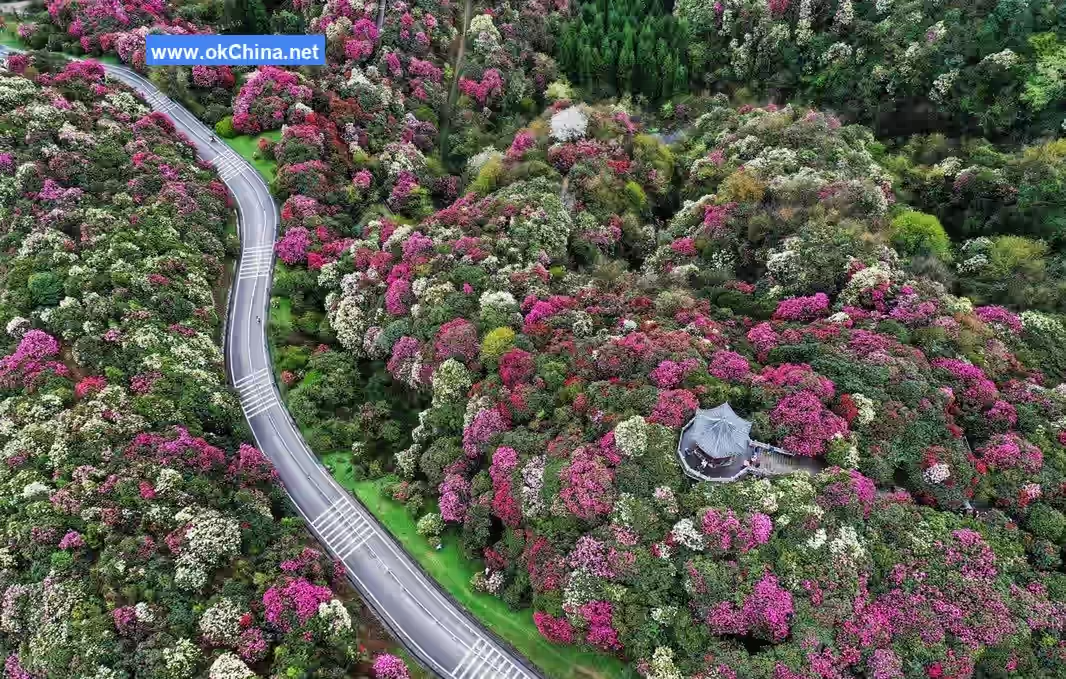
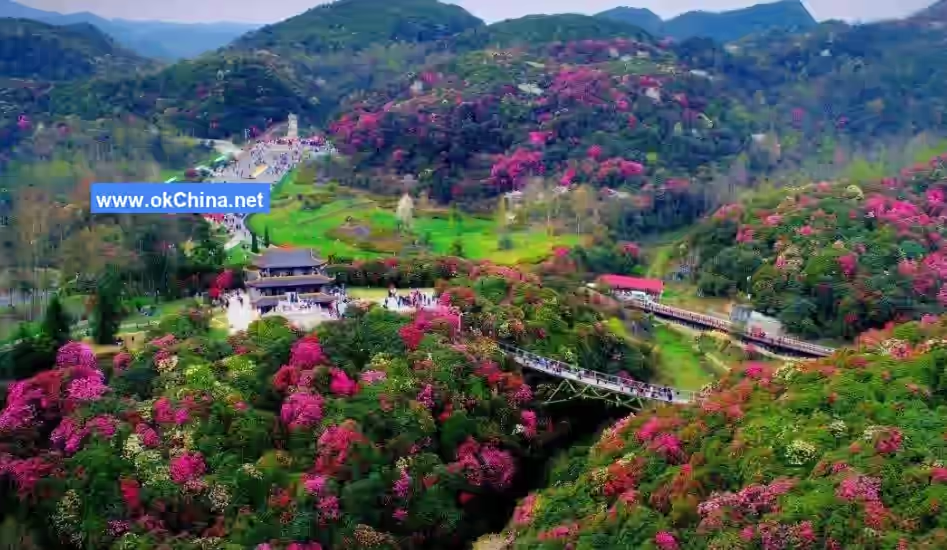
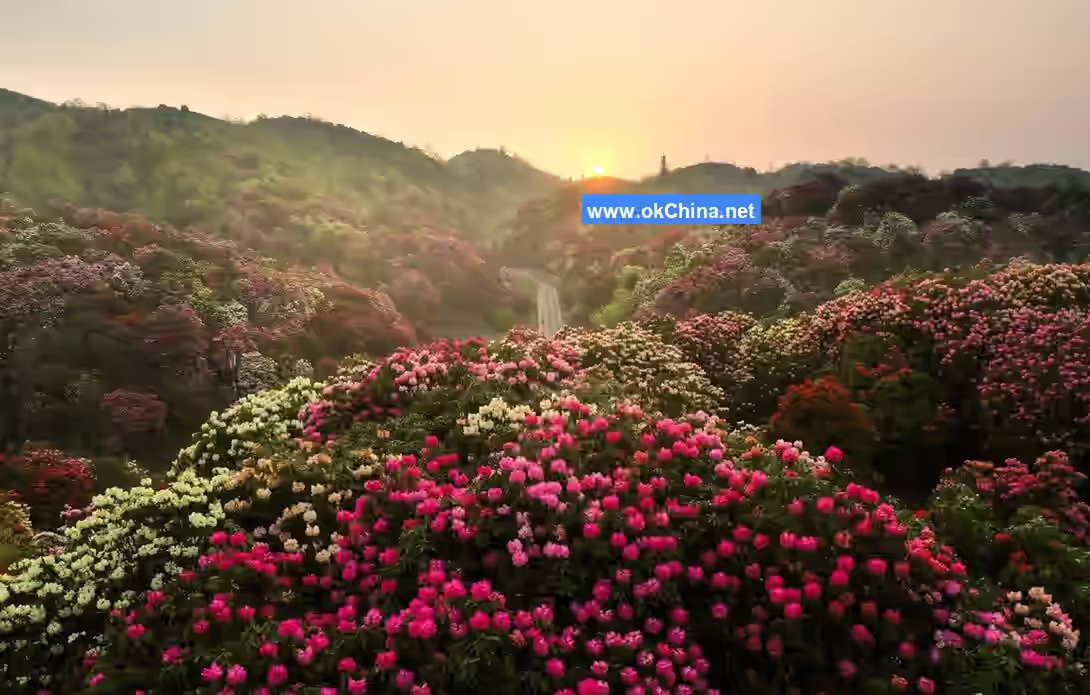
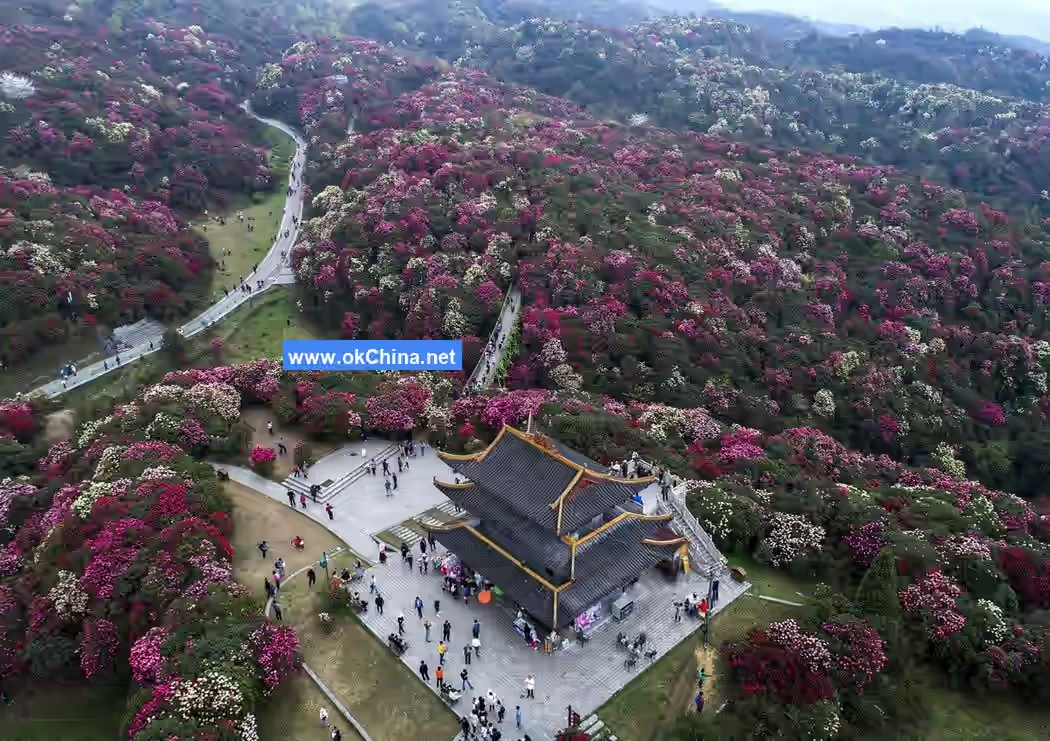
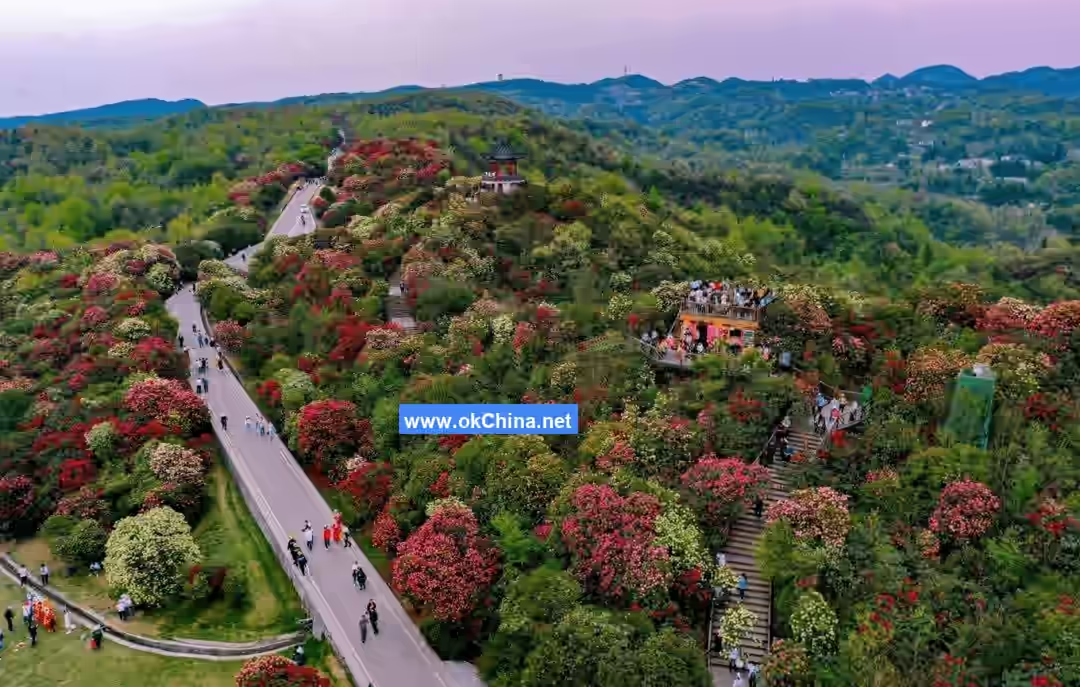
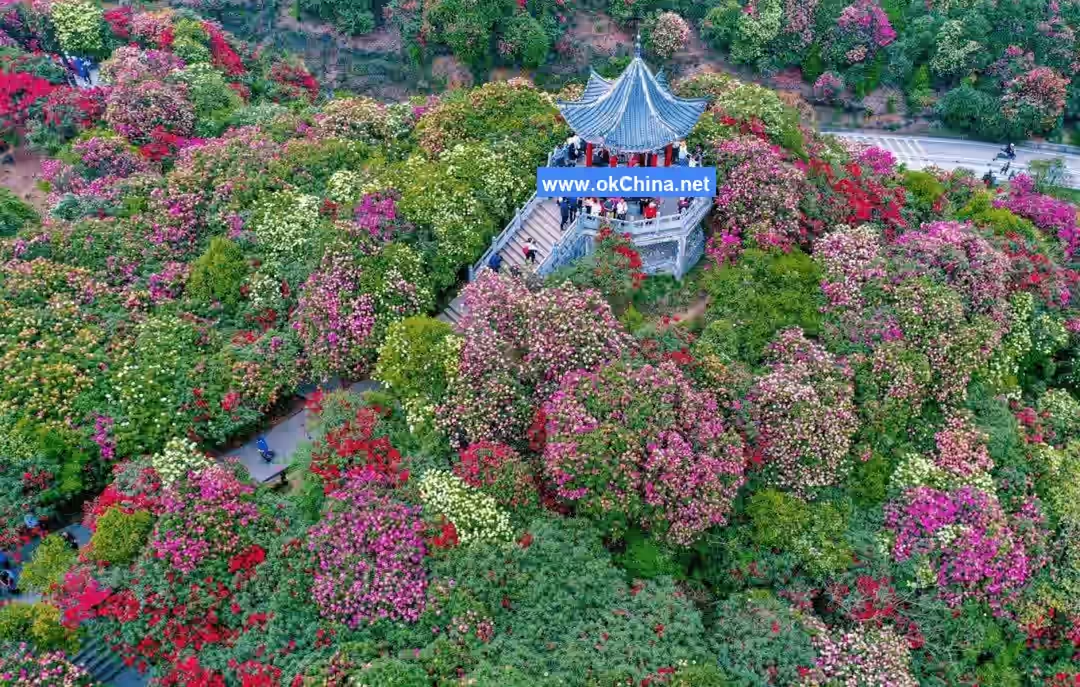
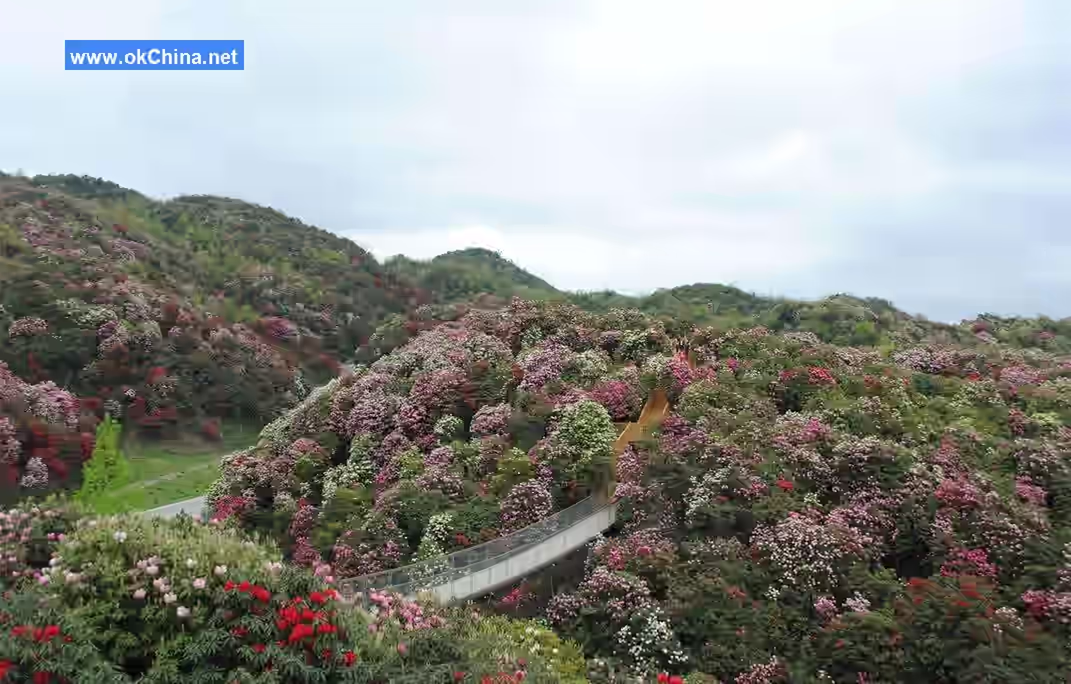
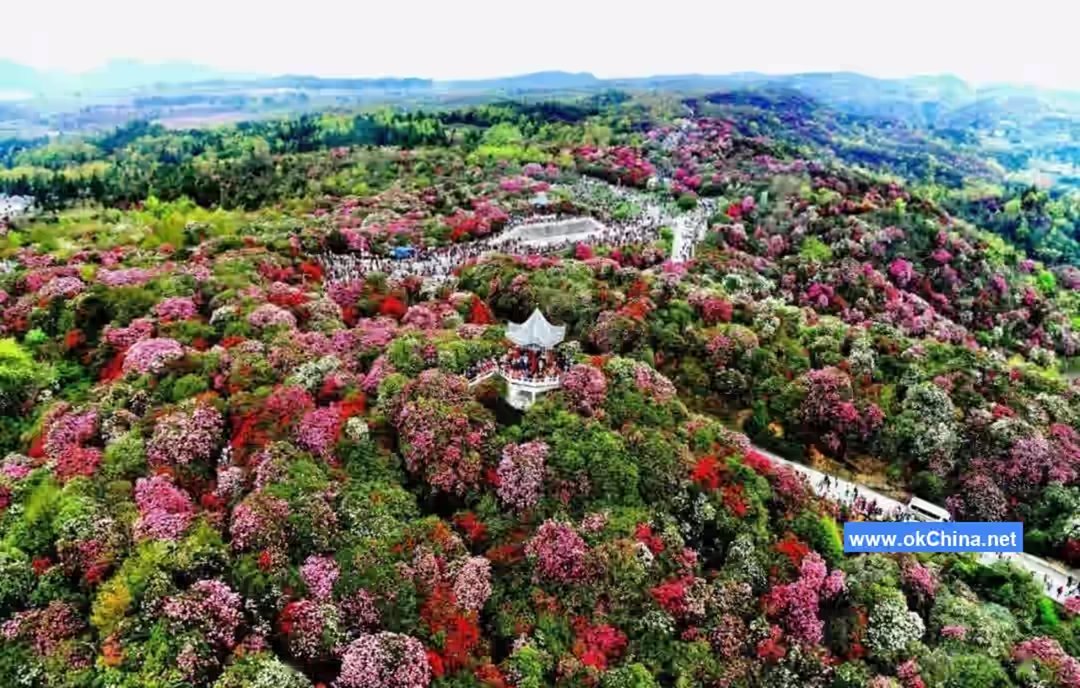
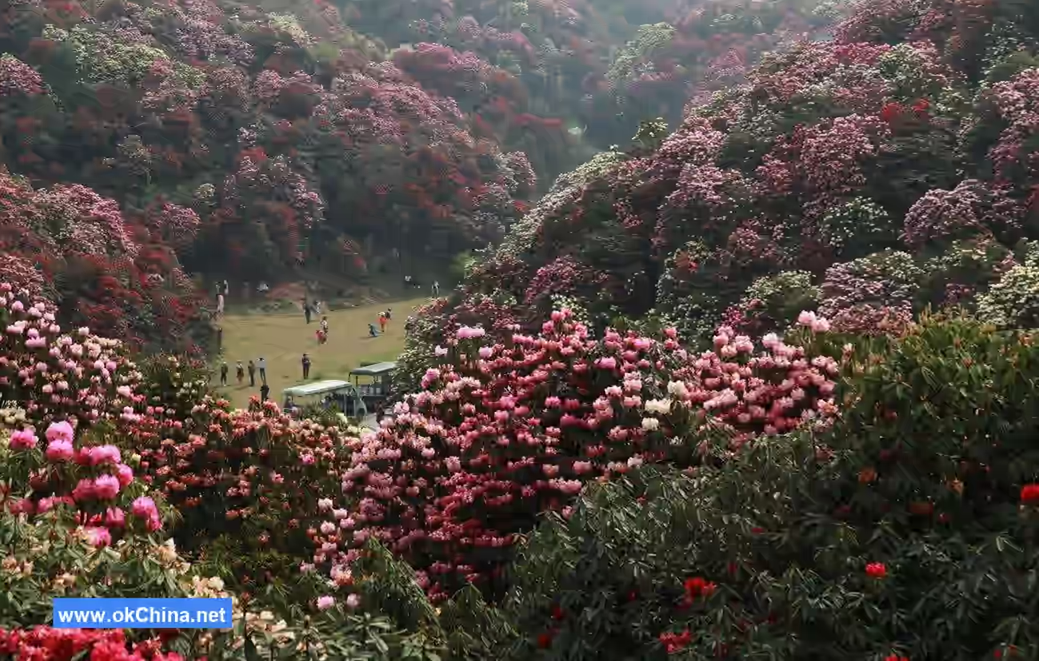
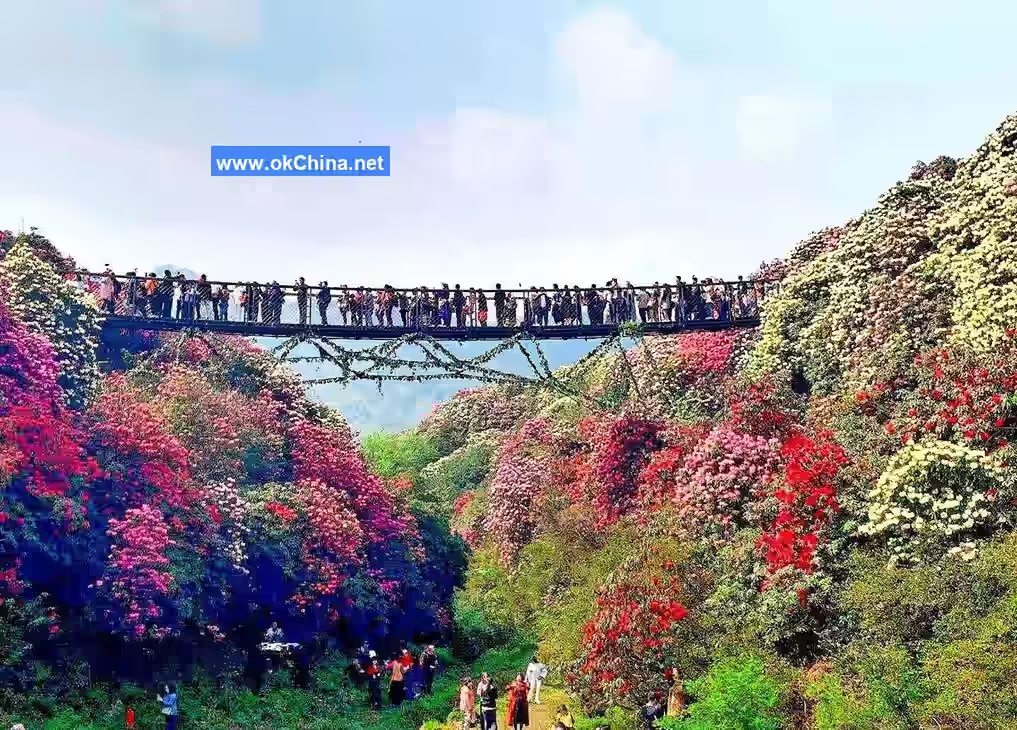
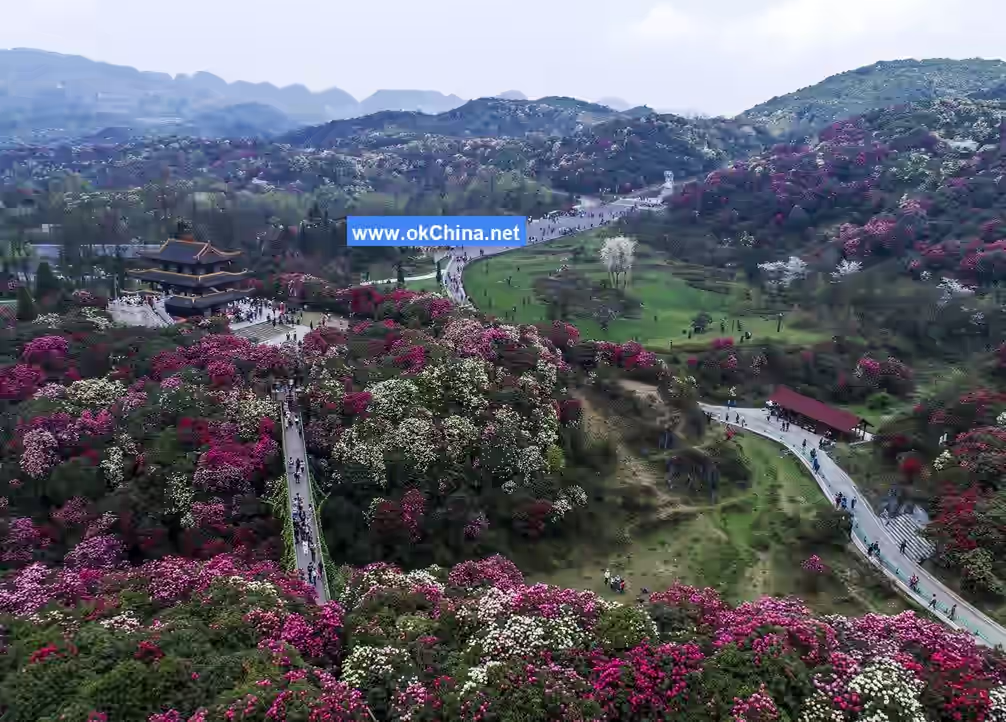
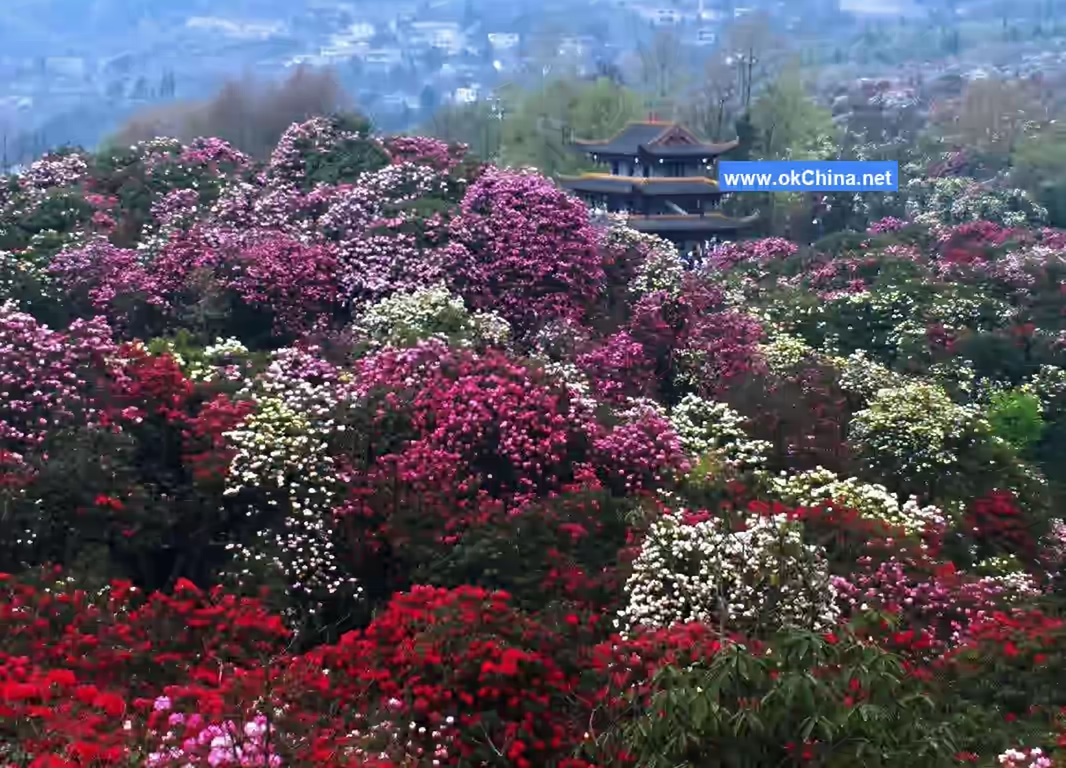
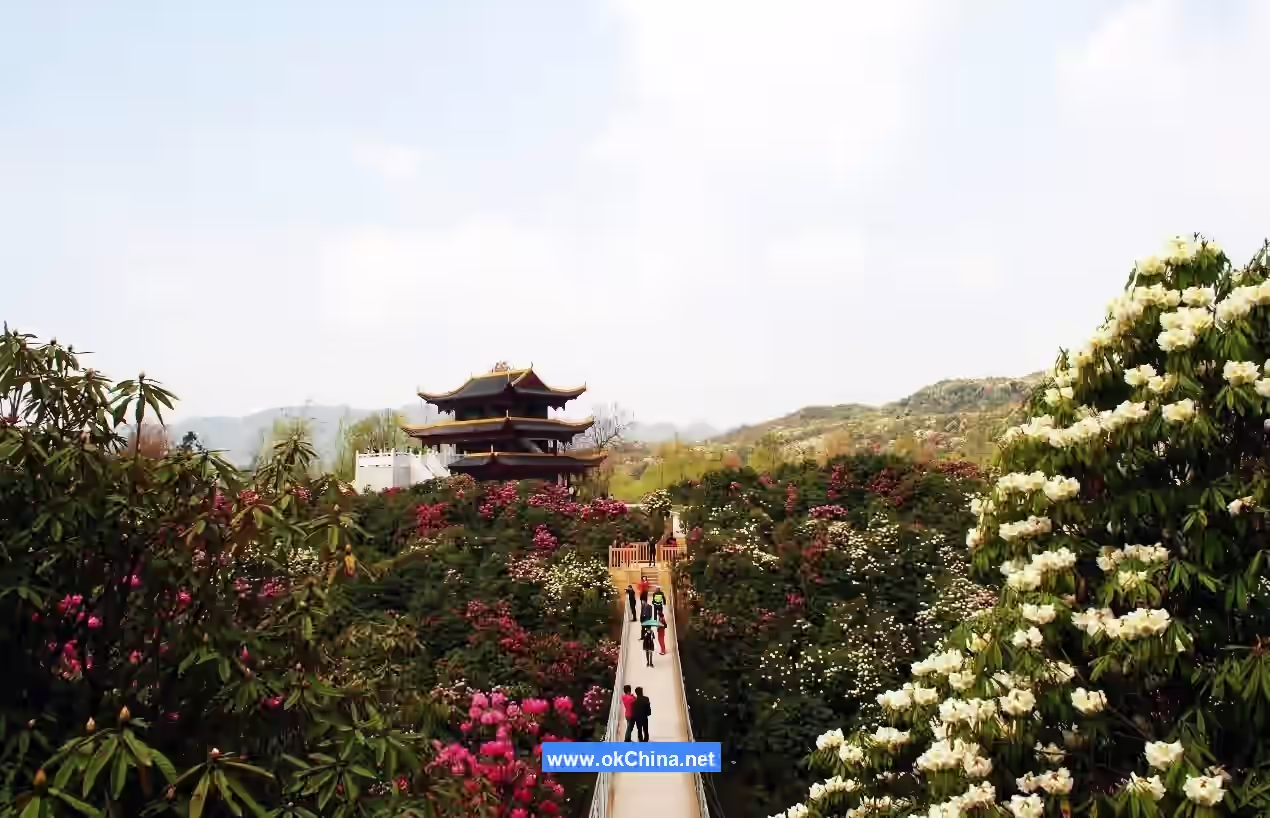
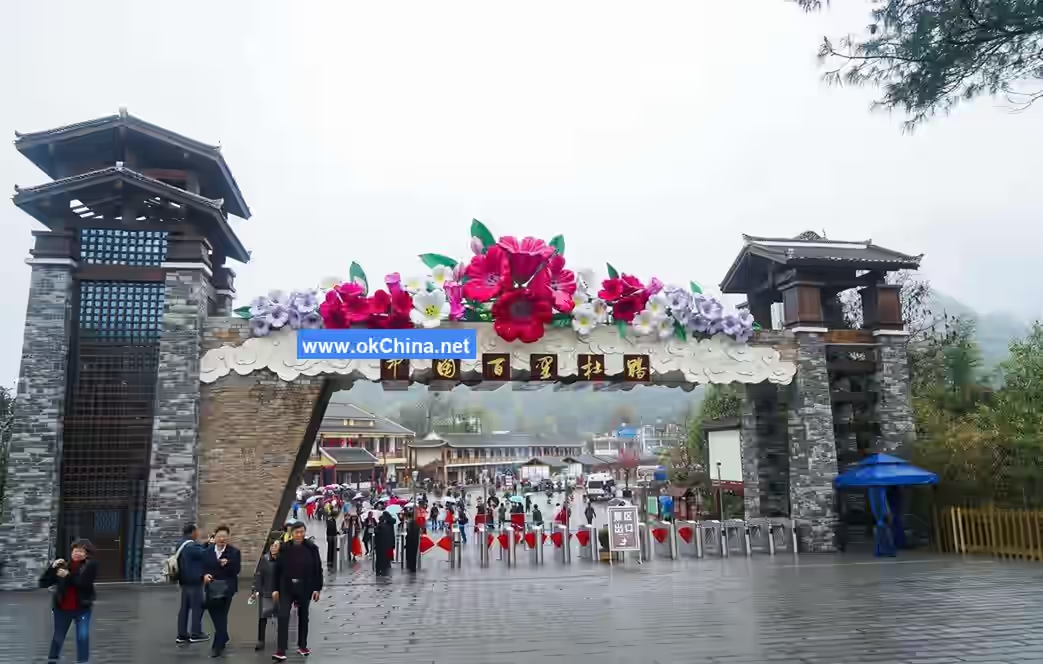
The Baili Azalea Scenic Area, abbreviated as Baili Azalea Scenic Spot, is located in the northwest of Guizhou Province, at the junction of Dafang County and Qianxi County in Bijie City, Guizhou Province. It is the largest azalea scenic area in China. Baili Azalea is essentially a magnificent natural garden, named after its natural sea of azalea flowers. It is also characterized by its vast area of native azalea forests, with a forest belt width of 1–3 kilometers, stretching over 50 kilometers and spanning a hundred li (a Chinese unit of distance), hence the name "Baili Azalea" (Hundred-Li Azalea). It is hailed as "the world's largest natural garden" and enjoys the reputation of being the "Earth's Colorful Ribbon, World's Garden." The total area of the Baili Azalea Scenic Area is approximately 125.8 square kilometers.
2. Geographical Environment
2.1 Location and Territory
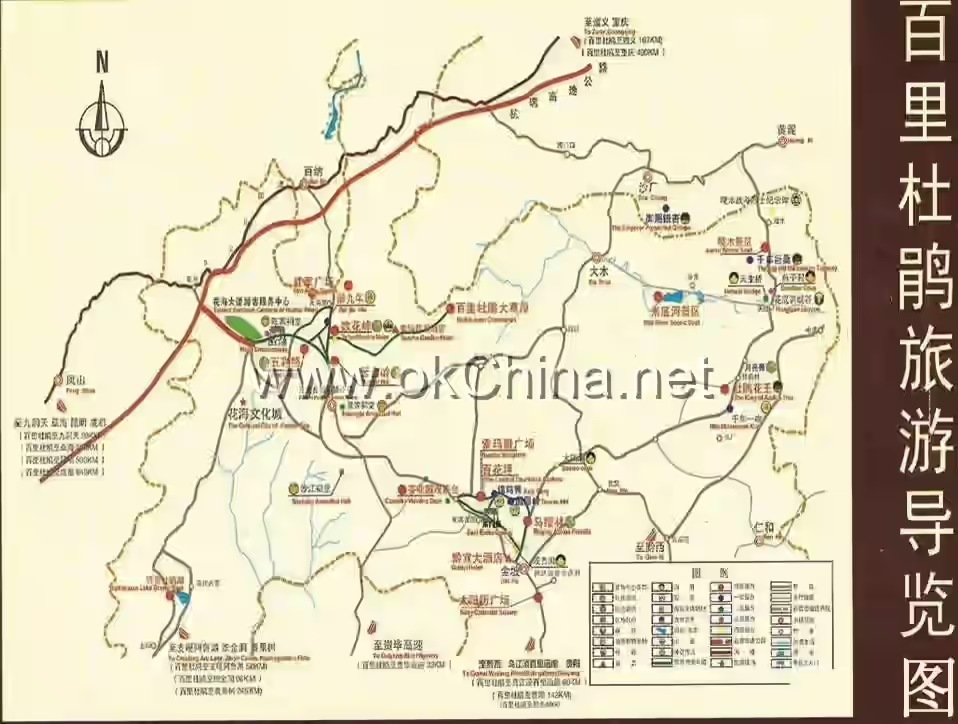
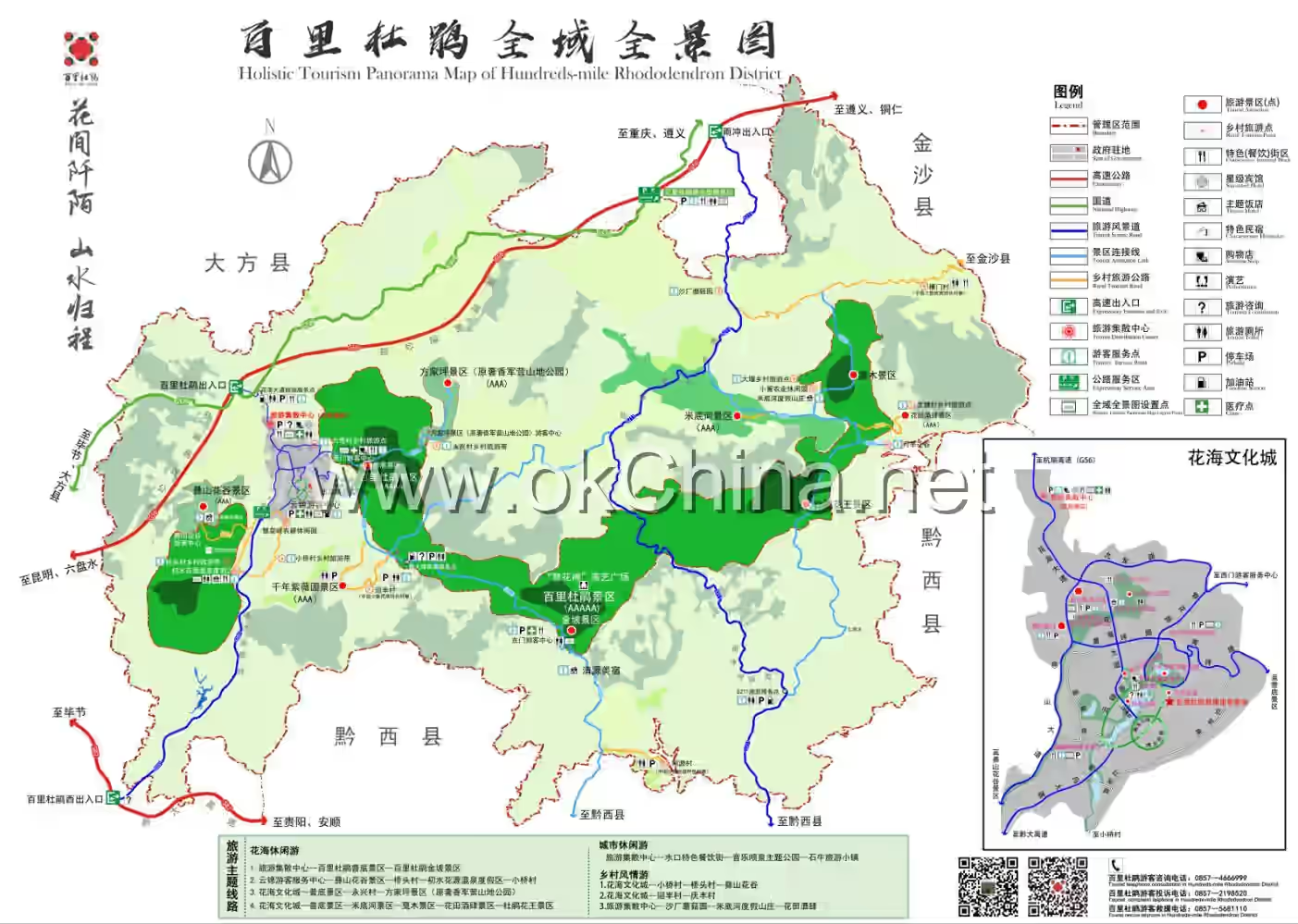
The Baili Azalea Scenic Area is located in Dahuang Village, Pudi Township, Baili Azalea Management District, Bijie City, Guizhou Province. It consists of multiple scenic spots including Pudi, Jinpo, Jiamu, Huawang, and Baihe. The total area is 125.8 square kilometers, with geographical coordinates: 105°50′16″E to 106°04′57″E, 27°10′07″N to 27°17′55″N.
2.2 Topography and Landforms
Baili Azalea features typical karst development landforms.
2.3 Climate Characteristics
The Baili Azalea Scenic Area has a warm temperate humid monsoon climate, with an average annual temperature of 11.8°C and an annual rainfall of 1150.4 mm.
2.4 Biodiversity
2.4.1 Plant Resources
The Baili Azalea forest belt is distributed in a ring shape, stretching over 50 kilometers and about 1–3 kilometers wide. There are 41 varieties, including Rhododendron delavayi, Rhododendron decorum, Rhododendron agastum, and Rhododendron irroratum, representing all five subgenera of azaleas in the world. The rarest phenomenon is "different flowers on one tree," where a single tree can bloom flowers of up to seven different colors. The thousand-year-old Azalea King, which blooms with tens of thousands of flowers during the flowering season, standing alone as a symbol of spring, is the largest azalea tree discovered on Earth to date.
The scenic area also contains national first-class protected plants such as ginkgo and yew, second-class protected plants including camphor tree, Magnolia officinalis, and camptotheca, 131 species of fungi, and ancient and famous trees such as the thousand-year-old giant mulberry, the Azalea King, the imperial-bestowed ginkgo, and the ancient Kalopanax septemlobus by the Shajiang River.
On September 13, 2023, the nationally near-threatened rare plant Monotropa uniflora (Indian pipe or ghost plant) was discovered in the Baili Azalea Management District of Bijie City, Guizhou Province.
2.4.2 Animal Resources
Within the Baili Azalea Scenic Area, there are 104 species of birds and 31 species of mammals. Among them, national first-class protected animals include the clouded leopard and forest musk deer, while second-class protected animals include the pangolin, leopard cat, small Indian civet, golden pheasant, Lady Amherst's pheasant, and Reeves's pheasant.
3. Main Attractions
3.1 Huangping Ten-Li Azalea
The Huangping "Ten-Li Azalea" attraction is located in the Pudi scenic area and is the epitome, representative, and essence of Baili Azalea.
3.2 Baili Azalea Prairie
The Baili Azalea Prairie is 4 kilometers from the central flower area of Pudi, with a total area of nearly 60,000 mu (about 4,000 hectares). It is distributed in ring and terrace shapes, with vegetation mainly consisting of alpine dwarf azaleas and native shrubs. Influenced by the high-altitude climate and wind, the vegetation grows in extremely peculiar forms, creating a unique natural bonsai garden. The prairie is dotted with sinkholes, offering high ornamental value. The karst landform is distinctive, with strangely shaped peaks and towering cliffs, known as the magical fairy tale of southern karst topography.
3.3 Yuntai Ridge
Within the Yuntai Ridge Azalea Forest, the densely packed flowers vary in size, with large clusters having dozens of trunks growing together and small ones standing alone, casting elegant shadows. The taller ones exceed ten feet, while the shorter ones are less than a foot. Some trees bear tens of thousands of flowers, forming clusters of blooms, while others have only one or two branches, standing alone in solitary beauty. The azalea trunks are oddly shaped, resembling huge natural bonsai.
3.4 Yishan Lake
Yishan Lake covers a water area of over 400 mu (about 27 hectares), surrounded by green mountains like painted eyebrows. In spring, azaleas bloom brilliantly, and in autumn, the layered forests are dyed in vibrant colors. The uniqueness of Yishan Lake lies in its little-known natural scenery of mountains, water, forests, and caves. The over 400 mu of emerald waves and winding water surface, nestled against the azalea forest, is the most enchanting gift of nature.
3.5 Drunken Nine Oxen
The "Drunken Nine Oxen" attraction is one of the most vivid spots in the Pudi scenic area. Its name originates from a touching legend. According to Records of the Southern Barbarians, in the 17th year of the Hongwu era of the Ming Dynasty (1384 AD), Lady Shexiang, the chieftain of Shuixi, presented tribute to Zhu Yuanzhang to maintain peace in the southwestern frontier. Among the tributes were nine strong oxen from Shuixi. However, when they reached this spot, they refused to go further, captivated by the brightly colored azalea flowers, and fell drunk in the azalea forest. After Shexiang reported this to Zhu Yuanzhang, he said, "Let that place be called 'Drunken Nine Oxen'." Hence, the name was born.
3.6 Midi River
Midi River is a tributary of the Wujiang River system. The river flows from high mountains into deep valleys, experiencing several dramatic drops. Among them, a 60-meter section features a three-step waterfall completed in one breath, with a total drop of 40 meters. The river and rocks coexist, sometimes cascading over stones and sometimes disappearing into mountains, forming various karst wonders such as high stone dams, stone troughs, natural bridges, and flower-bottom rocks. The excellent ecological vegetation creates a favorable environment. Along the 21.9-kilometer-long rocky riverbanks, there are not only primitive azalea forests but also precious ancient and rare plants. These include a thousand-year-old ancient mulberry tree known as the "First Mulberry of China," with a chest diameter of 3.25 meters and a height of over 40 meters; an imperial-bestowed ginkgo tree that forms a forest by itself, with a 600-year-old crown covering over 600 square meters; an ancient camphor tree requiring four people to encircle; a wild sweet osmanthus tree with a chest circumference of 2.2 meters; and a wild bayberry tree with a chest circumference of 1.8 meters.
3.7 Millennium Kiss
The "Millennium Kiss" attraction, also known as "Kissing Rocks," consists of two rock formations resembling a kiss, with the left rock tall and the right rock short. A deep valley forms beneath the rocks, serene and cool in winter and warm in summer, complementing the surrounding azaleas.
Legend has it that long ago, there were two sisters in the mountains: the elder named Asu and the younger named Azhi. To cure people's illnesses, they planted azaleas all over the mountains. Before the azalea forest could fully grow, Asu died from overwork. Azhi continued planting flowers daily but also died from long-term exhaustion. The villagers buried Asu and Azhi together so they would never part, even in death. Soon after, the two graves turned into two rocks, looking as if they were speaking mouth to mouth, hence the name "Kissing Rocks."
3.8 White Horse Slope
The White Horse Slope attraction is surrounded by mountains. On the slope stands a Rhododendron delavayi tree with a diameter of 80.18 cm, a circumference of about 258 cm, and a height of about 7 meters. It is estimated to be over 1,270 years old and blooms tens of thousands of flowers annually. This "Azalea King" was featured twice in June 2002 on Guizhou Television's program Discover Guizhou.
3.9 Five-Colored Road
As the name suggests, "Five-Colored Road" refers to a road of five colors. Originally, this place was called "Five-Forked Road" because five paths led to the flower area. Later, people found that during the peak flowering season, the fallen petals on the five paths created a beautiful, colorful scene, so they changed the name to "Five-Colored Road." This attraction boasts a relatively concentrated and complete variety of azalea species.
3.10 Zhiga'alu Sacred Mountain
Zhiga'alu Sacred Mountain, also known as Jiulong Mountain (Nine Dragons Mountain), is named after Zhiga'alu, a divine king of the Yi people. Legend has it that one year, five holes suddenly appeared in the sky, and floodwaters poured down, submerging the earth. Zhiga'alu hurriedly blocked the holes, taking three years to seal them, but the flood had already risen to the sky's base. He decided to go to a faraway place to drive mountains with his divine whip to fill the gaps. He drove and walked day and night for nine years. Exhausted, he fell asleep at the foot of this mountain. Cejuzu (a deity) saw his deep sleep and, pitying him, sent someone to take his divine whip, leaving an ordinary whip beside him. Zhiga'alu slept for three years. When he woke up and cracked the whip, it had no divine power. Thus, the mountain remained here. Later, to commemorate him, people named this mountain Zhiga'alu Mountain.
3.11 Lansheng Peak
The red azaleas on Lansheng Peak are not of a single hue. Rhododendron delavayi is the reddest—fiery red, dazzling bright red, deep red, bright red, water red, light red, flesh red, pink red... a vast expanse of red. The white azaleas on Lansheng Peak include yellow-white with pink stripes, purple-white, gray-white, green-white... a boundless white.
3.12 Chushui Huayuan
Chushui Huayuan is located within the Baili Azalea Chushui Huayuan Resort. It is part of Baili Azalea's summer retreat series—the Chushui Huayuan Exciting Drifting spot. The route is 3 kilometers long, with spring water converging from mountain streams and dense forests. The total drop along the river course is over a hundred meters, alternating between narrow rapids and wide, gentle stretches. The riverbanks are lined with layered green mountains, allowing visitors to look up at the mountain scenery and down at the clear waves.
3.13 Shexiang Ridge
Shexiang Ridge is where Shexiang and Aicui courted. Shexiang was born in Guduo Village, Shuixi (now in Gulin County, Sichuan). Just over a year after marriage, while Shexiang was in postpartum confinement, foreign troops invaded western Yunnan. The chieftain of western Yunnan sent for help, and Aicui personally led troops to rescue but unfortunately died in battle in western Yunnan. Thus, the 19-year-old Lady Shexiang took over her husband's position and governed Shuixi.
3.14 Shuhua Peak
"Shuhua Peak" (Flower-Counting Peak) is the highest peak in the entire Pudi flower area. From here, one can see continuous, rolling azalea peaks.
3.15 Longchang Nine Post StationsIn the fourth year of the Hongwu era of the Ming Dynasty (1371), the local chieftain Aicui of Guizhou submitted to the Ming court and was appointed as the Pacification Commissioner of Guizhou. Ten years later, after Aicui's death, his wife, Madame Shexiang, succeeded him as the Pacification Commissioner. To strengthen ties with the imperial court and develop the economy of Shuixi, she constructed a post road stretching from Guiyang in the east to Bijie in the west. This 280-kilometer (560 li) road featured nine relay stations: Longchang, Liuguang, Guli, Shuixi, Xixi (Shexiang), Jinji, Geya, Guihua, and Bijie. As Longchang was the first station, later generations collectively referred to these nine stations as the "Nine Longchang Relay Stations."
3.16 Huadi Rock
Huadi Rock is located about one kilometer from the Midi River Waterfall, where the river suddenly plunges into a karst cave approximately 500 meters deep. It flows through a natural bridge and a skylight before becoming an underground stream beneath a "skyscraper"-like rock formation.
3.17 Huamei Ridge
Huamei Ridge was once home to the golden Huamei bird. Due to its unique scenery, it has become an ideal spot for young men and women of various ethnic groups to sing folk songs and court.
3.18 Jinji Qing
The azaleas in Jinji Qing are characterized by large trees and dense forests, interwoven with enchanting varieties such as the charming azalea, goose-yellow dew-drop azalea, large white azalea, and deep-red horse-tassel azalea, attracting golden pheasants to nest and thrive here. The area's lush flowers, deep forests, and thick humus soil create an ideal environment for wild gastrodia elata and the growth of shiitake mushrooms and wood ear fungi. The gastrodia elata grown here contains 14.8% gastrodin, making it the "king of gastrodia." A locally produced tea, commonly used to entertain guests, is called "Jiulong Divine Herb."
3.19 Maying Forest
Maying Forest is the most concentrated area for horse-tassel azaleas. As the name suggests, the flower resembles the large red tassel on a horse's head. The horse-tassel azalea trees are tall, with dense blooms, some bearing two to three hundred flowers.
3.20 Floral Sea and Divine Turtle
This scenic spot features a "Floral Sea," a "Divine Turtle," and ancient Yi cultural elements such as the "Twelve Zodiac Animals" gathering and "Cuotaiji" opera stone carvings.
3.21 Fallen Petals Terrace
Azaleas are regarded as sacred flowers by the Yi people, who call them "Suoma Flowers." The fallen petals of azaleas here drift onto the pathways, creating a picturesque scene that adorns the land, hence the name Fallen Petals Terrace.
3.22 Hundred-Mile Azalea Lake
Hundred-Mile Azalea Lake covers an area of over 400 mu, surrounded by emerald-green mountains and intertwined landscapes. The lake features islands adorned with flowers.
3.23 Red Army Square
The Hundred-Mile Azalea Red Army Square Patriotic Education Base consists of a monument sculpture, a memorial square, and a memorial hall. The monument was originally the "Huangjiaba Blockade Battle Monument," built in 1985 at its original site on the mountainside of Shuhua Peak in the Huangping Flower Area, where the Red Army once fought. The monument is 3 meters high, 8 meters long, and covers an area of about 100 square meters.
In early February 1936, after the Second and Sixth Corps of the Chinese Workers' and Peasants' Red Army established the Qianxi-Dading-Bijie Revolutionary Base, the Kuomintang panicked and dispatched forces several times larger than the Red Army to attack the base. On February 18, the Sixth Division of the Second Red Army Corps received orders from the headquarters to rush from Dading City to Huangjiaba to block the enemy's Hao Mengling column advancing from the east. At dusk that day, the Red Army launched a sudden attack on the enemy in the Qingjiao area of Huangjiaba with lightning speed, accompanied by the roar of guns and cannons and thunderous battle cries.
Displaying bravery, skill, and a fearless spirit of sacrifice, the Red Army soldiers broke through three enemy defense lines and engaged in nearly ten hours of night combat, leaving the enemy disoriented, abandoning their equipment, and fleeing in disarray. They inflicted heavy losses on the enemy's 54th Division and New Eighth Division, killing one regimental commander, three battalion commanders, and over 100 soldiers below the company level. They also captured one light machine gun and more than 60 rifles. This thwarted the enemy's attempt to attack Dading from both east and west and disrupt the Red Army headquarters in Bijie, enabling the Second and Sixth Corps to carry out their strategic转移 smoothly.
3.24 Jiansheng Path
Jiansheng Path was built in memory of Mr. Xu Jiansheng, the former Director of the Guizhou Provincial People's Congress and Vice Governor of the Provincial Government. In 1984, during his inspection of the flower area at the peak of the blooming season, Mr. Xu was pleasantly surprised and promptly discussed with accompanying experts, naming the area "Hundred-Mile Azaleas."
3.25 Ancient Road Relics
The "Ancient Road Relics," also known as the "Shexiang Road," dates back over 500 years to the Hongwu era of the Ming Dynasty. It was one of the projects initiated by Madame Shexiang, connecting here to the Shuixi relay station of her "Nine Longchang Relay Stations."
3.26 Flower Goddess Worship Theme Park
The Jinpo Flower Goddess Worship Theme Park features mysterious and ancient carvings that narrate the traditional customs of the Yi people in ancient times worshipping the flower goddess. It vividly depicts the reverence, offerings, and worship of the flower goddess by local ethnic groups throughout history. At a high point, there is an altar for the flower goddess Mayilu, adorned with nine azaleas of different vibrant colors. In front of the altar are sacrificial offerings of three types of livestock. Drummers beat drums nearby, while "Thousand-Mile Eyes" and "Favorable-Wind Ears" observe celestial phenomena from all directions and listen to the sentiments of the people.
3.27 Azalea Flower Goddess Temple
The origin of the Azalea Flower Goddess Temple: To remain forever with her husband and descendants and to fulfill her vow of covering all Yi mountains with azalea trees and flowers, Mayilu transformed into azalea trees blanketing the hills. The Yi people deeply revered Mayilu and enshrined her soul as the flower goddess.
3.28 Huang Family Ancestral Hall
The Huang Family Ancestral Hall, located east of Pudi Street, was built during the Wanli era of the Ming Dynasty. It is a brick-and-wood structure with one pavilion and two courtyards, grand in scale and exquisite in craftsmanship.
3.29 Azalea Flower Goddess
The "Azalea Flower Goddess" stands 9 meters tall, serene and dignified on a high lotus pedestal.
3.30 Juandongmen Reservoir
Juandongmen Reservoir, built in the 1970s, is shaped like the Chinese character "山" (mountain) and covers a total area of approximately 3.9 million square meters. Its water quality is clean.
4. Cultural Activities
4.1 Flower Goddess Worship
In the Bainai Township of Hundred-Mile Azaleas, a Yi scripture titled "Flower Worship Scripture," over 3,000 characters long, has been passed down since the Ming Dynasty. This indicates that flower goddess worship activities existed in this area before the Ming Dynasty. Reportedly, due to the historical event of "King Wu's Suppression of Shuixi," the worship activities ceased for several years before reviving later. After the reform and opening-up, local people spontaneously organized "Flower Goddess Worship" activities again. This practice is considered a "living fossil" of folk art. The Nuo opera mask performances during the activities narrate the evolution of the Yi people from apes to humans, from primitive to modern humans, and from primitive to modern civilization, fully showcasing the glorious history of Yi civilization.
The Flower Goddess Worship in Hundred-Mile Azaleas involves reciting the "Flower Worship Scripture" annually. According to the scripture, in the past, flowers had peak and off seasons. In years when flowers bloomed well, the weather was favorable, crops thrived, and livestock flourished. In years when flowers bloomed poorly, crops suffered, disasters were frequent, life was difficult, and epidemics sometimes occurred. Thus, people believed that flowers possessed divine spirits that influenced the year's fortune. One year, leaders of several neighboring Yi tribes gathered and decided to invite Bumo (Yi priests) to worship the flower goddess. They selected a location with abundant flowers, chose the largest tree, offered sacrifices such as chickens, pigs, and sheep, and held a grand ceremony to worship the flower goddess. Since then, the tradition of flower goddess worship has been passed down.
The Flower Goddess Worship ceremony is grand and solemn. Every year on March 28th of the solar calendar, Yi compatriots and other ethnic brothers in Hundred-Mile Azaleas spontaneously organize the ceremony. Typically, nine Bumo participate in the worship: three chief priests and six assistant priests. The Bumo wear ritual hats and robes and carry ritual staffs. The robes and hats are in two colors: white for chief priests and black for assistant priests. The ritual staff stands are made of fumigated wood. The entire procession is divided into groups: the Bumo group (Yi priests, cultural inheritors), the musical instruments group (gongs, cymbals, mountain horns, suona, drums), the colorful flags group (various ritual banners), the offerings group, and the performance group (ritual dances and songs). The procession consists of about 300 people, with countless non-participating spectators joining spontaneously. On the day of the ceremony, the procession departs from the Pudi Yi Ethnic Style Town and parades to the main venue of Hundred-Mile Azaleas, accompanied by music and drums, to conduct the worship activities.
4.2 Yi Torch Festival
The Yi people are renowned as the "People of Fire." Their ancestors discovered fire, worshipped it, and revered it. Fire provides light, warmth, and cooked food, drives away wild animals and evil spirits, but also brings the troubles of fire disasters. Therefore, during the annual "Torch Festival," rituals such as fire worship, fire welcoming, and fire sending are held. After all activities conclude, a fire-sending ceremony is conducted to return unruly fire to its source, preventing harm to the people.The Yi ethnic group's "Torch Festival" revolves around fire, divided into several stages: fire fetching, fire worship, fire play, and fire sending. After preparing torches, sacrificial items, and related props, each stage is conducted one by one under the guidance of the Bumo (priest). The most mysterious aspect is the Bumo's recitation of scriptures for fetching fire, worshiping fire, playing with fire, and sending off fire, making the ceremony solemn and mystical. The liveliest part of the Yi Torch Festival occurs at night when participants raise their torches to form a fiery dragon as they enter the venue. Following the recitation of the fire play scriptures by the Bumo, they circle the venue three times clockwise and three times counterclockwise. Then, all torches are gathered into a woodpile to ignite a bonfire. The blazing flames illuminate the faces of the Yi brothers and sisters, resembling blooming Suoma flowers. After a year of labor, the Yi people form circles around the bonfire, singing and dancing in jubilation, celebrating throughout the night without rest.
Today, the "Torch Festival" has become a wonderful occasion for the Yi people to socialize, engage in trade, and for young Yi men and women to court. The Yi "Torch Festival" in the Baili Azalea Management Area is held annually, growing more grand with each passing year.
4.3 The Bai Ethnic Group's "Reunion Festival"
In early 2005, with the support of the Ethnic and Religious Affairs Bureau of Dafang County at the time, a decision was made through discussions at the Bai Ethnic Group Congress to change the date of the Bai Reunion Festival to the third day of the third lunar month each year. On that day, Bai compatriots from surrounding villages and towns gather from all directions at the Bai Ethnic Culture Square in Xiaoqiao New Village to participate in this ethnic cultural feast. The morning's "road-blocking wine" and the noon "long-table banquet" allow distant guests to savor the Bai people's warm hospitality and delicious cuisine.
4.4 The Miao Ethnic Group's "Flower Dance Festival"
The Flower Dance Festival is an important traditional festival of the Miao people in Bijie, with a long history, profound cultural heritage, and enduring transmission across generations. Wherever Miao communities reside, there are Flower Dance venues of varying sizes, reflecting its far-reaching influence and vibrant popularity. The history of the Miao Flower Dance Festival in Bijie dates back at least 2,000 years, making it a precious cultural heritage.
Legend has it that in ancient times, there was no Flower Dance Festival in the human world; only the Heavenly Emperor's family held such celebrations. Each time the Heavenly Emperor's family hosted the Flower Dance Festival, they would send messengers to the human world to invite Miao Lusheng (a reed-pipe wind instrument) players to dance under the flower trees. Once, the Heavenly Emperor's family invited an outstanding Lusheng player named Duotong to dance in the heavens, where he was persistently pursued by the Heavenly Emperor's youngest daughter. Duotong's lover searched for him in the heavens and, with great effort, brought him back to the human world. The organizers of the Flower Dance Festival, noticing the conflict between deities and humans, dismantled the celestial ladder and threw flower seeds to Kennibonao (a Miao place name) in Bijie. From then on, the human world had its own Flower Dance Festival. Later, whenever Flower Dance Festivals were held in various places, people would ride horses to Kennibonao to fetch a handful of soil and bring it to new Flower Dance venues to plant flower trees, imbuing the festival with spiritual significance.
Comments
Post a Comment