

The Great Wall
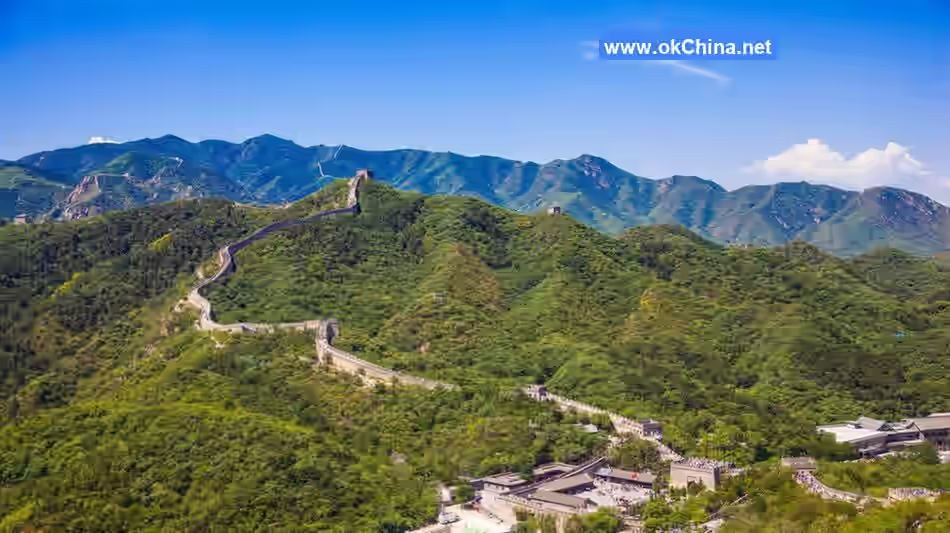
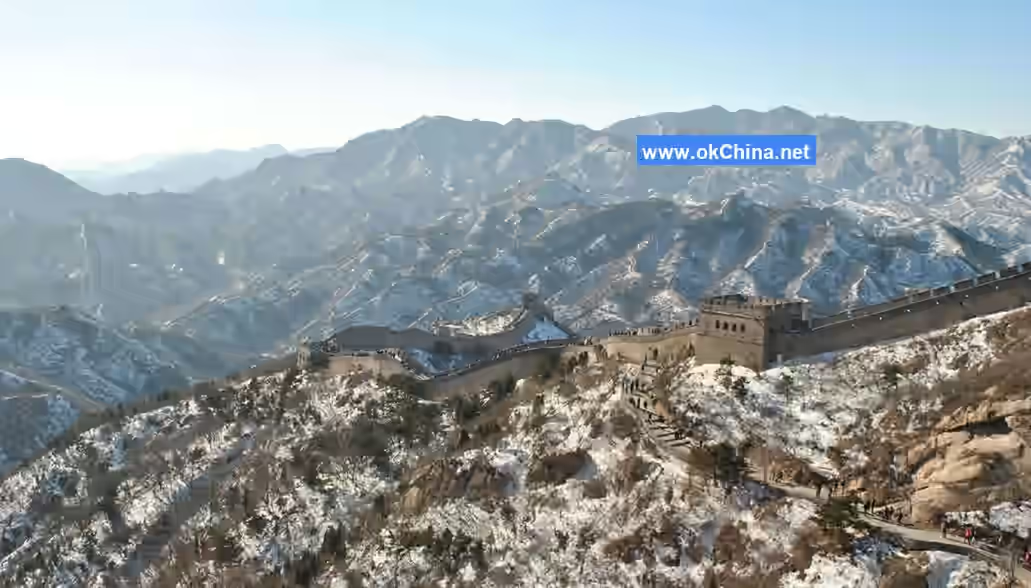
Badaling Great Wall
I. Introduction
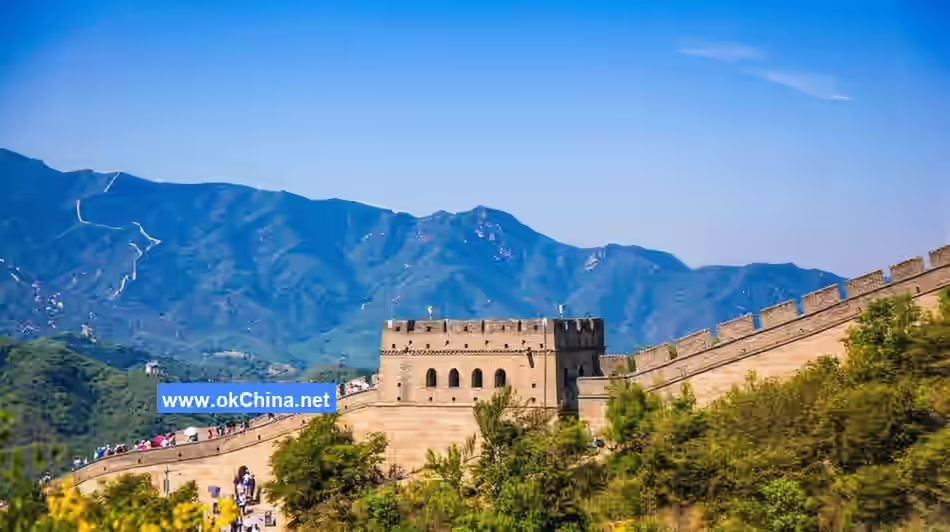
The Badaling Great Wall is located at the northern entrance of the Jundu Mountain Pass in Yanqing District, Beijing. It is an important component of the Great Wall, the great ancient Chinese defensive project, and serves as a strategic pass along the Ming Dynasty section of the Great Wall. The Badaling Great Wall was a crucial outpost of the Juyong Pass, historically described as "the peril of Juyong lies not in the pass itself but in Badaling."
The Badaling Great Wall is renowned as one of the "Nine Fortresses Under Heaven" and represents the essence of the Great Wall, standing out as a representative section of the Ming Dynasty fortifications. This segment of the wall is strategically positioned on steep terrain, offering a commanding view, and served as a vital military stronghold and a key barrier protecting the capital, Beijing, during the Ming Dynasty. With its advantageous geographical location, Badaling has long been a critical transportation route connecting Shanxi, Inner Mongolia, and Zhangjiakou.
The Badaling section of the Ming Great Wall is poetically referred to as the "Jade Pass and Natural Moat," one of the eight scenic spots of the Juyong Pass during the Ming Dynasty. Badaling was the earliest section of the Ming Great Wall opened to tourists. The Badaling scenic area, centered around the Great Wall, features modern tourist facilities such as the Badaling Hotel and the China Great Wall Museum, which bears the inscription of former President Jiang Zemin.
The Badaling scenic area is recognized as a national model for civilized scenic tourism. It is celebrated worldwide for its majestic landscape, comprehensive facilities, and profound cultural and historical significance, making it a globally renowned tourist destination.
II. Historical Development
Ancient Construction
According to historical records such as Records of the Grand Historian and surveys by cultural relic experts, it is confirmed that sections of the Great Wall were built in the Badaling area during the Warring States period. Remnants of walls and beacon towers from that era still exist today, and their alignment largely matches that of the Ming Great Wall. Historical records from the Han Dynasty mention the establishment of two fortresses: Jundu and Juyong. The Northern Wei Dynasty text Commentary on the Water Classic states: "Juyong Pass lies within the boundaries of Juyong, hence its name. To the south lies a deep valley, with stones piled to form the pass foundation. Its towering walls and steep cliffs are not easily scaled... The water flows south of the mountain, passing through the Jundu boundary..." As a result, some experts believe that the Han Dynasty established the Juyong Pass at the site of Badaling.
During the Northern Wei Dynasty, approximately 1,500 years ago, sections of the Great Wall were constructed in the Badaling area. According to the Book of Wei: Annals of Emperor Shizu, in the seventh year of the Taiping Zhenjun era (446 AD), the Northern Wei Tuoba clan built a wall north of the capital, Pingcheng (present-day Datong), known as the "Jishang Saiwei." This wall stretched from the Jundu Mountain in Shanggu (the Badaling area) in the east to the banks of the Yellow River in the west. Later, during the sixth year of the Tianbao era of the Northern Qi Dynasty (555 AD), another wall was constructed, starting from Datong, passing through Jundu Mountain, and extending eastward to the sea.
Reconstruction During the Ming Dynasty
The Badaling Great Wall was constructed during the 18th year of the Hongzhi era of the Ming Dynasty (1505 AD). Its construction spanned over 80 years, covering more than 1,300 li (approximately 650 kilometers). The renowned anti-Japanese general Qi Jiguang was transferred to the north to oversee the defense of the Great Wall, making this section an integral part of the ancient Chinese defensive project.
Development and Utilization
In 1953, after the restoration of the pass fortress and sections of the wall, the area was opened as a tourist site. Through multiple renovations, the accessible section now stretches 3,741 meters, with the southern section measuring 1,176 meters and the northern section 2,565 meters, featuring 16 watchtowers.
In March 1961, the "Great Wall—Badaling" was designated as one of the first batch of national-level cultural relic protection units.
In 1961, the State Council designated the Badaling pass fortress and walls as a national key cultural relic protection unit.
In 1982, it was listed as a national key scenic area. As an important part of the Beijing Badaling–Ming Tombs Scenic Area, it was approved by the State Council for inclusion in the first batch of national-level scenic areas.
In 1984, inspired by Comrade Deng Xiaoping's call to "Love China, Restore the Great Wall," the ancient fortress was revitalized. A total of 19 watchtowers and 3,741 meters of walls were restored, expanding the total tourist area to 19,000 square meters.
In 1986, Badaling was recognized as one of the "New Sixteen Scenic Spots of Beijing" and ranked first among China's top ten scenic attractions.
In 1987, it was inscribed on the UNESCO World Heritage List.
In August 1991, as the essence of the Great Wall, Badaling received the UNESCO World Heritage Certificate at the Beijing Palace Museum.
In December 1991, at the unveiling ceremony of China's Top Forty Tourist Attractions held in Zhuhai (with 94 candidate sites nationwide and 480,000 valid votes received), Badaling secured the top position with an overwhelming 370,000 votes due to its fame.
In 1992, it was ranked first among "Beijing's World-Class Tourist Attractions."
In 1995, the Badaling Great Wall was designated as a "National Patriotic Education Base" by the China National Committee for the Care of the Next Generation.
In 1998, the Badaling Expressway was completed and opened to traffic, greatly improving accessibility.
From 2000 to 2009, over 500 heads of state, government leaders, or ruling party leaders from around the world visited the Badaling Great Wall.
On May 8, 2007, the Badaling Great Wall was officially approved as a National 5A-level Tourist Attraction by the China National Tourism Administration.
Starting July 29, 2016, the Badaling Great Wall began offering free admission to active-duty military personnel and disabled veterans.
From June 1, 2019, the Badaling Great Wall scenic area implemented a fully online real-name reservation and ticketing system, along with a trial daily visitor cap of 65,000. Tickets can be reserved up to seven days in advance, with QR code purchases taking just one minute and ID card entry for faster access.
In July 2019, the Badaling Special Administrative Office officially took over the management of the Shuiguan and Ancient Great Wall sections, previously managed by the Badaling Tourism Corporation. The Shuiguan Great Wall (the eastern section) and the Ancient Great Wall (the western gate) are now uniformly managed by the Badaling Special Administrative Office, enriching the historical, military, archaeological, and ecological value of the Badaling Great Wall defense system.
III. Layout and Structure
Architectural Structure
The Badaling pass fortress is trapezoidal in shape, wider in the west and narrower in the east. It was built in the 18th year of the Hongzhi era of the Ming Dynasty (1505 AD) and renovated during the Jiajing and Wanli eras. The fortress has two gates: the eastern gate bears the inscription "Outer Town of Juyong," carved in the 18th year of the Jiajing era (1539 AD), and the western gate bears the inscription "Northern Gate and Key," carved in the 10th year of the Wanli era (1582 AD). Both gates are constructed of brick and stone, with arched passages leading to platforms. The platforms have passages to the north and south, connecting to the fortress walls, and are surrounded by battlements. A total of 1,316 beacon towers were built along this section.
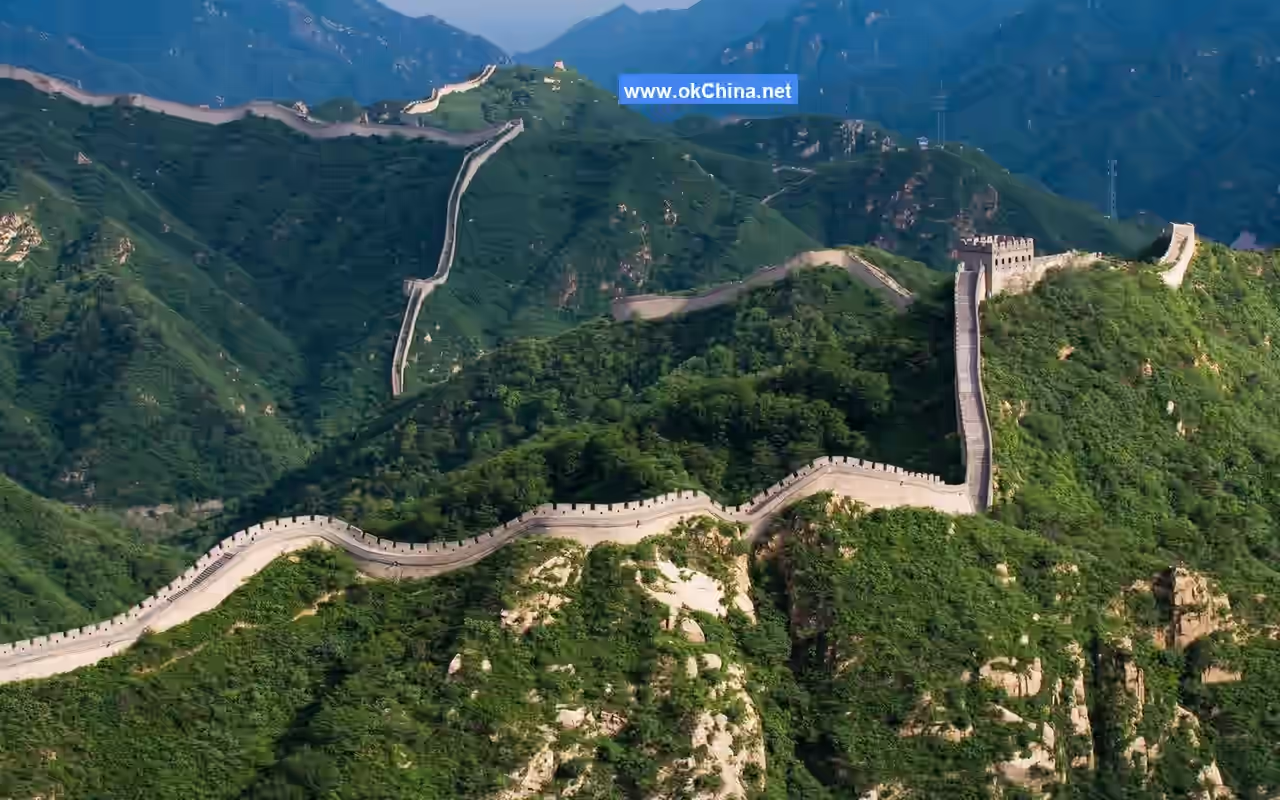
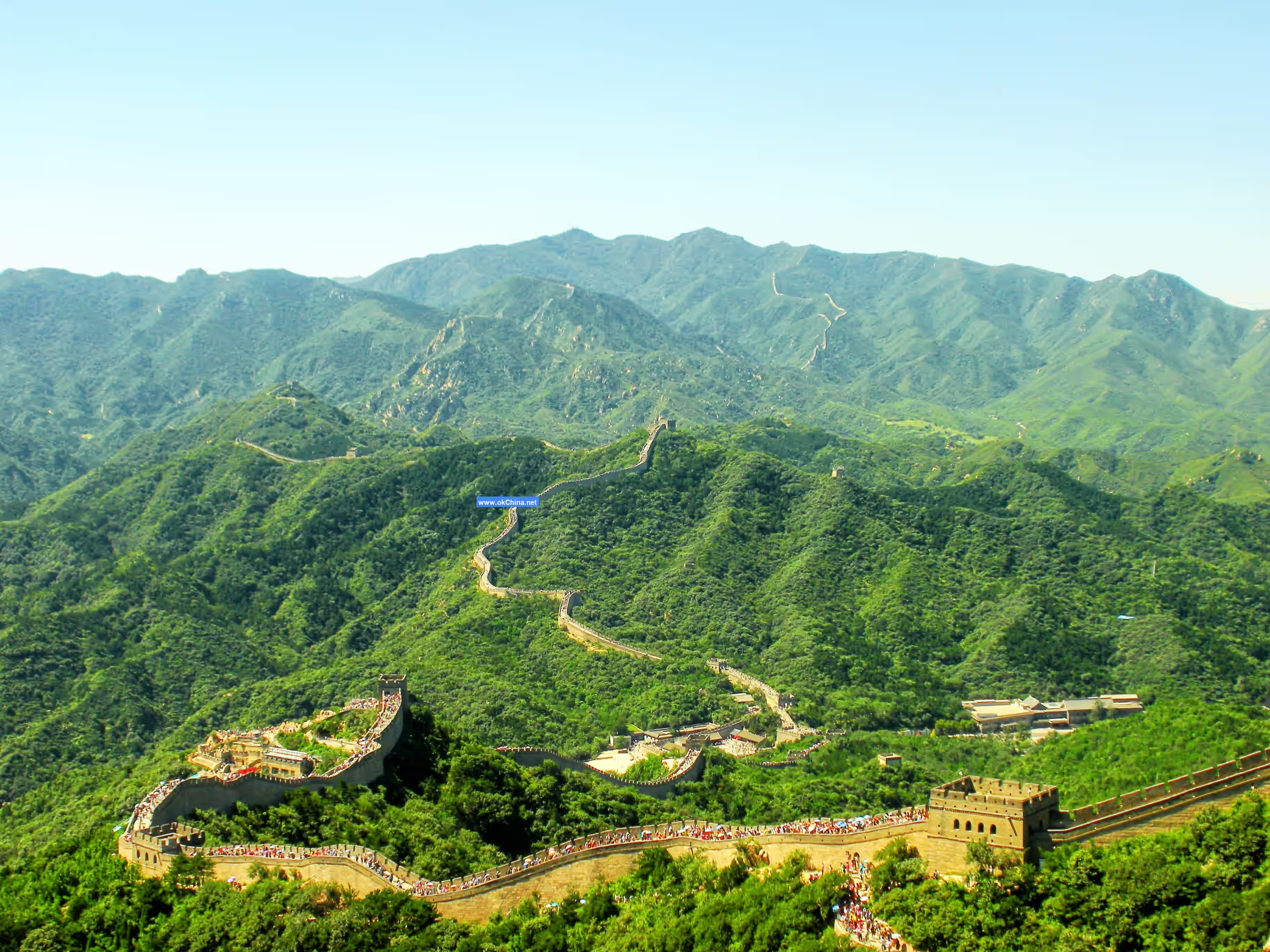
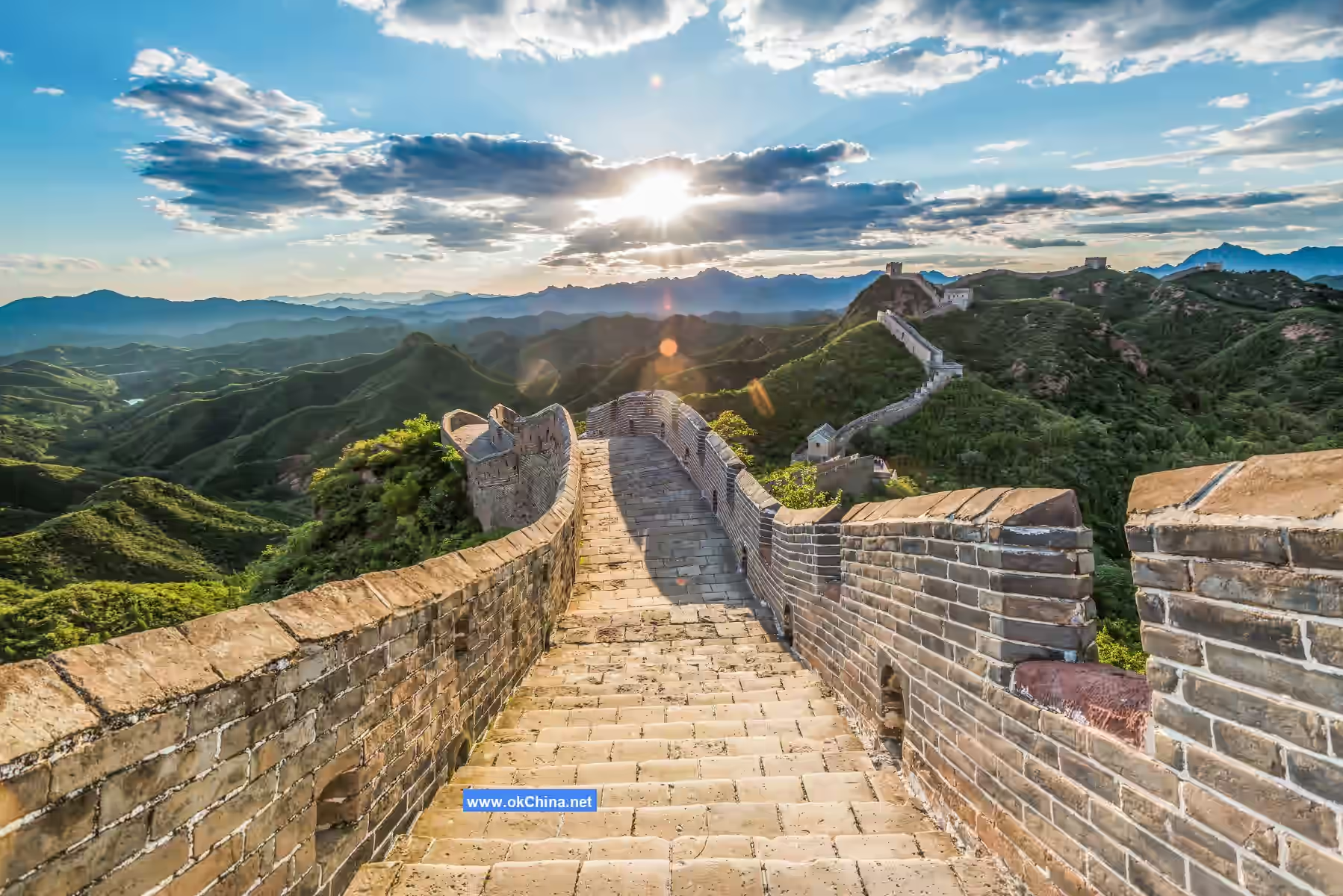
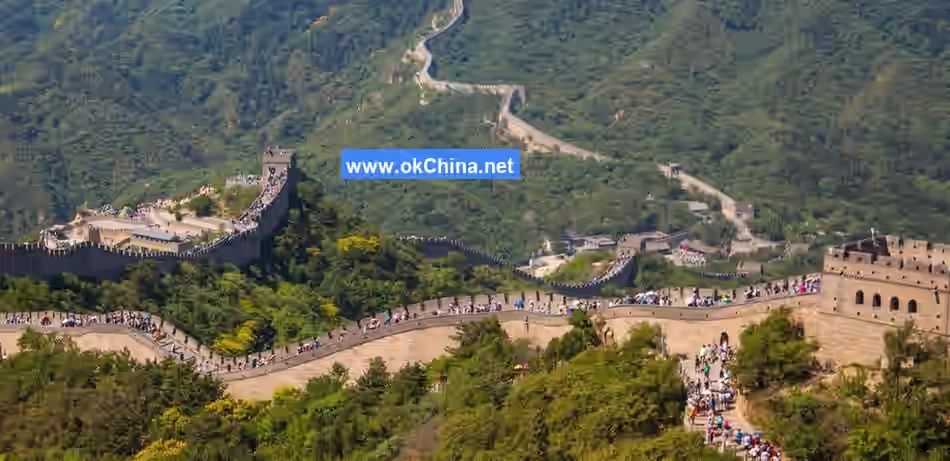
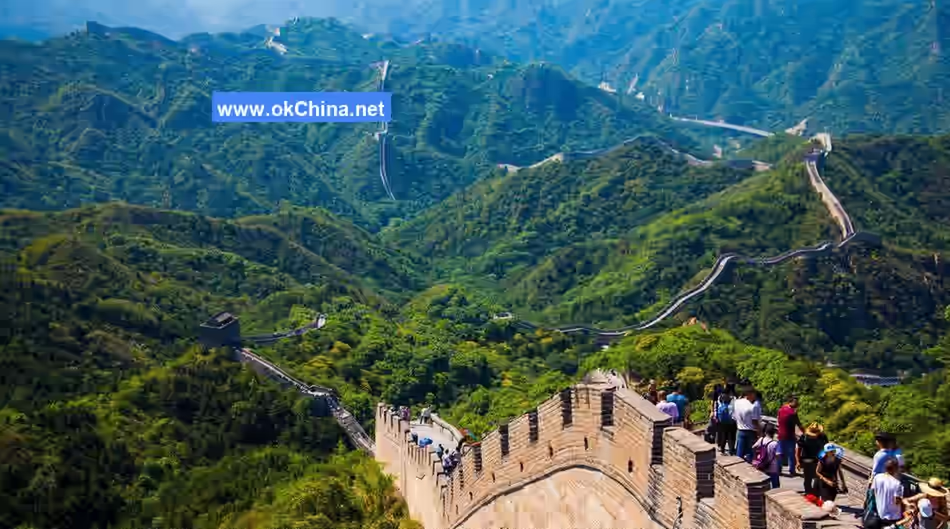
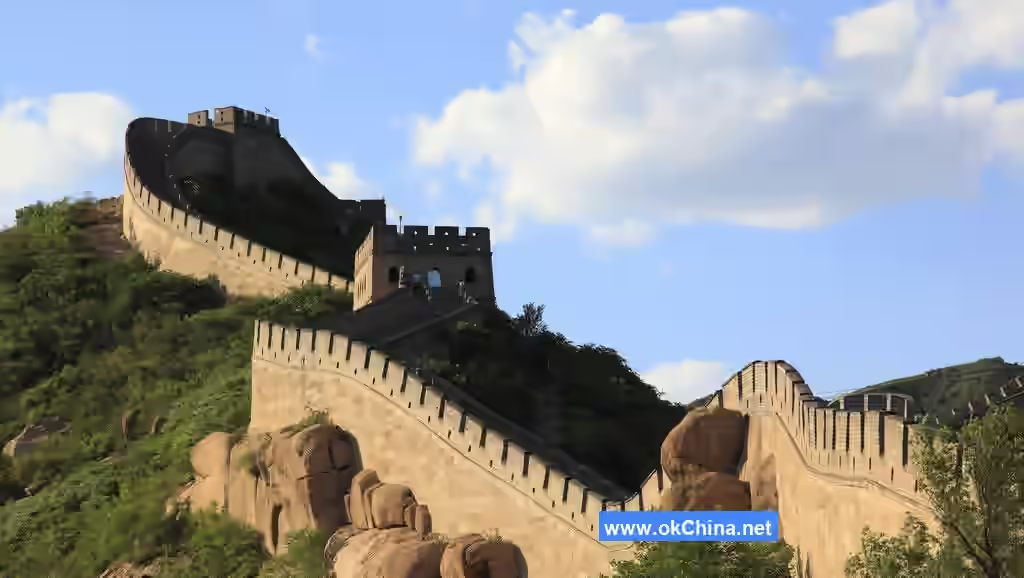
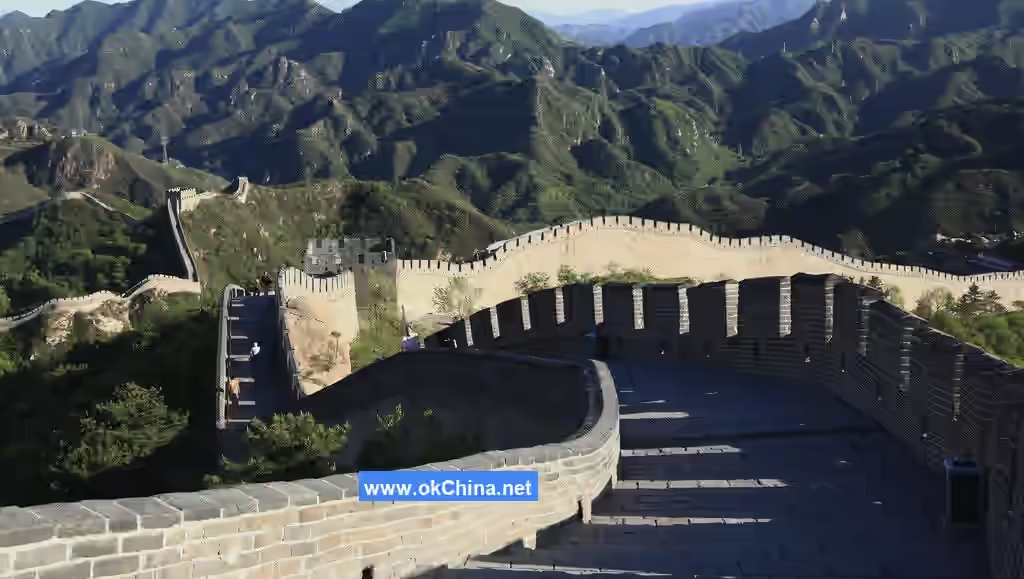
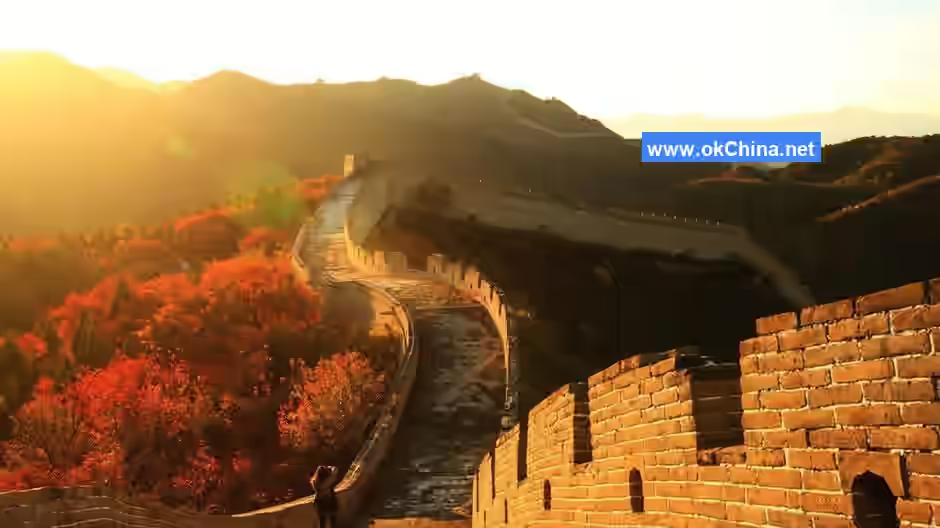
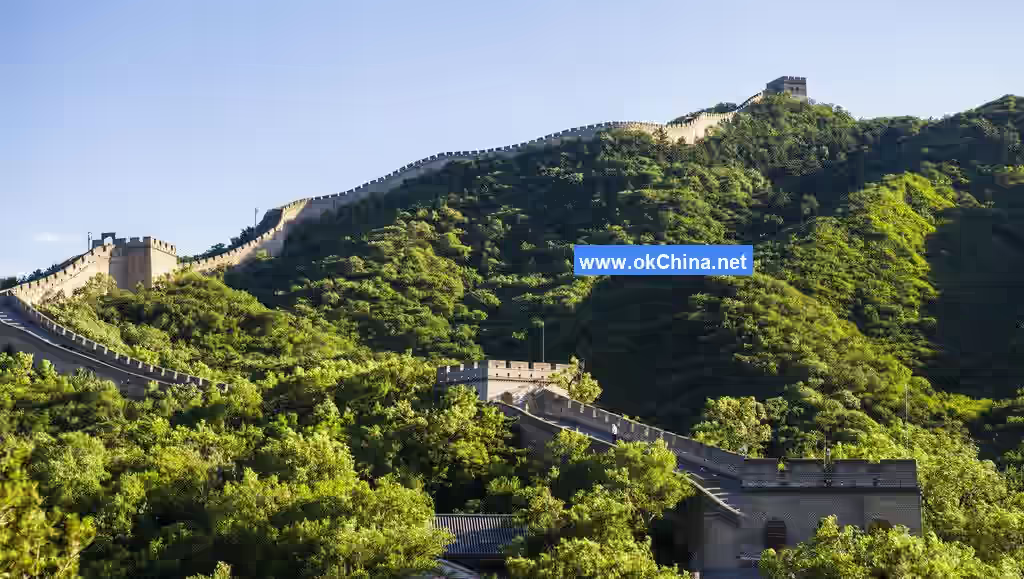
The Badaling Great Wall epitomizes the majestic and perilous grandeur of the Great Wall. Serving as a protective barrier for Beijing, it winds through overlapping mountains and treacherous terrain. The imposing walls snake north and south across the rugged peaks, stretching as far as the eye can see. Built along the mountain ridges, the Great Wall stands firm on steep cliffs, with the ancient inscription "Natural Peril" carved into a precipice, aptly summarizing the military significance of Badaling's location.
IV. Main Attractions
Wangjing Stone (Gazing-at-Beijing Stone)
Located outside the eastern gate of the Badaling pass fortress, on the south side of the main road in front of the "Outer Town of Juyong" gate. It is a natural granite stone, 1 meter high and 15 meters long, inscribed with the characters "Wangjing Shi."
Natural Peril Inscription
Located inside the eastern gate, on the cliff to the upper right of the current Bear Paradise. On a smoothed cliff face, the characters "Tian Xian" (Natural Peril) are carved, inscribed by Tong En, the magistrate of Yanqing during the 15th year of the Daoguang era of the Qing Dynasty (1835 AD), and engraved by Liu Zhenzong of Baoyang.
Playing the Zither Gorge
Located at the foot of the Wugui (Ghost) Head Mountain, it is one of the scenic spots along the Pass Valley.
Pass Fortress
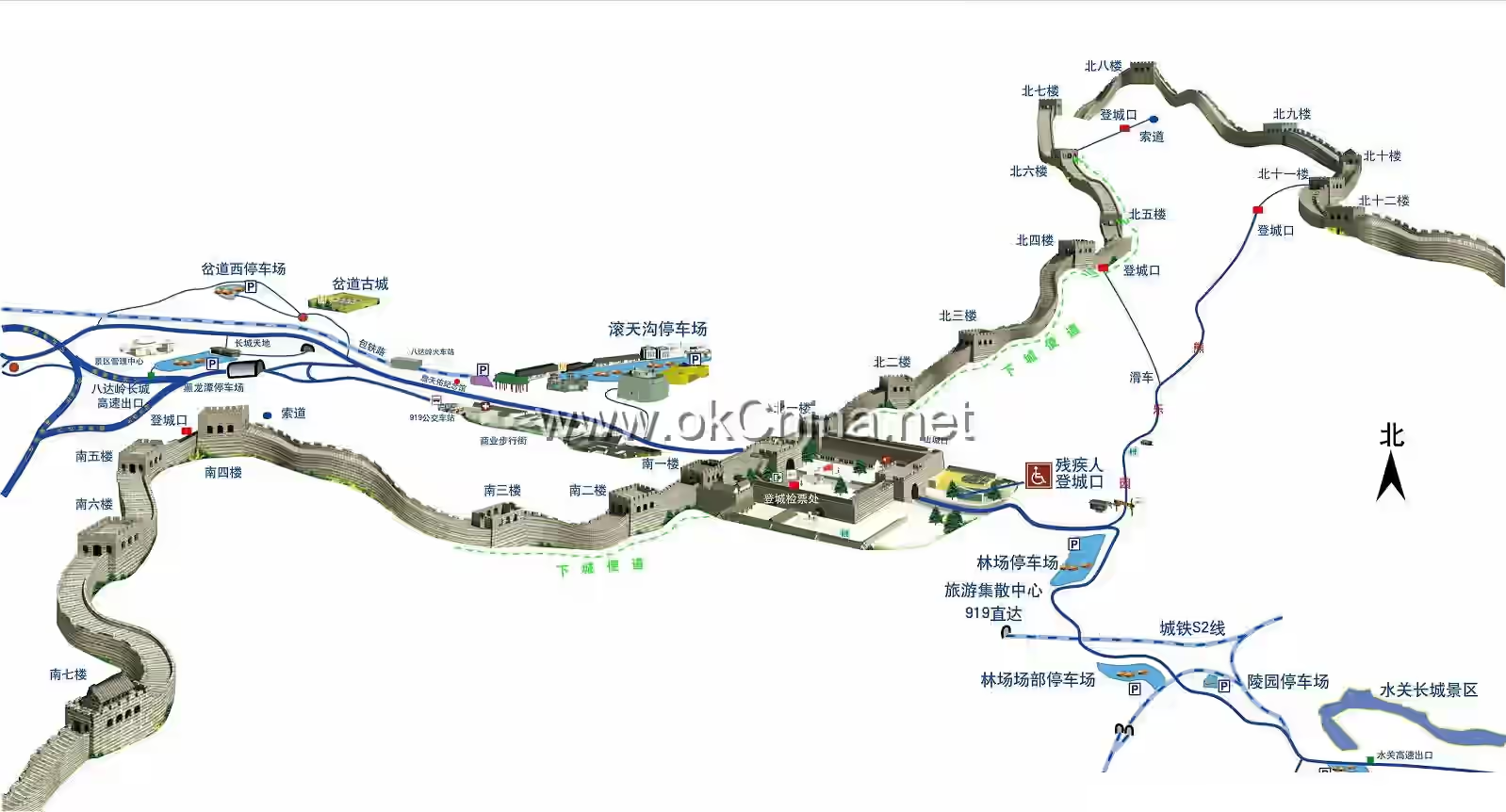
Badaling was originally a strategic pass, later developed into a fortress. From the 3rd year of the Longqing era (1569 AD) to the 10th year of the Wanli era (1582 AD) of the Ming Dynasty, defensive barriers were built at various passes, with walls, parapets, and horse-blocking walls constructed on the mountainsides. These were gradually expanded into the Great Wall, complete with watchtowers and beacon towers. Stretching from Chuancaohua Peak, through Shifosi Pass, Qinglong Bridge East Pass, Qinglong Bridge West Pass, Wangguayu Pass, Badaling Pass, Huamuliang Pass, Yujiachong Pass, Heidougu Pass to Shixia Valley, it spans approximately 12 kilometers. The Badaling Great Wall, its fortress, walls, strongholds, and the Juyong Pass in the middle of the Pass Valley formed a complete military defense system for Beijing during the Ming Dynasty.
Chadao Fortress
According to the Annals of Yanqing Prefecture, "Chadao has two routes: one leads to Huailai Guard, Yulin, Tumu, and Jiming stations to Xuanfu (present-day Xuanhua) as the western route; the other leads to Yanqing Prefecture, Yongning Guard, and Sihaizhi as the northern route." Hence, it was named "Chadao" (Forked Road). Archaeological reports indicate that the construction of Chadao Fortress began in the 30th year of the Jiajing era of the Ming Dynasty (1551 AD) and took over 30 years to complete. The fortress is irregularly rectangular, slightly bulging in the middle and tapered at the ends, built along the mountain terrain, with the northern section situated halfway up the mountain. The fortress measures 510 meters from east to west and 185 meters from north to south, shaped like a boat. It covers a total area of approximately 83,000 square meters, with walls 8.5 meters high, constructed from stone slabs, city bricks, lime, and earth. The walls feature horse paths, with battlements, lookout holes, and arrow slits on the outer parapets. The southern wall has two beacon towers. The construction of the walls occurred in two phases: the early phase used rammed earth internally with stone and lime masonry externally, while the later phase added outer layers of stone slabs and bricks to the original walls.
Ancient Cannons
Displayed alongside the horse path at the entrance to the Badaling pass fortress, there are five iron cannons, which were among the advanced weapons of their time.The largest cannon among them has a barrel length of 2.85 meters, a caliber of 105 millimeters, a range of over a kilometer, and immense power. The cannon body is inscribed with the characters "敕赐神威大将军" (Imperial Bestowal: Divine Might General), indicating it was manufactured in the 11th year of the Chongzhen era of the Ming Dynasty (1638). This cannon was transported in 1958 from Zhangbao, located over ten miles east of Badaling. The other four "ox-leg" small cannons are cultural relics unearthed during the restoration of the Great Wall in 1957. At the same time, hundreds of cannonballs were excavated, all of which were products of the Ming Dynasty. According to the Wubei Zhi (Treatise on Military Preparedness): "In ancient times, stones were launched by machines; the wooden frame of these machines resembled a crouching tiger. Later, when cannons were used, those with short and thick barrels that fired explosive shells were called 'tiger crouching cannons,' commonly known as 'field chicken cannons.'" This illustrates the advanced state of weaponry at that time.
The Wall
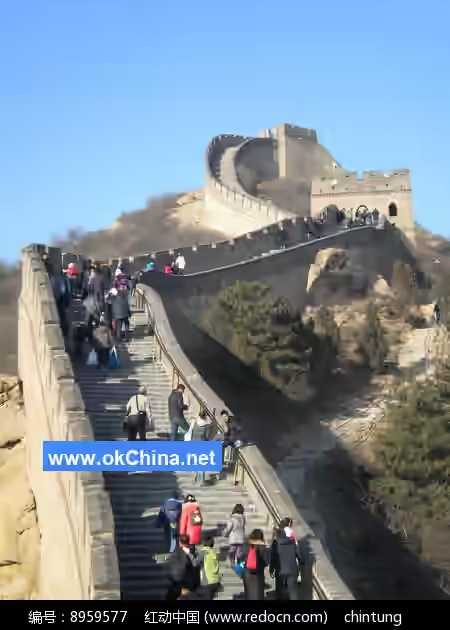
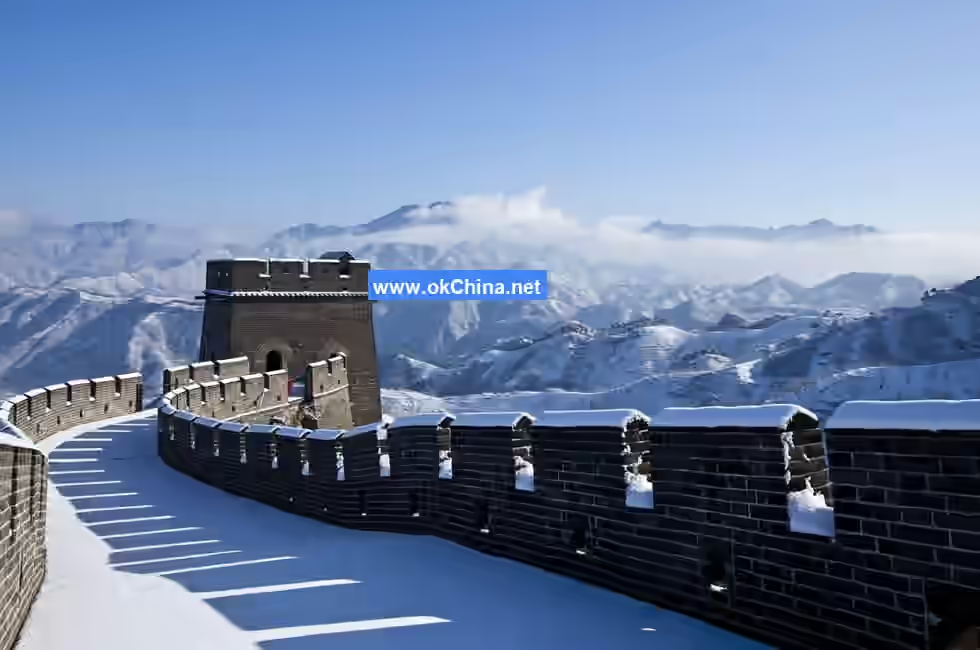
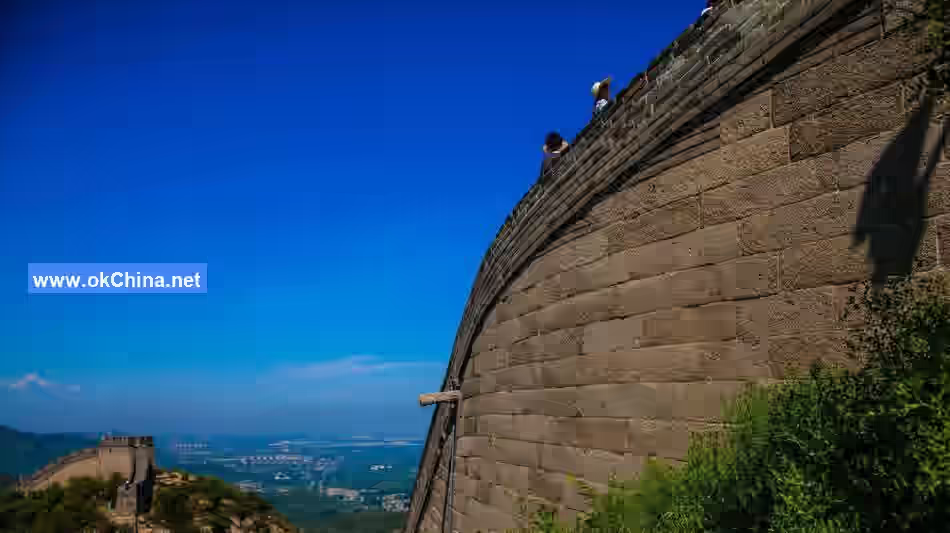
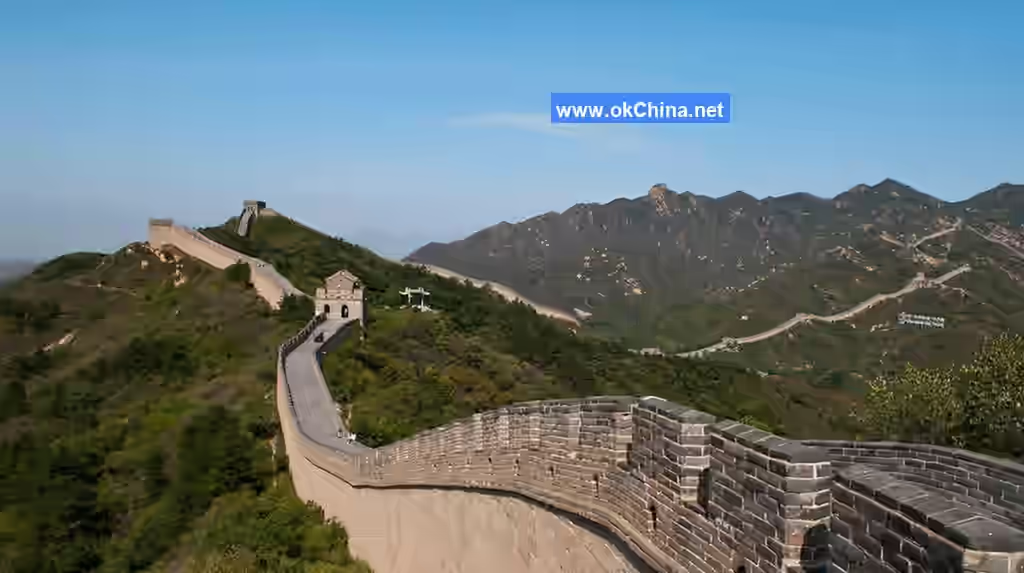
The Badaling Great Wall stands 6 to 9 meters high, with a trapezoidal cross-section. The base width ranges from 6.5 to 7.5 meters, and the top width from 4.5 to 5.8 meters. Most of the wall top is broad and flat, allowing "five horses to ride abreast and ten people to walk side by side." The central axis of the wall is offset towards the outer side, making the outer wall higher and the inner wall lower.
The Pass Fortress
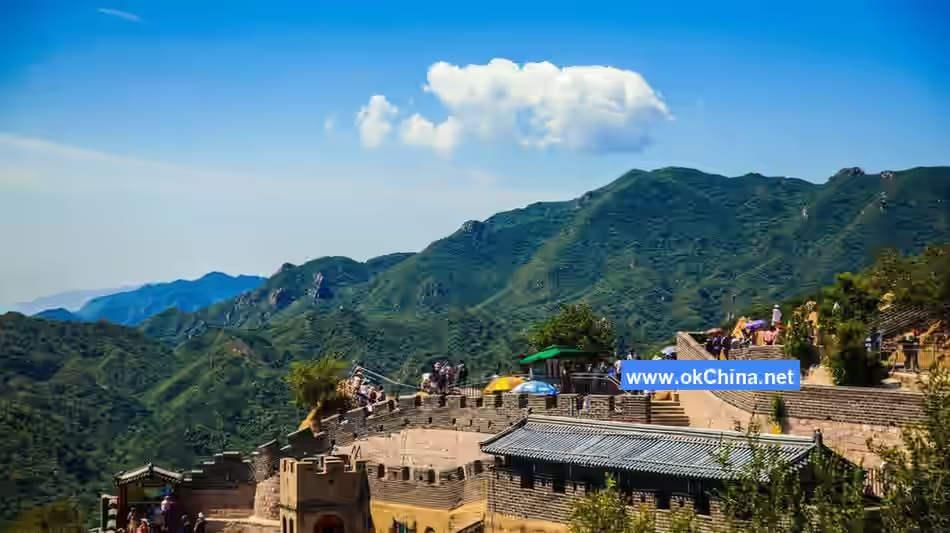
Outside the east gate of the Badaling Pass Fortress stood a temple named Wangjing Temple, which housed a large statue of the Bodhisattva of Compassion carved from rock. Outside the west gate stood an archway with a horizontal plaque inscribed "驱胡万里" (Expel the Barbarians for Ten Thousand Li). When the Pass Fortress was constructed in the 18th year of the Hongzhi era (1505) under the supervision of Wu Yiguan, the Assistant Minister of the Court of Judicial Review in charge of border affairs, both the temple and the archway were demolished. The Pass Fortress had east and west gates. The lower part of the western wall was built with over ten layers of granite slabs, while the upper part was constructed with large city bricks. The wall was over 20 meters wide, 17 meters thick, and 7.8 meters high. The top was a rectangular platform, 19.8 meters long and 14.15 meters wide, covering an area of 280.17 square meters, with parapets and crenellations on all four sides. About 30 to 40 meters from each side of the platform, one watchtower was built, connected by walls, forming a pincer-like defensive position with the Pass Fortress. The western wall connected to southern and northern walls, both built along the mountain ridge, lower in the east and higher in the west, forming a U-shape that met at the east gate. These walls were 3.3 meters thick, with a circumference of 2070 meters and a height of 7.6 meters. The distance between the east and west gates was 63.9 meters, and the enclosed area was about 5000 square meters. The east gate was erected in the 18th year of the Jiajing era (1539), with its plaque inscribed "居庸外镇" (Outer Garrison of Juyong). The west gate was erected in the 10th year of the Wanli era, with its plaque inscribed "北门锁钥" (Northern Gate Lock and Key). Both are well-preserved.
Watchtowers
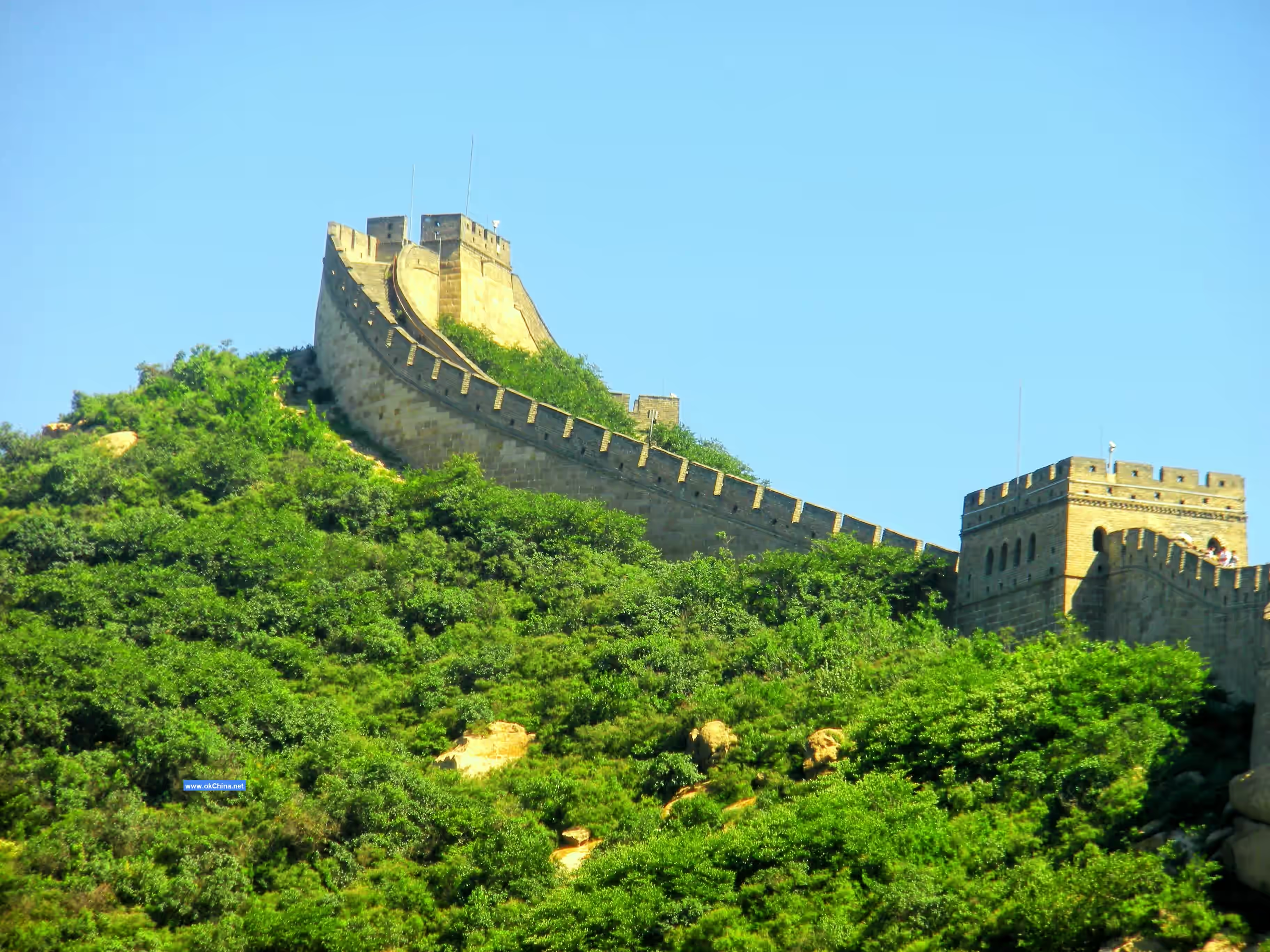
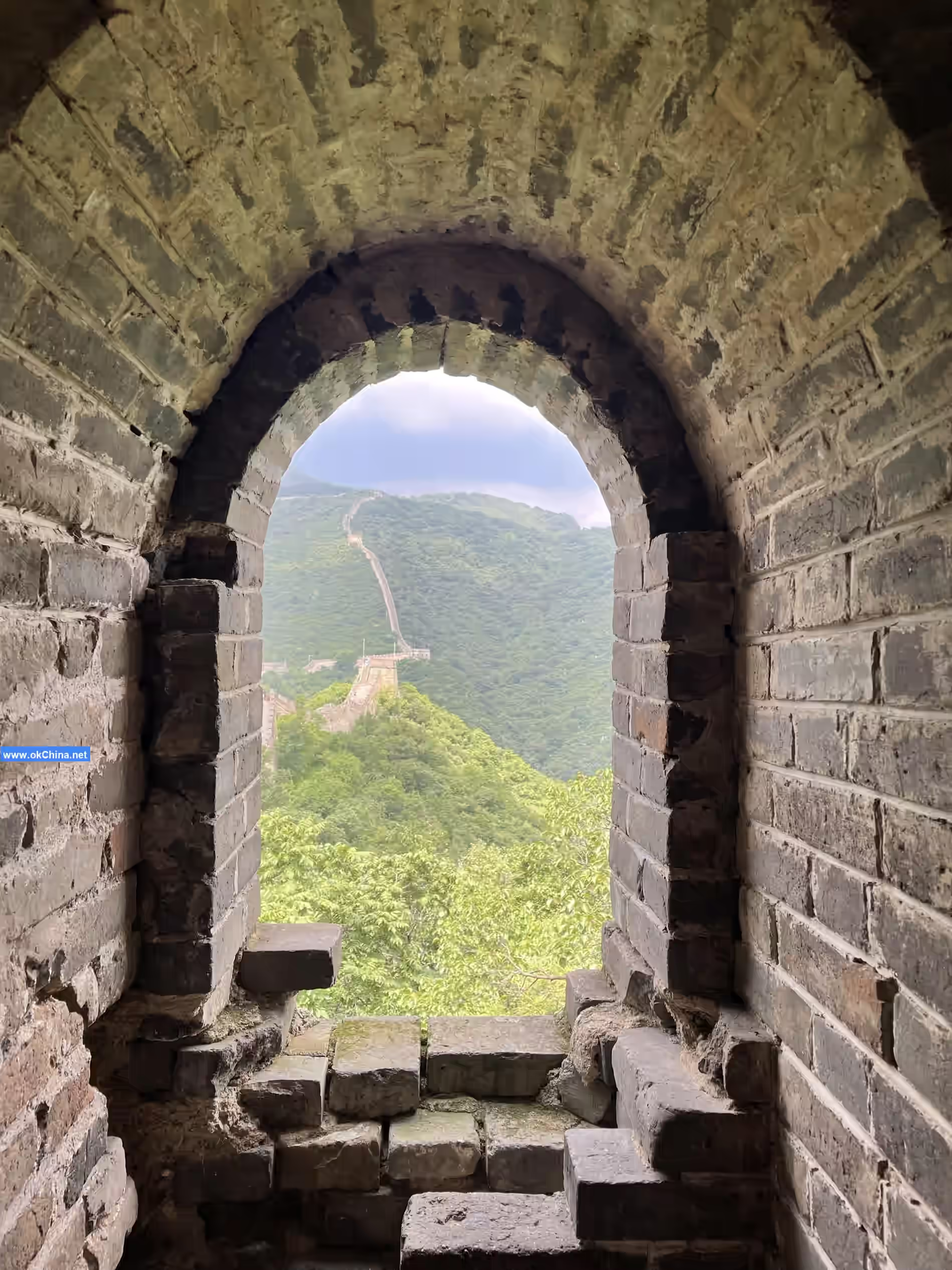
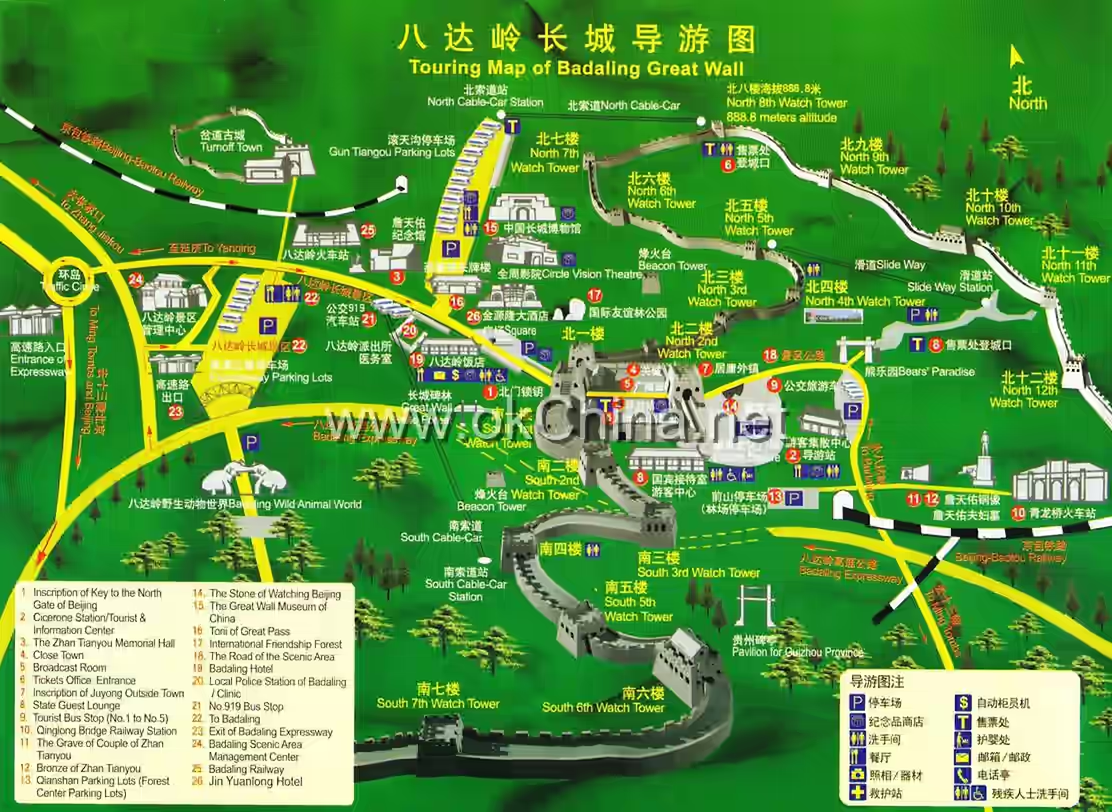
The Badaling Great Wall has a total of 43 watchtowers, similar in design yet each with unique features. Among them are wall platforms used for patrols and sentry duty, as well as two-story watchtowers. The upper stories are equipped with crenellations and arrow slits, while the lower stories served as quarters for soldiers and storage for supplies. The distance between towers and forts was determined by the mountain terrain. All are brick-and-stone structures. The ceilings of the first and second floors are constructed with numerous arches, and stairways provide access between levels. Both floors have firing ports, observation ports, and water spouts. The upper floor has crenellations, and the tower projects outward from the wall, incorporating the wall within it. Sixteen watchtowers, including the South Fourth Tower, North Fourth Tower, and North Fifth Tower, have been restored.
South and North Fourth Towers
Located on the southern and northern peaks of the Pass Fortress, there are four watchtowers on each peak. This is the earliest section opened for tourism. The two peaks have a large relative height difference and steep slopes. The watchtowers stand in sequence from lower to higher elevations, echoing each other from north to south. From the Pass Fortress to the South Fourth Tower, the wall is 685.8 meters long, rising 127 meters in height, averaging a 1-meter rise every 6 meters. Between the third and fourth towers, the terrain is steep, with the wall winding for about 500 meters. The most perilous section has a slope of 70 degrees. From the Pass Fortress to the North Fourth Tower, the wall is 767.5 meters long, rising 155 meters. This distance is longer than that to the southern peak but the slope is gentler. Past the third tower, the terrain becomes saddle-shaped, descending to the saddle before ascending to the fourth tower. This section has over a hundred steps. The eight watchtowers and the connecting wall sections between them were restored in the 1950s. The four watchtowers on the northern peak were originally two stories, but only three were fully restored; the upper story of the third tower was not restored. The upper stories of the first and second towers on the southern peak were also not restored. The South Third Tower originally had an attached building; the column bases remain but have not been restored. Each tower originally had a stele recording its construction details, but these are lost, leaving only the pedestals. On some watchtowers, the pivot sockets of the arched doors and holes for door bars are faintly visible.
North Fifth Tower
This is the watchtower with the most arched chambers. It is 9.25 meters long and 9.34 meters wide, with two stories. Entering the first floor through the arched door, one finds many arched chambers. Each side has four rows of brick piers, connected by arched ceilings, with over 30 arches supporting the floor of the second story.
North Sixth Tower
This is the watchtower with the largest area. It is 12.6 meters long and 8.5 meters wide, with a ground floor area of about 100 square meters. The long sides have seven rows of brick piers, and the wide sides have four rows. The tops of the piers are arched, forming a square corridor-like passageway with an open center, creating a rectangular courtyard. One can climb a ladder from the courtyard to reach the roof.
North Eighth Tower
At an elevation of 888 meters, this is the highest watchtower on the Badaling Great Wall and the best place for an overview of the wall, hence also called the Sunrise Viewing Platform. The tower has two stories with a connecting ladder. The first floor facing the enemy has six arrow windows, the highest number among all watchtowers. The distance from the Pass Fortress platform to the North Eighth Tower is over 1500 meters, with a relative height difference of 228 meters.
Watchtowers with Attached Buildings
Among the newly restored watchtowers, two have attached buildings: the North Tenth Tower and the South Sixth Tower. The attached buildings are small houses built on the second floor, with a hard gable roof and carved windows with red pillars.
Beacon Towers
Also known as signal fire towers. On the eastern and western mountains outside the Badaling Great Wall, there is one beacon tower each. Each beacon tower is five zhang high (approx. 16.5 meters), surrounded by a small wall one and a half zhang high (approx. 5 meters). They were equipped with hanging structures and wooden battlements above, moats and drawbridges below, and traps and pitfalls outside. The entrance path had water containers for holding ice in winter and water in summer. There were no stairs; rope ladders were used for ascent and descent. Each tower had two firearms/cannons and was garrisoned by ten soldiers, defended by troops from nearby fortresses, forming a deep defensive network with the fortresses. In the second year of the Chenghua era (1466), regulations were established for signaling with beacon fires: one fire and one cannon shot for over 100 enemies; two fires and two shots for over 500; three fires and three shots for over 1000; four fires and four shots for over 5000; five fires and five shots for over 10,000.
Wall Platforms
Also known as rampart platforms. These are platform-type structures slightly higher than the Great Wall's top, built with parapet walls, crenellations, and arrow slits. They were used by ancient soldiers for patrols, sentry duty, and defensive positions during warfare. For example, the platform atop the gate of the Badaling Pass Fortress is a wall platform.
Combat Forts
The large cannon in the combat fort was originally named "捷胜飞空灭虏安边发熉神炮" (Swift Victory, Sky-Soaring, Barbarian-Destroying, Border-Pacifying, Flame-Emitting Divine Cannon). Built at key transportation routes or strategically important locations along the Great Wall, these were fortress-like structures with one, two, or three stories, varying in size. They stored weapons, ammunition, and other strategic supplies, and their function was greater than that of watchtowers. According to the Sizhen Sanguan Zhi (Records of the Four Garrisons and Three Passes) by Liu Xiaozu of the Ming Dynasty, under the planning and supervision of Qi Jiguang, a total of 1,200 watchtowers and combat forts were built along the Great Wall from Shanhaiguan to Beijing (originally 3,000 were planned). During war, from these forts, one could "strike from above using firearms, folangji cannons, and mother-and-son cannons in rotation," and "when ammunition ran out, replace them with artillery." A combat fort typically required 30 defenders for the fort itself and 30 for the battlements, divided into six squads, and stocked with 300 jin of gunpowder. Additionally, the forts stored divine arrows, iron clubs, thousands of stones of various sizes, and a month's supply of rations and water. These combat fort facilities, "refined over time and ingenious in conception," could be used for both offense and defense. They closely coordinated with other military installations like wall platforms and watchtowers on the Great Wall to form a dense fire network, greatly enhancing combat effectiveness, effectively repelling enemy cavalry attacks, and playing a crucial strategic and tactical role in military defense.
V. Historical Significance
Badaling has been an important military strategic location since ancient times. During the Spring and Autumn and Warring States periods, walls were built here to defend against invasions from northern tribes. Remnants of walls and beacon towers from that era still exist, and their alignment largely coincides with the Ming Great Wall. Badaling is a mountain pass in the rugged Jundu Mountains. The Ming Dynasty text Chang'an Ye Hua (Night Talks of Chang'an) states: "The roads divide here, extending in all directions, hence the name Badaling (Eight-Reaching Pass). It is the highest among the passes and mountains." This highlights Badaling's geographical and strategic importance.
After over eighty years of construction, the Badaling Great Wall became a tightly integrated defensive system with interconnected passes and fortresses, mutually visible beacon towers and forts, layered walls for protection, and beacon fire alarm signals.
Historically, the Badaling Great Wall was the gateway protecting Juyong Pass. From Badaling to present-day Nankou, there is a 40-li-long valley. Within this valley stood the pass fortress "Juyong Pass," which gave the valley its name "Guangou" (Pass Valley). However, the true choke point was the Badaling Great Wall. Badaling occupies the highest point at the northern end of Guangou, where two peaks flank a central passage. Its居高临下 (commanding high ground) position made it extremely strategically important. Ancient people said, "Looking down from Badaling at Juyong Pass is like looking down from a high roof ridge or peering into a well," and "The danger of Juyong lies not in the pass fortress itself, but in Badaling." This indicates that Juyong Pass was merely a fortress, while the true Great Wall was built at Badaling. The unique terrain of the Badaling pass made it a contested spot for military strategists throughout history. Therefore, constructing the Great Wall here held immense strategic significance.
Badaling has witnessed many significant events in Chinese history. After the First Emperor Qin Shi Huang visited Jieshi in the east, he passed through Badaling on his way to Datong before returning to Xianyang. Empress Dowager Xiao's inspection tours, Genghis Khan's entry through the pass, the Yuan emperors' biannual journeys between Beijing and Shangdu, the Ming emperors' northern expeditions, Li Zicheng's capture of Beijing, and the Qing emperors' personal campaigns all made Badaling a必经之地 (necessary passage).In modern history, Empress Dowager Cixi fled westward, shedding tears at Badaling; Zhan Tianyou oversaw the construction of China's first independently built railway, the Beijing-Zhangjiakou Railway, at Badaling; and Dr. Sun Yat-sen ascended the Badaling Great Wall, leaving behind many historical anecdotes and precious memories, making it a renowned historical site.
Badaling Great Wall was the earliest section of the Great Wall to open to tourists. It has welcomed over 130 million domestic and international visitors, including 372 foreign heads of state and numerous world figures such as Nixon, Reagan, Thatcher, Gorbachev, Elizabeth II, and Heath, who have visited Badaling for sightseeing.
Mutianyu Great Wall
I. Introduction
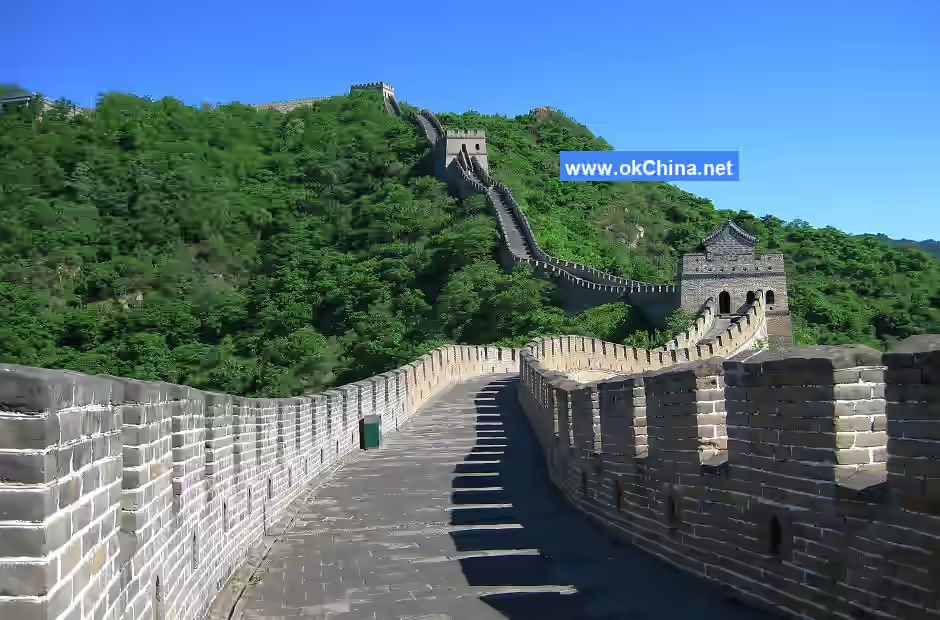
Located in Mutianyu Village, Bohai Town, Huairou District, Beijing, 73 kilometers from downtown Beijing, it enjoys the reputation both domestically and internationally as "the most spectacular section of the Great Wall." The scenic area features rolling mountains and a vegetation coverage rate of over 90%. Stretching 5,400 meters, Mutianyu Great Wall is the longest section of the Great Wall in China and one of the sixteen scenic spots of Beijing. In the first year of the Hongwu era of the Ming Dynasty (1368), Mutianyu Great Wall was constructed under the supervision of General Xu Da, a subordinate of Zhu Yuanzhang, on the ruins of the Northern Qi Dynasty Great Wall.
Mutianyu Great Wall represents the essence of the Ming Dynasty Great Wall. This section connects Gubeikou to the east and Juyong Pass to the west, serving as a crucial military stronghold for defending the capital since ancient times. Notable attractions include Zhengguan Tower, Dajiao Tower, and Yingfeidaoyang. The wall remains well-preserved, reflecting the ancient charm of the Great Wall.
II. Historical Evolution
Mutianyu was originally a small mountain village in Beixinying Township (now Bohai Town), Huairou District. Due to its strategic location—connecting Juyong Pass to the west and Gubeikou to the east, and serving as the eastern section of Huanghua Town, the northern gate of the capital—it has long been regarded as a northern barrier defending the capital and imperial mausoleums. Known as "Weiling Xiongguan" (Perilous Ridge and Majestic Pass), it witnessed numerous battles throughout history. Mutianyu Pass was one of the key passes protecting the capital and imperial mausoleums during the Ming Dynasty. (According to Changan Kehua, Volume 7: Gazetteer of Passes and Towns)
Northern Qi Period of the Northern and Southern Dynasties
During the Northern Qi period of the Northern and Southern Dynasties (550–577), the Great Wall was built at Mutianyu.
First Year of Hongwu, Ming Dynasty
Mutianyu Great Wall was constructed in the first year of the Hongwu era of the Ming Dynasty (1368) under the supervision of General Xu Da (later enfeoffed as Prince of Zhongshan) on the ruins of the Northern Qi Great Wall. (According to Qian'an County Annals of the Twelfth Year of Tongzhi: "In the early Ming Dynasty, Xu Zhongshan built border walls stretching over 1,700 kilometers from Shanhaiguan to Mutianyu, making the frontier defense exceptionally tight.")
Second Year of Yongle, Ming Dynasty
In the second year of the Yongle era of the Ming Dynasty (1404), "Mutianyu Pass" was established. (According to Rixia Jiuwen Kao: Frontier Defense, Volume 153, page 2466)
Third Year of Longqing, Ming Dynasty
In the third year of the Longqing era of the Ming Dynasty (1569), Emperor Muzong of the Ming Dynasty, Zhu Zaihou, appointed the renowned anti-Japanese general Qi Jiguang as the commander to oversee military training in the Ji, Chang, and Baoding garrisons. Qi led the renovation of the 2,000-li Great Wall, including the Mutianyu section, which was completed in the autumn of the fifth year of Longqing (1571).
1983
In 1983, Mutianyu Great Wall underwent restoration and development.
1988
In April 1988, Mutianyu Great Wall officially opened to domestic and international tourists.
2000
In 2000, the Huairou District People's Government decided to transform Mutianyu Great Wall into a scenic area.
III. Main Attractions
Zhengguan Tower
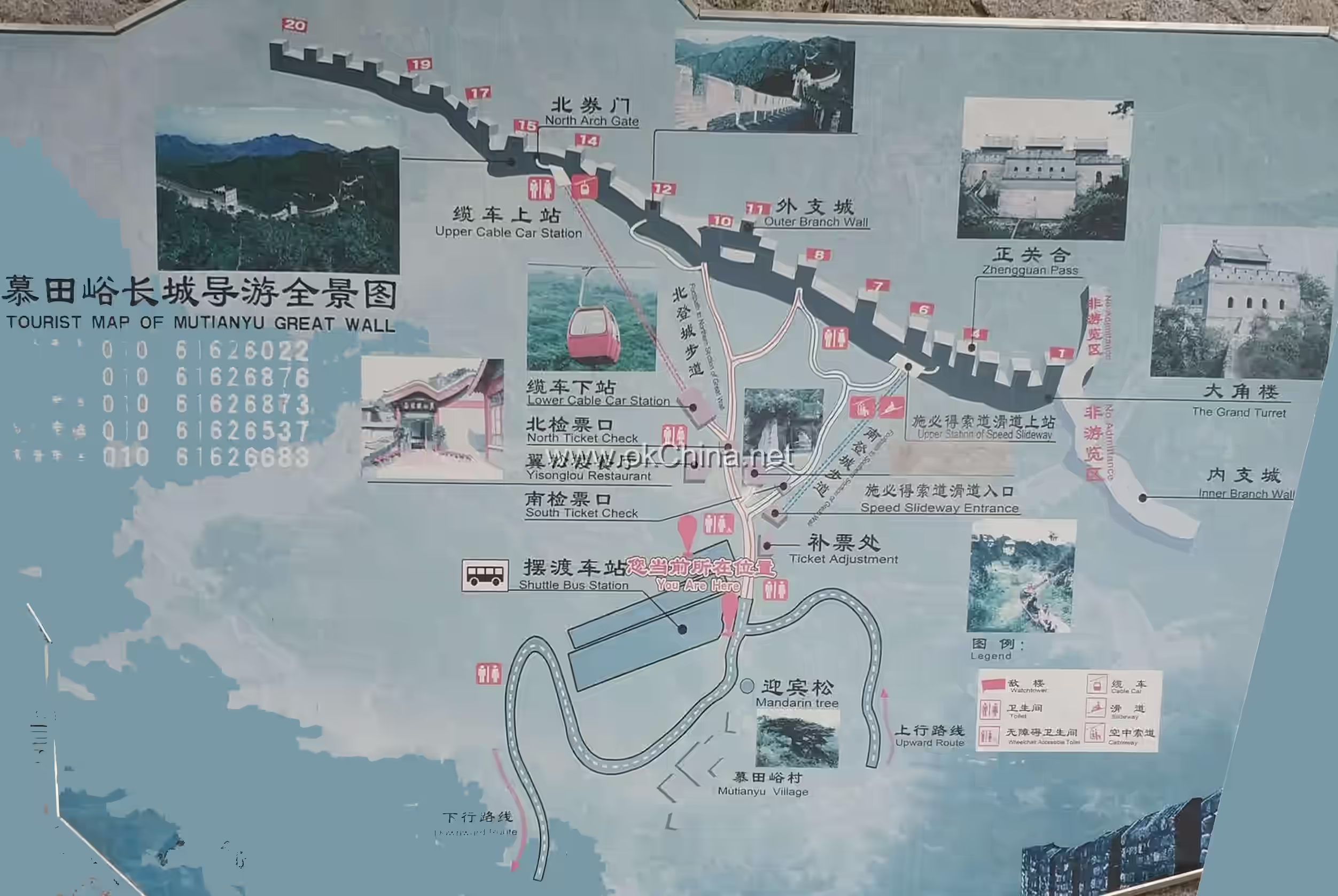
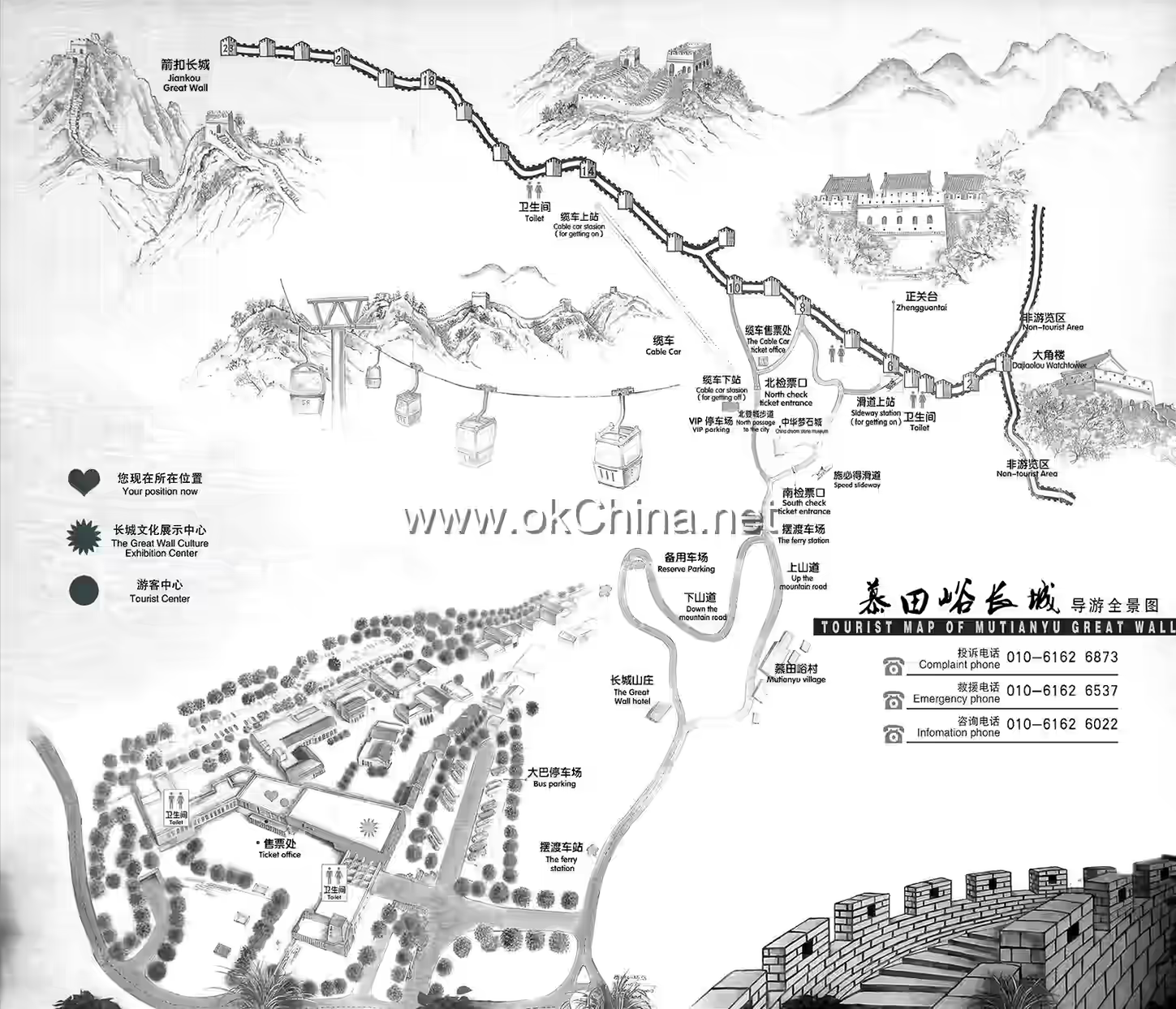
Also known as Mutianyu Pass, Zhengguan Tower features three watchtowers standing side by side, a rare architectural feat in Great Wall history. Built in 1404 (the second year of the Yongle era of the Ming Dynasty), it held significant strategic importance: one side faced the Xiongnu territories beyond the frontier, another served as a passage to the capital, and the third provided a shortcut to the imperial mausoleums. Measuring 40 meters long, 30 meters wide, and 20 meters high, the two-story tower has interconnected rooms on the lower level for storing grain and garrisoning troops. The battlements offer a broad view of the surrounding areas.
Dajiao Tower
Located at the highest point east of Mutianyu Pass, now designated as Mutianyu Tower No. 1, Dajiao Tower is one of the iconic sights of Mutianyu Great Wall. Historically, it marked the boundary between the Ji Garrison and Chang Garrison sections of the Great Wall. To the east was under the jurisdiction of the Ji Garrison, while to the west belonged to the Chang Garrison. The name "Dajiao Tower" derives from its unique structure: three sides of the tower connect to the Great Wall—one stretching west to Badaling, one east to Gubeikou, and one south to the inner branch wall. From any angle, it resembles a corner of a fortress, hence the name. As a large watchtower and the highest point in the eastern section, Dajiao Tower offers panoramic views of the Great Wall and its surroundings. It served as a crucial observation post, guarding Mutianyu Pass to the west and Qilian Pass to the east.
Yingfeidaoyang
One of the most famous perilous sections of the Great Wall near Beijing. Visitors to Jiankou often use the term "Yingfeidaoyang" (where eagles fly upside down) to describe the steepness and danger of this stretch. Jiankou has become one of the most photographed sections of the Great Wall in recent years and a popular spot for hikers and photographers. The wall ascends directly from the mountainside to the summit, where a watchtower stands, then suddenly descends back to the mountainside before rising sharply again to an elevation of over 840 meters. This section forms a large curve resembling an ox horn, earning it the name "Ox Horn Edge." On either side of the Ox Horn Edge at Mutianyu, the wall is known as "Jiankou" and "Yingfeidaoyang." Built on exposed cliffs, the slope of the wall averages around 50 degrees, with one segment nearly vertical at 90 degrees. The steps are only a few inches wide, making it accessible only to the brave.
IV. Site Features
(1) High Vegetation Coverage—The scenic area boasts rich plant diversity, with vegetation coverage exceeding 96%. The scenery varies with the seasons, offering breathtaking views year-round. It is renowned both domestically and internationally as "the most spectacular section of the Great Wall."
(2) Unique Pass Tower—Unlike Juyong Pass, Shanhaiguan, and Jiayuguan, Zhengguan Tower at Mutianyu consists of three hollow watchtowers connected and standing side by side. The two side towers are smaller, while the central tower is larger, with three lookout pavilions atop them. The gate is not located in the center but on the eastern side of the pass tower, with entrances and exits through the side towers. This unique architectural style is rare along the Great Wall.
(3) Dense Watchtowers—From Mutianyu Tower No. 1 (Dajiao Tower) to Mutianyu Tower No. 4 (Zhengguan Tower), a distance of less than 500 meters, there are four watchtowers. From Tower No. 1 to Tower No. 20, spanning only 3,000 meters, there are 25 watchtowers, observation platforms, wall platforms, and guardhouses. Such a high density of watchtowers is uncommon along the Great Wall.
(4) Double-Sided Battlements—While most sections of the Great Wall have battlements only on the outer side, Mutianyu features battlements on both sides. Battlements served as protective barriers for soldiers during combat. The presence of double-sided battlements indicates that defenders could engage enemies from both directions, highlighting the strategic importance of Mutianyu in history.
(5) Coexistence of Inner and Outer Branch Walls—Branch walls are additional sections of the Great Wall built along mountain ridges for tactical purposes. The outer branch wall at Mutianyu connects to Mutianyu Tower No. 11, while the inner branch wall is known as "Bald Tail Edge."
(6) Three-Dimensional Terrain—Mutianyu Pass is the lowest point, at an elevation of 486 meters. To the east, the terrain rises sharply, gaining 117 meters within less than 500 meters to Dajiao Tower (Mutianyu Tower No. 1). To the west, from Mutianyu Tower No. 4 (Zhengguan Tower) to Tower No. 19, the terrain is relatively gentle with minor fluctuations. From Tower No. 20 to the highest point of Ox Horn Edge, the elevation increases by 533 meters over about 10 watchtowers, reaching 1,039 meters, creating a magnificent spectacle.
The Great Wall sections in Beijing and Hebei are primarily built with bricks and stones, representing the best-preserved and most exquisite parts of the Ming Dynasty Great Wall.
Comments
Post a Comment