
Arctic Village
1. Introduction
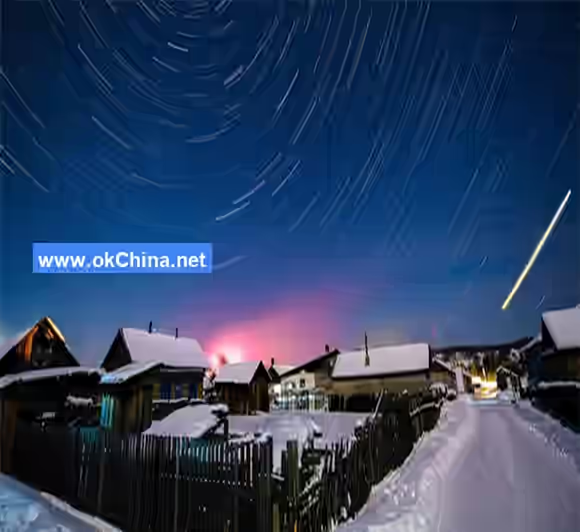
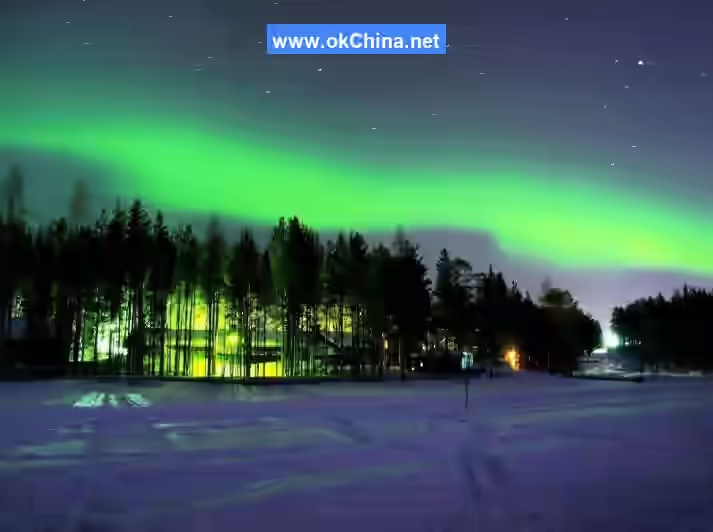
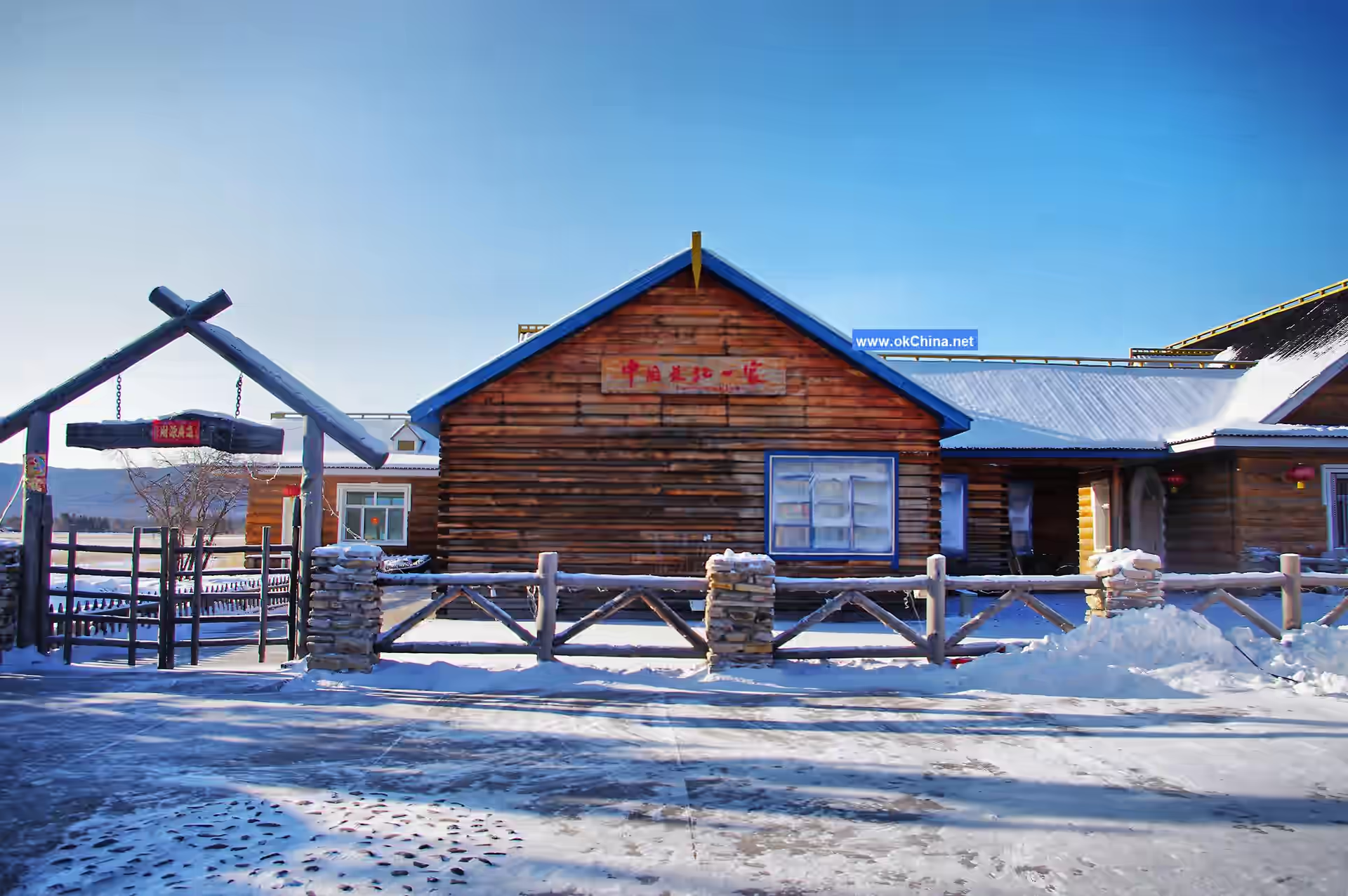
Arctic Village is located in Arctic Town, Mohe City, Greater Khingan Range region, Heilongjiang Province, at coordinates 53°33′30″ N, 122°20'27.14" E. It is a National AAAAA Tourist Attraction, renowned as the "Crown of the Golden Rooster," "China's Arctic Pole," and the "City of the Midnight Sun." It is considered the best observation point in China for viewing the Northern Lights, hosts the "Northernmost Sentinel Post of China," and is the northernmost town in the country. The Arctic Village National Nature Reserve boasts extremely rich natural resources. It is a protected area focused on boundary river conservation and wildlife corridor protection, holding significant importance for the international exchange of wildlife genes. The reserve is home to over 40 species of nationally protected animals and 6 species of nationally protected plants. Major attractions include the Arctic Christmas Ski Resort, Arctic Christmas Village, and the Mohe Stone Forest. In 2006, Arctic Village was awarded the "Gold Medal Honorary Unit for China's Most Desirable Places" and the "Gold Award for the 50 Places in China Most Worth Visiting by Foreigners." In 2010, it was successfully upgraded to a National 4A Tourist Attraction and recognized as one of the "First Batch of National Characteristic Landscape Tourism Towns (Villages)." In 2015, Arctic Village officially received the National 5A Tourist Attraction rating.
2. Historical Development
Arctic Village was originally named Mohe Village. People settled here as early as 1860 (the 10th year of the Xianfeng Emperor's reign in the Qing Dynasty). In 1888, Li Jinyong, the prefect of Jilin, was ordered to establish gold mines in Mohe, leading Mohe Village into a period of prosperity and forming the "Gold Road," with Mohe Village designated as the thirtieth station. In 1906 (the 32nd year of the Guangxu Emperor's reign), a military post (Kharun) was established. In 1909 (the 1st year of the Xuantong Emperor's reign), a Chief Post Yamen was set up. In 1914 (the 3rd year of the Republic of China), it became the seat of the Administrative Bureau. In 1917, it was upgraded from an Administrative Bureau to a second-class county seat. In 1947, it was merged into Huma County. In 1981, Mohe County was re-established, incorporating Mohe Township and Xing'an Township. Arctic Village is now the seat of the Arctic Town government. After years of development and construction, the Arctic Village scenic area was upgraded to a National 5A Tourist Attraction in 2015.
3. Geographical Environment
3.1 Location and Territory
The Arctic Village scenic area belongs to Arctic Town, Mohe City. It is located 77 kilometers from Mohe City, with convenient transportation, covering an area of 16 square kilometers. Situated at the northernmost tip of the country, it lies on the southern bank of the upper reaches of the Heilongjiang River, at the northern foot of the Greater Khingan Range, facing Russia across the Heilongjiang River. Its geographical coordinates are: 122°21′05″ E to 122°21′30″ E, 53°27′00″ N to 53°33′30″ N.
3.2 Climate Characteristics
In Mohe, the monthly average temperature remains below 0°C for over seven months of the year, with a frost-free period of about 90 days. The historically lowest temperature recorded in Arctic Village is -52.3°C, while the lowest in Mohe City is -53°C. The temperature difference between day and night is significant, leading to the saying "four seasons in one day."
4. Main Attractions
4.1 Arctic Christmas Village
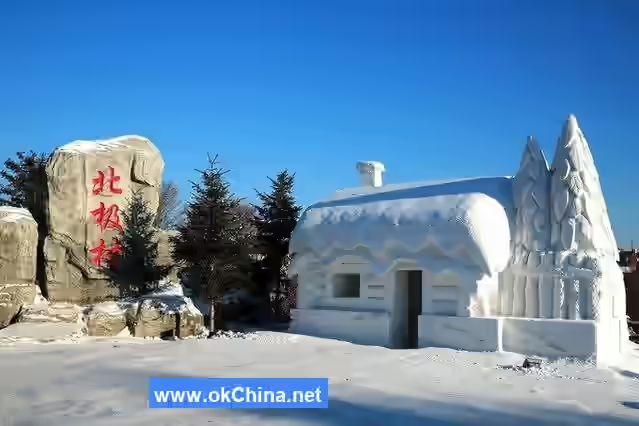
China's Arctic Christmas Village is located 22 kilometers from Arctic Village. The village features enchanting, primitive, and mysterious scenery, combining ice and snow, boundary rivers, auroras, and forests. It highlights Western Christmas culture alongside China's polar landscape, echoing the Arctic Christmas Village in Rovaniemi, Finland. It is an excellent place to observe the aurora and the midnight sun, reconnect with nature, experience a fairy-tale world, and spread peace and happiness. The Christmas Village mainly includes Santa's House, Christmas Post Office, Santa Claus Square, Children's Fairy-tale World, Snow White's Paradise, and the Seven Dwarfs' Treasure House. It boasts Asia's only Christmas World, an authentic Santa Claus from Rovaniemi, Finland, elegant European-style architecture, and a towering "King of Christmas Trees."
4.2 Christmas Ski Resort
Located 22 kilometers from Arctic Village, the Arctic Christmas Ski Resort attracts waves of tourists from southern China seeking the north and skiing, enjoying the joy brought by ice and snow. Mohe has a snow and ice period of nearly seven months, from mid-October to mid-April each year. The Christmas Ski Resort has ignited Mohe's ice and snow tourism. The Arctic Christmas Ski Resort was self-designed and self-planned, with its first phase of construction completed in 66 days, meeting domestic standards for primary ski resorts. The ski resort is fully equipped with facilities including a ski equipment hall, storage rooms, pump houses, ski tows, magic carpets, and water and electricity systems.
4.3 Arctic Village Monument
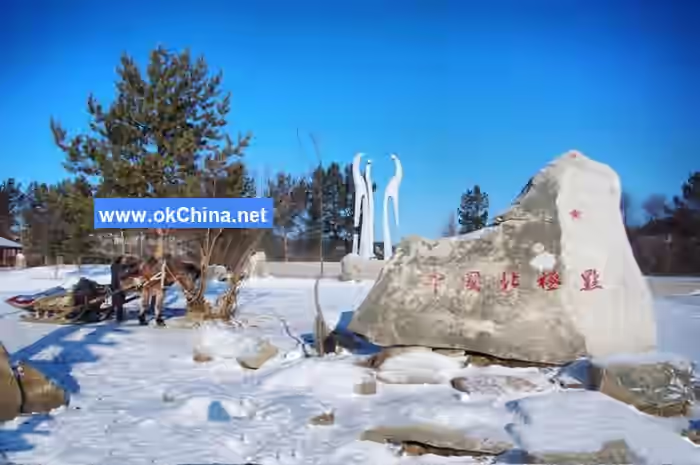
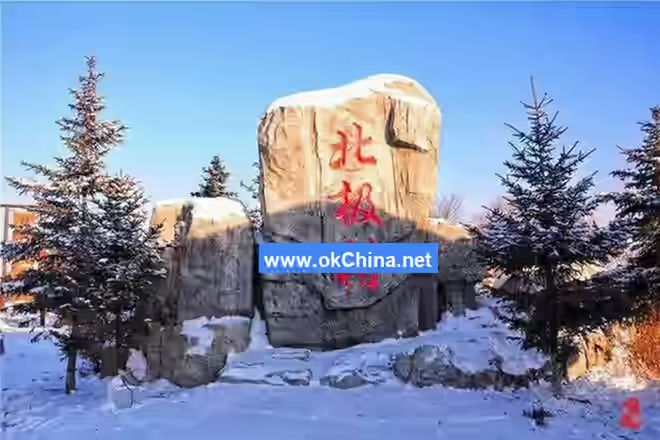
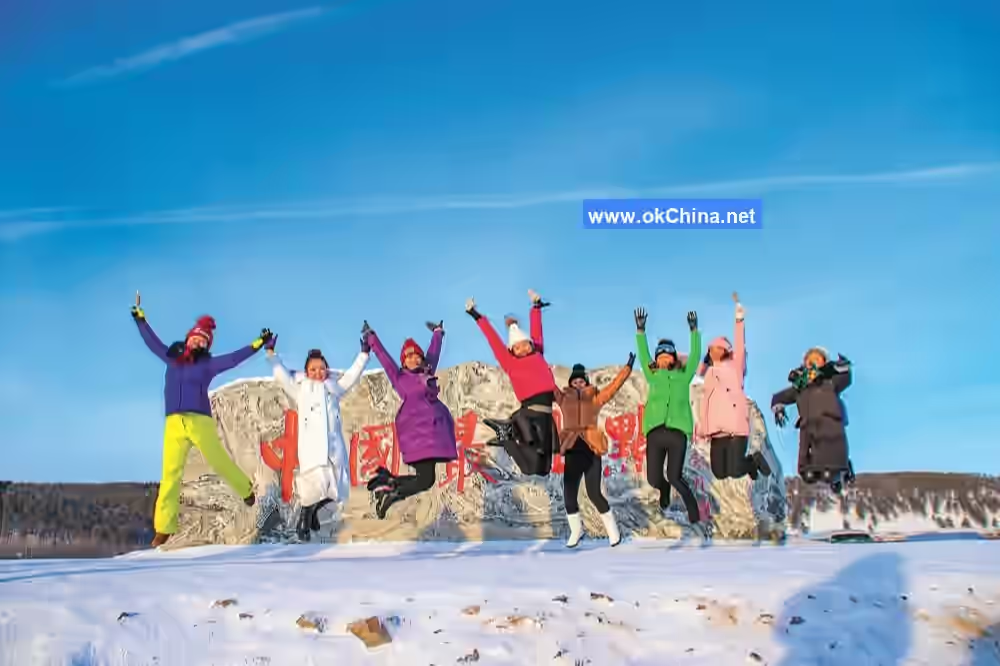
The village monument is a landmark structure of Arctic Village. Taking a photo with it is proof of having visited. Below the monument, a small river called "Mohe" (Ink River) can be seen, which is the source of Mohe County. It is named "Ink River" because, like the Heilongjiang (Black Dragon River), it appears as dark water from above—not due to pollution, but because of the fertile black soil resources of Northeast China.
4.4 Shenzhou Arctic Square
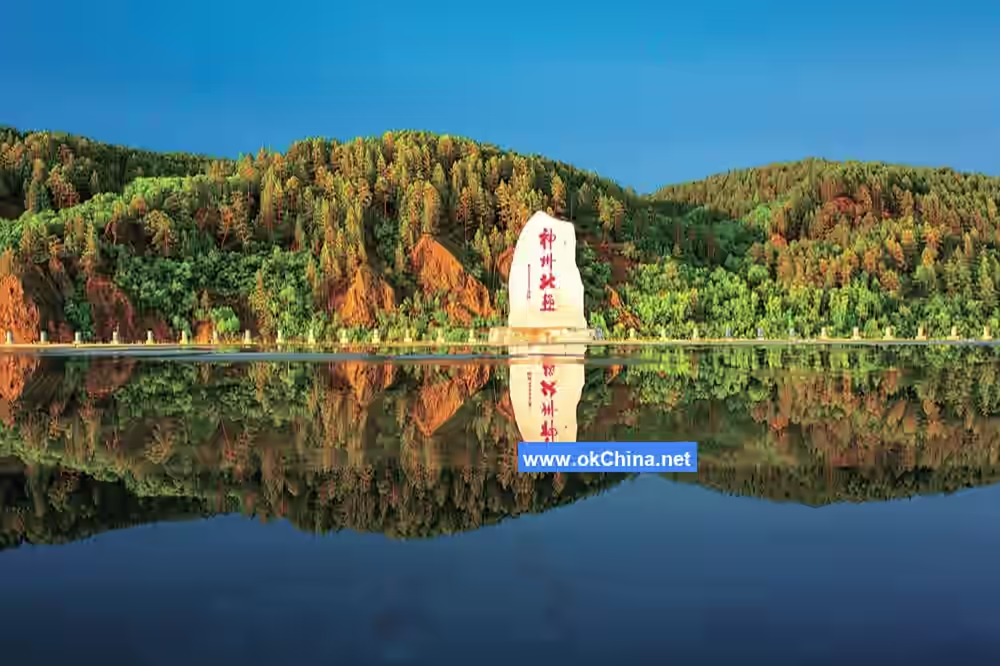
Shenzhou Arctic Square is located by the Heilongjiang River within the Arctic Village scenic area, facing Russia across the river. At the center of the square stands the landmark "Shenzhou Arctic" stone stele. Its front is inscribed with the four large characters "Shenzhou Arctic" (Divine Land's Arctic Pole), calligraphed by Aisin Gioro Qixiang, the ninth-generation descendant of the Yongzheng Emperor. This stele also symbolizes the northernmost endpoint of the Chinese mainland, creating a contrast with "Tianya Haijiao" (Edge of the Sky, Rim of the Sea) in the south. A photo here serves as evidence and a symbol of a traveler reaching the northernmost point of the Chinese mainland.
4.5 Mohe Stone Forest
The Mohe Stone Forest is located 120 kilometers southwest of the county town, covering an area of 53 square kilometers at an altitude of 1,000 to 3,000 meters. The stone forest has an ancient geological history, with its parent rock forming approximately 600 million years ago. Analysis of numerous discovered geological relics, such as potholes and wind-eroded niches, indicates that the current shape of the Mohe granite stone forest was forged by external geological forces like glacial movement and weathering erosion. The stone forest cluster combines wonder, uniqueness, peril, seclusion, and elegance, forming a unique geological and ecological spectacle with significant scientific research,观赏, and tourism value.
4.6 Arctic Forest Sea Guanyin
The Guanyin Mountain scenic area is designed with a landscape axis running north-south, connecting the northern temple area and the southern resort leisure area. The northern temple area primarily hosts activities like Buddhist pilgrimage and ecological leisure. Enshrined on the mountain is the Arctic Forest Sea Guanyin statue, which is the original statue of the 108-meter-tall Guanyin statue at Nanshan in Hainan. It stands 10.8 meters tall and features a unified three-bodied form, with the three sides representing Guanyin holding a sutra box, Guanyin holding a lotus, and Guanyin holding prayer beads. The southern leisure area provides vacation relaxation and service reception, creating a natural,休闲 tourism environment. The internal spatial layout of the Guanyin Mountain scenic area is mainly divided into eight structural zones: natural mountains, Buddhist pilgrimage, lake leisure, ecological leisure, cultural landscapes, and scenic squares. This forms a complete and orderly ecological landscape corridor where mountains, water, forests, temples, bridges, and Buddha statues integrate harmoniously, achieving unity between humans and nature and a prosperous blend of ecology and culture.
5. Cultural Activities
The China · Mohe Arctic Lights Festival was first held in 1991 and takes place annually around the summer solstice. It is Heilongjiang Province's only project among the first batch of national public cultural service system demonstration projects. Since its inception, each edition has been more successful and vibrant than the last. The festival features the beautiful and magical natural scenery, spectacular cultural performances, bonfire celebrations on the Arctic summer solstice, and震撼,时尚, and dynamic large-scale water screen laser music fireworks. These elements make Mohe, China's northernmost town, more charming, lively, and full of vitality. The festival further enhances Mohe's influence,知名度, and reputation, playing a positive role in promoting tourism and economic development in the Greater Khingan Range region.
Comments
Post a Comment