Ancient Villages in Southern Anhui - Xidi and Hongcun
1. Introduction
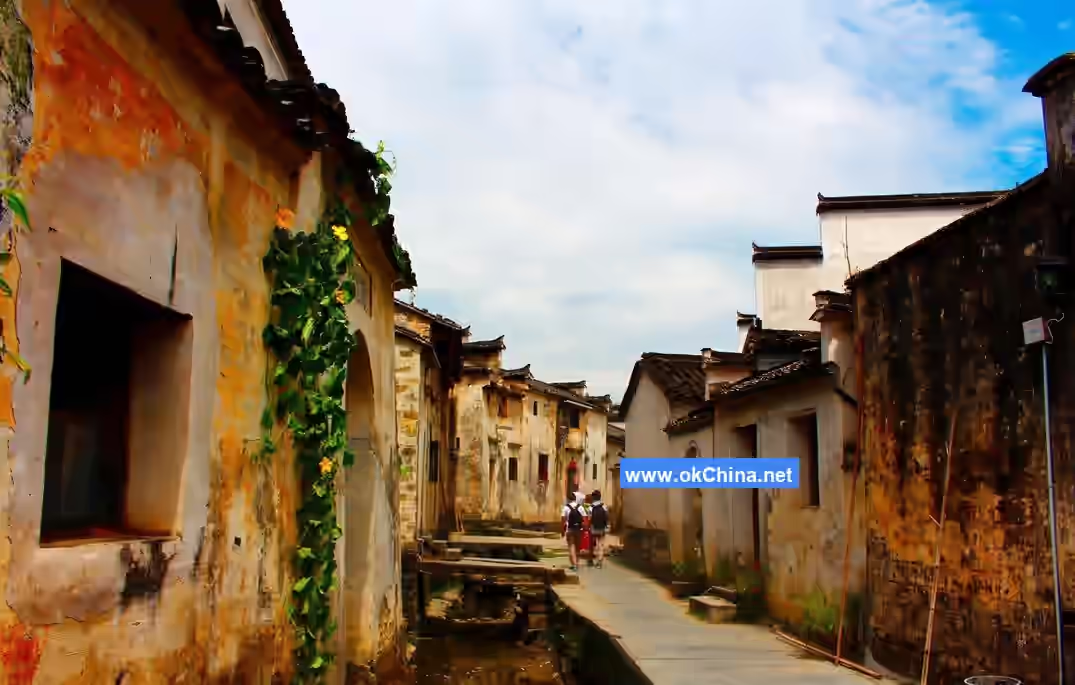
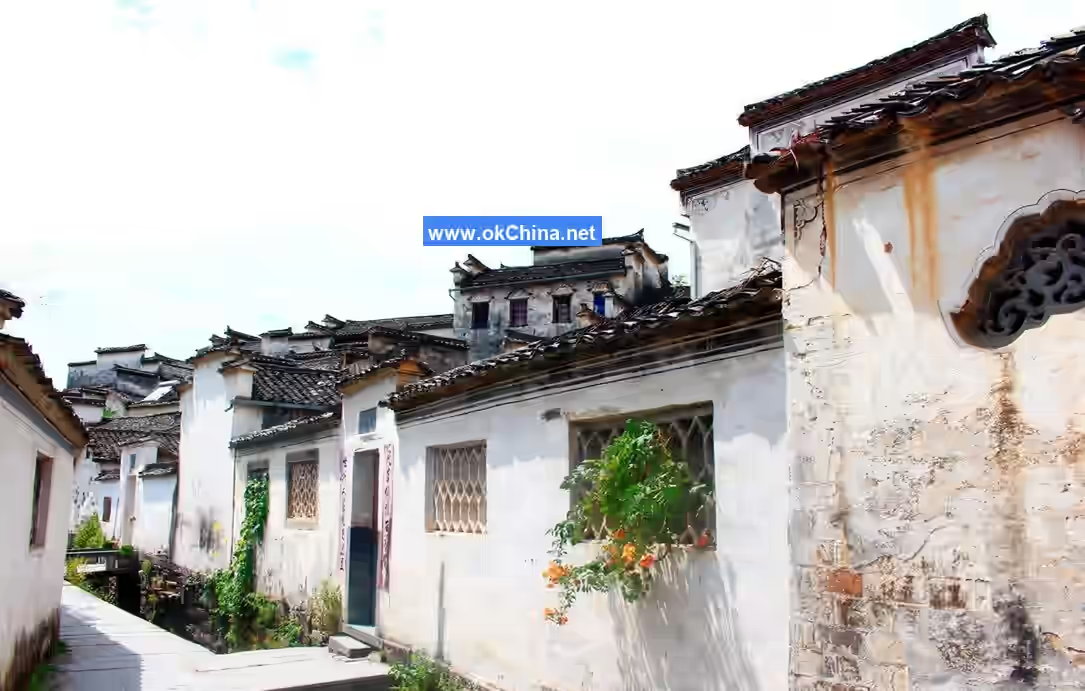
The ancient villages in Southern Anhui are located east of Yi County, Anhui Province, with Xidi Village and Hongcun Village as their representatives. The ancient residential villages of Xidi and Hongcun are situated within the Huangshan Scenic Area in Yi County, Anhui Province, eastern China. Xidi Village covers an area of nearly 13 hectares and has a history of over 950 years. It currently preserves 3 ancestral halls and 1 memorial archway dating from the 14th to the 19th centuries, along with 224 ancient residential buildings. Xidi Village has retained the typical architectural style of ancient villages from the Ming and Qing dynasties in excellent condition, earning it the title "Living Museum of Ancient Dwellings." Hongcun was founded in 1131 AD and retains 137 ancient buildings from the Ming and Qing dynasties. It serves as a carrier of Huizhou culture, a typical representative of late feudal Chinese society, and embodies the exquisite craftsmanship of Huizhou-style residential architecture.
The mountainous region of Southern Anhui has a long history and profound cultural heritage, preserving a large number of traditional buildings and villages with similar forms and distinctive features. The ancient villages of Southern Anhui not only skillfully integrate with the terrain, landforms, and landscape but also benefited from the strong financial support of Huizhou merchants during the Ming and Qing dynasties for their hometowns. This led to the flourishing of culture and education. Upon returning home, these merchants, with their refined, literary, and transcendent mindset, designed and constructed residences, enriching the cultural environment of the ancient villages and making the village landscapes more prominent.
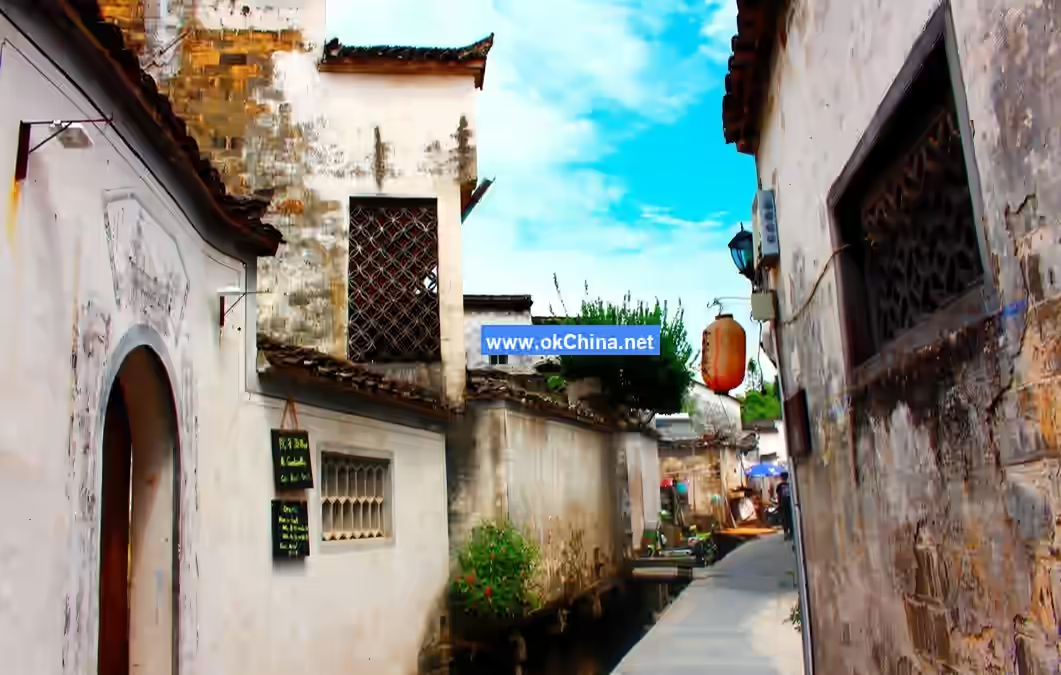
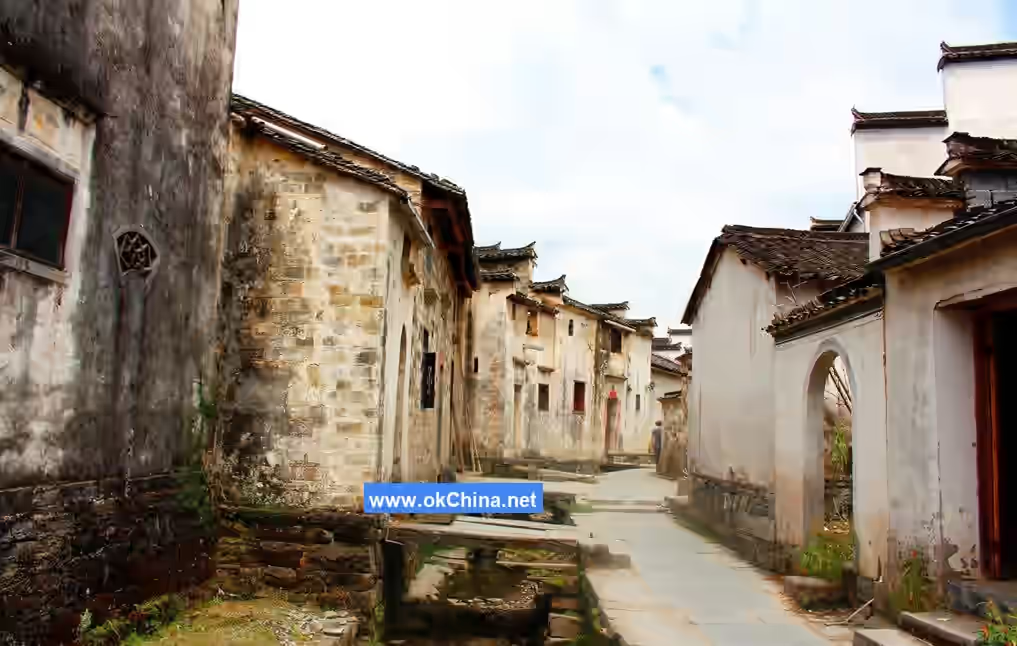
The two traditional ancient villages of Xidi and Hongcun largely retain the rural appearance that had disappeared or changed in the last century. Their street planning, ancient buildings and decorations, and residential water supply systems are unique cultural relics.
2. Characteristics of the Ancient Villages
2.1 Xidi
Xidi is a village in Xidi Town, southeast of Yi County, Southern Anhui Province. Xidi was founded during the Yuanyou era of the Song Dynasty (under Emperor Zhezong) in the 11th century. Originally called "Xichuan" because the river flowed west through the village, it later acquired the name "Xidi" due to an ancient courier station ("pudisuo") west of the village. It is often referred to as "a household in the land of peach blossoms."
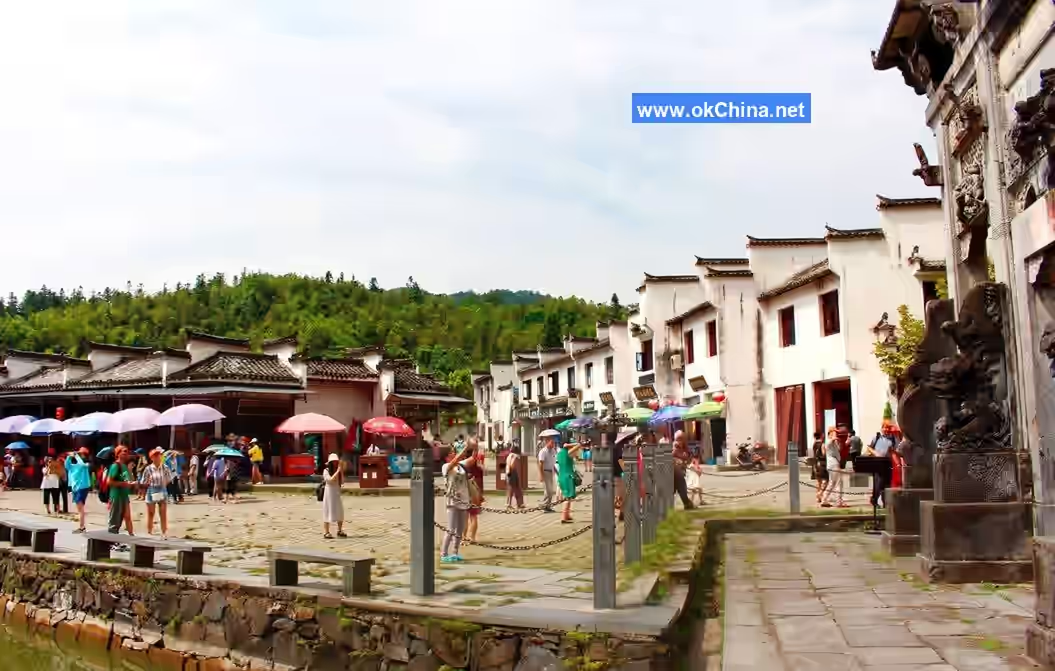
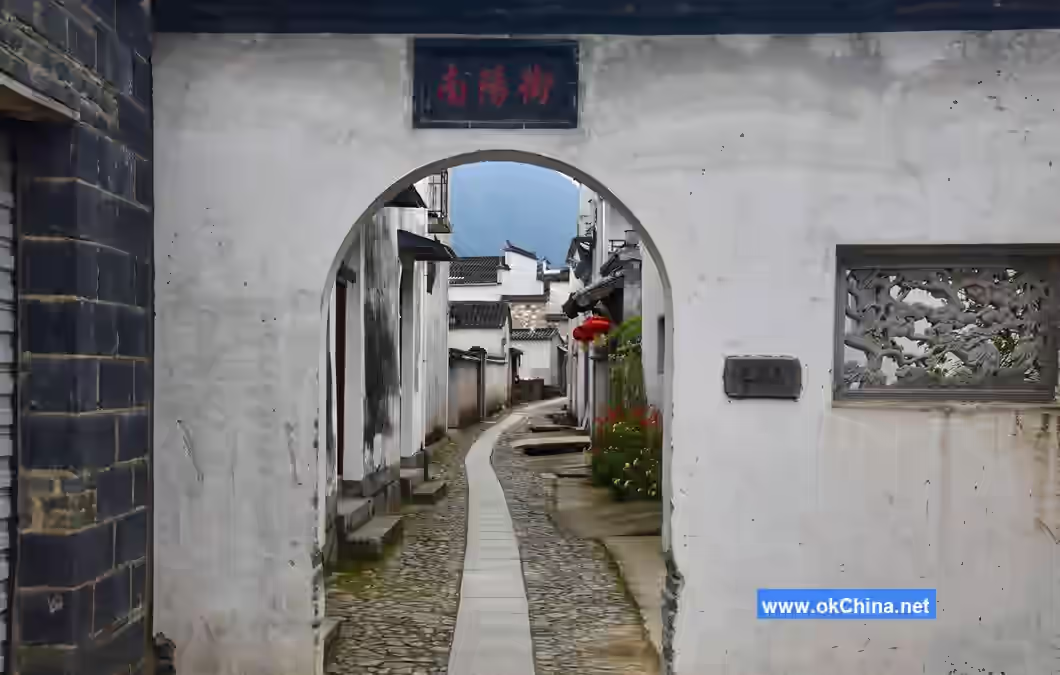
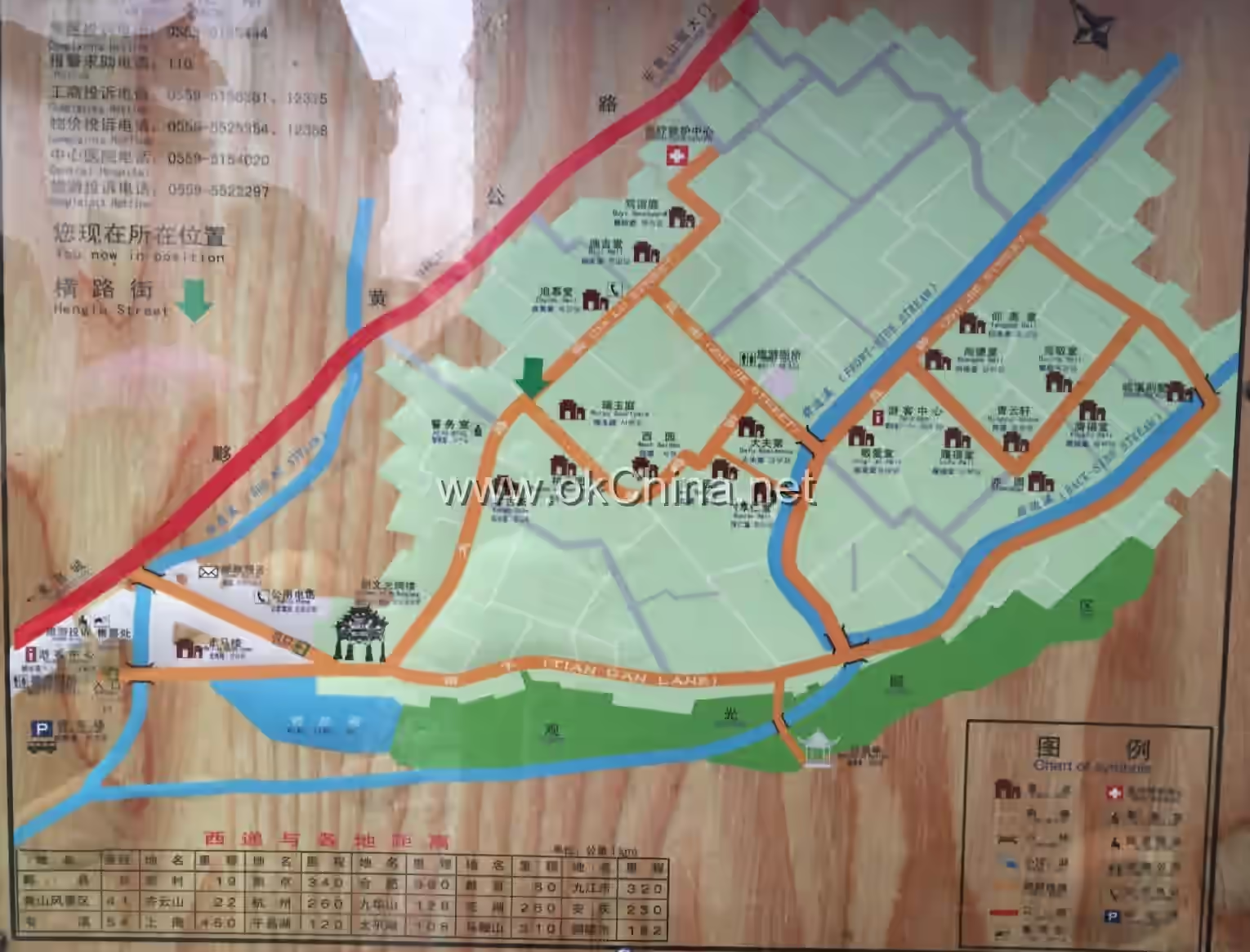
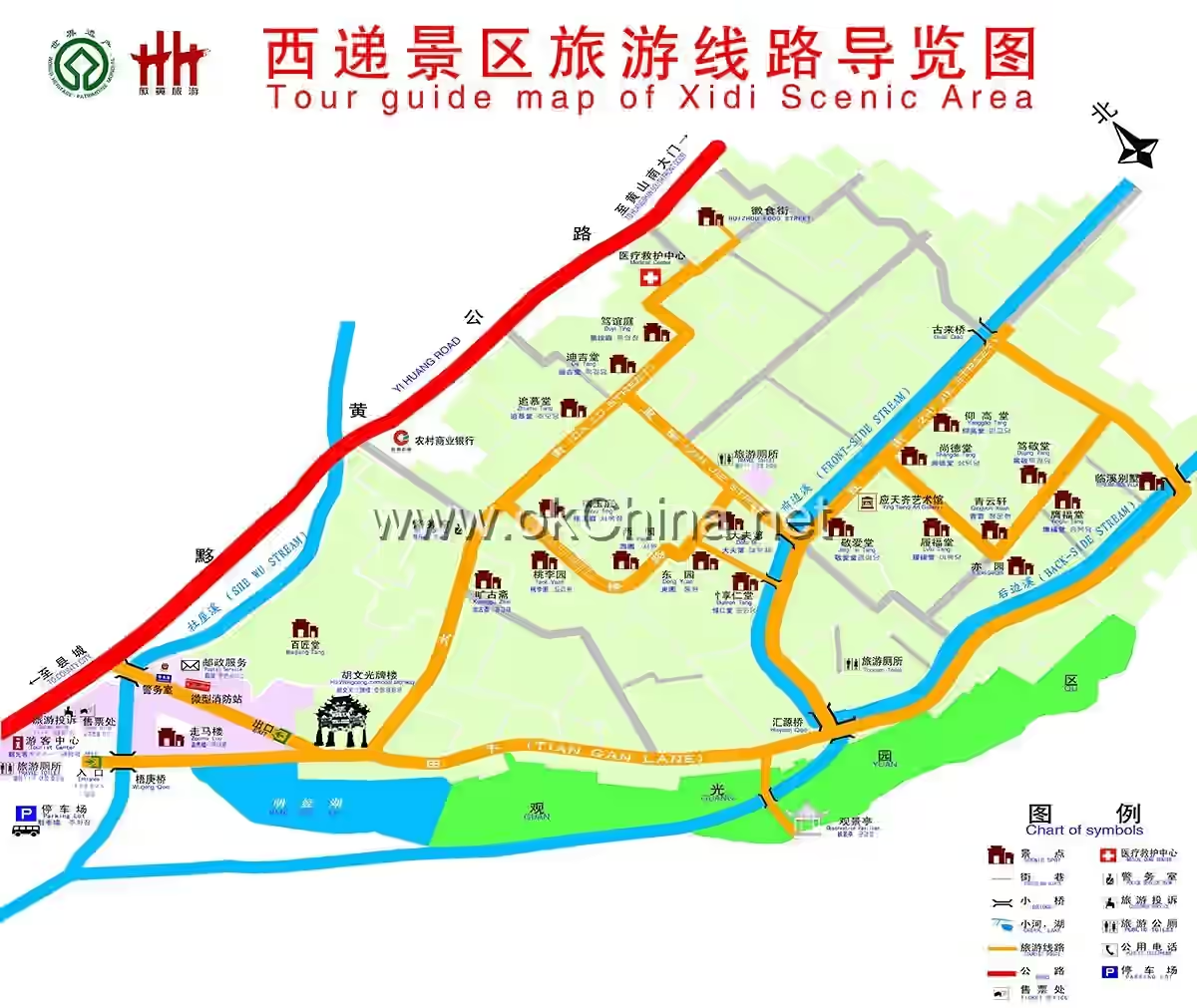
The founding ancestor of Xidi was the son of Emperor Zhaozong of Tang, Li Ye. After fleeing turmoil and hiding among the people, he changed his surname to Hu. Xidi is a Hu clan settlement bound by blood ties. The Hu family began engaging in business in 1465. Their commercial success led to large-scale construction, including building houses, repairing ancestral halls, paving roads, and constructing bridges. In the mid-17th century, the shift of some Hu family members from business to officialdom contributed to the village's development. From the 18th to the 19th century, Xidi reached its peak prosperity, with about 600 residential houses in the village. A main road runs east-west through Xidi, accompanied by two parallel streets on either side, intersecting many narrow alleys to form a street network primarily oriented eastward and extending north-south. Most village streets and alleys are paved with bluestone and run alongside streams. Small squares are located in front of public buildings such as the Jing'ai Hall, Zhuimu Hall, and the Memorial Archway of Governor Hu Wenguang. The preserved ancient residences largely retain the basic appearance and characteristics of Huizhou-style villages from the Ming and Qing dynasties, including 124 well-preserved ancient houses and 3 ancestral halls. Most residences are open to the public. Key structures include the bluestone memorial archway built in the 6th year of the Wanli era (1578), the Dafudi built in the 30th year of the Kangxi era (1691), the Taoli Garden representing courtyard gardens, and the Jing'ai Hall representing ancestral halls.
The basic unit of traditional ancient dwellings is typically a three-bay, inward-facing square or rectangular layout. The plan is square but not rigid, compact yet not cramped. Carefully arranged spatial patterns are unified yet flexible, with symmetrical layouts featuring a central hall and side rooms. Staircases are placed either in front of or behind the hall or on its sides. The entrance forms an inner courtyard for lighting and ventilation. Based on this, buildings extend vertically and horizontally, freely combining to form residences with two courtyards, three courtyards, or quadrangle layouts. The basic structure of residential buildings employs a raised-beam or column-and-tie construction with a gabled roof and external wall enclosure, using gable walls for separation. The foundation uses Yi County bluestone strips, with the top designed in a stepped or convex arc shape, decorated with openwork carvings of flowers and geometric patterns in bluestone. Door frames are made of Yi County bluestone, with lintels often adorned with brick or stone carvings depicting flowers, birds, insects, fish, or historical scenes, each with its own symbolism. Most Xidi residential courtyards are located in the front yard, though some are placed on the sides or behind the building. Courtyards are flexibly arranged, small and exquisite, with compact layouts. Skillfully employing gardening techniques, they create poetic and picturesque scenes within limited spaces. Courtyards make clever use of lattice windows, door openings, partitions, buildings, and plants to divide and combine space, creating transparent, layered, and subtly enchanting effects to express multiple artistic conceptions, stimulating imagination and providing diverse sensory experiences and inspiration.
2.2 Hongcun
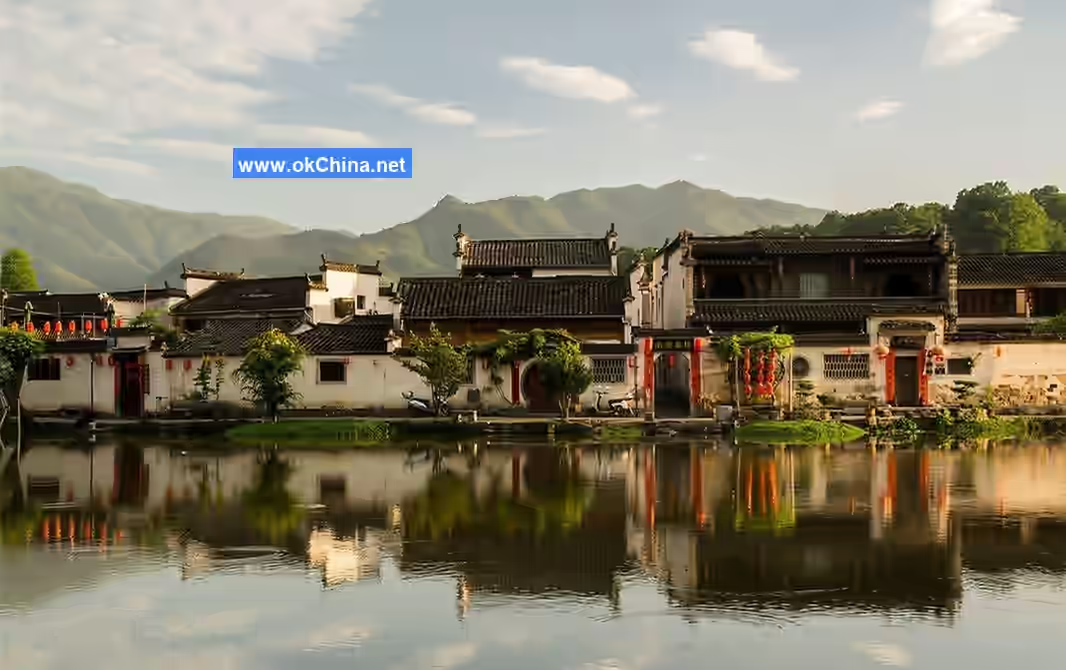
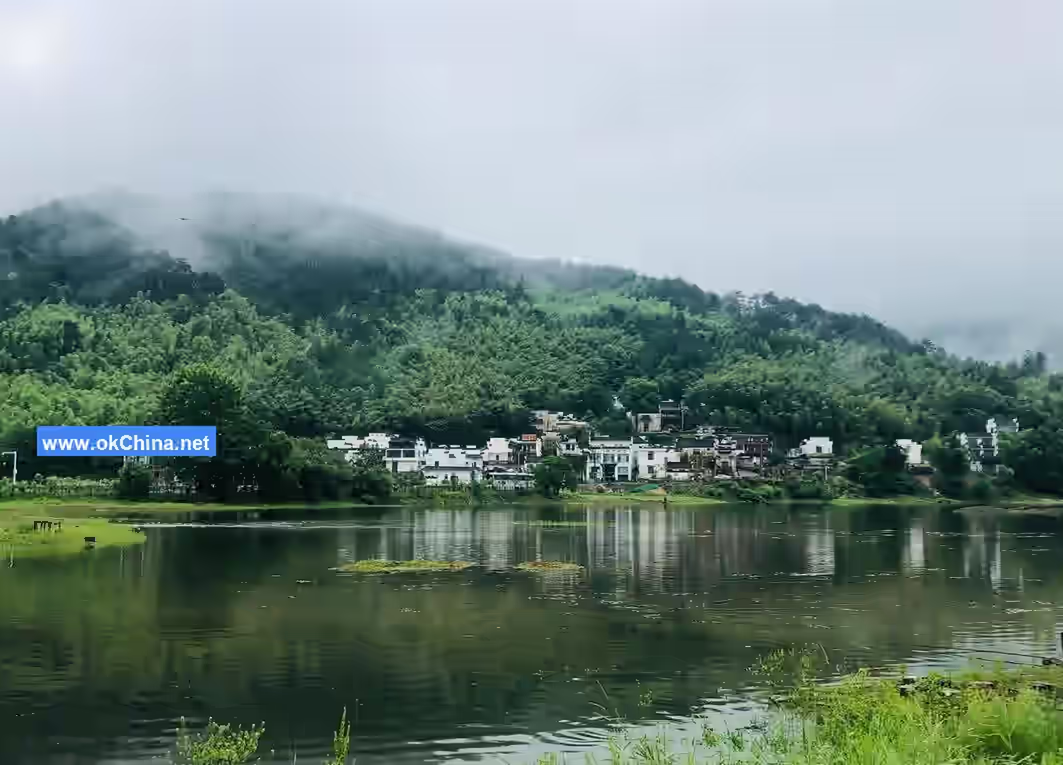
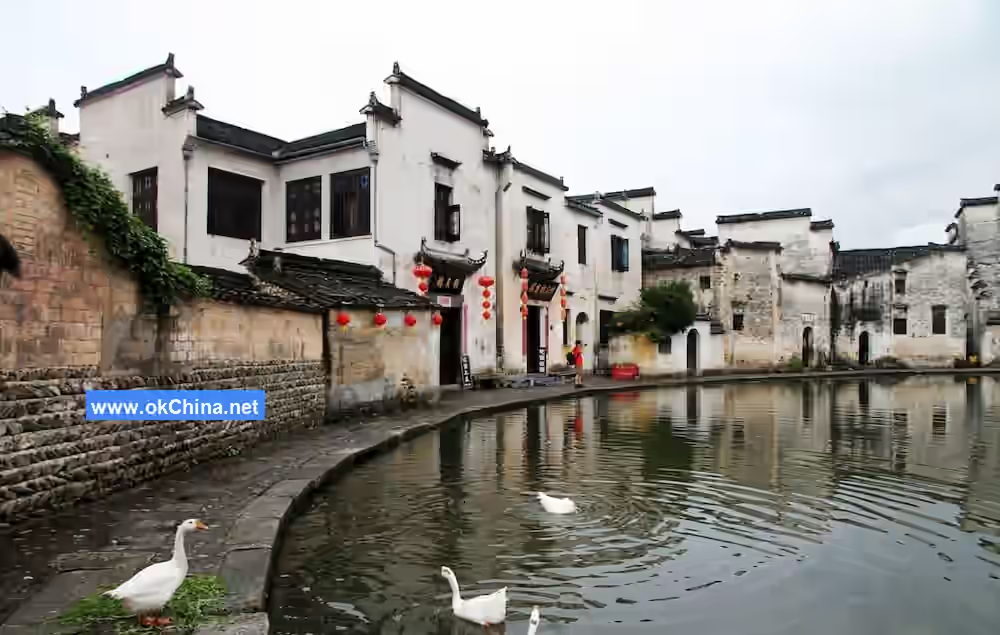
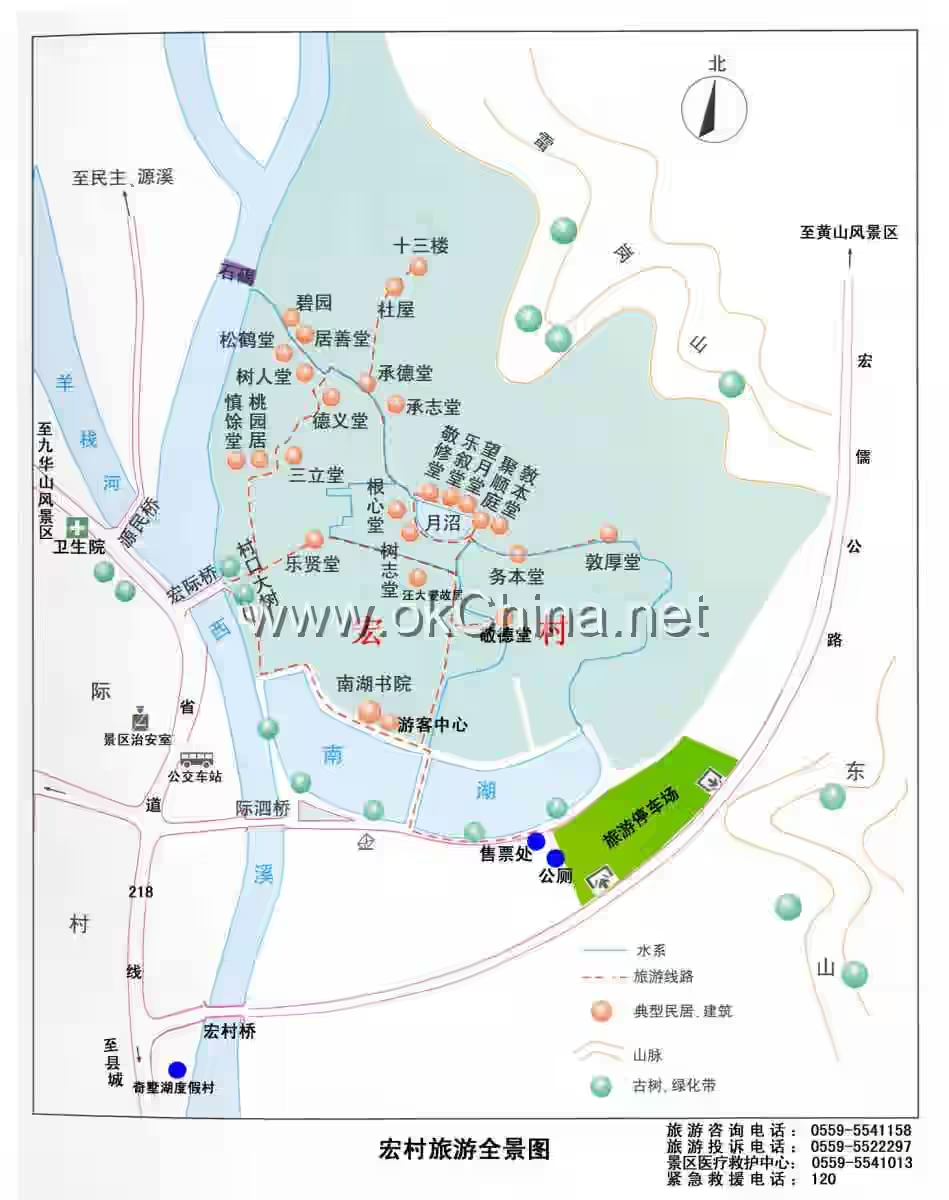
Hongcun is located at the foot of Huangshan in Southern Anhui Province, China. It is an ancient village with a large number of historical buildings from the Ming and Qing dynasties. The village also features a well-developed water system and a distinctive "ox"-shaped layout, making it a typical representative of Huizhou-style dwellings.
The village was founded in the 3rd year of the Zhenghe era of the Northern Song Dynasty (1113 AD). Initially called "Hongcun," it was a settlement of the Wang clan. During the Yongle era of the Ming Dynasty, the clan leader invited a feng shui master to survey the environment, redesign the layout, and channel water into the village. In the mid-Qing Dynasty, large-scale construction took place again, and to avoid the taboo of the Qianlong Emperor's name "Hongli," the village was renamed "Hongcun." The village retains a large number of ancient buildings from the Ming and Qing dynasties, including 1 from the Ming Dynasty, 102 from the Qing Dynasty, and 34 from the Republican period, most of which are well-preserved, representing typical Huizhou-style dwellings.
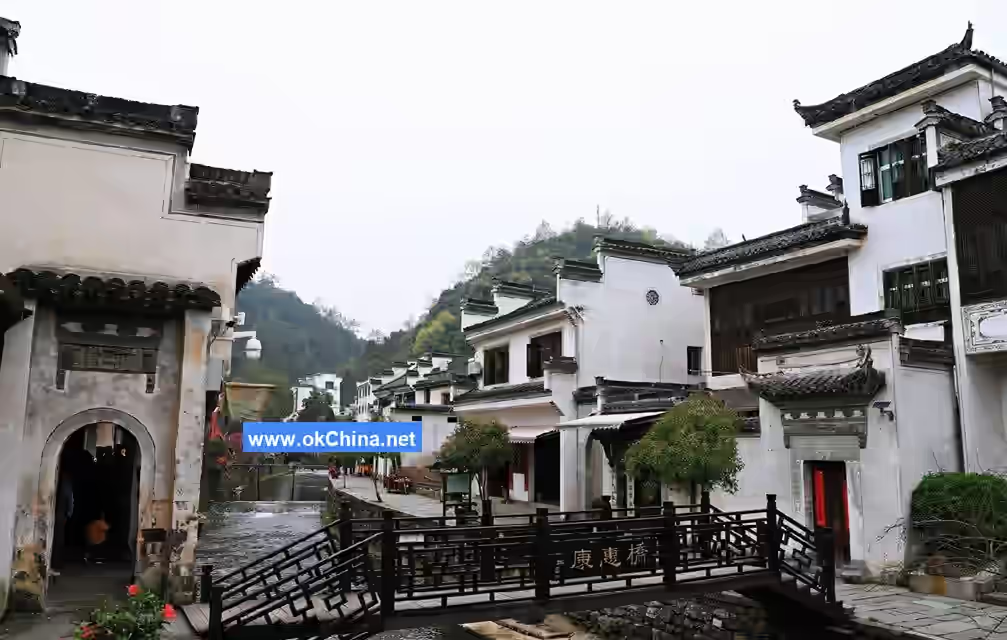
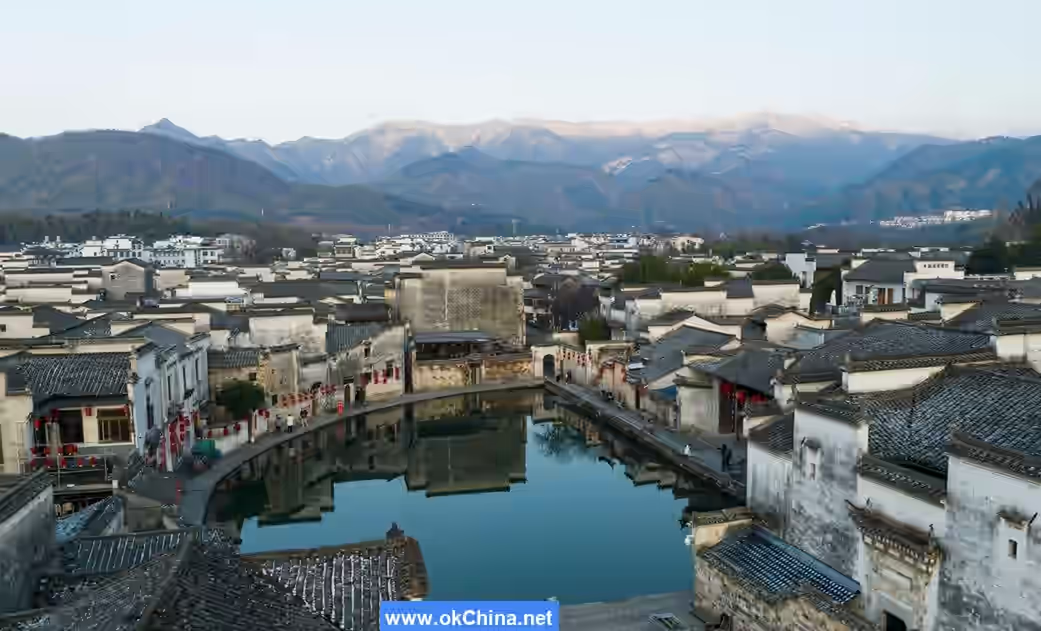
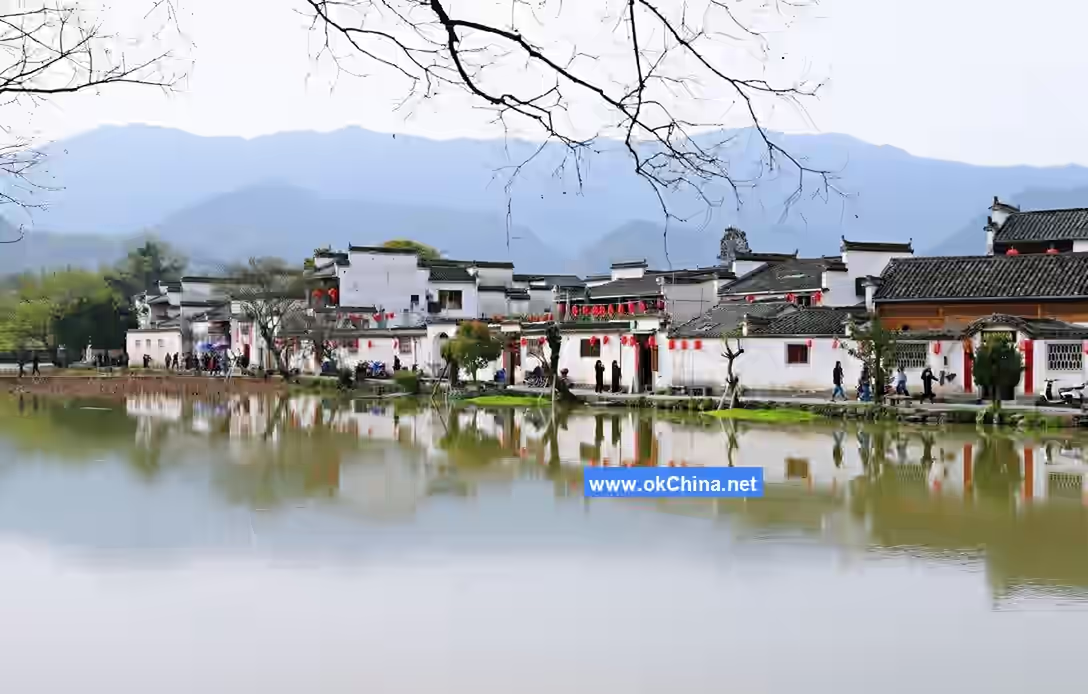
A major feature of Hongcun is its comprehensive water supply system. Villagers channeled water from the river west of the village into the settlement, digging a nearly 1-meter-wide water channel that winds through the village, providing domestic water for each household while also regulating temperature and beautifying the environment. The channel forms a crescent-shaped Moon Pond (Yue Zhao) in the center of the village and a bow-shaped South Lake (Nan Hu) in the south, creating Hongcun's unique landscape.
Another major feature is its biomimetic "ox"-shaped layout. Leigang Hill serves as the ox's head, two ancient trees at the village entrance as its horns, the Moon Pond as its heart, the South Lake as its stomach, the winding water channel as its intestines, the residential buildings as its body, and four ancient bridges as its legs. The resemblance is vivid, described as "the hill as the ox's head, trees as horns, bridges as four hooves, and houses as the body."
Hongcun's buildings mainly consist of residences and private gardens, along with public facilities such as academies and ancestral halls, forming relatively complete architectural complexes. Various buildings emphasize carvings, with exquisite wood, brick, and stone carvings of high artistic value. Most streets and alleys in the village are built alongside water, and residences are arranged around the Moon Pond. Houses typically have two courtyards, and some households channel water into their compounds to form water courtyards and fish ponds. Representative buildings include the South Lake Academy, Lexu Hall, Chengzhi Hall, Deyi Hall, Songhe Hall, and Bi Garden.
3. Main Attractions
3.1 South Lake
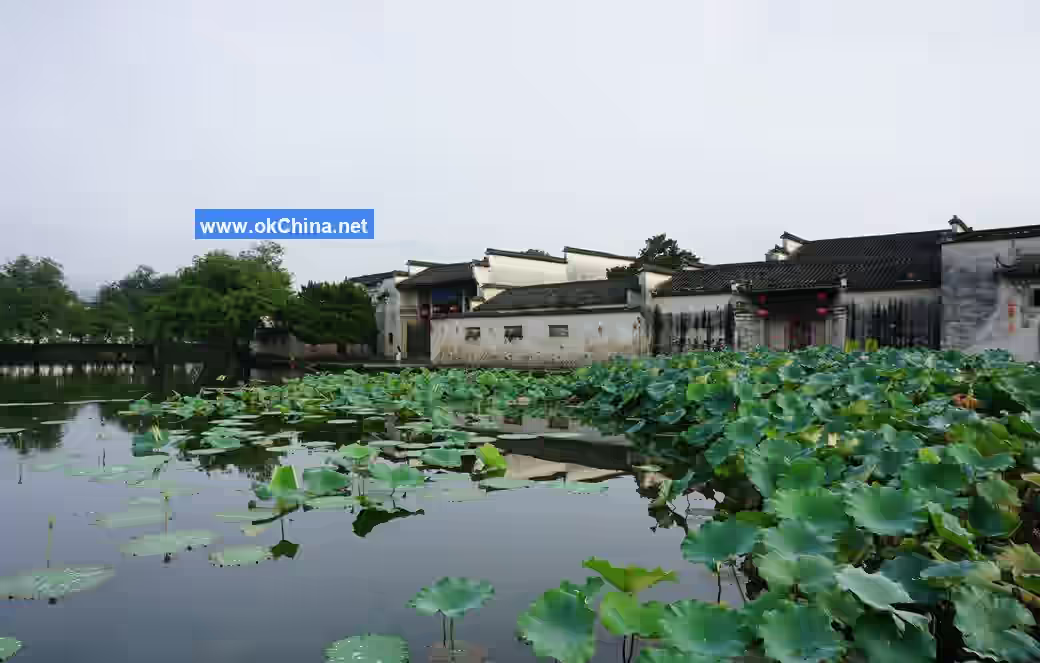
Located at the southern end of Hongcun, South Lake was built in the Dingwei year of the Wanli era (1607 AD). From the Yongle to Wanli periods, Hongcun's buildings multiplied, with varying heights and a growing population. Relying solely on the Moon Pond for water storage was insufficient, so in the Dingwei year of the Wanli era, hundreds of acres of fertile land south of the village were excavated several meters deep, with stone banks built around it, modeled after the "Pinghu Qiuyue" style of West Lake in Hangzhou, to create South Lake. The lake is shaped like a large bow, with an embankment divided into upper and lower levels, the upper level being 4 meters wide. South Lake has undergone three major renovations in history, with the central embankment rebuilt in 1986 and a "Painting Bridge" added for boating east and west.
In the autumn of the Jiaxu year of the Jiaqing era (Qing Dynasty), the renowned scholar Wu Xilin from Qiantang (now Hangzhou), Zhejiang, visited South Lake and wrote: "The scenic beauty of Hongcun's South Lake rivals that of West Lake in Zhejiang." Thus, South Lake is also known as "Little West Lake at the Foot of Huangshan." Many poets and painters, ancient and modern, have composed poems and created paintings after visiting South Lake.
3.2 Moon Pond
The Moon Pond, locally called Yue Tang, is the so-called "ox's small stomach." It was built during the Yongle period of the Ming Dynasty (1403–1424 AD). At that time, Hongcun produced a figure named Wang Siqi, who discovered a natural spring in the village that gushed continuously in winter and summer. He invited the feng shui master He Keda from Haiyang County (now Xiuning) three times, along with senior clan members, to "survey the mountains and rivers in detail, examine the veins," and develop a blueprint for expanding Hongcun's foundation and planning the overall ox-shaped water system. They channeled water from the West Stream around the village houses, with the winding "ox intestine" water channel, and directed water into the village center where the natural spring was located to create the Moon Pond reservoir, storing yang water for fire prevention, drinking, etc. Descendants like Wang Shengping invested over ten thousand gold to continue digging the channel and excavating the half-moon-shaped pond, completing the unfinished "Moon Pond" of their predecessors. In practice, the area around the Moon Pond became a shared space for people, an open-air stage for "customs and folk sentiments."
3.3 Deyi Hall
Built in the 20th year of the Jiaqing era (1815 AD), it is a two-story, three-bay structure.
In front of Deyi Hall's main hall, there are 16 half-leaf lotus doors with passages connecting indoors and outdoors. In front of the hall is a pond connected to the water channel via a hidden drain. Bonsai are arranged around the pond. The courtyard of Deyi Hall is lush with flowering trees and layered greenery, known as the "Open-air Flower Hall." A Southern Anhui kiwi vine climbs the eastern wall. The garden contains eastern and western gardens, one open and one hidden, planted with fruit trees and flowers. Deyi Hall features a layout of "garden within water, water within garden." The garden of Deyi Hall is a typical representative of Huizhou-style private gardens.
3.4 Chengzhi HallChengzhi Hall is located in the middle section of the Upper Water Channel in Hongcun. It was built in the fifth year of the Xianfeng reign of the Qing Dynasty (1855 AD) and served as the residence of Wang Dinggui, a prominent salt merchant in the late Qing Dynasty. The entire structure is made of wood, with lavish interior decorations of brick, stone, and wood carvings. It covers a total area of approximately 2,100 square meters, with a building area of over 3,000 square meters, making it a well-preserved large-scale residential building. The mansion features nine courtyards, 60 rooms of varying sizes, 136 wooden pillars, and 60 doors and windows. The house is divided into inner and outer courtyards, front and rear halls, east and west wings, a study hall, a fishpond hall, a kitchen, a stable, and more. It also includes a "Paishan Pavilion" for playing mahjong and a "Tunyun Pavilion" for smoking opium. Additionally, there are rooms for bodyguards and male and female servants. The house contains a pond and a well, ensuring that water needs are met without leaving the premises.
The front hall is the most exquisite part of the entire house. Behind the main gate stands a majestic middle gate. Above the character "福" (fortune) on the middle gate, a wooden carving titled "Hundred Children Celebrating the Lantern Festival" is inlaid, depicting 100 young boys celebrating the Lantern Festival with lanterns. This vividly reflects the traditional ancient belief in "more children, more blessings." On either side of the carving, the "商"-shaped bracket sets are carved with scenes from the Romance of the Three Kingdoms. Above the bracket sets are carvings of the "Southern and Northern" gods of wealth. Above these gods are the attic guardrails, where Wang Dinggui designed four wooden carved pillars representing "fishing, woodcutting, farming, and studying," symbolizing the four ancient professions.
3.5 Shuren Hall
Shuren Hall is located within the Hongcun scenic area. It was built in the first year of the Tongzhi reign (1862 AD) by Wang Xingju, who was appointed as a Fengzheng Dafu and later as a Chaoyi Dafu during the Qing Dynasty. Dissatisfied with the corruption in officialdom, he resigned and retired to seclusion. The hall covers an area of 266 square meters and features a two-story, three-bay structure with a uniquely designed garden and pond. The foundation is hexagonal, symbolizing the idea of "six harmonies bringing great smoothness." The main hall and side hall face south, backed by a water channel. The ceiling is painted with peonies and butterflies in gold and vibrant colors, expressing hopes for a happy future for descendants. On the east side of the hall, a small fishpond was built in a limited space, with flowing water. The courtyard includes two small studies. The outer gate is an eight-character gate tower with suspended lintels and railings inside, symbolizing the dignity and grandeur of officialdom and representing the former prominence of the owner. There is no back door, and guests enter and exit through the main gate, symbolizing the integrity of the builder as an official. The name "Shuren Hall" carries the profound meaning of "all professions require mastery, and children must be educated."
3.6 South Lake Academy
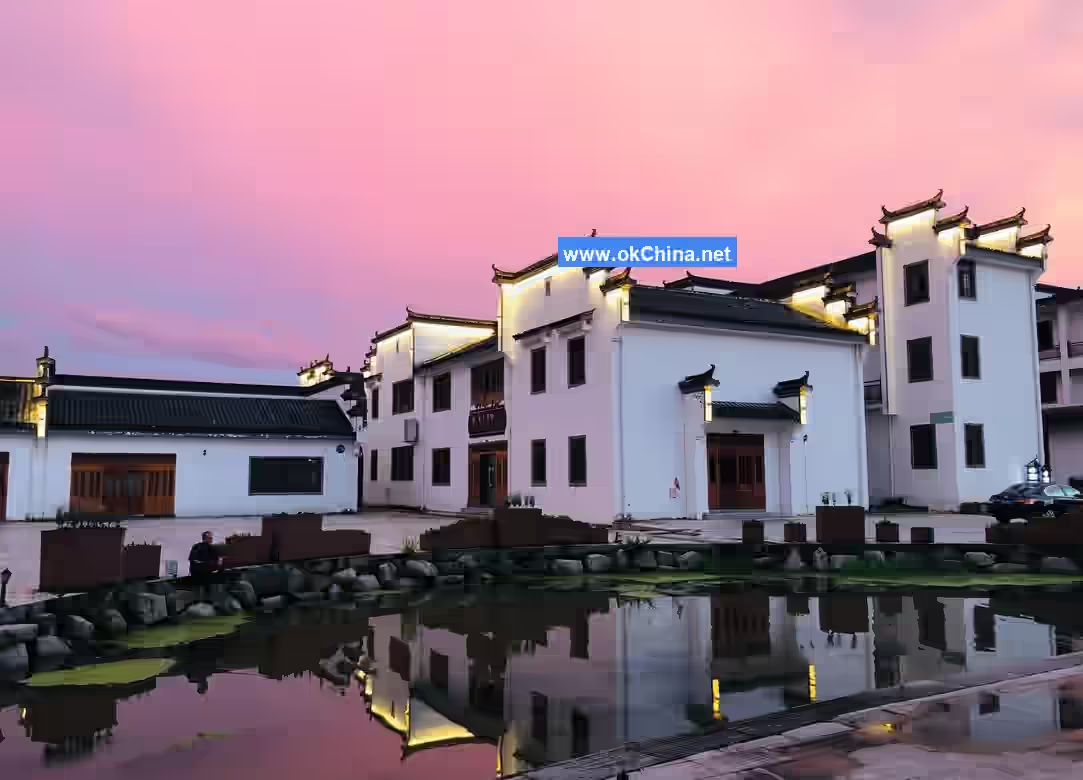
South Lake Academy is located on the northern shore of South Lake. Originally, it consisted of six private schools built in the late Ming Dynasty, known as the "Six Academies by the Lake." In the 19th year of the Jiaqing reign of the Qing Dynasty (1814 AD), they were merged and rebuilt into the "Yiwen Family School," also known as the "South Lake Academy." The rebuilt academy comprises six parts: Zhidao Hall, Wenchang Pavilion, Qimeng Pavilion, Huiwen Pavilion, Wanghu Tower, and Zhi Garden. With white walls and black tiles, clear water, and blue skies, the environment is exceptionally elegant. Lexu Hall is the ancestral temple of the Wang clan, located in the center of the northern shore of Moon Pond. It is the only remaining Ming Dynasty building in the village, featuring exquisitely detailed wood carvings.
3.7 Red and White Ancient Trees
The Red and White Ancient Trees are two 500-year-old trees located at the entrance of Hongcun Village. One is an ancient Chinese wingnut tree, locally called the "Red Poplar," and the other is a ginkgo tree, locally called the "White Fruit Tree."
The Red Poplar on the northern side stands 19 meters tall with a circumference of 6 meters, requiring four or five people to encircle it. Its crown resembles a giant umbrella, covering several acres of land at the village entrance with shade. The White Fruit Tree on the southern side stands 20 meters tall, shaped like a sharp sword piercing the sky. As the ginkgo is a rare species worldwide and this tree is 500 years old, it is regarded as a "treasure" at the village entrance. These two large trees are considered the "horns" of the ox-shaped village and the "feng shui trees" of Hongcun, symbolizing good fortune. According to local customs, when villagers hold weddings, the bridal sedan chair must circle the Red Poplar, symbolizing a harmonious and blessed marriage. When an elderly person passes away, the coffin is carried around the White Fruit Tree, symbolizing a large family and longevity for descendants.
4. Cultural Value
4.1 World Heritage
Hongcun and Xidi are the two most representative ancient villages among the residential buildings in southern Anhui, China. They are renowned worldwide for their idyllic rural scenery, well-preserved village layouts, exquisite Huizhou-style architecture, and rich historical and cultural significance. In 2000, they were inscribed on the World Heritage List as cultural heritage sites.
The ancient residences of Xidi and Hongcun are located within the Huangshan Scenic Area in Yi County, Anhui Province, eastern China. Hongcun was founded during the Shaoxing period of the Southern Song Dynasty (1190–1194 AD) and was originally a settlement for the Wang clan, with a history spanning over 800 years. Backed by the foothills of Huangshan, such as Yangzhan Ridge and Leigang Mountain, the village sits at a higher elevation, often shrouded in mist and clouds. Sometimes resembling heavy ink paintings and other times like freehand brushwork, it is often described as an unfolding landscape scroll, earning it the title "Village in a Chinese Painting." Notable attractions include South Lake scenery, South Lake Academy, Moon Pond in spring, the Ox Intestine Water Channel, Twin Streams Reflecting Green, the tree in front of the pavilion, Leigang Mountain at sunset, Shuren Hall, and the Ming Dynasty ancestral hall, Lexu Hall. During the Shaoxing period of the Southern Song Dynasty, the ancient villagers of Hongcun ingeniously applied principles of bionics to create an artificial water system for fire prevention and irrigation, hailed as a "unique wonder in China" and a "marvel in architectural history." Majestic and verdant Leigang Mountain represents the ox's head, towering ancient trees its horns, and the orderly residential clusters from east to west resemble the massive body of an ox. A clear spring serves as the "ox intestines," flowing through the village into Moon Pond, the "ox stomach," before being filtered and directed to South Lake, the "ox tripe." Four bridges were built over the streams surrounding the village, serving as the ox's legs. This innovative and scientific village water system not only provided firefighting water but also regulated temperature, facilitated daily and agricultural water use, and created an environment where "washing and drawing water are never hindered by distant streams, and every household has clear water at its doorstep."
Xidi is 8 kilometers from the county town and was founded during the Huangyou period of the Northern Song Dynasty (1049–1054 AD), with a history of nearly a thousand years. The entire village is shaped like a boat, surrounded by mountains on all sides. Two streams flow from the north and east, converging at the Huiyuan Bridge in the south. The village's layout is based on one longitudinal street and two riverside roads, forming a street and alley system that primarily extends eastward and branches north and south. All streets and alleys are paved with Yi County bluestone. The ancient buildings are mostly wooden structures with brick walls, featuring rich and diverse wood, stone, and brick carvings. The design and layout of the lanes and buildings are harmonious, with flexible spatial variations and simple, elegant architectural tones.
4.2 Historical Value
The most significant difference between ancient villages in southern Anhui and other village forms is that their development and growth were largely independent of agriculture. The consciousness, lifestyle, and interests of the villagers far surpassed those of ordinary farmers and urban residents, aligning more closely with the literati and official classes, resulting in a strong cultural atmosphere. Based on a standard layout, the residential buildings in southern Anhui villages employ various decorative techniques, such as building small courtyards, excavating ponds, installing lattice windows, arranging bonsai, carving beams and painting rafters, and inscribing plaques, all reflecting the high cultural and artistic素养 of the local residents. The site selection and construction of these villages follow the principles of Zhouyi feng shui theory, which has a history of over 2,000 years. This theory emphasizes the ideal of harmony between humans and nature, respect for the natural environment, and attention to both material and spiritual needs, grounded in scientific principles and high aesthetic standards.
4.3 Architectural Value
The ox-shaped village and artificial water system planned and built by the ancient residents of Hongcun are architectural marvels. Majestic and verdant Leigang Mountain represents the ox's head, towering ancient trees its horns, and the orderly residential clusters from east to west resemble the massive body of an ox. A clear spring serves as the "ox intestines," flowing through the village into Moon Pond, the "ox stomach," before being filtered and directed to South Lake, the "ox tripe." Four bridges were built over the streams surrounding the village, serving as the ox's legs. This village water system not only provided firefighting water but also regulated temperature, facilitated daily and agricultural water use, and created an environment where "washing and drawing water are never hindered by distant streams, and every household has clear water at its doorstep." The village currently preserves over 140 well-maintained ancient residences from the Ming and Qing Dynasties, which are古朴典雅 and full of charm.
Comments
Post a Comment