Ancient Longzhong Scenic Area in Xiangyang City
1. Introduction
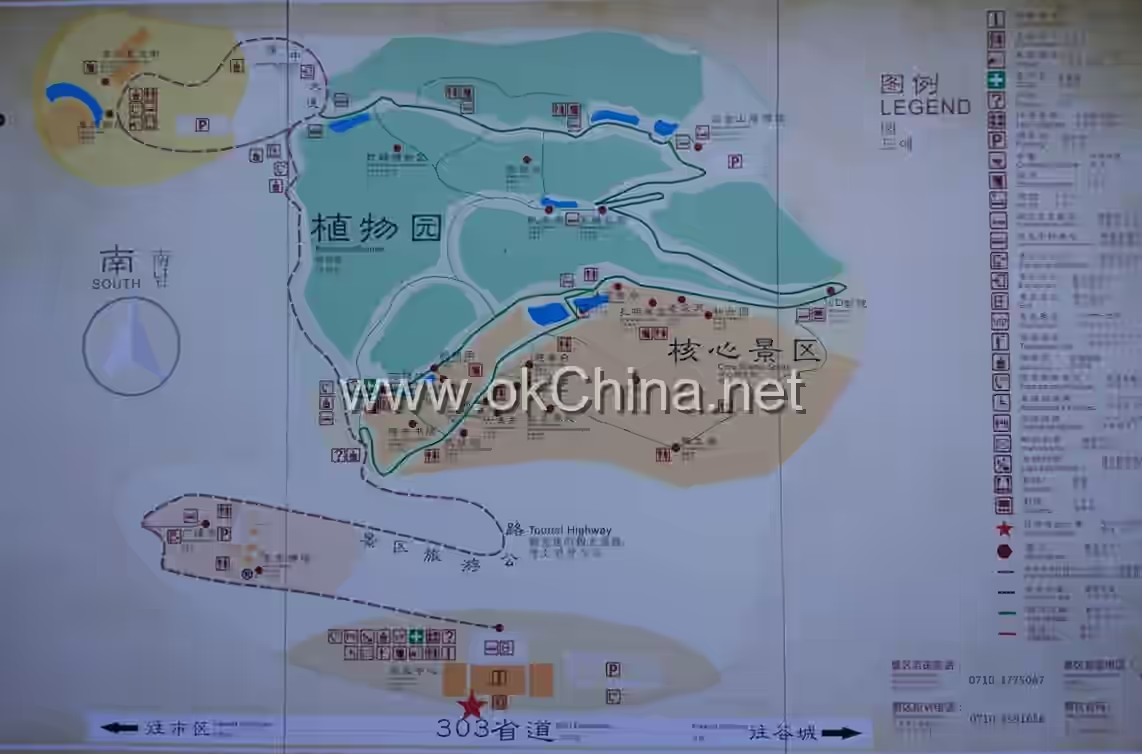
The Ancient Longzhong Scenic Area in Xiangyang City, also known as the Longzhong Scenic and Historic Interest Area or Longzhong Scenic Area, is located at No. 6 Longzhong Road, Longzhong Community, Longzhong Street, Xiangcheng District, Xiangyang City, Hubei Province, covering an area of 22.05 square kilometers. Situated within the Longzhong Community under the Longzhong Office of Xiangcheng District, it is recognized as a National Scenic and Historic Interest Area, a National Key Cultural Relics Protection Unit, a National Practical Education Base for Primary and Secondary School Students, and one of the "Top Ten Tourism Icons of Beautiful Hubei."
With a history of over 1,800 years, Longzhong is renowned as the "Cradle of Wisdom" and the "Birthplace of the Tripartite Division of the World" due to Zhuge Liang's "farming in the fields" and Liu Bei's "Three Visits to the Thatched Cottage," which led to the famous "Longzhong Dialogue." It is celebrated as a scenic spot of "eternal elegance and tranquility." Centered around Zhuge Liang's Thatched Cottage, the area includes Longzhong Mountain, Le Mountain, Daqi Mountain, Xiaoqi Mountain, Zhuge Temple Valley, Guangde Temple Valley, and more. It integrates historical relics such as Zhuge Liang's former residence with cultural landscapes and natural mountain and pastoral scenery. The total area of the Longzhong Scenic and Historic Interest Area is 209 square kilometers, encompassing seven major scenic zones: Ancient Longzhong, Shuijing Zhuang, Hezi Chuan, Cheng'en Temple, Qili Mountain, Wuduo Mountain, and Kongming Lake.
2. Geographical Environment
2.1 Location and Territory
The Ancient Longzhong Scenic Area is located at No. 461-1 Longzhong Road, Xiangcheng District, Xiangyang City, Hubei Province, with geographical coordinates at 31°59' North latitude and 112°02'09 East longitude.
2.2 Topography and Landforms
The Ancient Longzhong Scenic Area lies in the foothills of the Jing Mountain range in northwestern Hubei's mountainous region, characterized by tectonically eroded low hills and mountains. The cultural and scenic area, centered around Zhuge Liang's Thatched Cottage, includes mountains such as Longzhong Mountain, Le Mountain, Daqi Mountain, and Xiaoqi Mountain, as well as valleys like Zhuge Temple Valley and Guangde Temple Valley, along with streams formed between the mountains. The highest peak, Longzhong Mountain, stands at 306 meters above sea level. The total earthwork area of the scenic area is 18,000 mu, comprising 3,000 mu of original scenic spots, 581.4 mu of arable land, 14,268.6 mu of mountainous land, 35 mu of water bodies (reservoirs and ponds), and 115 mu of roads. The area features undulating hills, crisscrossing ravines, evergreen vegetation throughout the seasons, birdsong, floral fragrances, and diverse spatial variations.
2.3 Climate Characteristics
The Ancient Longzhong Scenic Area is located in a transitional zone between northern and southern climates. The annual average temperature ranges from 15°C to 16°C, with an average annual precipitation of 900 mm and a frost-free period of 250 days. Migratory birds from both north and south come here to inhabit and breed. Wild geese arrive from the north after the Mid-Autumn Festival, overwinter, and return north in February of the following year. Swallows arrive from the south in March each year, building nests under the eaves of local houses to breed before returning south after the Mid-Autumn Festival. The area experiences four distinct seasons with ample sunlight, making it suitable for the growth of both northern and southern plants.
3. Main Attractions
3.1 Overview
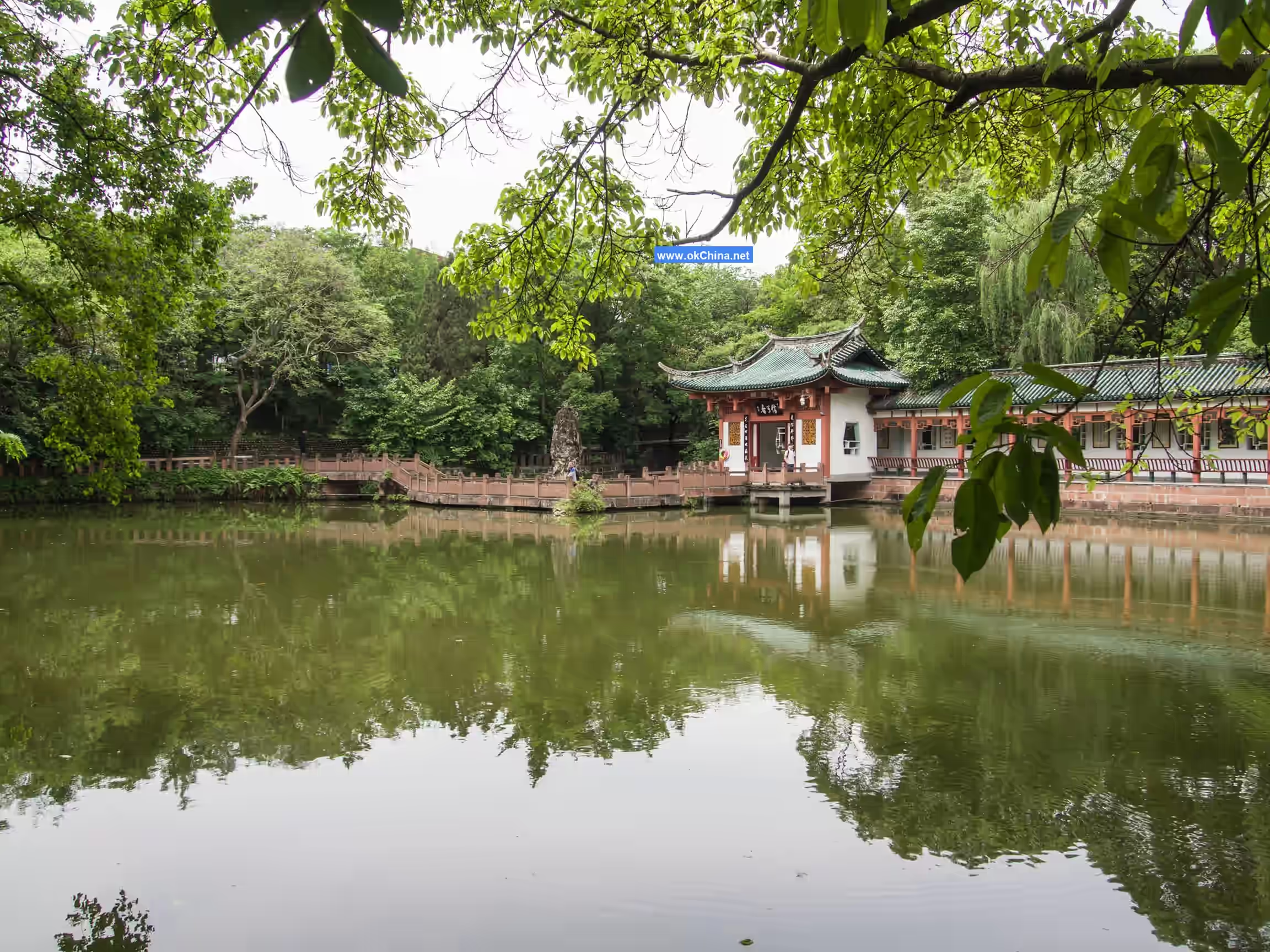
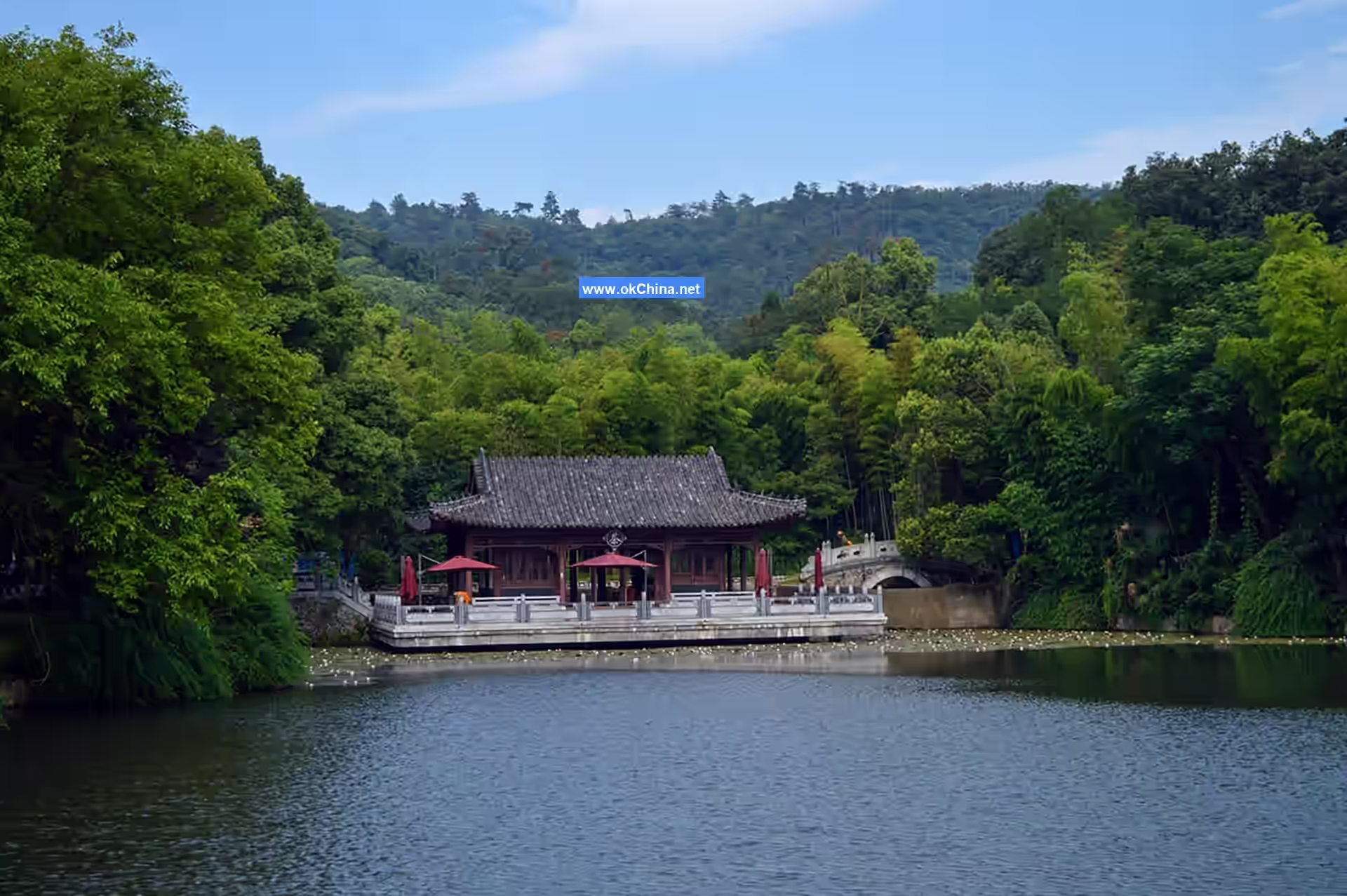
The Ancient Longzhong Scenic Area boasts rich cultural and natural resources. As described by Luo Guanzhong in Romance of the Three Kingdoms, "The mountains are not high but elegant; the waters are not deep but clear; the land is not vast but flat; the forests are not large but lush." Longzhong has long been known for its dense forests, clear streams, fragrant flowers, melodious birdsong, harmonious coexistence of apes and cranes, and interwoven greenery of pines and bamboos, creating a uniquely serene and elegant environment. Most structures in the scenic area date back to the Ming and Qing dynasties, featuring courtyard-style layouts. The halls typically have front corridors, combining wooden column-and-beam frames with gable walls, without ornate brackets or upturned eaves. The gable walls are painted, and the ridge ends curve upward at the center.
3.2 Attractions
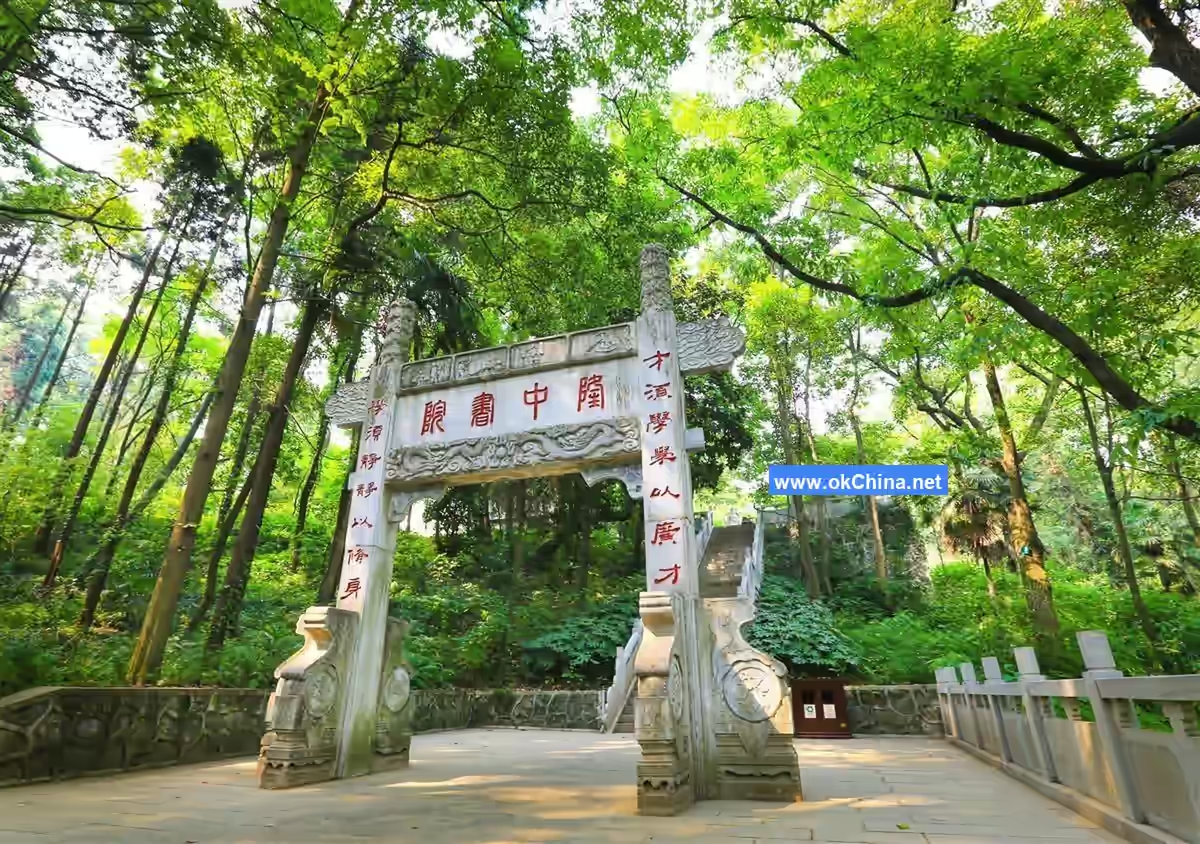
3.2.1 Memorial Archway
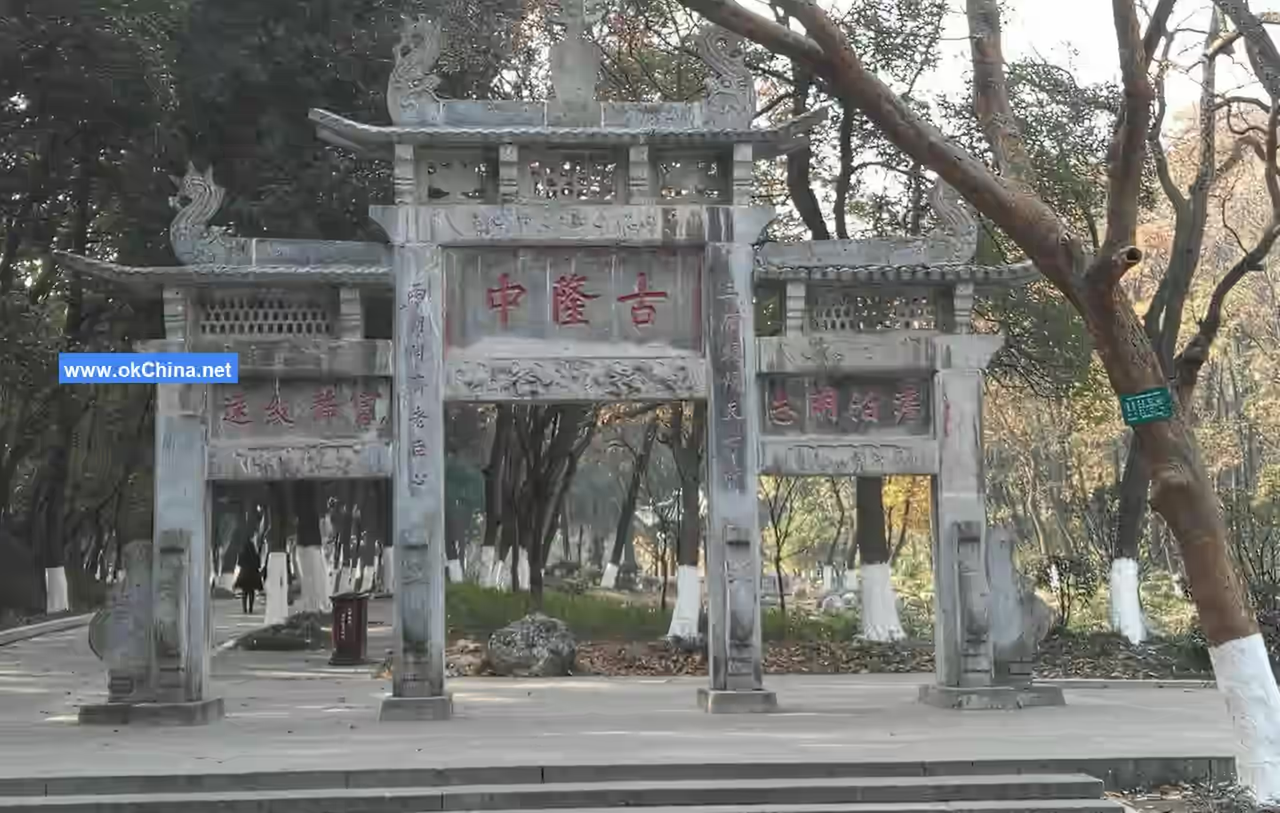
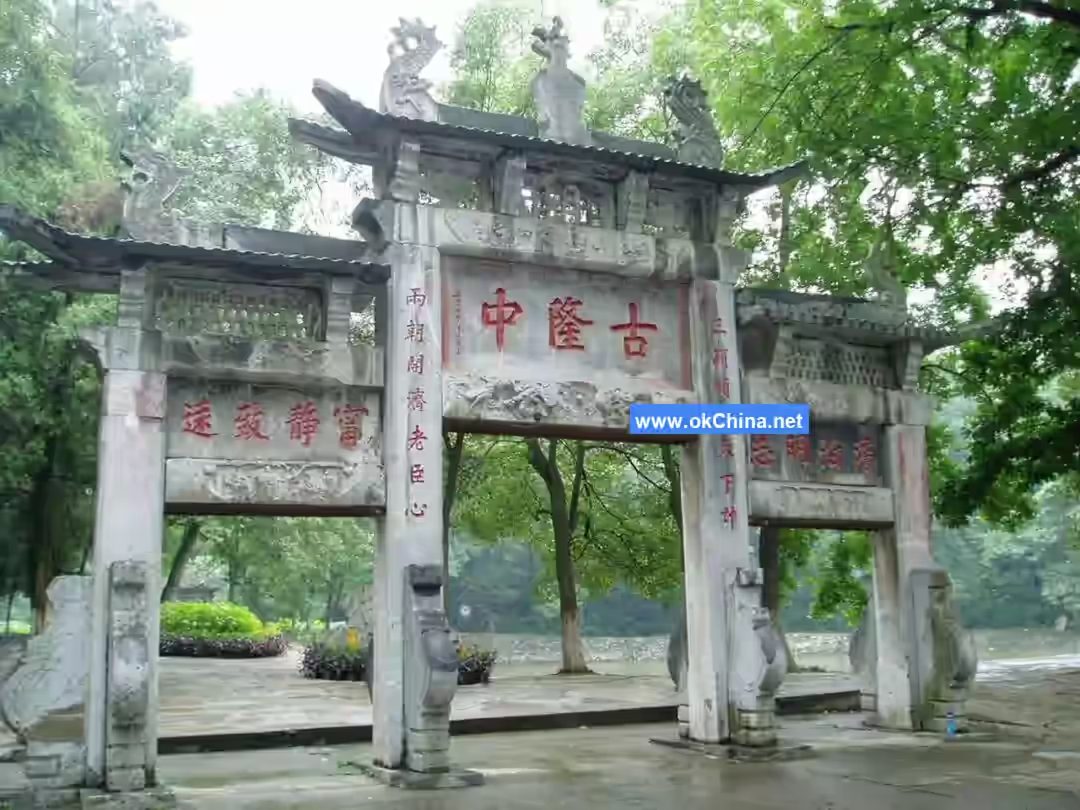
The Ancient Longzhong Memorial Archway is an iconic structure in Longzhong, built in the 19th year of the Guangxu reign of the Qing Dynasty (1893). It mimics wooden architecture with a four-pillar, three-gate tower design, stabilized by ten drum-shaped stone bases. The archway is adorned with carved beams and painted rafters, upturned eaves, single-eave brackets, and ridge ornaments, integrating line carving, relief carving, and openwork carving. Landscapes, figures, flowers, birds, fish, and insects are vividly depicted. The archway stands approximately 6 meters high and 10 meters wide. The central plaque bears the three large characters "Gu Long Zhong" (Ancient Longzhong), flanked by the famous phrases "Dan Bo Ming Zhi" (Indifferent to Fame, Clear in Ambition) and "Ning Jing Zhi Yuan" (Tranquility Leads to Far-reaching Goals). Historical records note: "West of Xiangyang City, there is a mountain that rises prominently in the middle, named Longzhong." Longzhong can be said to have "gained its name from the mountain and its spirit from its people," with the person who imbued Longzhong Mountain with this spirit being Zhuge Liang.
3.2.2 Wuhou Temple
Wuhou Temple, originally built during the Jin Dynasty, is a temple dedicated to Zhuge Liang. Located on the mountainside of Longzhong Mountain, it underwent frequent construction and destruction through the Sui, Tang, Song, Yuan, Ming, Qing, and Republic of China periods. The current structure was rebuilt in the 38th year of the Kangxi reign of the Qing Dynasty (1699) by Jiang Xingqi, the Jingxiang Observer. The temple is a four-courtyard, three-courtyard layered terrace structure, with single-eave gable roofs except for the third courtyard, which features a round-ridge roof. The main hall houses statues of Zhuge Liang and his descendants, Zhuge Zhan and Zhuge Shang, for visitors to pay respects. The central courtyard has left and right wing rooms, two towering ancient cypress trees, and a 400-year-old osmanthus tree believed to possess spiritual significance.
3.2.3 Zhuge Liang's Thatched Cottage
Zhuge Liang's Thatched Cottage is where Zhuge Liang lived, studied, and farmed during his time in Longzhong. The TV series Zhuge Liang was filmed here. The cottage is built in Han-style architecture with brick and wood structures, divided into front and rear courtyards. It consists of a thatched hall, guest rooms, bedrooms, a kitchen, and inner corridors. The cottage features robust materials, balanced proportions, and a simple, elegant, grand, and majestic design, recreating Zhuge Liang's daily life in Longzhong. Inside, artifacts such as the Wooden Ox and Gliding Horse and the "Zhuangyuan Tree" are displayed.
3.2.4 Baoxi Pavilion
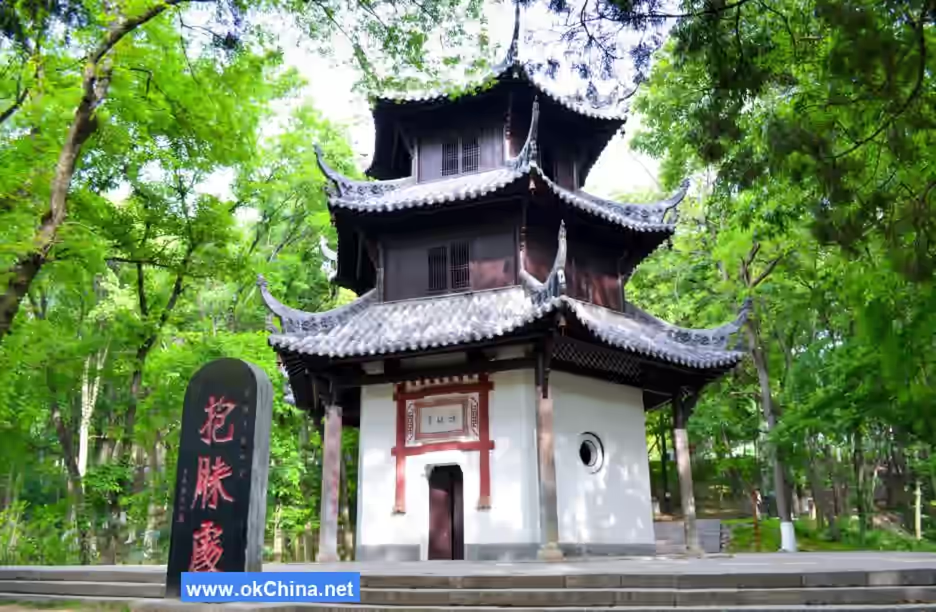
Baoxi Pavilion was rebuilt between the 14th and 19th years of the Guangxu reign (1888–1893) by Cheng Wenbing, the Governor of Hubei, on the site of the original "Gonggeng Pavilion" constructed by Zhao Hong'en during his inspection of Yunxiang. Legend has it that a large stone originally stood here, where Zhuge Liang would sit during his leisure time in Longzhong, singing folk songs from his hometown in Shandong, such as "Liangfu Yin," to express his nostalgia and lofty aspirations. The pavilion, nestled in greenery, is hexagonal with three eaves and three layers, featuring elegantly upturned corners and a graceful design. Visitors can climb the pavilion to enjoy the scenery, offering a unique charm.
3.2.5 Longzhong Academy
Longzhong Academy was originally built during the Tianfu period of the Five Dynasties and was initially known as the Wuling Wang Study Hall. By the late Yuan Dynasty, the Guangde Temple Academy moved to Longzhong and merged with the original academy, collectively named Longzhong Academy. Covering an area of 3,600 square meters with a building area of 1,123.44 square meters, the academy is divided into six sections: Preface Hall, Inspiration Hall, Diligence Hall, Integrity Hall, Admonition Hall, and Prospect Hall. It comprehensively showcases Zhuge Liang's life, including his journey to success, diligent and honest governance, and his approach to educating his children.
3.2.6 Wolong Deep Abode
Wolong Deep Abode was first built in the 7th year of the Yongzheng reign of the Qing Dynasty (1729) and has a history of 281 years. It was reconstructed in 1982 by the Longzhong Scenic Area Management Office. The inscription "Wolong Deep Abode" on the lintel was written in 1984 by Wang Renzhong, former Vice Chairman of the Standing Committee of the National People's Congress. The entire complex is divided into eastern, central, and western courtyards.
3.2.7 Wolong Ridge
Wolong Ridge is located on the southern side of Le Mountain and consists of a large expanse of stone forest resembling a "dragon's skeleton," lying prostrate on Le Mountain like a "crouching dragon." Below the stone forest, a crescent-shaped spring remains unfrozen year-round. The entire "Wolong Stone" is majestic and lifelike, resembling a "crouching dragon" about to take flight. Experts and scholars, after examining its geology, landforms, and history, believe it may be a large fossil site with significant archaeological, academic, and tourism value, closely resembling the legendary Wolong Ridge.
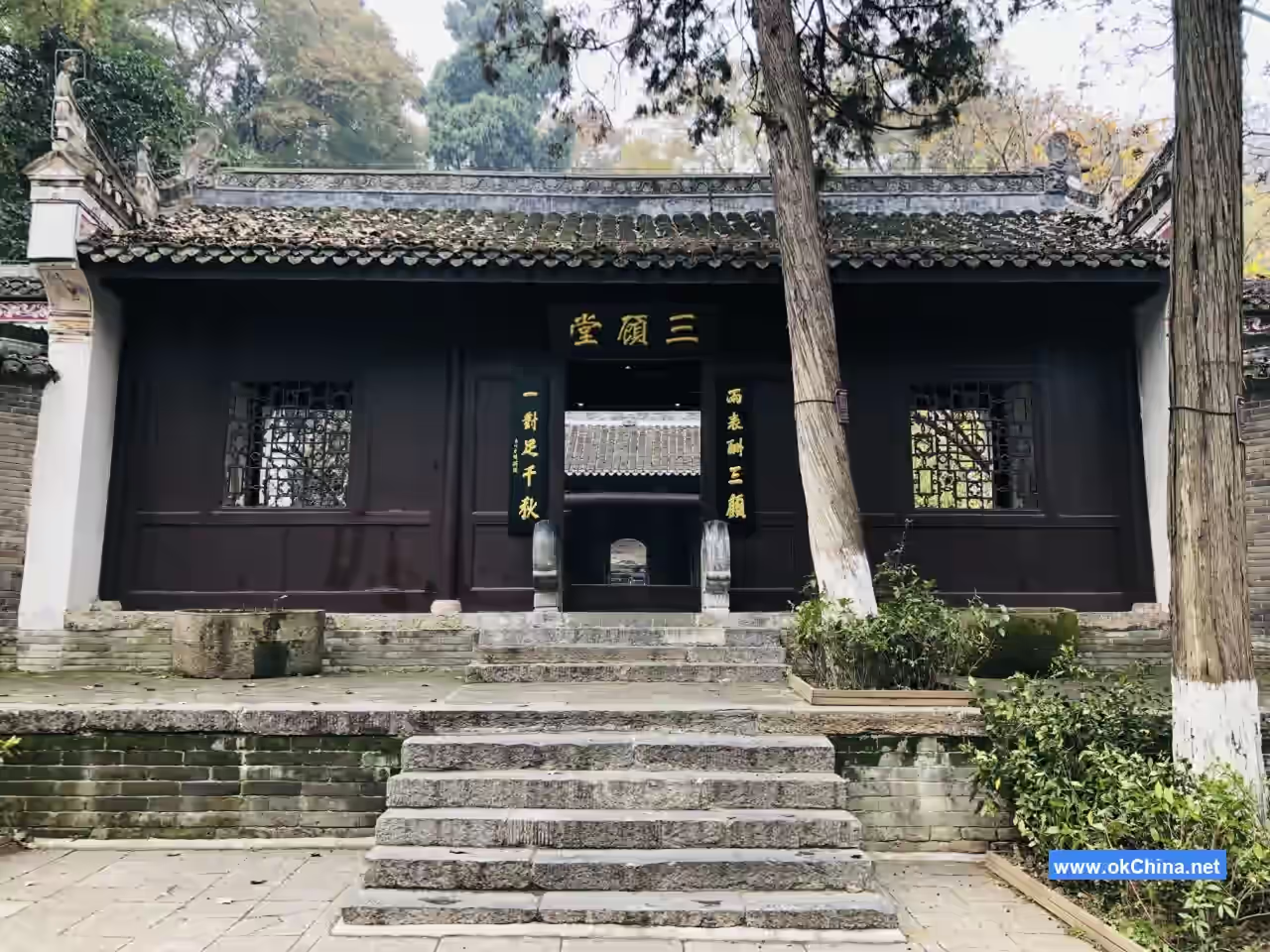
3.2.8 Sangu Hall
Sangu Hall is a memorial hall commemorating Liu Bei's "Three Visits to the Thatched Cottage" and Zhuge Liang's "Longzhong Dialogue." Built to honor Liu Bei's three visits, the hall features a couplet at its entrance: "Two memorials repay three visits; one dialogue suffices for eternity." The "two memorials" refer to Zhuge Liang's former and later "Memorials on the Expedition," while the "one dialogue" refers to the famous "Longzhong Dialogue." The main hall of the existing Sangu Hall was rebuilt in the 58th year of the Kangxi reign of the Qing Dynasty (1719) by Zhao Hong'en on the original site, largely preserving the Guangxu-era style: three front halls and five rear halls with gable roofs and ridges. The side corridors are embedded with stone inscriptions of historical poems and maintenance records. Three ancient cypress trees in front of the hall are said to be the trees where Liu Bei, Guan Yu, and Zhang Fei tied their horses during their visits. Every scene and object here exudes an antique elegance, evoking reflections on the historical tableau of "the union of fish and water dividing the world, and the rise of winds and clouds across the land."
3.2.9 Farming Fields
During his stay in Longzhong, Zhuge Liang and his younger brother, Zhuge Jun, reclaimed wasteland for farming, leading a self-sufficient life. In 1984, the Longzhong Scenic Area erected a single-eave hip-roof pavilion in the middle of the farming fields. The pavilion bears a plaque inscribed with "Tian Yuan Dan Bo" (Rural Simplicity), and inside is a stele inscribed with "Gong Geng Long Mu" (Farming in the Fields) by Liu Huaqing, former Vice Chairman of the Central Military Commission, during his visit to Longzhong in 2002. Every spring, the pavilion is surrounded by golden rapeseed flowers, reminiscent of Zhuge Liang's youthful years of seclusion.
4. Cultural Resources
4.1 Historical Evolution
The Ancient Longzhong Scenic Area in Xiangyang City is where Zhuge Liang, from age 17 to 27, farmed and studied, shaping his talents. It is also the site of the "Three Visits to the Thatched Cottage" and the "Longzhong Dialogue." After Zhuge Liang left Longzhong, a family named Dong briefly resided in the thatched cottage, after which it remained uninhabited. However, the bamboo-fenced thatched cottage, along with sites like Ge Well and the three-room house, has been preserved. Longzhong has consistently received official maintenance and protection, with figures such as Liu Hong, Xi Zuoqi, and Liu Guangzu paying homage to Zhuge Liang here. During the reign of Emperor Zhaozong of Tang, a stele was bestowed upon Longzhong, conferring the title "Wuling Wang" upon Zhuge Liang. Emperor Xiaozong of Song granted the temple the name "Ying Hui" and added the title "Ren Ji." Emperor Wuzong of Ming bestowed the temple name "Zhong Wu."
4.2 Historical StoriesThe Longzhong Plan and the Three Visits to the Thatched Cottage
The Longzhong Plan and the Three Visits to the Thatched Cottage are significant historical events of the Three Kingdoms period, profoundly influencing the formation of the tripartite division.
In the late Eastern Han Dynasty, eunuchs monopolized power, the court was corrupt, and the people lived in misery. After the outbreak of the Yellow Turban Rebellion, the empire fell into chaos, with warlords across the land carving out their own territories, leading to prolonged warfare. Liu Bei, a descendant of the Han imperial family, harbored the ambition to restore the Han dynasty but repeatedly faced setbacks, lacking a strategist capable of planning and decision-making. In 207 AD, while stationed in Xinye (present-day Nanyang, Henan), Liu Bei was recommended by his advisor Xu Shu to seek out Zhuge Liang, who was living in seclusion in Longzhong (present-day Xiangyang, Hubei). Xu Shu described Zhuge Liang as the "Crouching Dragon," a man of extraordinary talent. Eager for talent, Liu Bei decided to visit him personally. During his seclusion in Longzhong, Zhuge Liang cultivated the fields himself and enjoyed reciting the "Liangfu Yin." He was eight chi tall and often compared himself to Guan Zhong and Yue Yi, though most people at the time did not recognize his abilities. Only Cui Zhouping from Boling and Xu Shu from Yingchuan befriended him, believing in his talent. When recommending Zhuge Liang to Liu Bei, Xu Shu emphasized that Zhuge Liang could only be met through personal visits and could not be summoned. Thus, Liu Bei humbled himself and made three visits to the thatched cottage before finally meeting Zhuge Liang. On the first visit, Liu Bei, accompanied by Guan Yu and Zhang Fei, arrived in Longzhong but found Zhuge Liang absent, with only a young servant to receive them. Liu Bei left a message expressing his sincerity. Several days later, he visited again but still did not meet Zhuge Liang, encountering only his younger brother, Zhuge Jun. Liu Bei left a letter expressing his admiration. On the third visit, Liu Bei finally met Zhuge Liang. To show his sincerity, Liu Bei waited quietly outside the door until Zhuge Liang awoke from his nap. Moved by Liu Bei's sincerity, Zhuge Liang decided to leave seclusion and assist him. The "Three Visits to the Thatched Cottage" not only demonstrated Liu Bei's humility and eagerness for talent but also reflected Zhuge Liang's prudence and wisdom. This story became a model of the ideal ruler-subject relationship in ancient China, celebrated by later generations.
After Zhuge Liang joined Liu Bei, Liu Bei sought his advice on the overall situation and future strategic direction. In Longzhong, Zhuge Liang analyzed the current circumstances and proposed the famous "Longzhong Plan." He pointed out that Cao Cao, who held the north, controlled the emperor and commanded the feudal lords, had a large army and many generals, making it temporarily unwise to confront him directly. Sun Quan, who occupied Jiangdong, had ruled for three generations, with a secure territory and loyal people, making him a potential ally. Jingzhou, bordered by the Han and Mian rivers to the north, extended its benefits to the South Sea, connected Wu and Kuaiji to the east, and linked Ba and Shu to the west, making it a strategic region. However, its ruler, Liu Biao, was incapable of defending it, so it should be taken first. Yizhou, with its rugged terrain and fertile land, was a natural fortress, but its ruler, Liu Zhang, was weak and incompetent, failing to care for his prosperous and wealthy people. It could be taken as a foundation. Liu Bei should first occupy Jingzhou and Yizhou as his base, pacify the western and southern tribes, ally with Sun Quan externally, and improve governance internally. When the world underwent changes, he could send a general to lead the Jingzhou army toward Wan and Luo while personally leading the Yizhou forces through Qinchuan. Then, his hegemony could be established, and the Han dynasty restored. When seeking Zhuge Liang's advice, Liu Bei first dismissed his attendants, expressing his grief over the decline of the Han dynasty and the usurpation of power by treacherous officials, as well as his determination despite limited strength. After hearing this, Zhuge Liang analyzed the situation in detail and proposed a concrete strategic plan. Liu Bei greatly admired the plan, and his relationship with Zhuge Liang grew increasingly close. Guan Yu and Zhang Fei were dissatisfied, but Liu Bei explained, "With Kongming, I am like a fish finding water." Only then did Guan and Zhang stop complaining. The Longzhong Plan provided Liu Bei's faction with a clear strategic blueprint, forming the foundation for the establishment and development of the Shu Han state. Zhuge Liang's foresight and strategic vision were fully displayed in this plan.
Following the Longzhong Plan, Liu Bei successively captured Jingzhou and Yizhou, establishing the Shu Han regime. However, due to unforeseen events such as Guan Yu's loss of Jingzhou and Liu Bei's defeat at the Battle of Yiling, the strategy of the Longzhong Plan was not fully realized. After Liu Bei's death, Zhuge Liang continued to assist Liu Shan, launching multiple northern expeditions in an attempt to restore the Han dynasty, but ultimately without success. The "Three Visits to the Thatched Cottage" is regarded as a model of humility and respect for talent in ancient China, reflecting Liu Bei's sincerity and Zhuge Liang's wisdom. The "Longzhong Plan" is considered a masterpiece of strategic planning in ancient China, showcasing Zhuge Liang's foresight. Both stories are recorded in the Records of the Three Kingdoms and the Romance of the Three Kingdoms, becoming symbols of the ideal ruler-subject relationship, wisdom, and loyalty in Chinese culture. Chen Shou, in the Records of the Three Kingdoms: Biography of Zhuge Liang, detailed the content of the Longzhong Plan, shaping Zhuge Liang's image as an outstanding statesman and strategist through this event. He excelled at assessing situations, analyzing circumstances, seeing the bigger picture, and anticipating the future. The text is clear in structure, rigorous in organization, concise in language, and profound in meaning. The Longzhong Plan is not only a historical document but also a model of strategic thought in ancient China.
Comments
Post a Comment