Aizhai·Shibadong·Dehang Grand Canyon Scenic Area in Xiangxi Tujia and Miao Autonomous Prefecture
1. Introduction
The Aizhai·Shibadong·Dehang Grand Canyon Scenic Area in Xiangxi Tujia and Miao Autonomous Prefecture, abbreviated as the Aizhai·Shibadong·Dehang Grand Canyon Scenic Area, is a tourist attraction located within Xiangxi Tujia and Miao Autonomous Prefecture, Hunan Province. The scenic area has been listed in the "Top 100 5A-Level Scenic Areas in Brand Communication Power" for the third consecutive year since 2021.
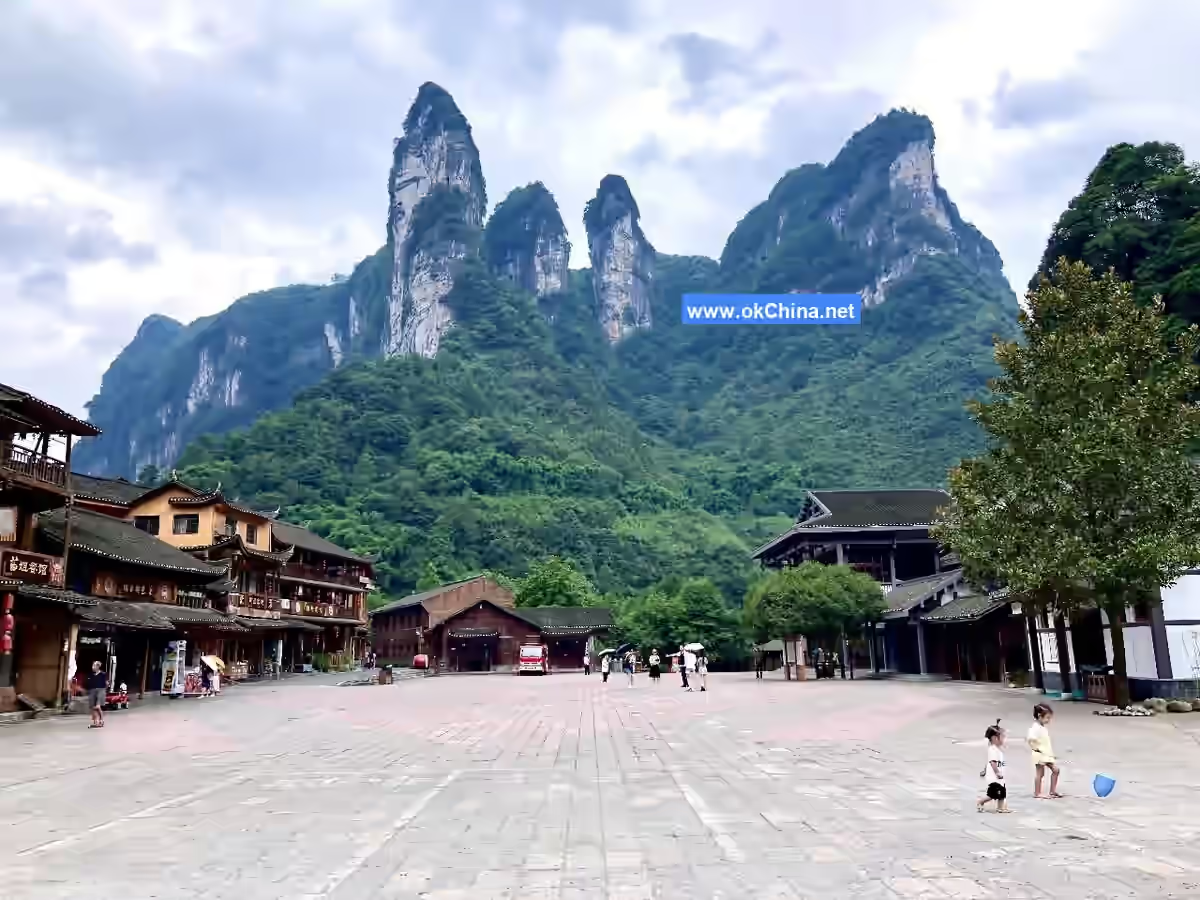
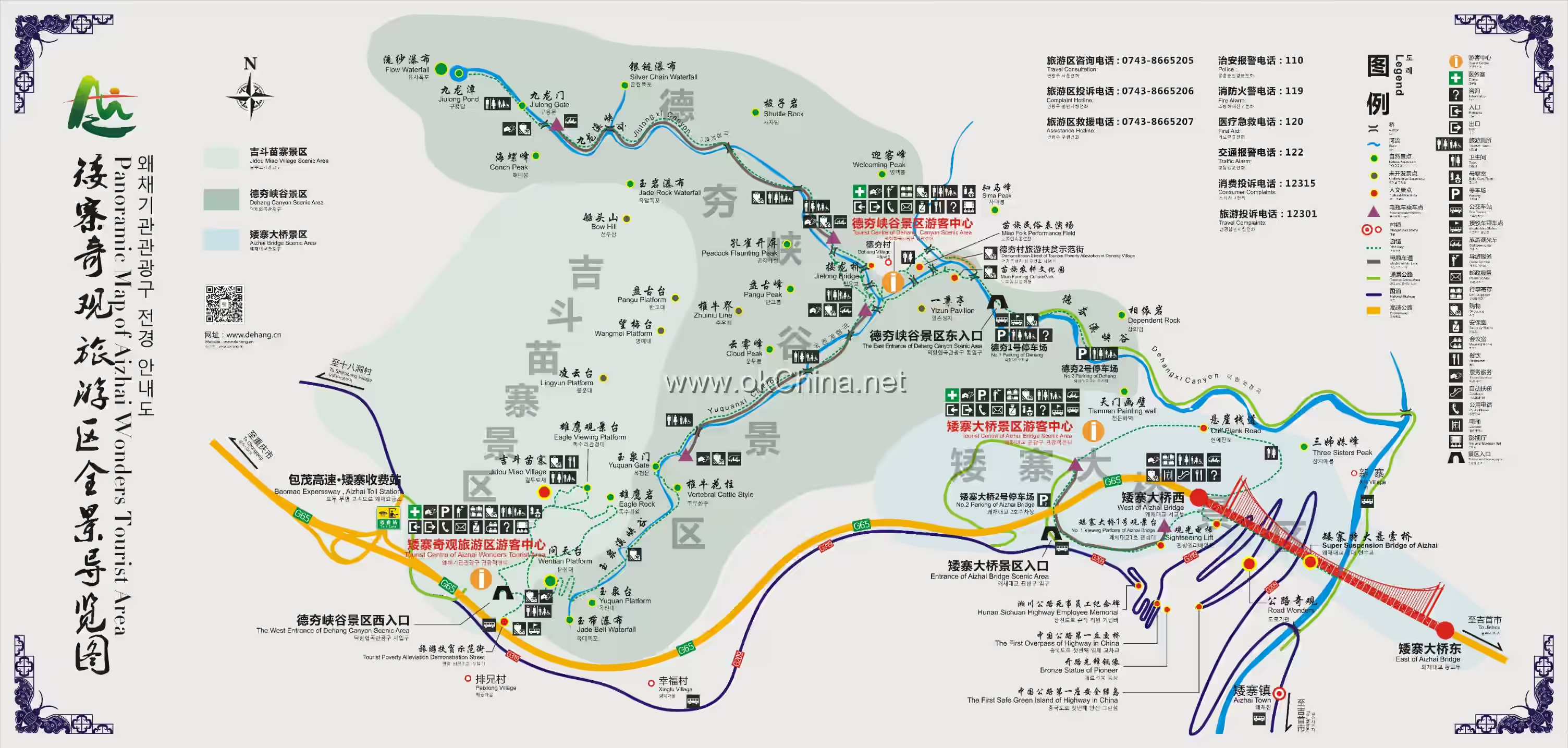
The Aizhai·Shibadong·Dehang Grand Canyon Scenic Area is primarily composed of the Aizhai Wonders Tourist Area and the Shibadong Scenic Area. These areas can be connected via the Sonid Left Banner–Beihai Highway, with a driving time of just over ten minutes. The Aizhai Wonders Tourist Area is located in Aizhai Town, Jishou City, with a core area of 8.1 square kilometers. It consists of the Aizhai Bridge Scenic Area, Jidou Miao Village Scenic Area, and Dehang Canyon Scenic Area. It features wonders such as extraordinary roads, bridges, canyons, waterfalls, and customs, making it a comprehensive cultural and tourist zone integrating sightseeing, experience, science education, and leisure. The Shibadiang Scenic Area is located in Shuanglong Town, Huayuan County, situated in a high-altitude cold mountainous region with long winters and short summers. It belongs to a high-altitude karst area, with an elevation of around 700 meters, beautiful ecological environment, and a forest coverage rate of 87%. Attractions within the scenic area include the Liantai Mountain Forest Farm, Huangma Rock, Bird Dragon's Thread of Sky, Beier Mountain, and Sky Pillar.
On June 11, 2021, the Aizhai·Shibadong·Dehang Grand Canyon Scenic Area in Xiangxi Tujia and Miao Autonomous Prefecture, Hunan Province, was designated as a National AAAAA Tourist Attraction by the Ministry of Culture and Tourism of the People's Republic of China. It became the first such attraction in Xiangxi Tujia and Miao Autonomous Prefecture and the 11th in Hunan Province.
2. Geographical Environment
2.1 Location
The Aizhai Wonders Tourist Area is located in Aizhai Town, Jishou City, Xiangxi Tujia and Miao Autonomous Prefecture, Hunan Province. Its geographical coordinates are between 109°30'~110°04' east longitude and 28°08'~28°29' north latitude, with a core area of 8.1 square kilometers.
The Shibadong Scenic Area is located in Shibadong Village, Shuanglong Town, Huayuan County, Xiangxi Tujia and Miao Autonomous Prefecture, Hunan Province. Its geographical coordinates are between 109°15′~109°38′ east longitude and 28°10′~28°38′ north latitude.
2.2 Topography and Landforms
The canyon geology of the Aizhai Wonders Tourist Area belongs to the Cambrian period, rich in paleontological fossils, and features a karst canyon landform at the edge of a plateau tableland. The Shibadong Scenic Area has an average elevation of 700 meters and features a high-altitude lava landform.
2.3 Climate Characteristics
Xiangxi Tujia and Miao Autonomous Prefecture, where the Aizhai·Shibadong·Dehang Grand Canyon Scenic Area is located, has a subtropical monsoon humid climate with distinct continental climate features. During the summer half-year, it is controlled by the summer monsoon, resulting in abundant precipitation and a warm, humid climate. During the winter half-year, it is controlled by the winter monsoon, resulting in less precipitation and a colder, drier climate.
3. Main Attractions
3.1 Aizhai Bridge Scenic Area
3.1.1 Xiangxi Aizhai Extra-Large Suspension Bridge
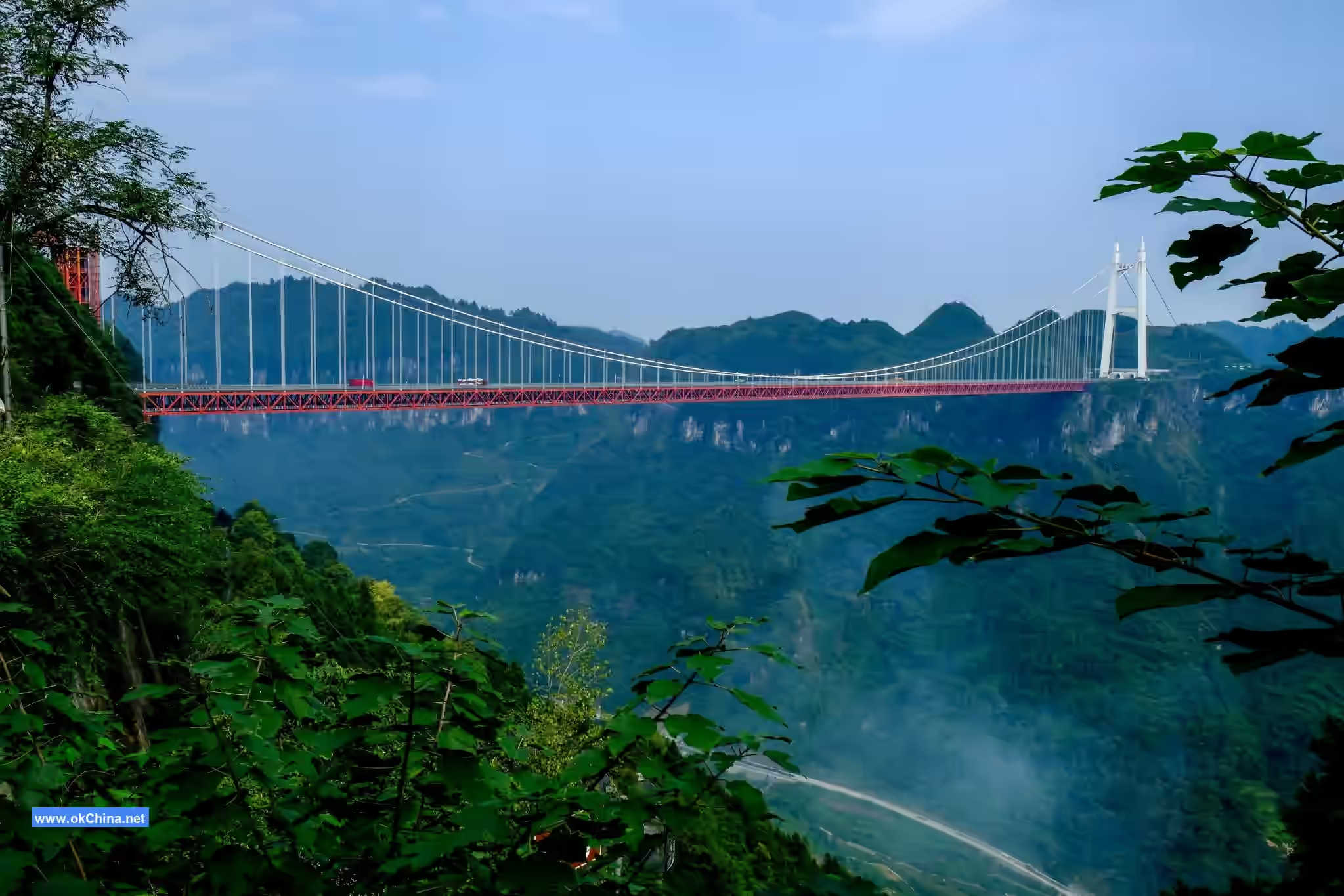
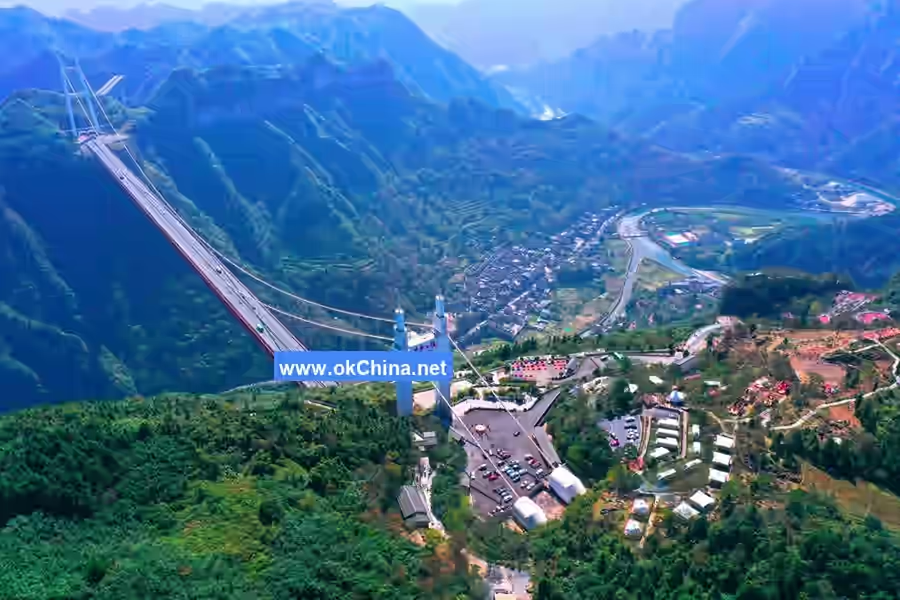
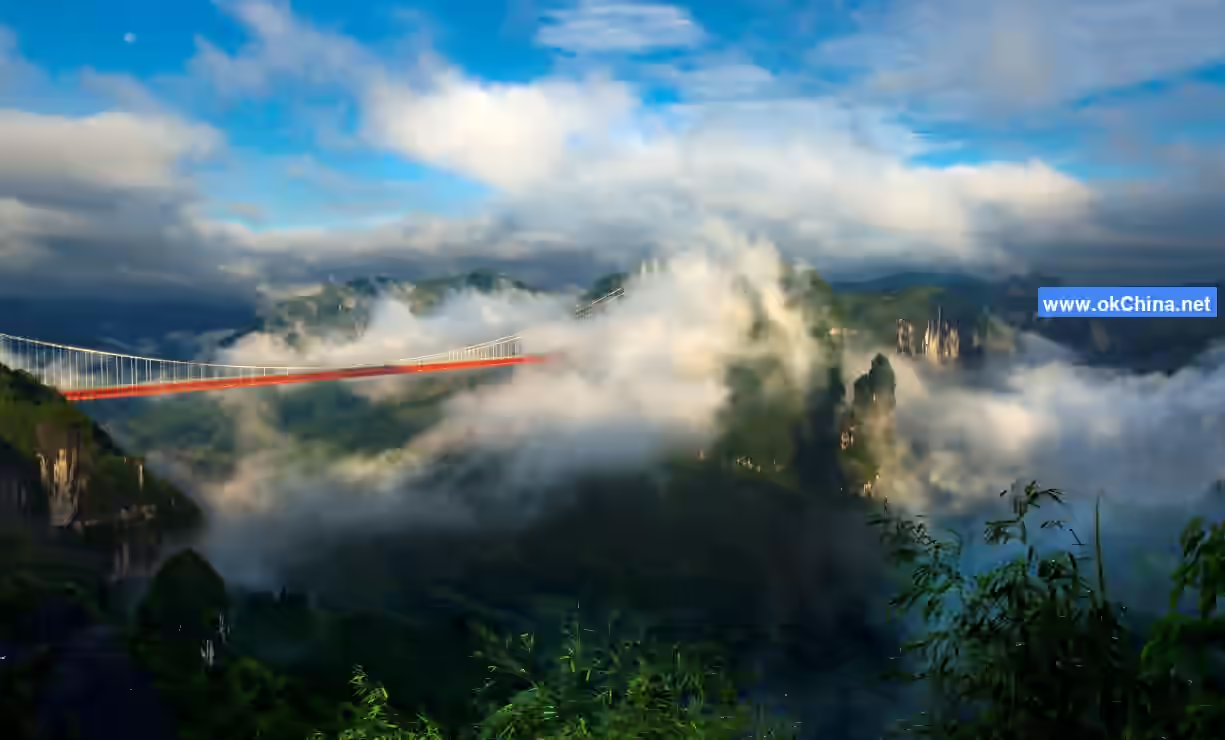
The Xiangxi Aizhai Extra-Large Suspension Bridge, abbreviated as Aizhai Bridge, is located over the Dehang Grand Canyon and is a key control project of the Baotou–Maoming Expressway (National Expressway G65). The Aizhai Bridge is a dual-purpose bridge with two levels for road traffic and sightseeing. It is a four-lane expressway super-large bridge with a total main bridge length of 1,414 meters. The main span of the suspension bridge is 1,176 meters, the deck width is 24.5 meters, and the height from the valley floor is 355 meters. Due to its special geographical location and construction difficulty, the Aizhai Bridge set four world records during its construction: the longest main span among suspension bridges across canyons, the first bridge to adopt a completely separated tower and girder structural design, the first bridge to use the rail cable sliding method for erecting steel truss girders, and the first bridge to use rock anchor hanger structures with carbon fiber as prestressing tendons. The design elevation of the bridge deck has a 330-meter difference from the ground level, making it hailed as a model of perfect integration of bridge architectural art and natural landscape.
3.1.2 Cliffside Walkway
The Cliffside Walkway is built on cliffs 300-400 meters above the Dehang Canyon. It includes a glass walkway, cliff-top viewing platforms, and slow-walking paths, with a total length of 1.6 kilometers, including 100 meters of glass walkway. It complements the Sky Bridge (Aizhai Bridge) and the Sky Road (Aizhai Highway Wonder), forming a canyon spectacle where human culture and nature coexist, and grandeur and delicacy are both present.
3.1.3 Flying Magic Carpet
It takes only a few minutes to ascend the mountain easily, whether sitting or lying down, suitable for all ages. Besides the thrilling experience, one can enjoy the beautiful scenery along the way. Riding the Flying Magic Carpet, traversing mountains and forests, watching the sea of clouds and waterfalls, makes ascending the mountain easy with less walking.
3.1.4 Walk in the Clouds
The "Walk in the Clouds" project on the Aizhai Bridge is the world's first high-bridge cloud-walking project. The route is 108 meters long and about 355 meters high. Underfoot is the deep mountain canyon with howling winds, ahead is the heart-stopping "Cloud Walkway," and above is the flawlessly blue clear sky. Thrill and magnificence weave together into a colorful watercolor painting. Come for a "Journey in the Clouds," using the vast sky as a blue canvas, transforming the imaginative world of cloud-walking wonders into the most magnificent and unrestrained "Painting in the Clouds."
3.1.5 High Bridge Matrix
The Aizhai Bridge High Bridge Matrix project is characterized by strong challenge and观赏性. At a height of 355 meters above the ground, utilizing the steel truss girder structure of the Aizhai Bridge, a unique walking matrix is created to experience a "007-style" high-altitude crossing adventure. It is the only project in the world to apply a similar activity to a world-high bridge.
3.1.6 High Bridge Bungee Jumping
The bungee jumping height at Aizhai Bridge is 355 meters. The bungee cord is 50 meters long with a maximum stretch length of 150 meters. Standing on the bungee platform, the scenery of Aizhai is fully visible. Spread your arms and leap,穿越 the thin mist in the mountains,享受 the极限快感 of free fall.
3.1.7 High-altitude Swing
The high-altitude swing is set up by installing ropes in the middle of the bridge, standing over纵横 ravines,临界于 cliff edges. Experiencers失重下落 at an instantaneous speed of 88 kilometers per hour. Under external force, the swing seems to fly from the platform towards the极限 of vision. As the swing goes higher and higher, have a dialogue between soul and heart at 355 meters high, let yourself go in the clouds, experience speed and激情, greet the mountain breezes, adding a unique touch of interest to life.
3.1.8 Infinity恒温 Swimming Pool
The building is constructed according to the terrain. The infinity恒温 swimming pool located on the mountaintop is a perfect spot to overlook the magnificent万年 canyon.
3.1.9 Aizhai Mountain Highway
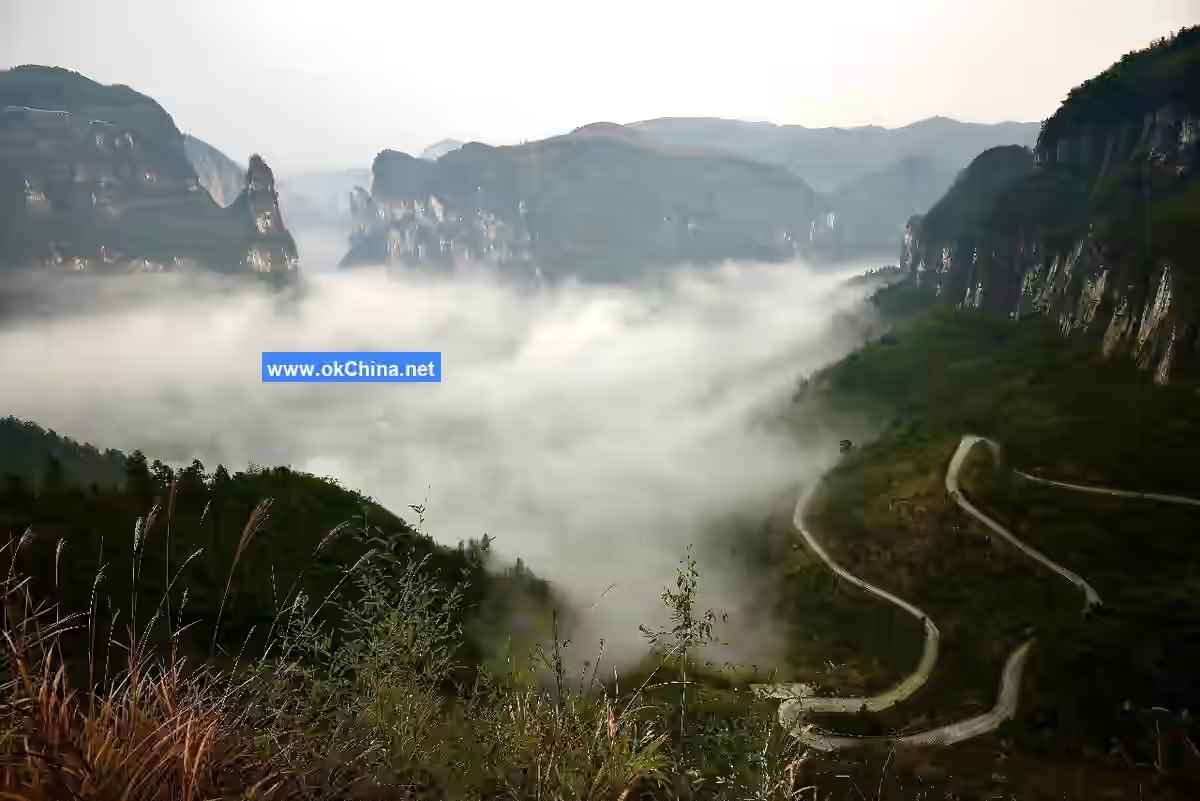
The Aizhai Mountain Highway is part of the Xiangchuan Highway (National Highway 319), connecting the throat passage from the Yuehan and Xiangguiqian routes to the southwest. The entire Xiangchuan Highway is 1,256 kilometers long. Its construction began in early the 24th year of the Republic of China (1935) and was fully completed and opened to traffic in September of the 25th year of the Republic of China (1936). During the eight-year War of Resistance against Japan, the Xiangchuan Highway was the only通道 connecting the Yuehan and Xiangguiqian routes to the vast rear area in the southwest, bearing a great historical mission. The middle section of the Xiangchuan Highway traverses the entire territory of western Hunan, with the road winding up and down through towering mountains and steep ridges. Its惊险程度 exceeds imagination. The Aizhai Mountain Highway is about 6 kilometers long but was built on大小 slopes with a horizontal distance of less than 100 meters, a vertical height difference of 440 meters, and gradients of 70-90 degrees. This specific space forced the road to turn multiple times, forming 13 sharp acute bends and 26 sections of almost parallel,上下重叠 road surfaces. The widest part of the road does not exceed 7 meters, and the narrowest section is less than 4 meters, where two small cars cannot pass simultaneously. Its地势之险 and巧妙 engineering design rank first among national highways,被称为 the "Aizhai Highway奇观," becoming a special attraction in western Hunan.
3.2 Dehang Canyon Scenic Area
3.2.1 Agricultural Culture Park
The Agricultural Culture Park, also known as Daixiongchang, meaning a place where Miao people gather for markets, features folk workshops with the most characteristic elements of western Hunan and ethnic culture, such as oil presses, weaving workshops, wine brewing workshops, and tofu workshops. The Agricultural Culture Park collects and displays many ancient原始 production and living tools of the Miao people,集中展现 their living customs and local traditions, making it a showcase base with the most distinctive ethnic features.
3.2.2 Dehang Miao Village
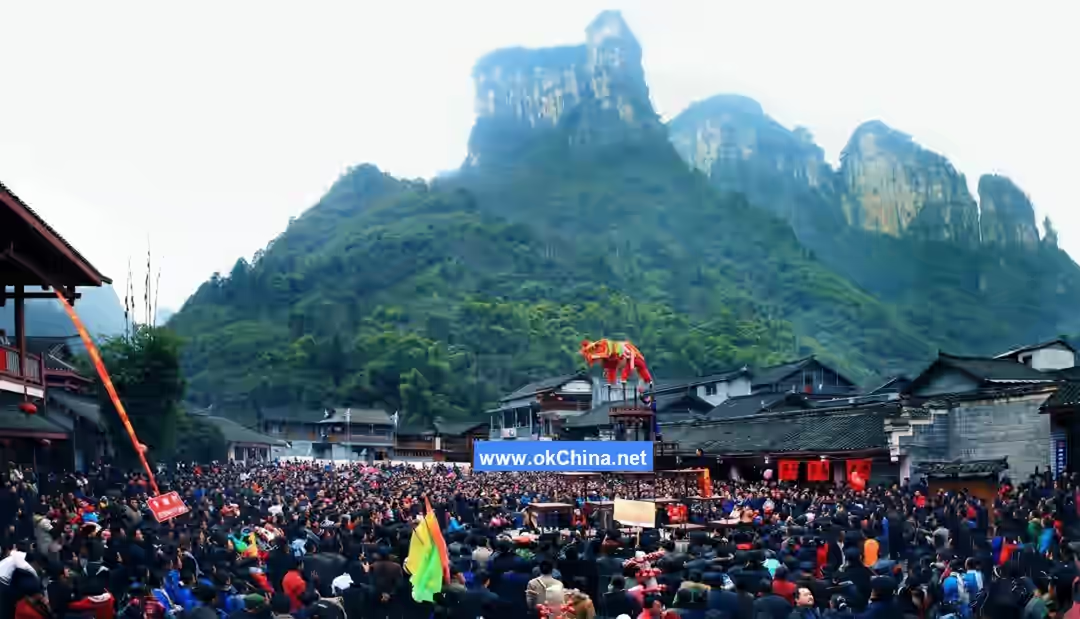
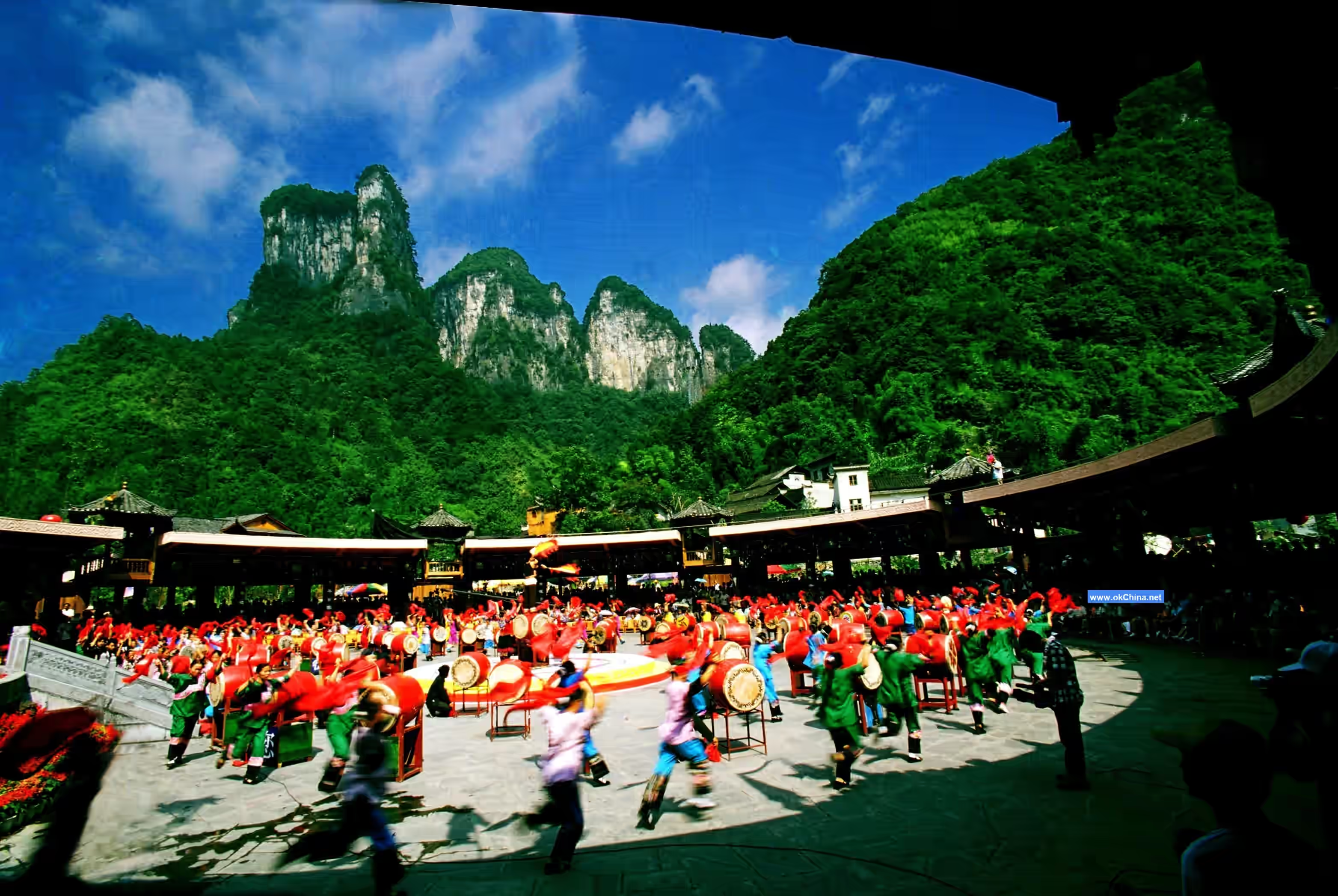
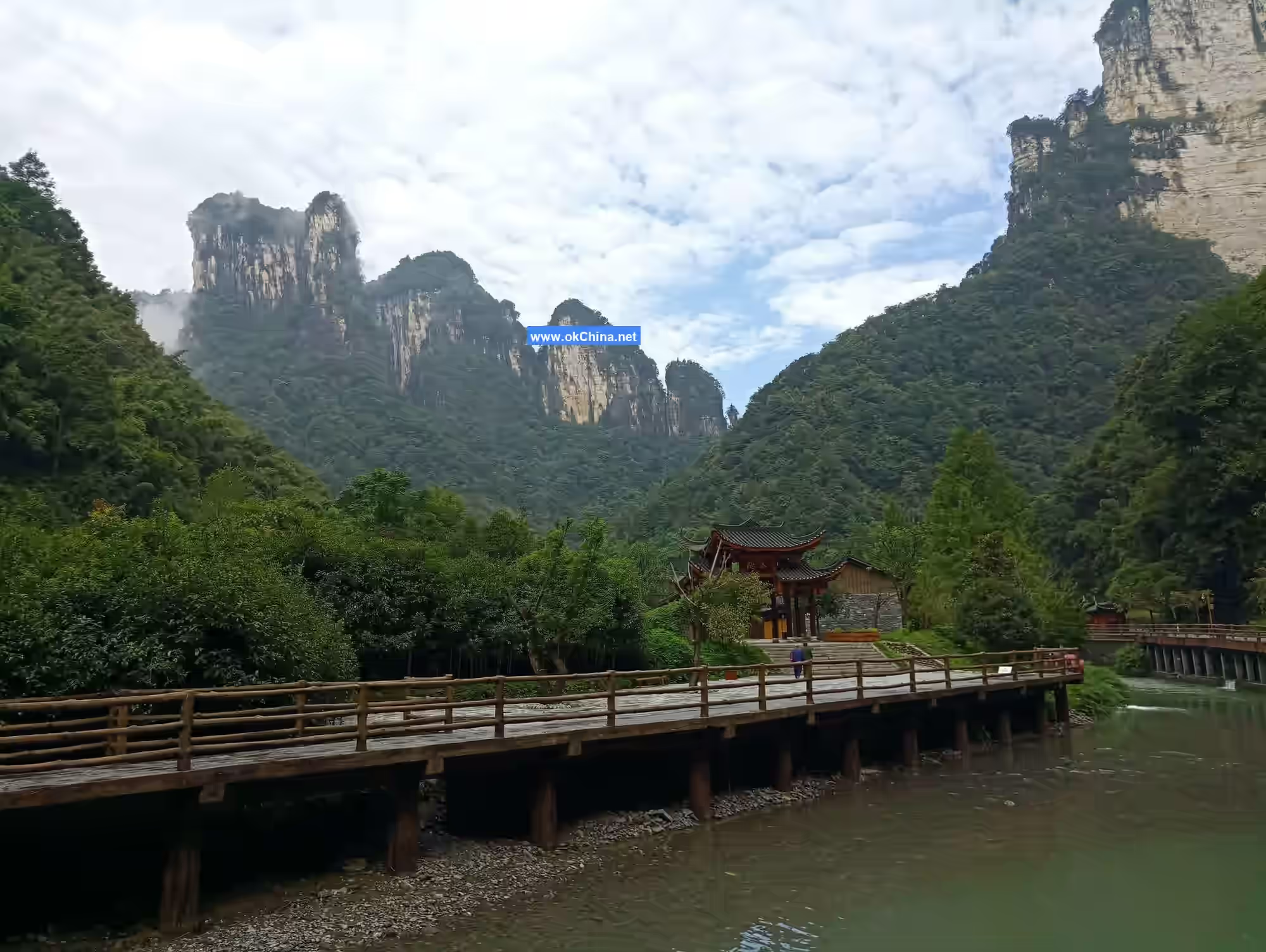
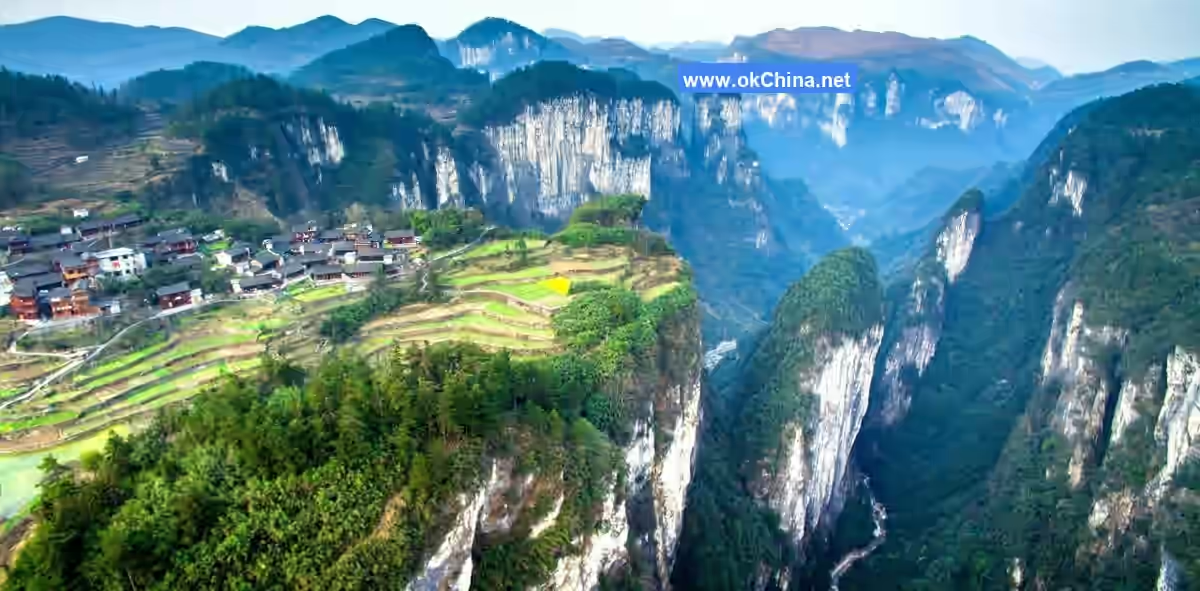
"Dehang" in Miao language (deut hangd) means "beautiful canyon." Dehang Miao Village is an ancient and magical Miao village within this beautiful canyon, a unique flower镶嵌 in mysterious western Hunan. Located at the core of the Dehang Scenic Area, the village is built against the mountains, surrounded by千山飞瀑. The民居 have upturned eaves and corners,半遮半掩, with fire walls,吊脚楼, carved花窗,奇特造型,鲜明格调, and缤纷色彩, all displaying the atmosphere of ancient遗民. Over a hundred Miao households reside in Dehang Miao Village, preserving千年古俗 to this day. Dehang Miao Village is world-renowned as the hometown of Miao drums. Men, women, old, and young all love "drum dancing," and it has produced five generations of Miao drum kings. The Miao同胞繁衍 here have lived and worked in peace for thousands of years. They speak the Miao language, wear collarless embroidered clothes, use songs as媒 for自由恋爱; follow daily routines, take life and death in stride; and are immersed in song and dance.#### 3.2.3 Yuquanxi Canyon Yuquanxi Canyon is a deep and secluded gorge connecting Jidou Miao Village, Wentian Platform, and Dehang Miao Village. Within the canyon, the mountains rise and fall dramatically, with sheer cliffs standing tall, waterfalls cascading down, and peculiar rocks jutting out. Two large mountains stand facing each other across the Yuquanxi Canyon, forming a natural stone gate. Because there is a pool of clear, jade-like spring water in the middle of this stone gate, it is called the "Jade Spring Gate."
3.2.4 Jiulongxi Canyon
Jiulongxi Canyon stretches for 2,400 meters. Along its banks, strange peaks rise in myriad postures, with sheer cliffs as picturesque as paintings and vibrant colors. The stream water along the way is clear and lively, flowing ceaselessly through all four seasons, and the stream is rich with plump shrimp and crabs. The path passes by Chuantou Mountain, Suozi Rock, Conch Peak, and Yinlian Waterfall, eventually reaching Liusha Waterfall, which boasts the greatest height drop in China.
3.2.5 Liusha Waterfall
Liusha Waterfall is located at the source of the Jiulongxi Stream. With a height of 216 meters, it hangs in the air like a white silk ribbon or a silver gauze against the cliff, making it one of China's taller waterfalls. It can be seen after a short walk along the Jiulongxi Stream from Dehang Miao Village. The stream water plunges down from the sheer cliff. Due to the significant height drop, the water disperses into a sand-like flow by the time it reaches the bottom, hence the name "Liusha" (Flowing Sand) Waterfall. During the high-water season, torrents of water cascade from the cliff into the deep pool, resembling nine dragons churning the waves, swallowing clouds and spitting mist, with a sound like thunder that shakes the valley, creating a majestic and spectacular scene. In the dry season, the water drifts down the cliff, sometimes like a light gauze brushing the face, sometimes like a bead curtain hanging, akin to white silk cleansing the green pool, stirring up layers of ripples, displaying graceful and gentle elegance. Visitors can walk along the mountain paths on either side, passing beneath the waterfall. A faint mist-like spray drifts down, creating a feeling of entering a "Water Curtain Cave," with a fine drizzle that seems to seep into one's heart.
3.3 Jidou Miao Village Scenic Area
3.3.1 Jidou Miao Village
Jidou Miao Village is situated atop the mountain peaks of the Wannian Canyon in Aizhai Town, Jishou City, Xiangxi Tujia and Miao Autonomous Prefecture, Hunan Province. It is located within the Dehang Scenic Area, 24 kilometers from downtown Jishou. "Jidou" is a transliteration from the Miao language, meaning "the Miao village riding on the back of an eagle." The mountain range where Jidou Miao Village sits resembles a giant eagle spreading its wings, ready to take flight, with Jidou Village恰好 perched on the eagle's back.
Behind Jidou Miao Village, steep cliffs rise sharply on both sides, towering and exceptionally precipitous as if carved by an axe or knife, forming a beautiful grand canyon. It is internationally recognized in geological circles as a "Golden Spike Section."
3.3.2 Wentian Platform
Within the Dehang Yuquanxi Grand Canyon, Wentian Platform stands among the mountains, with a cliff-side height of about 150 meters. It is exposed on three sides, a solitary peak rising alone, isolated from its surroundings. A natural viewing platform formed on the rock pillar served as a place for prayer and sacrificial ceremonies in ancient times. Surrounded by纵横交错的 canyons and rows of peaks, reaching Wentian Platform requires traversing a rugged mountain path—there are no cable cars or winding mountain roads, only徒步攀登. Climbing up from the Jade Spring Gate, one arrives at Wentian Platform just before reaching the summit. Mountain ranges surround a solitary peak, with a sheer abyss ahead. Standing here feels as if one can truly converse with the heavens. Legend has it that this is the place where, during the Warring States period 2,300 years ago, the poet Qu Yuan once lamented and questioned the heavens. At the end of the Warring States period, Qu Yuan of the Chu State, framed by treacherous court officials, was exiled to the Yuan and Li river areas. He later came here, ascended the platform, and composed the famous timeless poem "Tian Wen" (Heavenly Questions), from which the platform derives its name.
3.4 Shibadong (Eighteen Caves) Scenic Area
3.4.1 Yelang Shibadong
Hidden within Liantaishan Mountain, Yelang Shibadong is a large-scale karst mixed cave within the喀斯特地貌 of the Xiangxi region. The cave is vast and complex, with a hidden and difficult-to-find entrance. Inside, the景观 are rich and mysterious, and there is an underground阴河 leading to the outside. The cave's景观 are奇特, with varied forms and divine craftsmanship, earning it the reputation as the "Number One Wonder Cave in Asia."
3.4.2 Liantaishan Mountain
Liantaishan Mountain was once over a thousand acres of barren hills. Through the relentless efforts of forest rangers, it is now a continuous stretch of forest, filled with birdsong and fragrant flowers, forming a beautiful natural风景线 that shelters Shibadong Village.
3.4.3 Ancient Well
The ancient well was built 70 years ago and remains in good condition. It has always been a place for local villagers to fetch water and wash clothes. The well's exterior is built with bluestone. The approach to the well is a stone staircase built by the villagers for convenient water access. Many stones surround the well, enclosing it so that only one side is exposed, making it look like a cave from a distance. The well is well-preserved.
3.4.4 Tudimiao (Earth God Temple)
Also known as Fudemiao or Bogongmiao, the Tudimiao is a small structure spontaneously built by villagers. As the Earth God holds a relatively low divine status, these temples are mostly simple in design. Two stones serve as walls and one as a roof, forming the temple, commonly called a "pile-style" Earth God temple. The worship of the Earth God originates from ancient people's reverence for land rights. The land yields the five grains, acting as humanity's "parent for food and clothing," hence people make offerings to it. As a place where people集中祭祀 the Earth God, the Earth God temple naturally flourished.
3.4.5 Zhuzi (Bamboo) Village
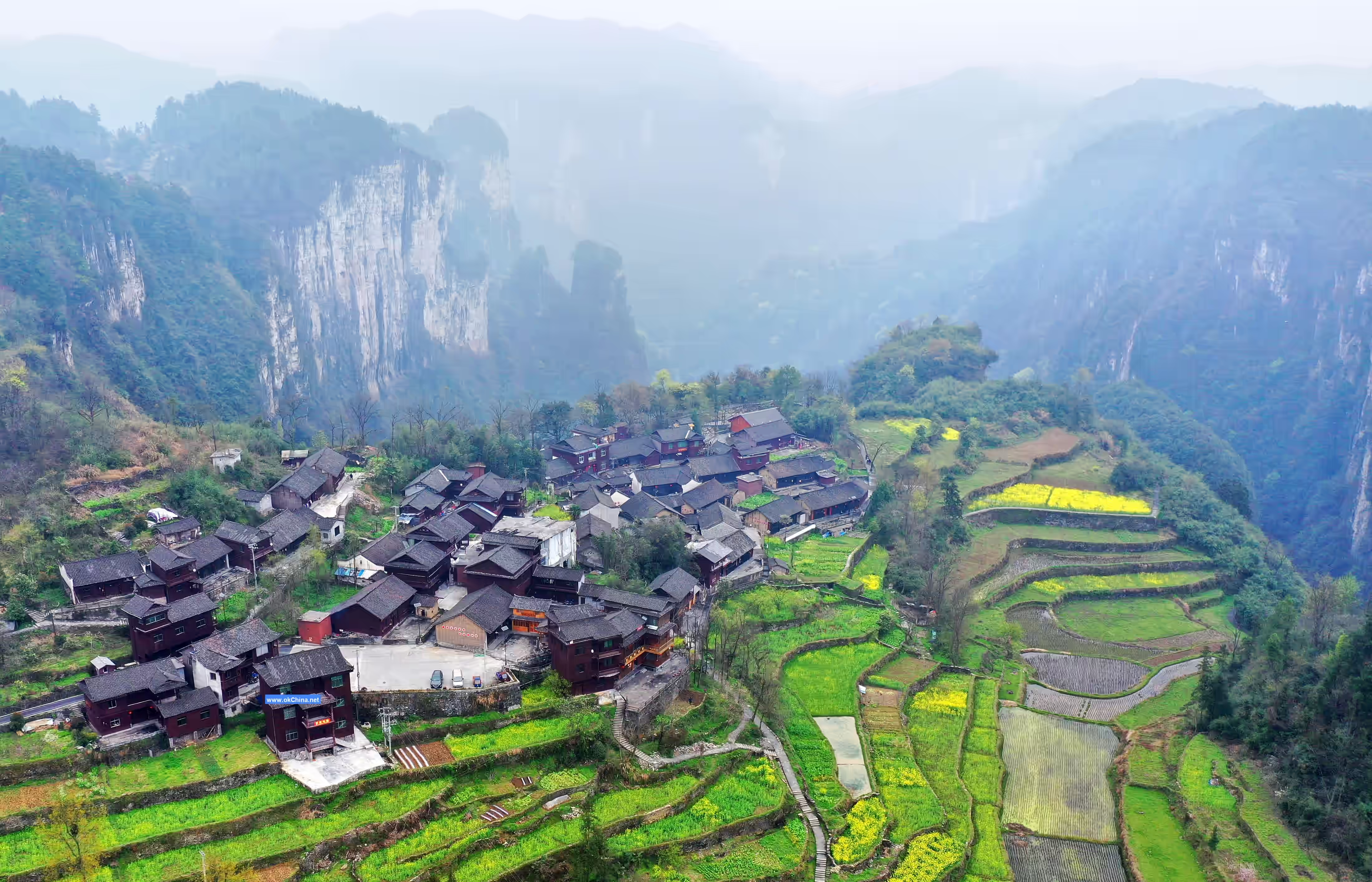
Zhuzi Village is built according to local conditions. The dwellings are mainly divided into three levels following the terrain, creating a well-proportioned and staggered spatial arrangement. The village integrates with the environment, connected by bamboo-fenced paths leading to every household, reflecting the characteristics of Zhuzi Village and constituting an authentic Miao hometown.
3.4.6 Dangrong Village
The dwellings in Dangrong Village are all built following the mountain's contours, with orderly planning and reasonable layout. The street and alley spaces are arranged顺势 according to the地形, ascending with the slope. Bluestone-paved streets and alleys, stilted buildings, and vegetation together form a harmonious and traditionally meaningful street space.
3.4.7 Lizhi (Pear) Village
Lizhi Village grows naturally following the mountain's contours. The dwellings are layered, staggered, and offer open视野. The architecture blends with the environment, creating a serene意境 whether viewed from afar or up close. Winding rural paths connect everything,构成 an authentic Miao hometown.
4. Development History
1987: The Aizhai Wonders Tourist Area officially opened to the public.
May 2013: The sightseeing platform of the Aizhai Bridge within the Aizhai Wonders Tourist Area began trial operation.
Since 2015: The total investment in construction projects for the Aizhai Wonders Tourist Area reached 450 million yuan, with an average annual investment exceeding 70 million yuan. The glass walkway, scenic公路, the tourist area's green transportation system, and慢行 system were successively completed or upgraded. Over 2,000 parking spaces were built and put into use. Shuttle buses and electric carts interweave to provide tourists with a safe and comfortable游览体验. The external transportation network for the scenic area has become increasingly健全, greatly enhancing the tourist area's accessibility. The total number of厕所 in the Aizhai Bridge and Dehang Grand Canyon scenic areas reached 446. The total area of tourist centers reached 3,785 square meters, with standardized facilities such as medical rooms, complaint rooms, and tourist shops. The design, production, and installation of 1,200 trash bins were completed, and over 2,200 signs and指示牌 in Chinese, English, and Korean were updated or replaced. A smart scenic area command and dispatch center, data center, video surveillance system, etc., were built. Service quality, safety production, etc., achieved standardized management. A team of foreign-language tour guides was established, and professional personnel and equipment for medical care, rescue, security, etc., were fully配备.
Since November 2017: Infrastructure such as water, electricity, and roads in the Shibadong Scenic Area has become increasingly完善. Agritainment (农家乐) has developed rapidly, with both scale and quality提升. Projects like the tourist service center, "Earth Cabin" ("地球仓"), and tourist parking lots have all been put into use.
March 2018: The Aizhai Wonders Tourist Area launched two new products: the "Cliff Walkway" and "Drum Dance Banquet" ("鼓舞伴宴").
April 6, 2022: The tourist service center of the Shibadong Scenic Area officially began operation.
Comments
Post a Comment