Ayi River Scenic Area
1. Introduction
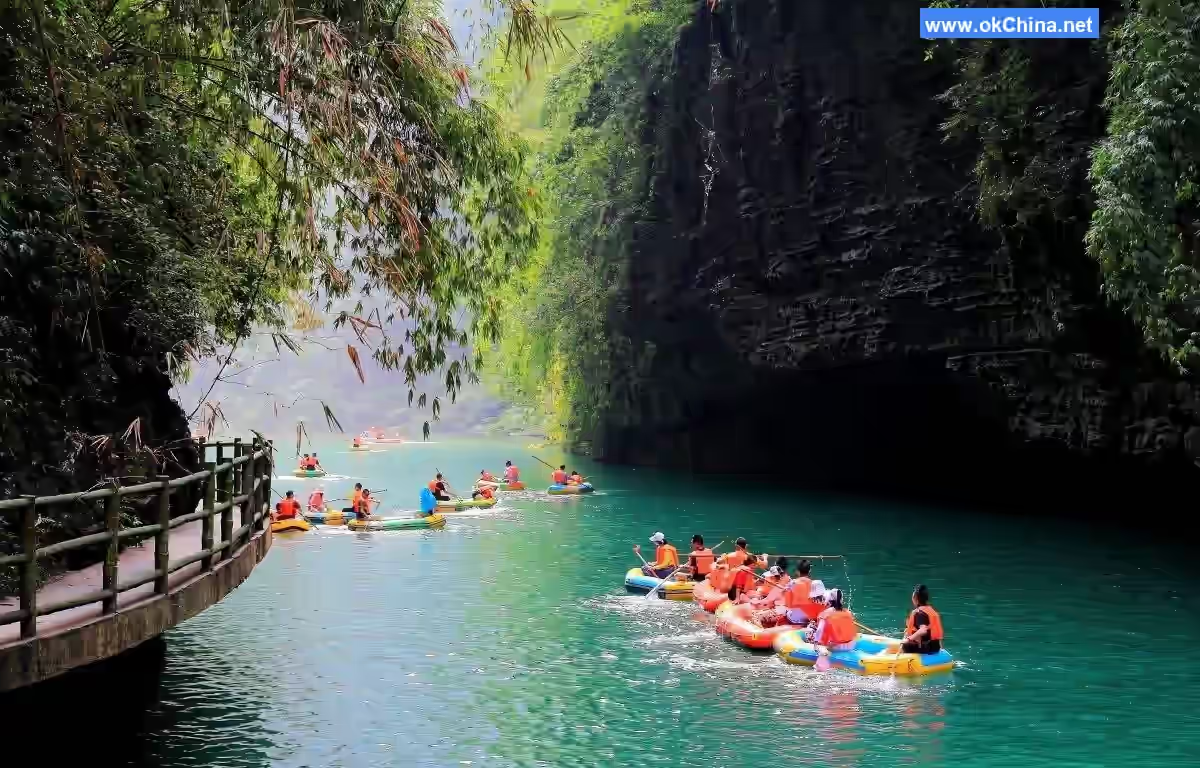
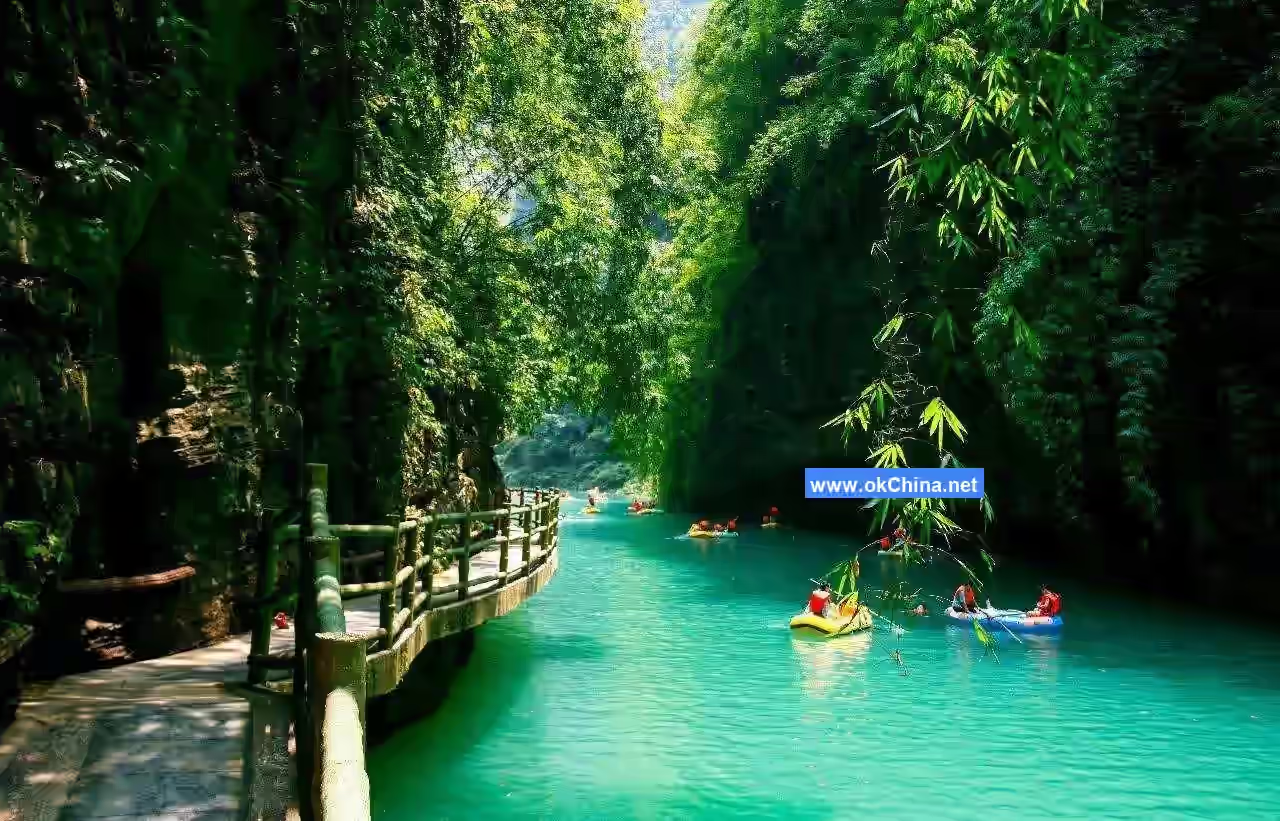
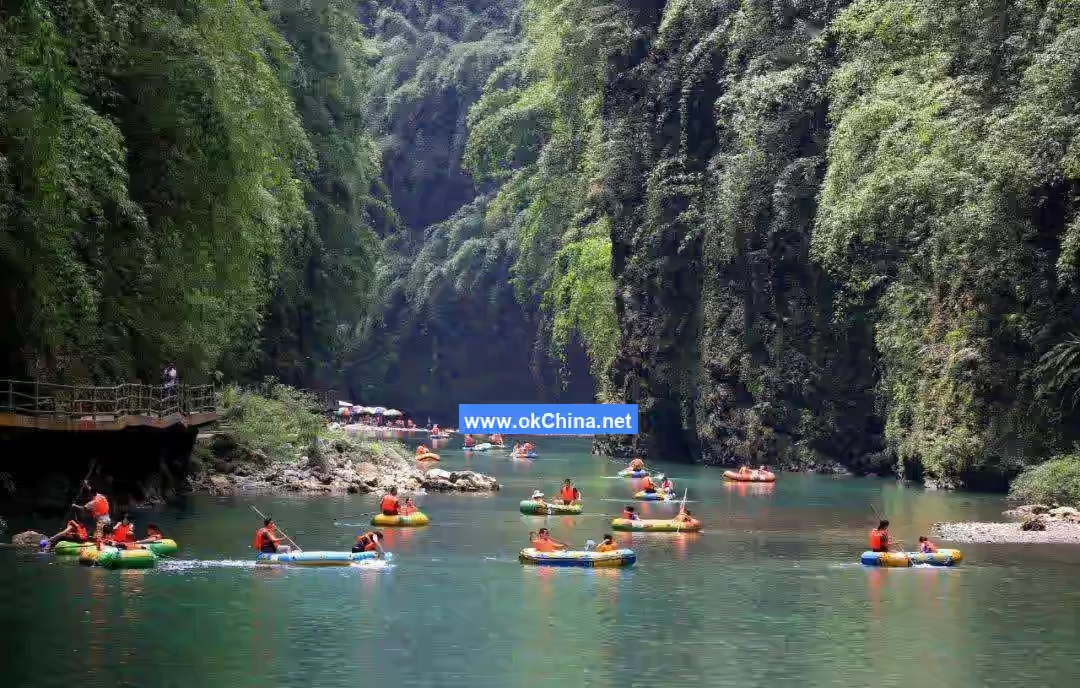
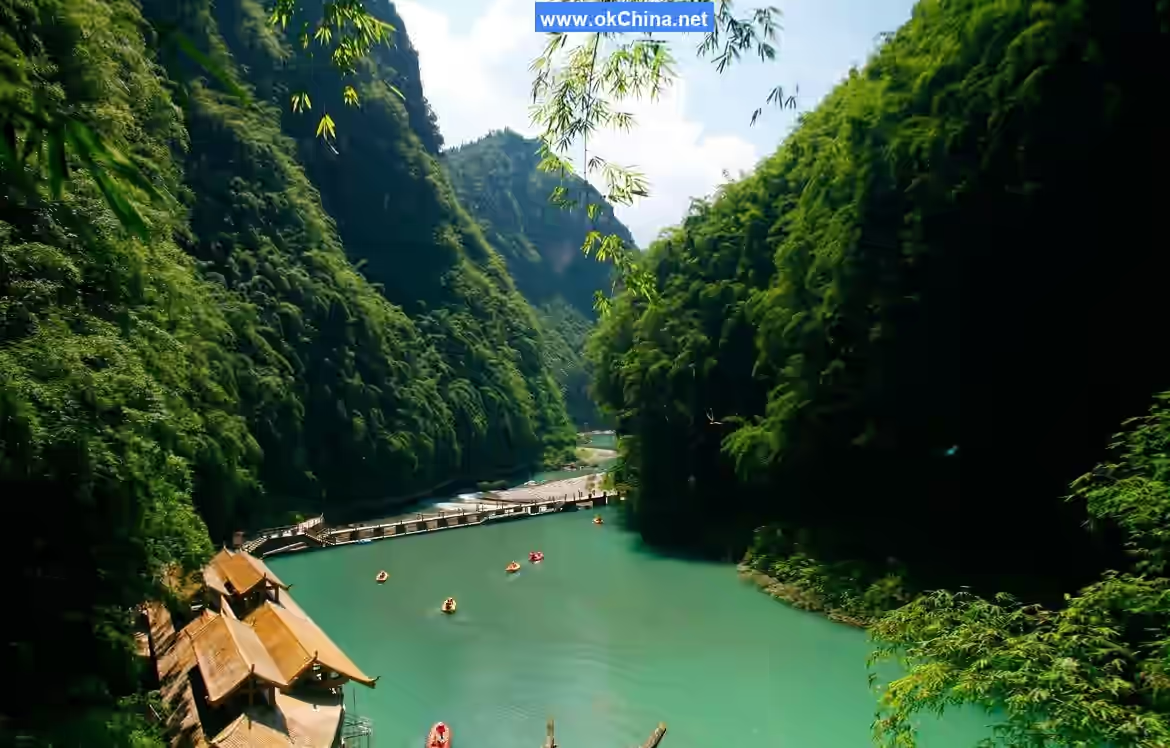
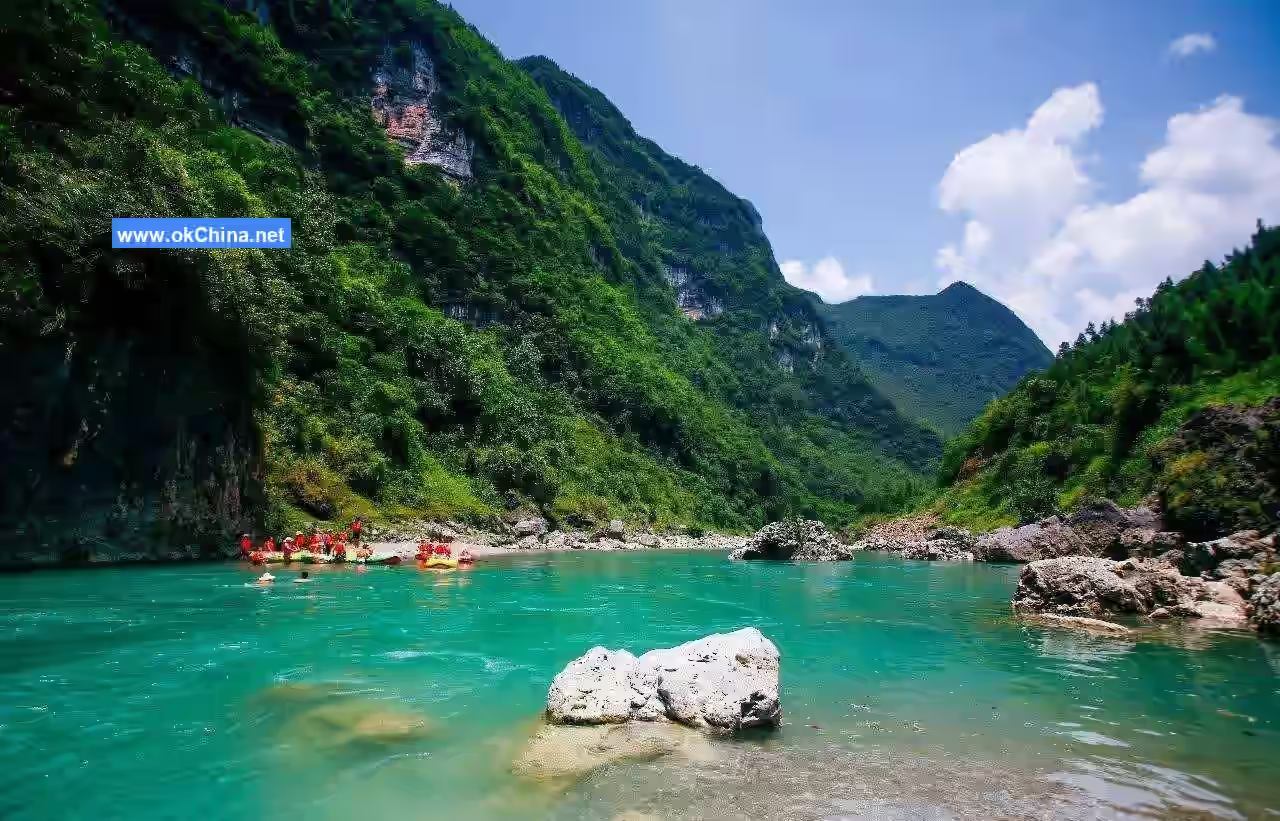
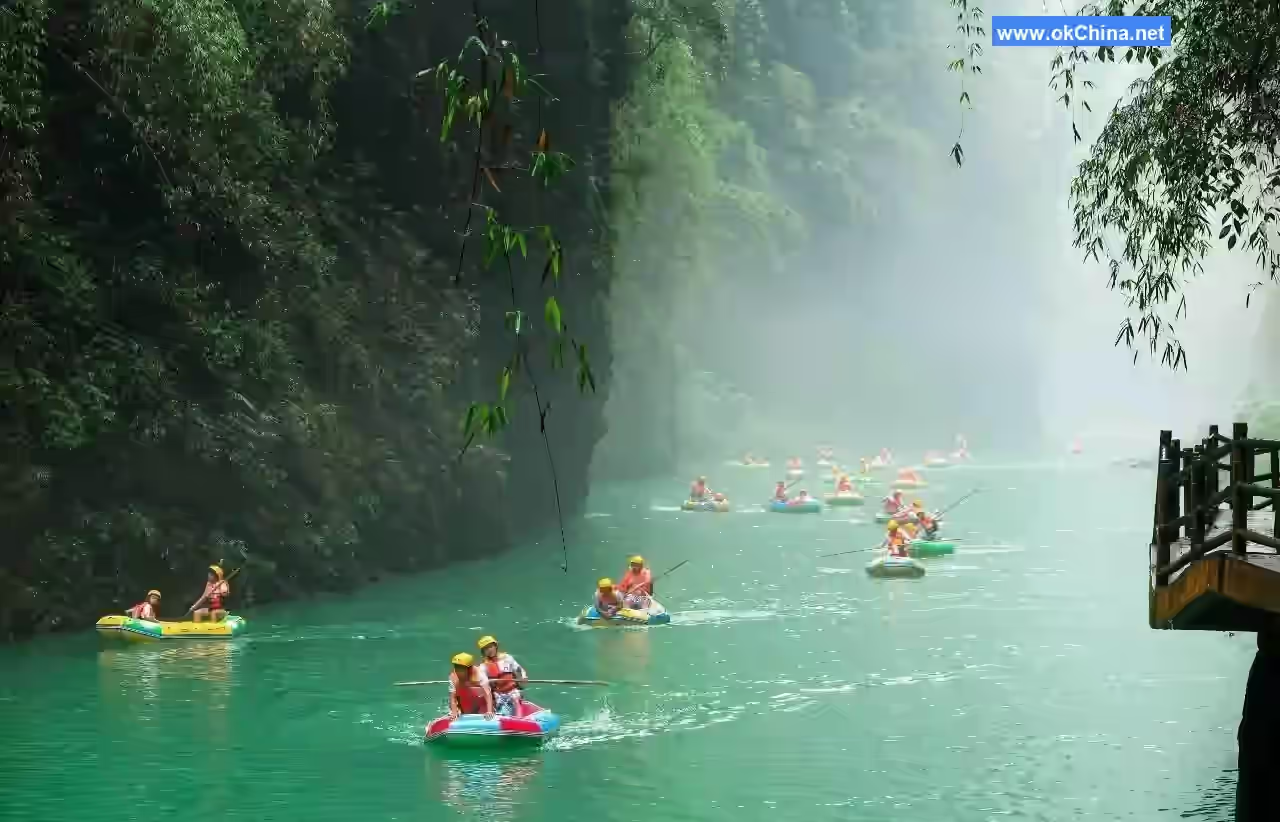
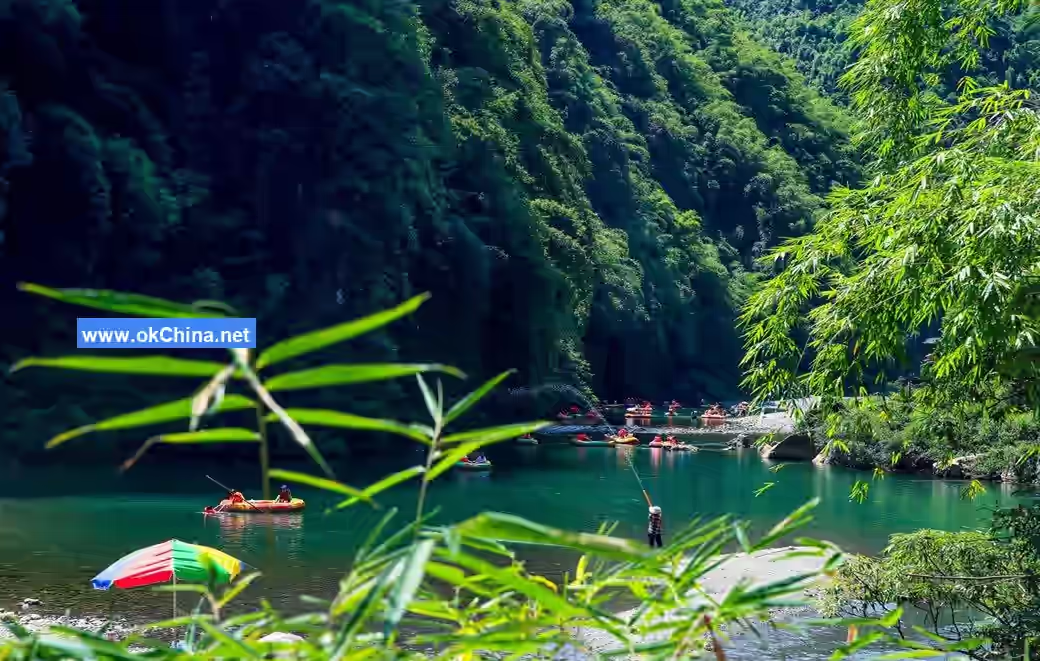
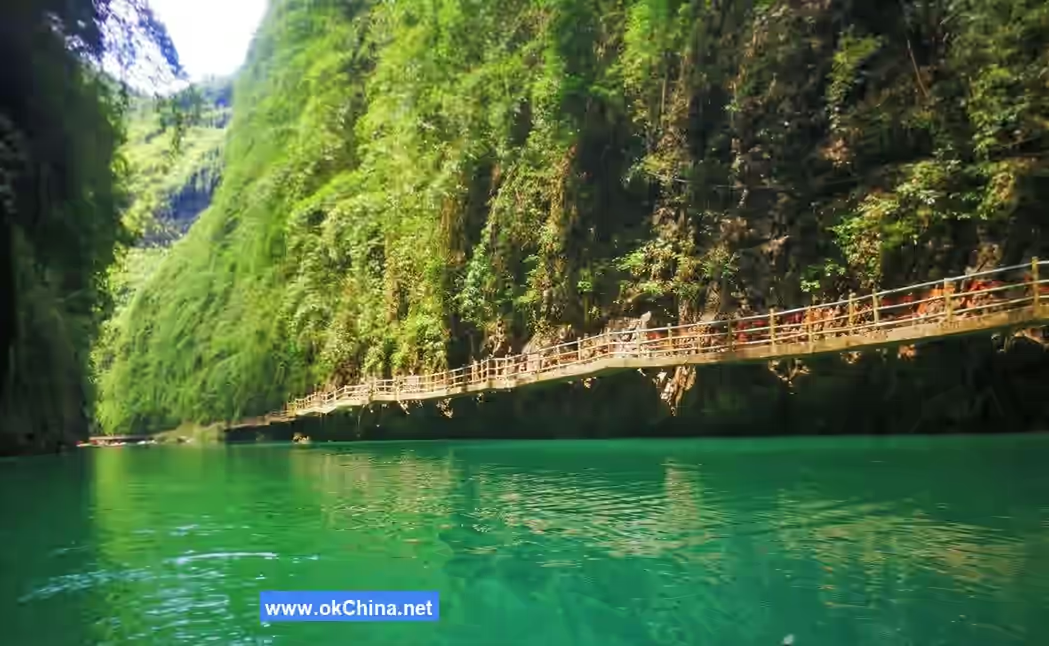
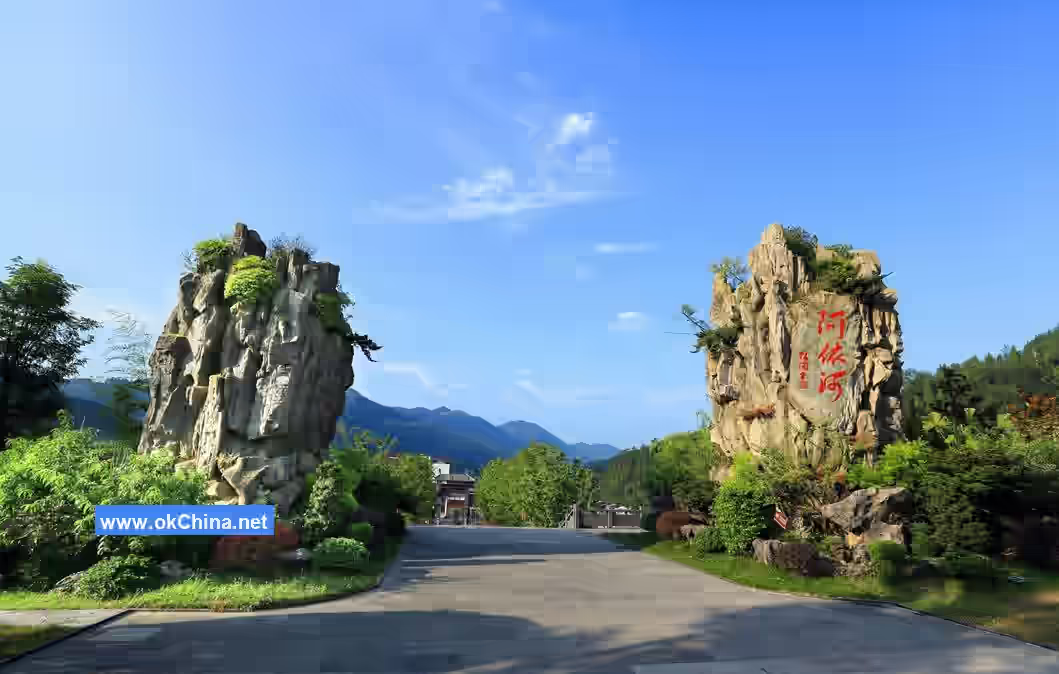
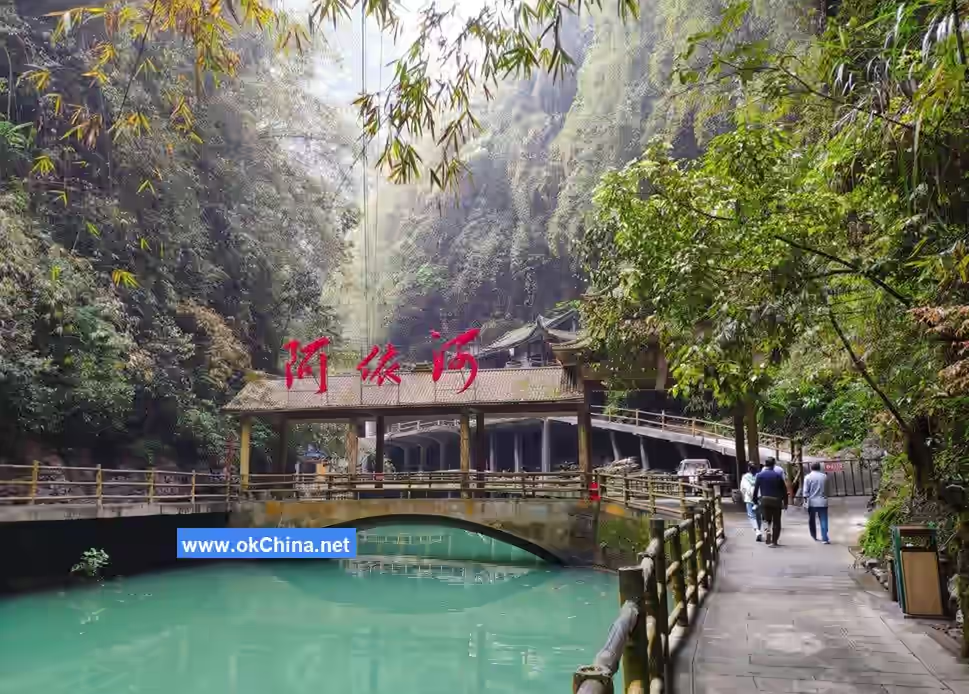
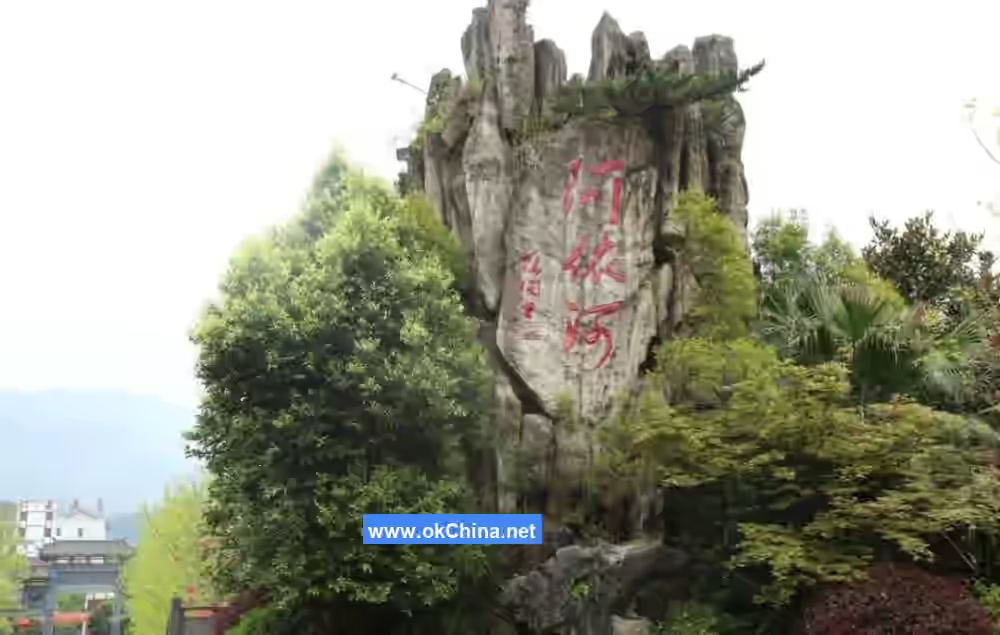
The Ayi River Scenic Area is located in Pengshui Miao and Tujia Autonomous County, Chongqing Municipality. It is a National AAAAA Tourist Attraction and is acclaimed as the top of the "New Twelve Scenic Spots of Bayu". The Miao people refer to kind, beautiful, and intelligent women as "Jiao Ayi," which is how the Ayi River got its name. The scenic area stretches for 21 kilometers, integrating mountains, water, forests, springs, and gorges into one, renowned for its majestic, peculiar, perilous, elegant, and serene natural landscapes. Core attractions include the Qinglong (Azure Dragon) Sky Elevator—Asia's first fully outdoor sightseeing elevator—the Ten-Mile Bamboo Sea, and Qinglong Cave. It also features unique experiential activities like thrilling rafting and bamboo raft singing. The Ayi River is not only a representative of Chongqing's eco-tourism but also attracts visitors with its rich Miao and Tujia ethnic cultures, making it a tourist destination that combines natural beauty with cultural charm.
2. Geographical Environment
2.1 Location and Territory
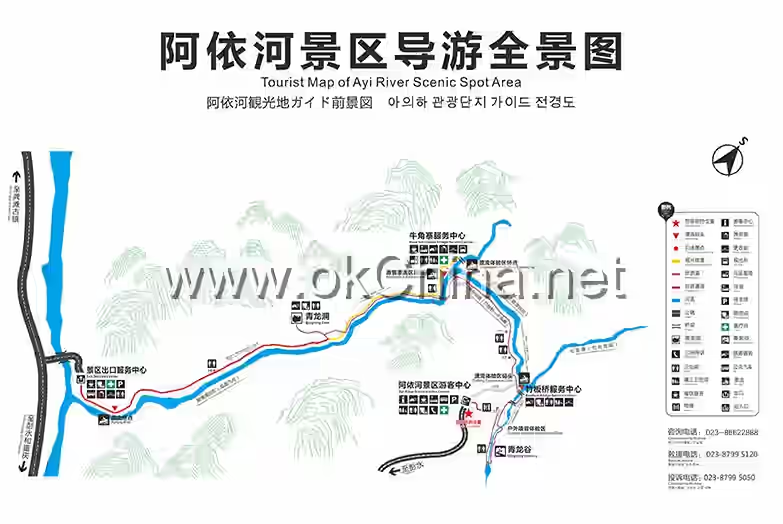
The Ayi River Scenic Area is located at No. 500, Group 6, Ayi River Community, Shaoqing Subdistrict, Pengshui County, Chongqing. It lies deep within the Dalou Mountains in the central-southwest part of Pengshui, belonging to the middle and lower reaches of the Changxi River, spanning across four townships/subdistricts: Huangjia, Langxi, Shaoqing, and Wanzu. Its geographical coordinates are between 107°55′45″E to 108°11′15″E and 28°52′45″N to 29°12′35″N. The Zhubanqiao Dock sits at an altitude of 330 meters, Niujiao Village at 292.8 meters, and the Changxi River Estuary at 211.3 meters. The reception center (Yantouba) is 18 kilometers from the county town, and the exit is 10 kilometers away. The area is connected to the county town by the Baotou–Maoming Expressway (G65), the Chongqing–Huaihua Railway, National Highway 319, and provincial secondary roads such as Pengshi, Pengyou, and Pengwu.
2.2 Geology and Landforms
The area within Ayi River belongs to the Mowei Mountain Range, an extension of the Dalou Mountains, primarily composed of Mesozoic limestone, dolomite, argillaceous limestone, and shale, forming a valley and hilly landscape. Around 6 trillion years ago, crustal movements, intense internal plate collisions, and horizontal compression caused the sedimentary rocks in this region to bend and form folds. Within this fold structure, "synclines form mountains and anticlines form valleys," collectively creating the beautiful gorge scenery of Ayi River's green mountains and clear waters.
2.3 Hydrological Characteristics
The Ayi River originates from Lengjiaba in Fenshui Town, Wuchuan Gelao and Miao Autonomous County, Guizhou Province, and is a mountain stream river. During the Tang Dynasty, when Duru County was established from part of Yinglong County (governed at present-day Longyangchang, Runxi Township, Pengshui), the river was named Durushui. It flows northeast through Changba and Ma'nao Mountain into Pengshui territory, then passes Changqiba, Zhouzituo, and Sanjiangkou, finally converging into the Wu River about 1 kilometer downstream of the Pengshui Hydropower Station dam on the Wu River. Its length within the area is 36.6 kilometers. The river channel is a typical box-shaped valley, with the gorge deeply cut by 80–200 meters. The riverbed is narrow, only 10–30 meters wide in the dry season, with numerous reefs. Within the scenic area, tributaries like the Muzi Stream and Langxi River join, and there are many cave springs along the banks replenishing the river, resulting in cool, clear water. The multi-year average flow rate is 14.94 cubic meters per second, with an average annual runoff of 4.72 cubic meters and an average gradient of 5‰, making the flow relatively swift.
2.4 Climate Features
The Ayi River Scenic Area belongs to the central subtropical humid monsoon zone. The annual average temperature is about 17°C, with annual rainfall between 1200–1300 mm and a frost-free period of 290 days. The climate is mild, humid, and cool throughout the four seasons. Ecological protection is excellent, with no industrial pollution within the area. Agricultural and rural non-point source pollution is well-controlled and managed properly. There are 365 days of excellent air quality annually, and water quality remains at an excellent level or above all year round.
3. Main Attractions
3.1 Natural Landscapes
3.1.1 Qinglong Valley
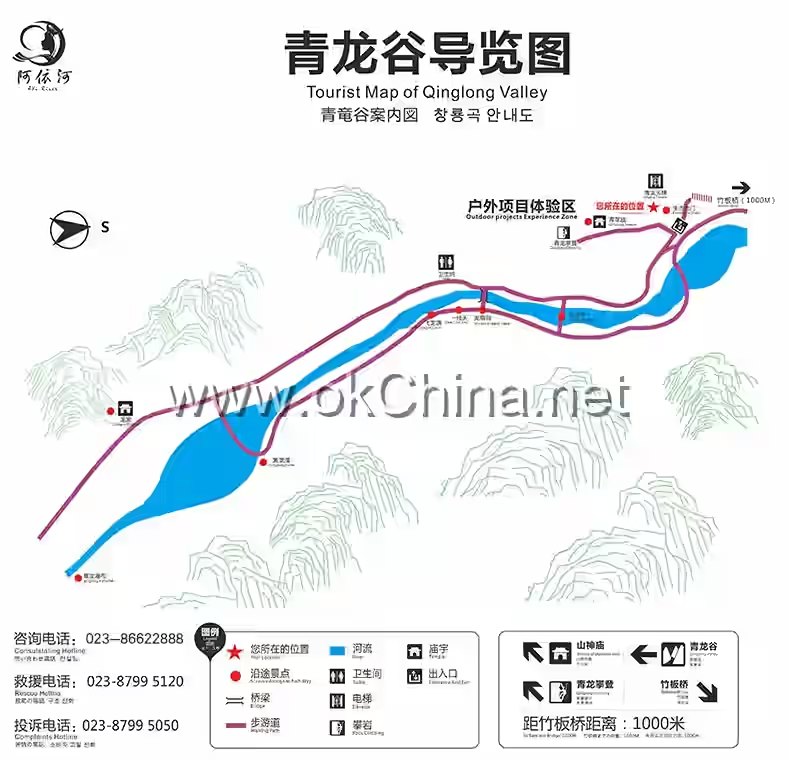
Qinglong Valley is located 18 kilometers southwest of Pengshui County town, beside the Ayi River. The gorge is 300 meters high and 1600 meters long, winding and secluded like a giant azure dragon. At the gorge entrance stand two sculpted azure dragons called "Twin Dragons Welcoming Guests"—one is a relief on the cliff wall with a dancing body and outstretched claws; the other is a coiled dragon sculpture seeming to soar into the sky. The mountains on both sides of the valley meander and intertwine, while streams and rivers wind through caves within the gorge, presenting a classic gorge and river landscape. Both banks within the valley are covered with continuous verdant bamboo and shaded by green trees. Scenic spots inside the gorge include "A Thread of Sky" and "Black Cave."
3.1.2 Shaizi Rock (Sieve Rock)
Shaizi Rock is located 200 meters from the scenic area's sightseeing elevator towards Zhubanqiao. The rock is 20 meters high, covering an area of about 30 square meters, and is a small karst landform. It is named "Sieve Rock" because its shape resembles a full moon and contains many small holes. A stream from the mountain forest washes over the rock face, and the rock wall filters the mountain spring water like a rural sieve used for grains, dispersing it. The sieved water is clear and bright, flowing out from various holes at the bottom of the "sieve" and rushing down. Below the sieve, unique stalagmites and stone pillars have formed due to thousands of years of water erosion.
3.1.3 Qilitang Gorge
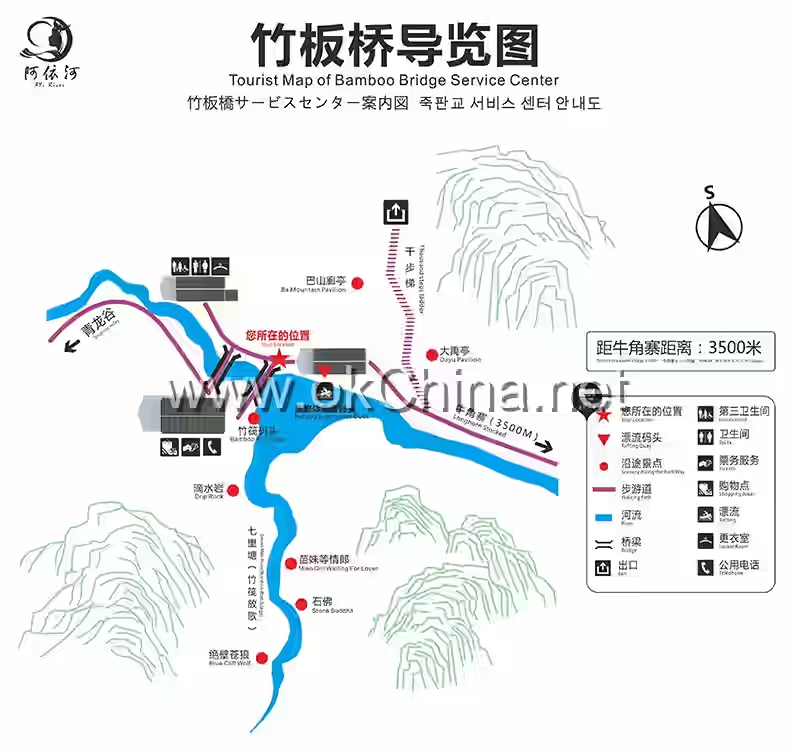
Qilitang Gorge is 3.5 kilometers long. Due to water erosion, the banks of the gorge feature distinctively layered stepped rock formations. Surrounded by emerald bamboo and with serene, clear waters, the gorge boasts peculiar peaks, strange rocks, and ancient stalagmites that seem to prop up the sky. Various monkey groups play on both banks, and the caves within are filled with stalactites of diverse shapes. Attractions in the gorge include High Platform Lion Dance, Water Curtain Cave, Monkeys Fishing for the Moon, Miao Maiden Waiting for Her Lover, Twin Elephants Drinking Water, Lone Wolf on the Precipice, and A Thread of Sky.
3.1.4 Qinglong Cave
Qinglong Cave is located 3.3 kilometers downstream from Niujiao Village. The cave loop is 1590 meters long with upper and lower branch caves. The temperature inside is pleasant, maintaining a constant 16°C year-round. Formed over hundreds of thousands of years by groundwater dissolving limestone, Qinglong Cave is rich in deposits, densely populated with stalactites, cave flowers, stalagmites, stone curtains, stone flags, and rimstone dams. Along the route are attractions such as the White Jade Guanyin Statue, Nine-Dragon Gate, Dragon Pool, Dragon Maiden's Colorful Canopy, Dragon King Playing with Water, Jade Pillar Holding Up the Sky, and Lotus Blooms with Every Step, integrated with features like glass walkways and laser lighting to create a fantastical cave landscape. At the end of the cave is a 200-meter-high silvery-white waterfall named "Flying Waterfall in the Cave." The waterfall's walls form a cone shape pointing towards the high dome, roaring like thunder, creating a magnificent and spectacular sight.
3.1.5 Baibao Cave (Treasure Cave)
Baibao Cave is located beside Zhubanqiao Dock. The cave is warm in winter and cool in summer, with cool, sweet-tasting stream water, and is home to many protected animals. Legend says that after an immortal petrified in the cave, people came to worship and make wishes. Since people started worshipping, a tree grew at the cave entrance. Whenever a wish was granted, a new branch sprouted. Now, the branches of this large tree have become dense and intertwined.
3.1.6 Yingge Gorge (Parrot Gorge)
Yingge Gorge is located 1.5 kilometers from Zhubanqiao towards Niujiao Village. It is 500 meters long and gets its name because the sound of flowing water resembles the melodious singing of a parrot, especially after water levels rise when the river gurgles and chimes like a parrot's cheerful call. As the Miao people call parrots "Yingge," the gorge was named Yingge Gorge. Both banks of Yingge Gorge are surrounded by emerald bamboo, with high mountains, deep valleys, and continuous sheer cliffs.
3.1.7 Hongqiantang (Rainbow Submerged Pool)
Hongqiantang is located about 2 kilometers from Zhubanqiao towards Niujiao Village. It is 1.5 kilometers long, deep and abundant with fish. It is named Hongqiantang because rainbow bridges often appear here.
3.1.8 A Thread of Sky
This is the narrowest point within the Qilitang sightseeing area, locally known as "A Thread of Sky." Looking up from here on a clear day, the sky appears like a single white thread spun by the Weaving Maid. Legend has it that after Chiyou, the ancestor of the Pengshui Miao people, was defeated in the decisive battle against the Yellow Emperor in the Central Plains, he hid in the Ayi River and entered the underground river of Qilitang. Moved by the hero's plight, the earth was stirred, and the mountain god opened its mouth, letting the noon sunlight shine into the valley floor to heal Emperor Chiyou.
3.2 Cultural Landscapes
3.2.1 Love Letter Corridor
The Ayi River Love Letter Cultural Corridor is established at the scenic area entrance, stretching 1.5 kilometers. It is China's first love letter corridor. Construction began in 2013, displaying 108 exemplary love letters collected from around the world along the corridor. In 2016, the Love Letter Cultural Corridor was fully completed, sharing love stories while also showcasing Pengshui's local folk customs and the ancient love history of the Miao people.
3.2.2 Qinglong Bridge
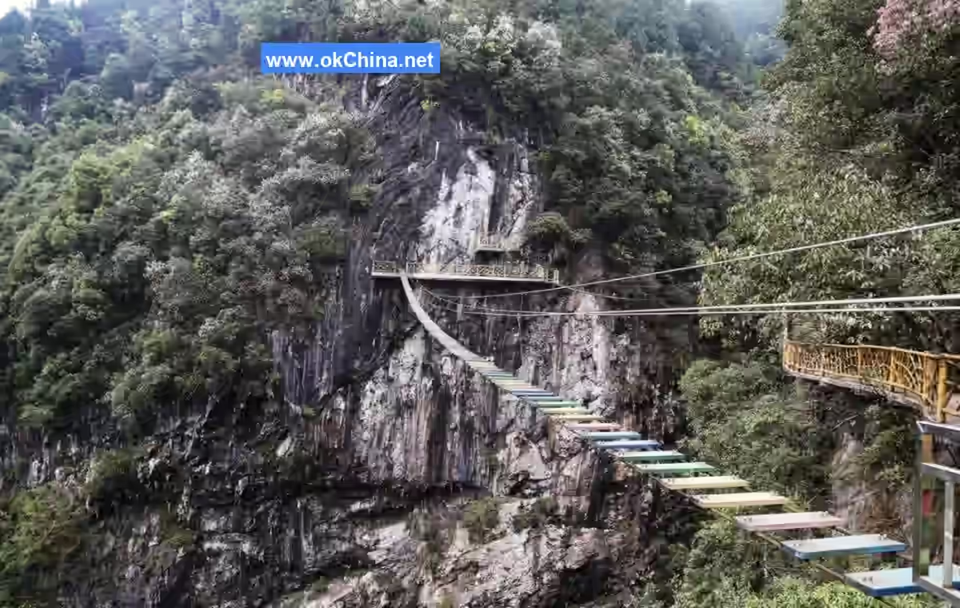
Qinglong Bridge is located within the scenic area's reception center service zone, reachable by a 5-minute walk from the ticket checkpoint. It is an outdoor attraction consisting of an 80-meter-long, 0.8-meter-wide steel wire and wooden plank bridge and a 30-meter-long, 1.5-meter-wide glass walkway, standing 200 meters high. Standing on Qinglong Bridge, one can overlook the entire gorge and experience the thrilling sensation of walking a tightrope.
3.2.3 Qinglong Sky Elevator
The Qinglong Sky Elevator is located next to Qinglong Bridge. With a total height of 180 meters, an operating height of 148.8 meters, and an operating speed of 2.5 meters per second, it is the scenic area's fully outdoor gorge sightseeing elevator, ranking first in height in Asia. It employs two fully imported German three-sided sightseeing elevators running side-by-side independently. Each elevator has a maximum rated capacity of 15 passengers per trip, taking about 1 minute.
3.2.4 Rainbow Stairs
The Rainbow Stairs are located to the left of the Qinglong Sky Elevator. Utilizing the seven colors of the rainbow—red, orange, yellow, green, cyan, blue, and purple—each step has its own color, totaling 169 steps. Ayi River is hailed as a "Love Healing Sanctuary," a place where love grows. The number 1 represents "wholehearted devotion," 6 represents "5+1 is you and me," and 9 represents "everlasting."#### 3.2.5 Thousand-Step Ladder The Thousand-Step Ladder is a riverside walking path from the scenic area entrance to the Ayi River Valley. With a vertical height of 220 meters and a total length of 800 meters, it winds its way along the riverbank. It consists of 1,033 stone steps, hence the name "Thousand-Step Ladder." This ladder was manually carved into the mountainside. Its construction was initiated by local resident Peng Guoliang in the 1920s, and it was later renovated with funds raised by Peng Yunkai in the 1990s.
3.2.6 Bashan Corridor Pavilion
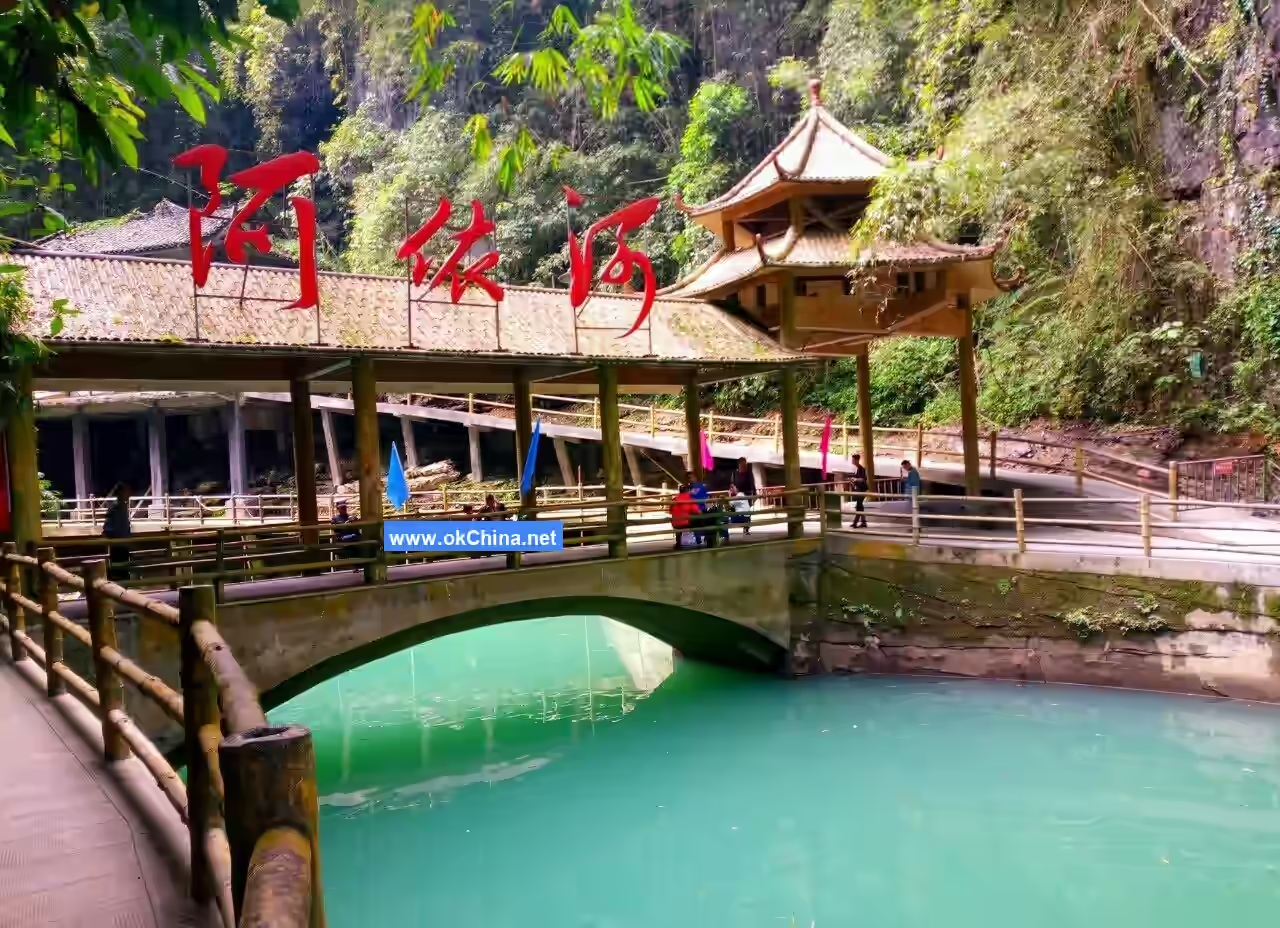
The Bashan Corridor Pavilion is located at the foot of the Thousand-Step Ladder, by the riverside of the Ayi River Valley. The corridor is approximately 300 meters long, with a 20-square-meter hexagonal pavilion at each end. Built against the rock face, the pavilion uses mountain stones as its foundation and logs as its pillars, featuring layered black tiles, presenting a simple and elegant ancient charm. From inside the pavilion, one can overlook the Muzixi Grand Canyon and the mountain scenery opposite. Every morning, the area around the pavilion is enveloped in mist, creating a dreamlike and illusory atmosphere.
3.2.7 Zhuban Bridge
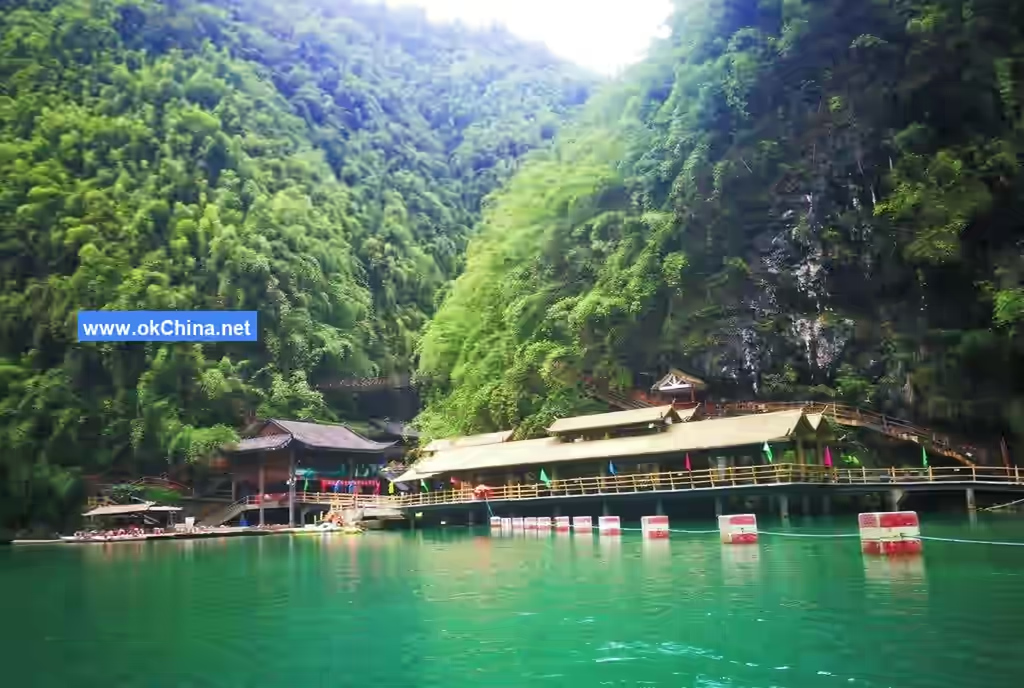
Zhuban Bridge is located 2 kilometers from the scenic area entrance. It takes about 1 hour to walk from the Thousand-Step Ladder to Zhuban Bridge, or 10 minutes by sightseeing elevator. Covering an area of 2,000 square meters, it serves as the common starting point for rafting and bamboo rafting activities in the Ayi River Scenic Area. The name "Zhuban Bridge" originates from the pre-Qin period when local villagers used bamboo to build a bridge for crossing the river. To commemorate the bridge builders, the place was named Zhuban Bridge. Currently, stilted buildings, antique-style corridor workshops, and a rafting launch platform have been constructed here.
3.2.8 Zhuban Bridge Papermaking
Zhuban Bridge papermaking employs ancient techniques. Located in the Zhuban Bridge village of Tianwan Village, Langxi Township, on the right bank terrace of the Ayi River Zhuban Bridge dock, there are 18 households, each with its own workshop. Using ancient methods and bamboo from the river valley, they produce straw paper, earning the village the nickname "the Cai Lun tribe hidden in the mountains." The ancient papermaking technique is a protected intangible cultural heritage project of Chongqing City. Below the Zhuban Bridge dock, on the right bank of the river, there are remnants of papermaking sites dating back to the Qing Dynasty.
3.2.9 Ayi River Community
The Ayi River Community is located in Shaoqing Subdistrict. The main part of the community consists of four sections: the Ayi River Folk Style Town, the Hujiawan Miao Village, the Huangjialing Tourism New Village, and the Yantouba Resettlement New Village, covering an area of approximately 1.5 square kilometers. Villagers provide reception services centered around the scenic area. It is recognized as a National Ethnic Minority Characteristic Village and a National Characteristic Landscape Tourism Village.
3.2.10 Hejiagai Miao Village
Hejiagai Miao Village is located in Group 4 of Tianwan Village, Langxi Township. It is a mountainous ethnic village, approximately 2 kilometers in a straight line from the Ayi River Zhuban Bridge dock. The village is designated as a National Traditional Village, with 33 households and 148 residents, mostly of Miao ethnicity. The forest coverage rate is 70%, with over a hundred ancient trees more than a century old. The village features a viewing square and a leisure square, with 110 wooden houses featuring sloping roofs.
3.2.11 Wachangba Traditional Village
Wachangba Traditional Village is located in Groups 1 and 2 of Liaojiacun Village, Wanzu Town. It consists of three natural settlements distributed along the village road from the mountainside to the foot of the mountain, built against the mountain in a V-shape. The village covers an area of 1.12 square kilometers, with buildings primarily made of wood and tiles. Over 50 traditional buildings remain today, including more than 10 houses over a century old. The Nanmu Garden residence has a history of over 260 years. The village has 43 households and 375 residents, mainly with the surnames Zhou and Huang, with the Zhou family being the majority. All residents belong to the Miao ethnicity.
3.2.12 Niujiao (Ox Horn) Stockade
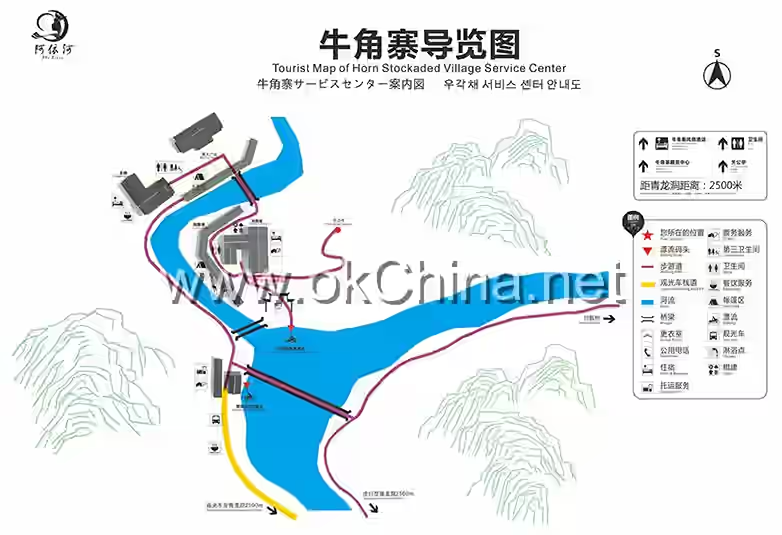
Niujiao Stockade is a transfer station on the rafting section of the Ayi River Scenic Area, located in the middle section of the scenic area. It takes 3 hours to walk from the reception center to Niujiao Stockade. It is named "Niujiao Stockade" due to the naturally formed ox horn pattern on the cliff face. Covering an area of 3,300 square meters, it is a cliffside Miao stockade surrounded by mountains on three sides and facing water on one side. Historically, it was a key passage from Pengshui through Danzikeng and Wangjiashan along the Langxi River into Guizhou. As early as the Ming Dynasty, people set up shops here to receive passing merchants and porters. From the 1950s to the 1970s, it served as the logging station of the Pengshui County Forestry Bureau. After reconstruction and expansion, the stockade now spans both banks of the Langxi River and consists of stilted buildings, a themed hotel, a covered bridge, a love corridor, and a monkey play area. It is a characteristic mountain stockade integrating leisure, entertainment, sightseeing, and accommodation. Nestled deep in the valley and living by the water, the stockade is very tranquil, and macaques often enter to play.
3.2.13 Reception Center Folk Style Town
The Reception Center Folk Style Town is located at the scenic area entrance. Passing through this town leads to the tourist reception center. The town covers an area of 140,000 square meters, primarily featuring Miao and Tujia architecture, forming an antique-style architectural complex of Han and Tang dynasty-inspired Miao and Tujia folk houses. The commercial street has 56 shops, with various businesses already operating, mainly offering specialty catering, tourist souvenirs, local specialties, and casual clothing.
3.2.14 Sanjiangkou Power Station
Sanjiangkou Power Station is located 1.5 kilometers from Niujiao Stockade towards the scenic area exit. It is a small power station within the scenic area, built in 1970, covering an area of 200 square meters. After renovation by the scenic area, the station's installed capacity reached 1,500 kilowatts, primarily supplying electricity for the daily needs of Niujiao Stockade. Viewed from the side of the power station, the water flow resembles a waterfall, pouring out rapidly and creating a magnificent spectacle.
4. Folk Culture
4.1 Miao Customs and Traditions
The Ayi River Scenic Area is a Miao ethnic聚居区, with the Miao population accounting for about 60%. They are mainly descendants of the Chiyou Jiuli tribe, belonging to the western Hunan branch, and primarily consist of the Hua Miao subgroup. They live in stilted houses, sit around fire pits, wear Miao clothing, practice Miao etiquette, sing Miao songs, and dance Miao dances. They are skilled in Miao embroidery and silver ornament making, with their elaborate attire被誉为穿戴在身上的历史和艺术品 (renowned as history and art worn on the body). They are particularly adept at singing and dancing. For weddings, there are "crying wedding songs"; for funerals, there are "filial piety songs"; and love songs and mountain songs, represented by "Jiao Ayi," are especially distinctive. They enjoy sour and spicy foods, and stewed cured meat, homemade tofu, and glutinous rice cakes are essential for entertaining guests. Customs include the "pole jumping" on the third day of the third lunar month and outings on the eighth day of the fourth lunar month, which have evolved into the Flower Mountain Festival and the Chiyou Sacrifice Ceremony.
4.2 Spring Outing and Antiphonal Singing
The eighth day of the fourth lunar month is the Miao Spring Outing Festival, also traditionally believed to be Chiyou's birthday. On this day, young men and women go out for a "spring outing" to the mountaintops to sing "antiphonal songs" (pan'ge). "Antiphonal singing" is an ancient form of call-and-response singing through which Miao youth express their feelings and showcase their talents. It has now become a folk tourism experience activity in the Ayi River area. Every year between March and April, as nature revives and spring flowers bloom, people enjoying spring outings in the Ayi River Scenic Area hold grand antiphonal singing activities around the Zhuban Bridge area.
4.3 Bamboo Shoot Harvesting Custom
The banks of the Ayi River are abundant with bamboo, featuring six or seven different species, primarily慈竹 (ci zhu, a type of bamboo), covering an area of over 133 hectares. The bamboo grows entirely on steep cliffs and in the poor soil of rock crevices, lush green and full of vitality. In the past, local villagers would worship the mountain god before harvesting bamboo shoots and sing mountain songs during breaks. The bamboo shoot harvesting songs are highly distinctive, featuring male-female duets or a lead singer with a chorus. The lyrics are often improvised, frequently expressing aspirations for a better life and the pursuit of sweet love.
4.4 Drinking Oil Tea
Residents of the Ayi River area are fond of drinking oil tea. To make oil tea, cured lard is melted in a pot until fragrant, then tea leaves are added and stir-fried. A small amount of water and salt are added, the lid is covered, and it is simmered over low heat until the tea leaves become soft. Then, a wooden ladle is used to continuously pound and mash the tea leaves into a paste. For immediate consumption, water is added and boiled for a short while. If not for immediate use, the tea paste can be bottled for later. When brewing oil tea,阴米 (yin mi, a type of processed rice) and eggs are often added. Oil tea has an invigorating effect and is commonly called "vigor soup." The Miao people in the Ayi River mountains treat guests with oil tea, considering it a gesture of high respect.
4.5 Dragon Boat Festival
The Miao people refer to the "Dragon Boat Festival" as "Guo Duan Yang." In the past, the people around Ayi River were mostly fishermen living off the water and placed great importance on commemorating Qu Yuan. Every Dragon Boat Festival, households hang calamus and mugwort, called "calamus swords and mugwort tigers." Customs include eating zongzi (sticky rice dumplings), gathering mugwort, and drinking realgar wine. In some years, dragon boat races are organized, creating a lively and bustling atmosphere.
Comments
Post a Comment