
Ami Dongsuo Scenic Area in Haibei Prefecture
I. Introduction
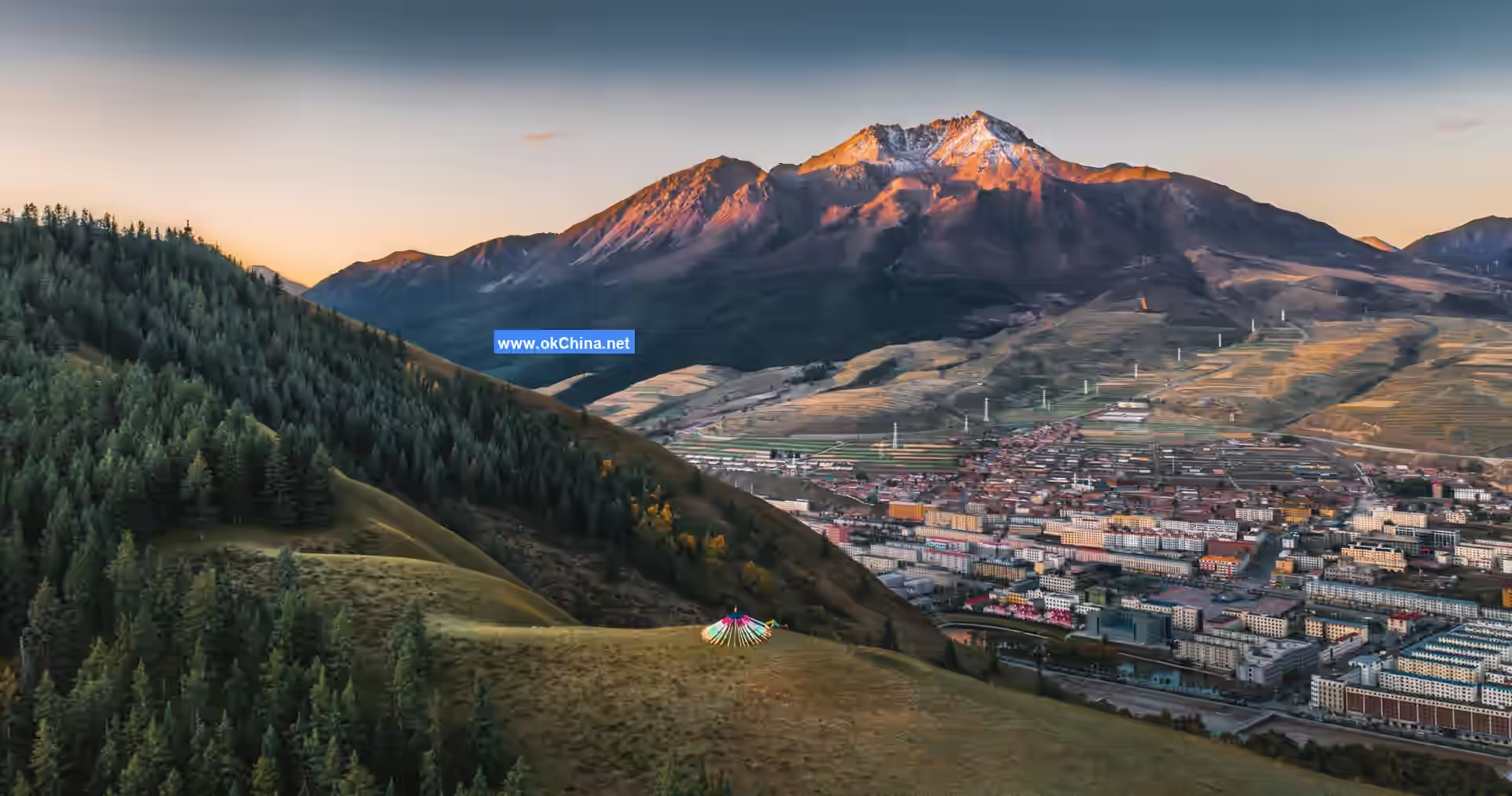
The Ami Dongsuo Scenic Area in Haibei Prefecture, abbreviated as the Ami Dongsuo Scenic Area, is located in Qilian County, Haibei Tibetan Autonomous Prefecture, Qinghai Province. "Ami Dongsuo" is a Tibetan term meaning "Thousand-Soldier Sentry Post," commonly known as Niuxin Mountain (Ox Heart Mountain). In Mongolian, it is called "Naiman Erdeni," meaning "Eight Treasures Mountain." According to local lore, the surrounding terrain of Ami Dongsuo resembles the Eight Auspicious Symbols. Tibetan, Mongolian, Yugur, and other ethnic groups residing in the Qilian region who practice Tibetan Buddhism revere Ami Dongsuo as the King of Mountains in Qilian.
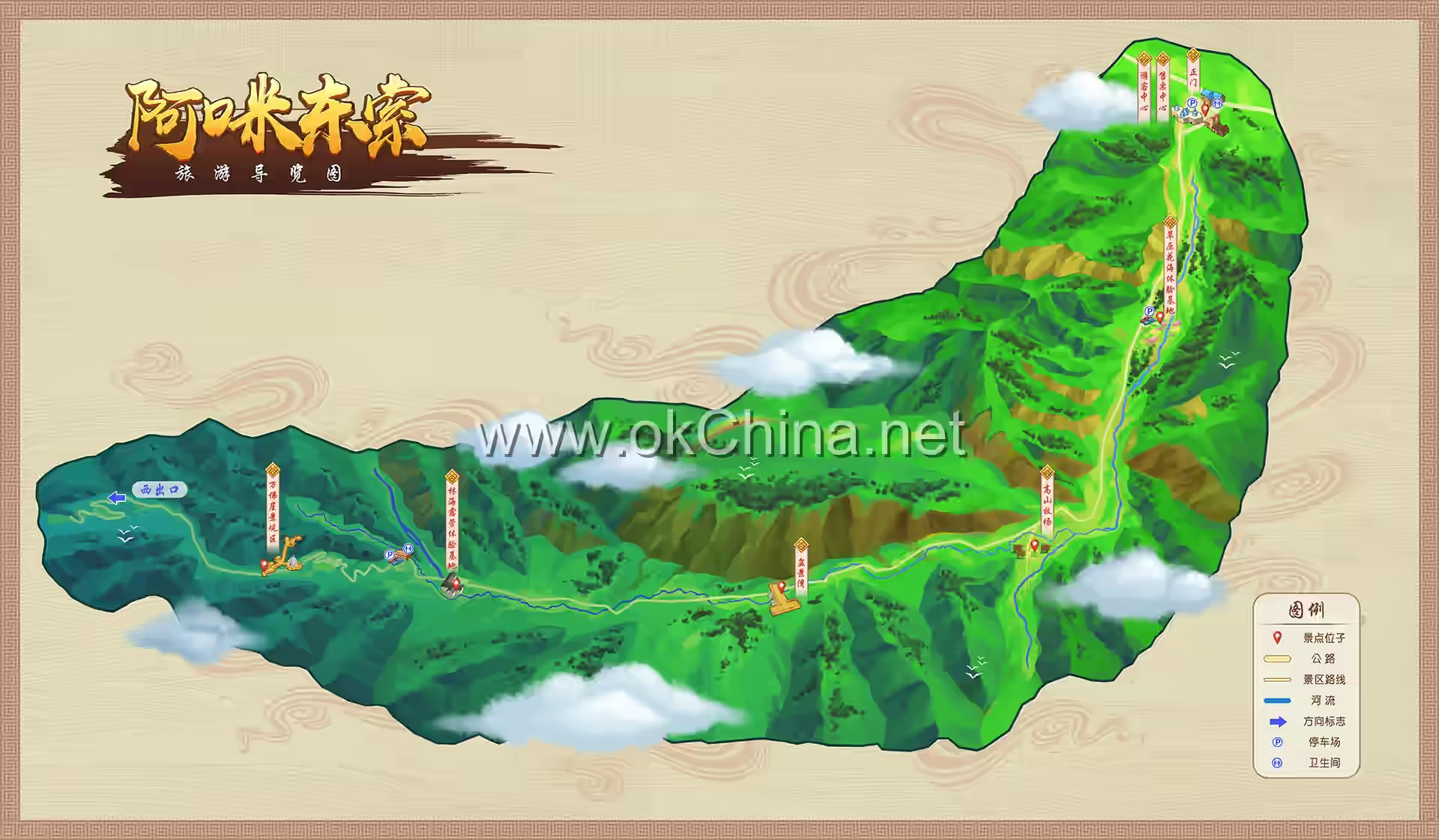
The scenic area primarily consists of viewing spots such as the highland pasture, grassland flower sea experience base, forest sea camping experience base, Bonsai Bay, Wanfo Cliff (Ten Thousand Buddha Cliff), and Prayer Flag Platform. Activities like sketching, hiking, camping, exploration, wildlife observation, and ecological education can be conducted here, making it an original ecological highland valley experience destination. The scenic area boasts pleasant scenery, cool climate, babbling streams, misty clouds, lush pines and cypresses, verdant fields, abundant wildlife, and well-preserved primitive ecology, making it a natural, original ecological tourism paradise.
II. Location and Layout
Geographical Location
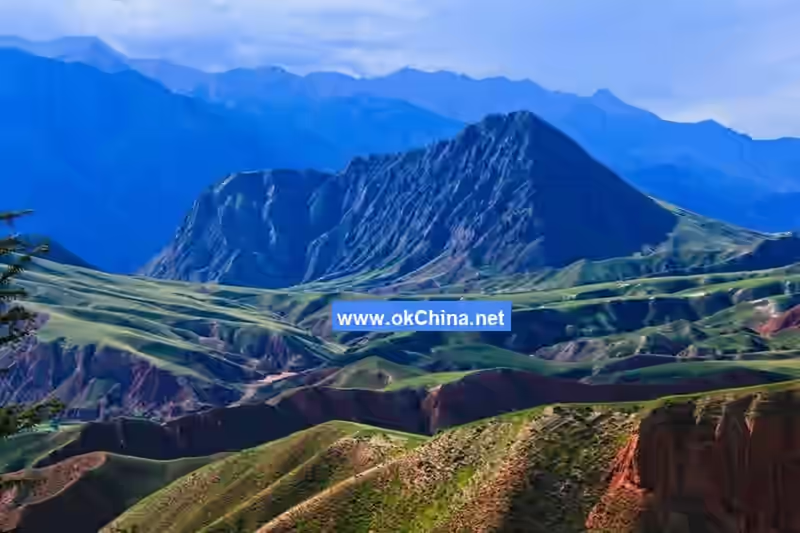
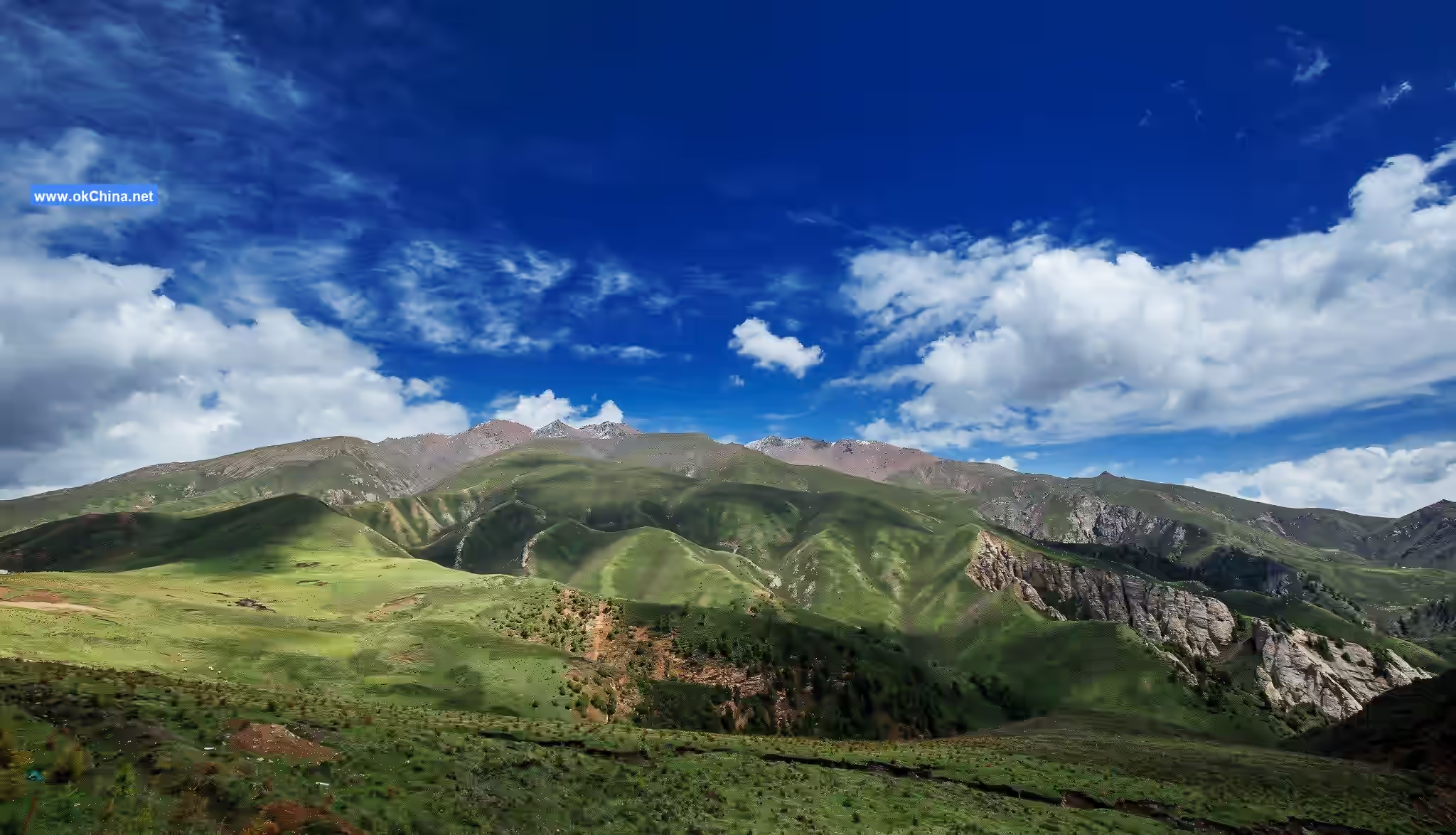
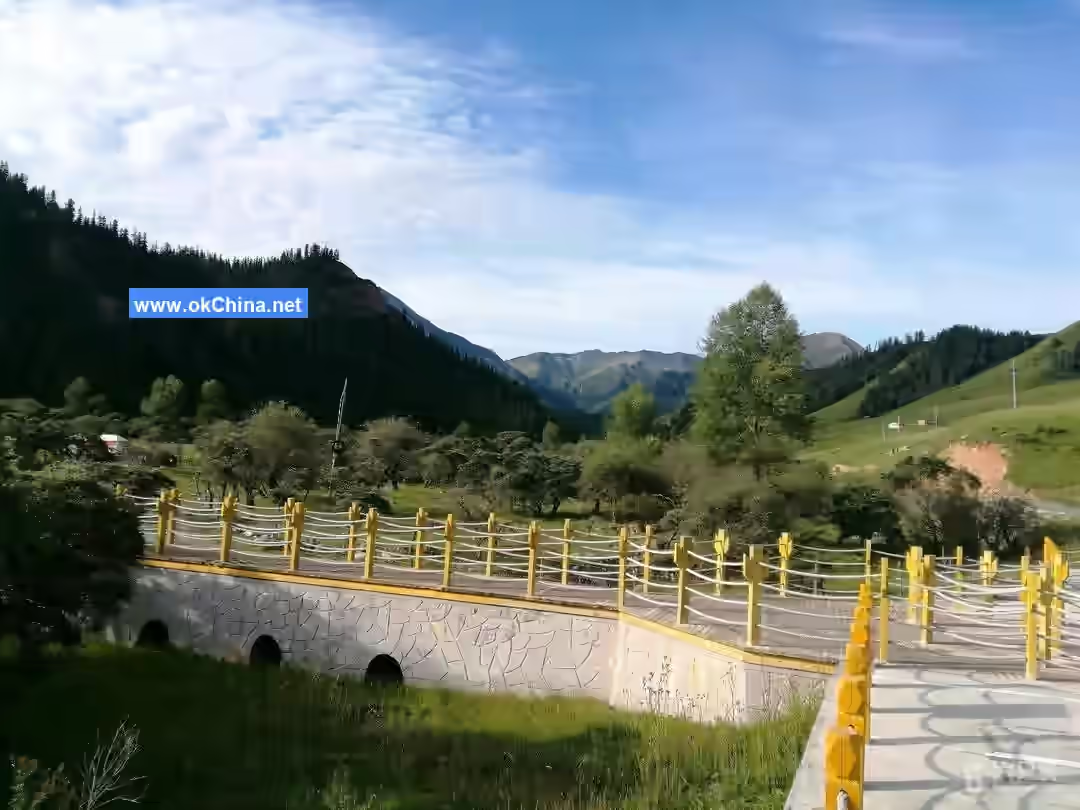
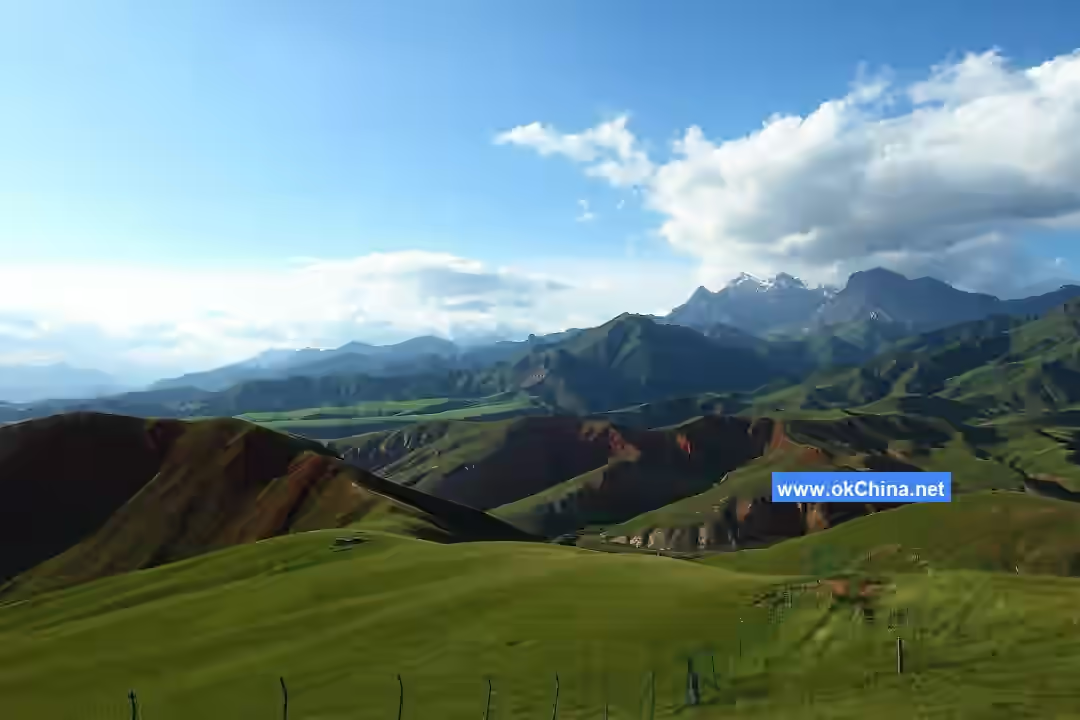
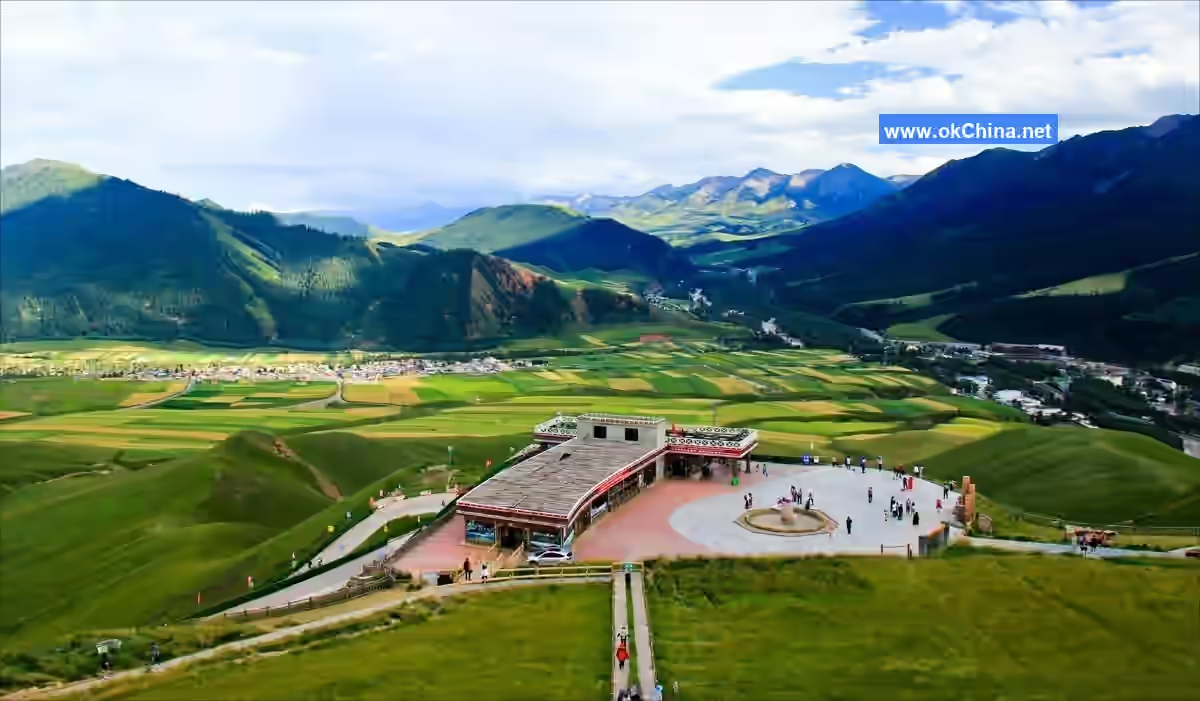
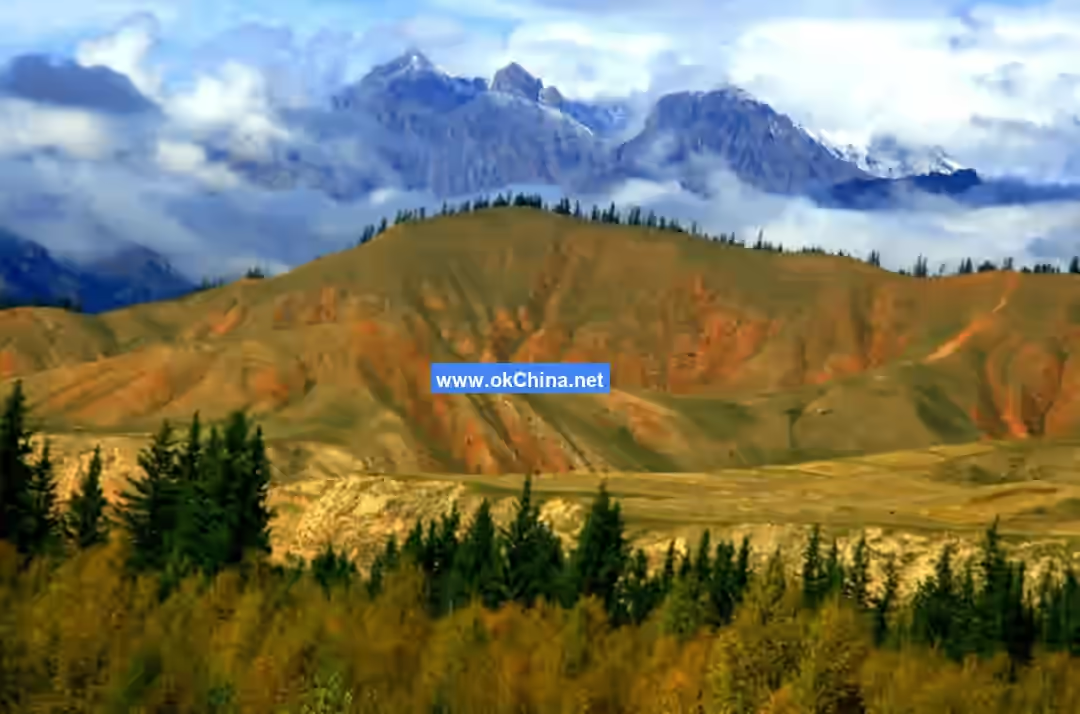
The Ami Dongsuo Scenic Area is situated within Qilian County, Haibei Tibetan Autonomous Prefecture, Qinghai Province, approximately 9 kilometers from Qilian County town, at an altitude ranging from 2,800 to 3,500 meters. Located in the middle section of the Qilian Mountains, it comprises multiple northwest-southeast trending parallel mountain ranges and broad valleys. The tourism area integrates snow-capped mountains, canyons, Danxia landforms, stone forests, grasslands, forest seas, farmland, and villages, making it a typical highland ecological tourism destination.
Climatic Features
The Ami Dongsuo Scenic Area experiences a plateau continental climate characterized by low temperatures, significant diurnal temperature variations, low and concentrated rainfall, long sunshine hours, and strong solar radiation. Winters are severely cold and long, while summers are cool and short.
III. Famous Attractions
Ami Dongsuo Mountain
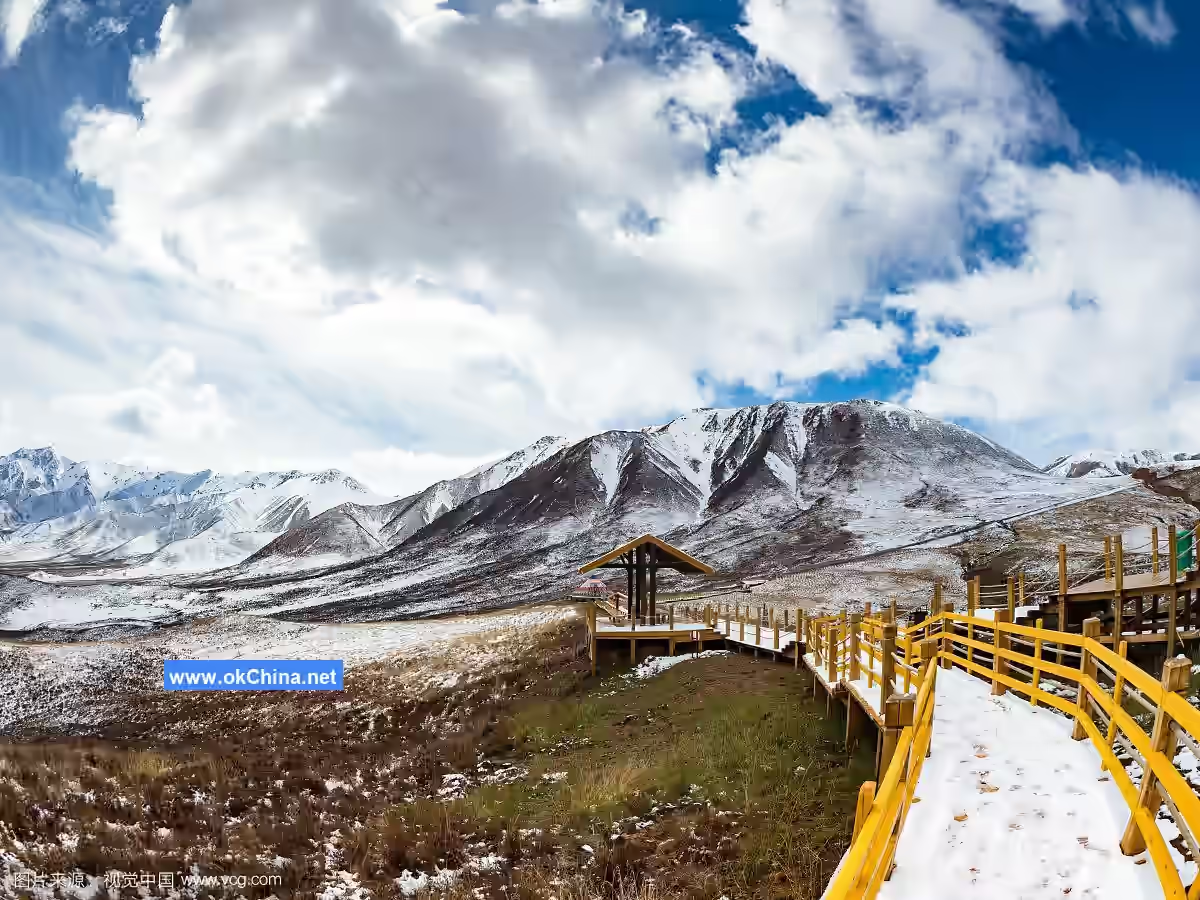
As the core and soul of the scenic area, Ami Dongsuo Mountain stands tall and majestic on the Qilian land with considerable elevation. Also known as "Niuxin Mountain" (Ox Heart Mountain), it appears robust and magnificent from a distance, resembling a giant ox heart, exuding a sense of power and majesty. Its peak is perpetually snow-capped, with pristine white snow covering the summit, shimmering with dazzling silver light under the sun, like a brilliant crown highlighting its purity and nobility.
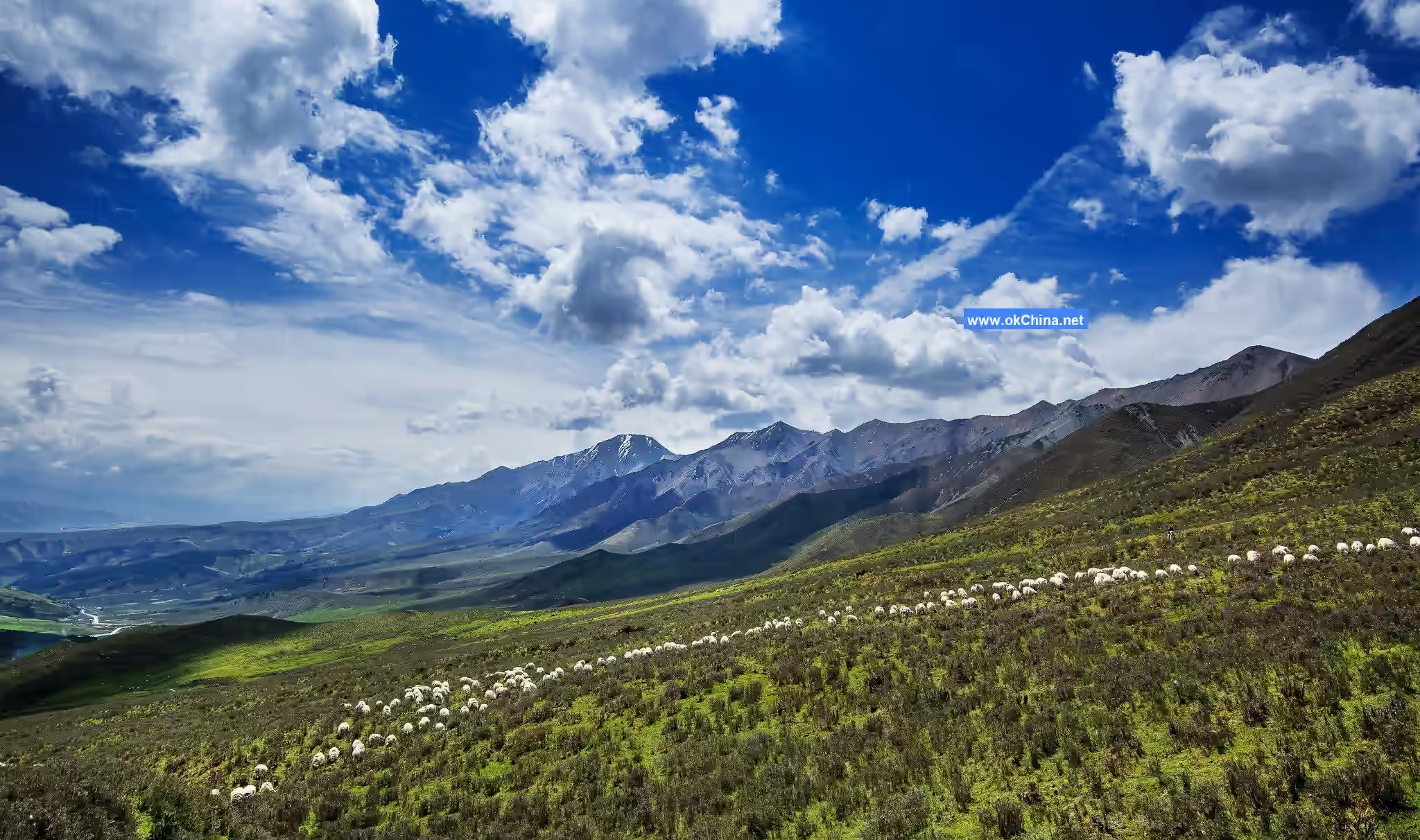
The vegetation distribution on the mountain exhibits distinct vertical zonation. At the foot lies a vast grassland, where lush green meadows resemble a soft carpet adorned with colorful wildflowers—red like fire, pink like rosy clouds, white like snow, and yellow like gold—gently swaying in the breeze and competing in beauty, as if holding a grand beauty contest. Herds of cattle and sheep graze and roam leisurely on the grassland, forming a harmonious pastoral picture with the grassland, blue sky, and snow-capped mountains, evoking a sense of nature's tranquility and beauty.
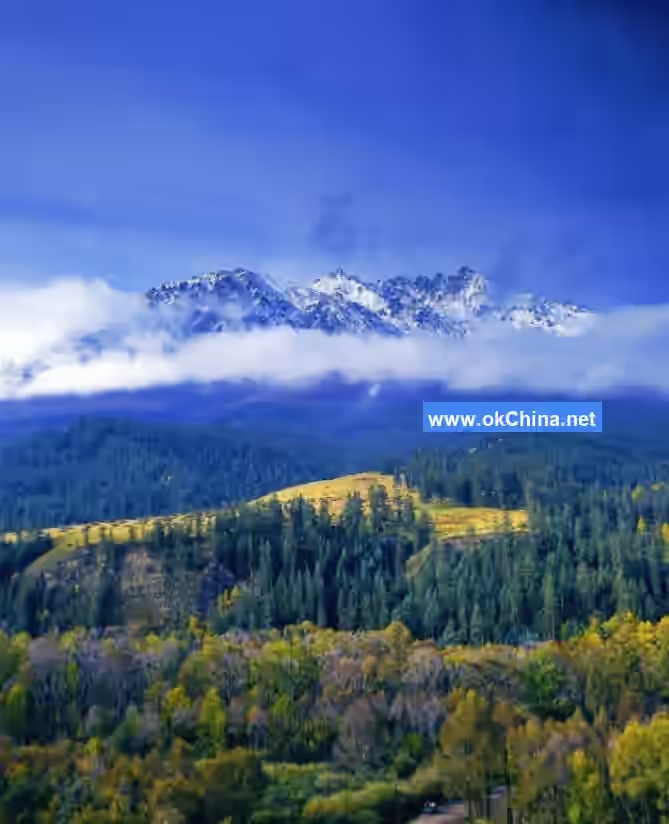
As the altitude increases, the grassland gradually gives way to dense forests. Tall and straight coniferous forests, such as pines, cypresses, and spruces, flourish luxuriantly, blocking out the sky. These trees stand robust and upright, pointing straight to the heavens like loyal guardians sent by nature to protect Ami Dongsuo Mountain. Entering the forest, the air is fresh and pleasant, filled with the distinctive fragrance of trees, making one take deep breaths to inhale the pure air. Occasionally, the clear songs of birds can be heard among the branches, where they hop and play joyfully, adding infinite vitality and energy to this serene forest.
At higher elevations, exposed rocks and perennial glaciers dominate. Glaciers flow slowly over the long river of time, acting as nature's master sculptors, shaping various peculiar landforms with endless time and power. Glacial crevasses crisscross, deep and unfathomable, like giant mouths of the earth, inspiring awe. When sunlight falls on the glaciers, they refract colorful rays, dreamlike and fantastical, resembling a fairyland. Climbing Ami Dongsuo Mountain is a dream for many outdoor enthusiasts and adventurers. During the ascent, they can personally experience the climatic differences and landscape changes at different altitudes, from the warm grasslands to the cold glaciers, as if traversing four seasons. However, the climbing path is not smooth; it requires overcoming challenges such as hypoxia from high altitude, cold, and complex terrain, making the successful summit of Ami Dongsuo Mountain a highly challenging and rewarding experience. Standing atop the peak and looking around, the entire Qilian Mountain range unfolds in rolling waves, with distant mountains faintly visible amidst clouds and mist like an ink-wash painting, where Ami Dongsuo Mountain serves as the finishing touch. At this moment, a sense of infinite reverence and admiration for nature wells up in the heart, as if one has merged with heaven and earth, feeling the vastness of the universe and the insignificance of life.
Qilian Stone Forest
The Qilian Stone Forest is another breathtaking wonder within the Ami Dongsuo Scenic Area. This stone forest spreads across a vast area, grand in scale and majestic in momentum. The stones within the forest vary in shape—some resemble vivid animals, others take on myriad human postures, and some mimic magnificent structures. Each stone seems like a meticulously carved artwork by nature, brimming with endless imagination and creativity.
Some stones resemble majestic lions, standing tall and gazing into the distance as if guarding this magical land; others look like graceful fairies, with fluttering robes dancing gracefully, offering aesthetic pleasure; still others resemble ancient castles with towering walls and turrets, inspiring thoughts of stories that might have unfolded within. The colors of these stones are also rich, including gray, black, brown, and red, interwoven to present a绚丽多彩 (colorful and splendid) spectacle under sunlight. At sunset, the lingering glow bathes the stone forest, turning it golden as if draped in a golden veil, dreamlike and magnificent.
The formation of the stone forest results from geological movements and long-term weathering. Over millions or even billions of years, tectonic plate movements caused continuous compression, uplift, and fracturing of the rocks here. Subsequently, under the influence of natural forces like wind, sun, rain, and frost, they were gradually eroded and sculpted into their current forms. Strolling through the Qilian Stone Forest feels like traveling back to ancient times, witnessing the earth's immense changes. Visitors can freely exercise their imagination here, endowing each stone with unique stories and life, feeling the震撼与惊喜 (awe and surprise) brought by nature's miraculous craftsmanship.
Ladongtai Folk Culture Village
Ladongtai Folk Culture Village is nestled within the Ami Dongsuo Scenic Area, a village brimming with strong Tibetan characteristics. The housing architecture here is distinctive, mostly traditional Tibetan blockhouses. These blockhouses are typically built with stone blocks, featuring thick walls that withstand the cold climate and biting winds of the plateau. The exterior of the houses is古朴典雅 (simple and elegant), with flat roofs slightly upturned at the corners, adorned with prayer flags fluttering in the wind as if narrating the faith and prayers of the Tibetan people.
Entering the folk culture village, one can feel the warm hospitality of the Tibetan people. Villagers dressed in bright traditional Tibetan attire greet distant guests with smiling faces. In the village, visitors can tour Tibetan homes to learn about their lifestyles and traditional customs. The interior decorations of Tibetan homes are exquisite, with walls painted in vibrant murals depicting Buddhist stories, the Eight Auspicious Symbols, etc., symbolizing good fortune and happiness. The homes are furnished with精美的藏式家具 (exquisite Tibetan-style furniture), such as carved cabinets and low tables, which are not only practical but also works of fine art.
Visitors can also savor authentic Tibetan cuisine here. Tibetan culinary culture is rich and diverse, featuring fragrant highland barley cakes, rich butter tea, and delicious yak jerky. Highland barley cakes have a crispy texture with a subtle barley aroma; butter tea is an indispensable daily beverage for Tibetans, made from butter, milk, tea leaves, etc., with a rich flavor and high nutritional value—a sip brings immediate warmth and energy; yak jerky is made from yak meat from the plateau, with firm texture, satisfying chewiness, and delicious taste, making it a delicacy in Tibetan cuisine.
At Ladongtai Folk Culture Village, visitors can also enjoy traditional Tibetan song and dance performances. Tibetan people are skilled in singing and dancing; their dances are passionate and vigorous, such as the lively Guozhuang dance and graceful Xianzi dance. Accompanied by melodious Tibetan music, villagers join hands in circles, singing and dancing. Visitors are often感染 (infected) by this lively atmosphere, joining the dance to share in the celebration and experience the unique charm of Tibetan culture. Additionally, the village hosts traditional handicraft workshops, such as Thangka painting workshops and Tibetan carpet weaving workshops. Thangka is a unique form of painting art in Tibetan culture, renowned for its delicate brushwork, vibrant colors, and rich religious connotations. In Thangka painting workshops, one can observe artists meticulously painting Thangkas, stroke by stroke creating exquisite patterns—each Thangka requires considerable time and effort,堪称艺术珍品 (truly artistic treasures). Tibetan carpet weaving is a skill mastered by Tibetan women, who use their dexterous hands to weave colorful, intricately patterned Tibetan carpets from wool. These carpets not only have practical value but also high artistic and collectible worth.
IV. Cultural Value
Specialty Cuisine
Qilian Roast MeatQilian, situated on a high plateau, is a major livestock county renowned for its Tibetan sheep, celebrated for their natural, green, and delicious meat. The lamb is sliced into small pieces, skewered on iron rods, and roasted in a specially designed rectangular oven. Enhanced with seasonings such as soy sauce, salt, ginger powder, chili powder, and pepper, the meat becomes tender, flavorful, and nutritious. Roasted lamb has evolved to include delicacies like roasted tendons and kidneys, making Qilian's roasted lamb truly exceptional.
Hand-Grabbed Lamb
Hand-grabbed lamb is a unique way of enjoying lamb among the herders of the Qinghai Plateau. It gets its name from the method of eating: holding a knife in one hand to slice the meat and grabbing it with the other to eat. A plate of hand-grabbed lamb features red meat and white fat, rich but not gamey, with an enticing appearance. Slicing and eating it with a knife may leave one's hands and mouth greasy, but upon careful tasting, it is refreshing without being greasy, with tender, succulent meat and an extraordinary flavor. People of all ethnic groups in Qinghai regard hand-grabbed lamb as a top-tier dish for entertaining guests.
Offal Soup
A beloved morning delicacy for the people of Qilian is offal soup, made by simmering boiled sheep or cow offal, including head meat, tripe, heart, lungs, intestines, and liver—commonly known as "variety meats." The soup, with its golden-green dried scallion shreds, has a rich aroma. It not only nourishes the body and satisfies hunger but also helps ward off the cold, making it the most cherished delicacy during the long, harsh winters. Drinking a bowl in the morning offers a delightful experience from lips to stomach—fragrant, delicious, and savory.
Earthen Hot Pot
The cold climate of the Qinghai-Tibet Plateau, abundant in cattle and sheep, gives rise to the earthen hot pot. The broth is typically made from clear lamb soup with a touch of pickled cabbage, emphasizing a spicy and fragrant flavor without red oil or excessive seasonings. The soup is clear and naturally rich. When served, the ingredients are neatly arranged in the pot, combining meat and vegetables for a balanced, aromatic delight. A single taste reveals the perfect harmony of the lamb's freshness and the pickled cabbage's crispness, leaving a lingering flavor without any greasiness.
Roasted Whole Lamb
Sheep raised grazing in the Qilian Mountains have tender, non-gamey meat, with the secret to its lack of gaminess lying in a sauce made from over a dozen spices. The steaming roasted whole lamb, with its charred aroma, is dipped in cumin and chili powder and taken in big bites. As the teeth cut through the fibers, the mouth fills with juicy, tender, and fragrant meat, distinct in texture, golden and crispy, with the intense aroma of cumin lingering in the mouth and nose.
Gá Miànpiàn (Small Dough Slices)
As the most common homemade noodle dish in Qinghai, Gá miànpiàn are delicate and thin, with the smallest, thinnest slices being the most refined. The people of Qilian love both meat and noodles, and miànpiàn alone come in many varieties: plain miànpiàn garnished with greens and scallions; beef or lamb miànpiàn with rich broth; stir-fried miànpiàn cooked with meat, vermicelli, and chili without broth; and braised miànpiàn with minimal broth, mixed with fried sauce. Each bowl of miànpiàn carries the deep nostalgia of Qilian natives living away from home.
Stir-Fried Yellow Mushrooms
As one of Qilian's "Eight Treasures," yellow mushrooms are large, thick, low in moisture, and fine in texture. Known for their tender texture, fragrant taste, and beautiful color, they are hailed as "Fairy Mushrooms of the Grasslands" and are a famous local delicacy. In 2008, they were approved as a Chinese geographical indication trademark. Yellow mushrooms contain chemical components that enhance immune function and inhibit tumor growth, offering high nutritional value and health benefits. Dishes like stir-fried yellow mushrooms with meat or plain stir-fried yellow mushrooms are widely praised by tourists.
Yak Bone Broth
At 5 a.m., yak meat is taken out and simmered in a pot for four hours. The combination of noodles, meat, and vegetables is highly distinctive. The special sauce soaks the meat, vegetables, scallions, and garlic flowers. When stirred, the meat and vegetables in the bowl, slightly warmed by the noodles, release an enticing aroma. The noodles, cooked to a perfect texture—neither too soft nor too firm—are tender and chewy. Using chopsticks to lift the noodles, take a deep breath to let the aroma fill the mouth and nose before swallowing. A bowl of yak bone broth leaves a lingering fragrance and satisfies the taste buds.
Beef Jerky
Beef jerky is made from fresh yak meat. The cleaned meat is boiled in plain water, cut into small pieces, and then stir-fried and dried with seasonings like Sichuan pepper powder, curry powder, MSG, cooking wine, sugar, and salt. It is rich in aroma and flavor, with benefits such as replenishing energy, nourishing the spleen and stomach, and strengthening bones and muscles. As a specialty of Qilian County, beef jerky is deeply loved by tourists.
Kūn Guō Mó (Pot-Baked Bread)
Following traditional methods, Kūn guō mó is made by rolling rapeseed oil into ordinary fermented dough, applying natural food colorings like red yeast, turmeric, and fenugreek powder, then layering and rolling the dough into a cylindrical shape similar in size to the pot. The dough is placed in the pot, which is then buried in the ashes of a stove fueled by wheat straw. The resulting bread is crispy on the outside, soft on the inside, and fragrant.
Tsampa
Tsampa is also one of the staple foods for the people of Qilian. Made from roasted highland barley ground into flour without sifting, tsampa is mixed with butter tea, perfectly blending the aroma of barley with the rich tea flavor. The kneaded tsampa is sweet and delicious. Due to its portability and nutritional value, tsampa has become a staple for the nomadic people of the plateau.
Sānzi (Fried Dough Twists)
Sānzi is a type of fried dough food. Made from wheat flour with a bit of salt, alum, and seasonings, the dough is kneaded, shaped, and deep-fried until it forms golden, interlocking rings. This food is crispy, fragrant, and stores well without spoiling. When serving elders or distinguished guests, it is often paired with milk tea. The Hui and Salar ethnic groups fry sānzi during festivals.
Gǒu Jiāo Niào (Dog-Pissing Pancake)
Known locally as "dog-pissing oil pancakes," this is a thin pancake fried in rapeseed oil popular in the Qinghai region. Wheat flour dough is kneaded, rolled out, sprinkled with fenugreek powder, brushed with rapeseed oil, rolled into a long cylinder, twisted into a spiral shape, cut into small sections, and flattened. Despite its unappealing name, the pancake is sweet, fragrant, and soft.
Niàngpí (Fermented Wheat Noodles)
Niàngpí is made from wheat flour through traditional steps: washing the dough, fermenting, filtering, brushing with slurry, steaming, removing the skin, and cutting into strips. Served with pieces of gluten and seasonings, niàngpí is a traditional Qinghai snack with strong local flavors. It is spicy, cool, chewy, and deeply flavorful.
Butter Tea
Butter tea is a daily essential for the people of Qilian. It warms the body in cold weather, cuts through greasiness when eating meat, satisfies hunger, relieves fatigue, and refreshes the mind when drowsy. Butter and tea are repeatedly churned together until the mixture resembles cocoa tea in color. A sip releases the aroma of milk and tea, leaving a long-lasting aftertaste.
Qilian Yogurt
Locals in Qilian make yogurt by fermenting cooked milk in small bowls, deliberately adding a few drops of rapeseed oil on the rim. The surface forms a golden milk skin with oil spots, while the yogurt itself is white as lard, rich in milk aroma, tender, smooth, cool, and slightly sour. Adding a spoonful of sugar makes it sweet and sour, even more refreshing and delicious. It also aids digestion, stimulates appetite, and has antibacterial, astringent, calming, and hypnotic properties. Medical studies have found it can lower cholesterol, prevent arteriosclerosis and tumors, and delay premature aging.
Comments
Post a Comment